
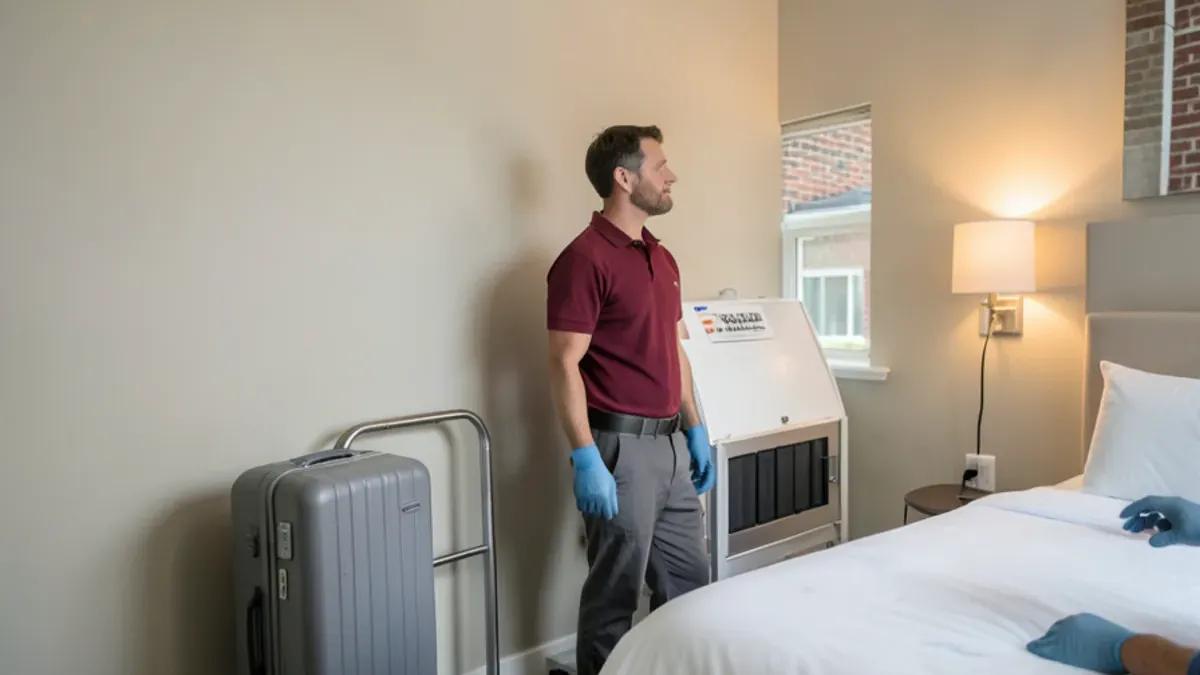
Learning how to avoid bed bugs when traveling comes down to three habits: check the room before you settle in, keep your luggage off the bed and away from the walls, and unpack carefully when you get home. A few minutes at each stage of a trip keeps them from moving into your bedroom.
What are you actually looking for?
Bed bugs do not fly or jump; they hitch rides in suitcases, clothing and bags. That is why every habit below is about where your bags sit and what touches them.
Adult bed bugs are flat, oval and reddish-brown, about the size of an apple seed. Young ones are smaller and paler, and eggs are tiny, white and easy to miss. Because they hide during the day, you will more often find their traces than the insects themselves.
- Small dark spots, like marker dots, along mattress seams, sheet corners or headboard edges.
- Pale, empty shed skins in crevices.
- Tiny rust-colored smears on sheets or pillowcases.
- Live insects tucked into seams, piping, or the joint between the headboard and the wall.
Avoiding bed bugs when traveling starts with how you pack
A little preparation makes the rest of the trip simpler. Hard-sided suitcases offer fewer seams and pockets to hide in than soft fabric bags, and light-colored liners make dark insects stand out.
Pack clothes in large zippered plastic bags or packing cubes that close fully. Bring one extra bag for dirty laundry so worn clothes stay sealed until you are home, and pack a small flashlight or plan to use your phone light for the room check.
How do you check a hotel room for bed bugs?
Do the check before you unpack, while your luggage is still in the bathroom or on a hard floor near the door. It takes about five minutes.
Park the luggage in the bathroom
Set bags in the tub or on the tile floor while you inspect. Bed bugs rarely live on smooth, bare surfaces.
Pull back the sheets at the head of the bed
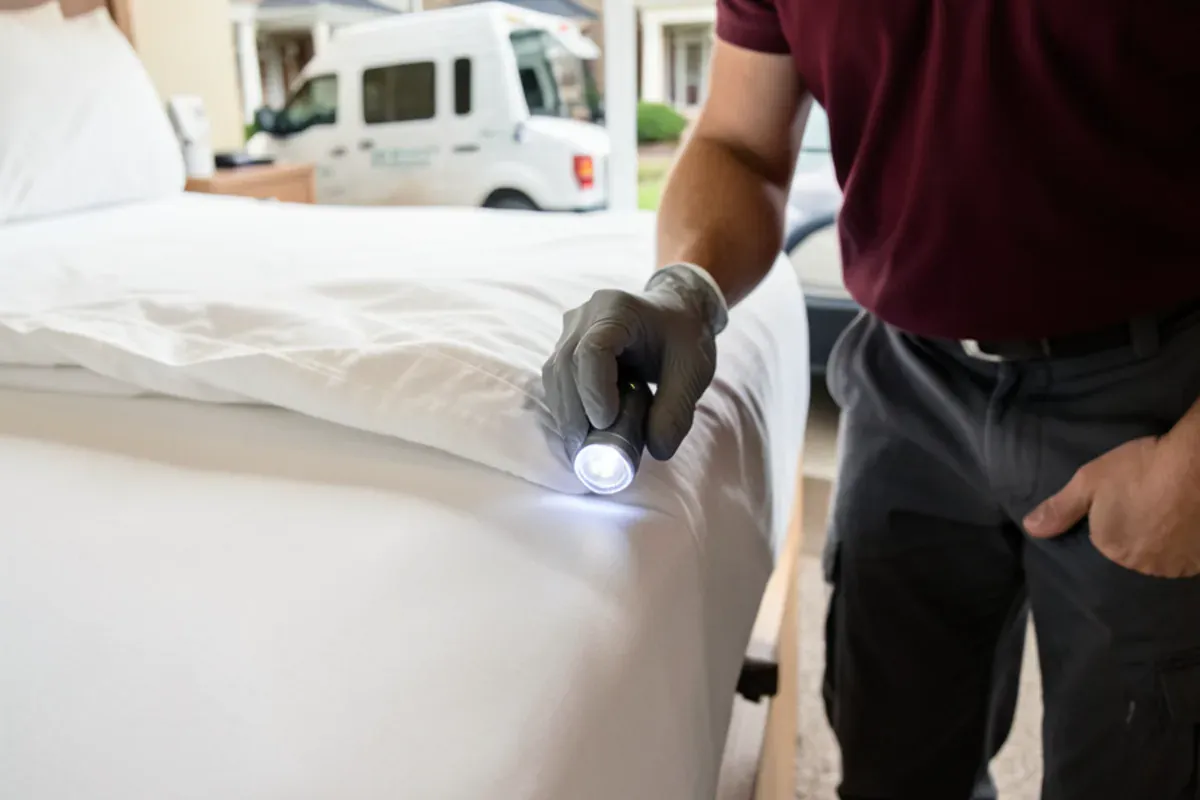
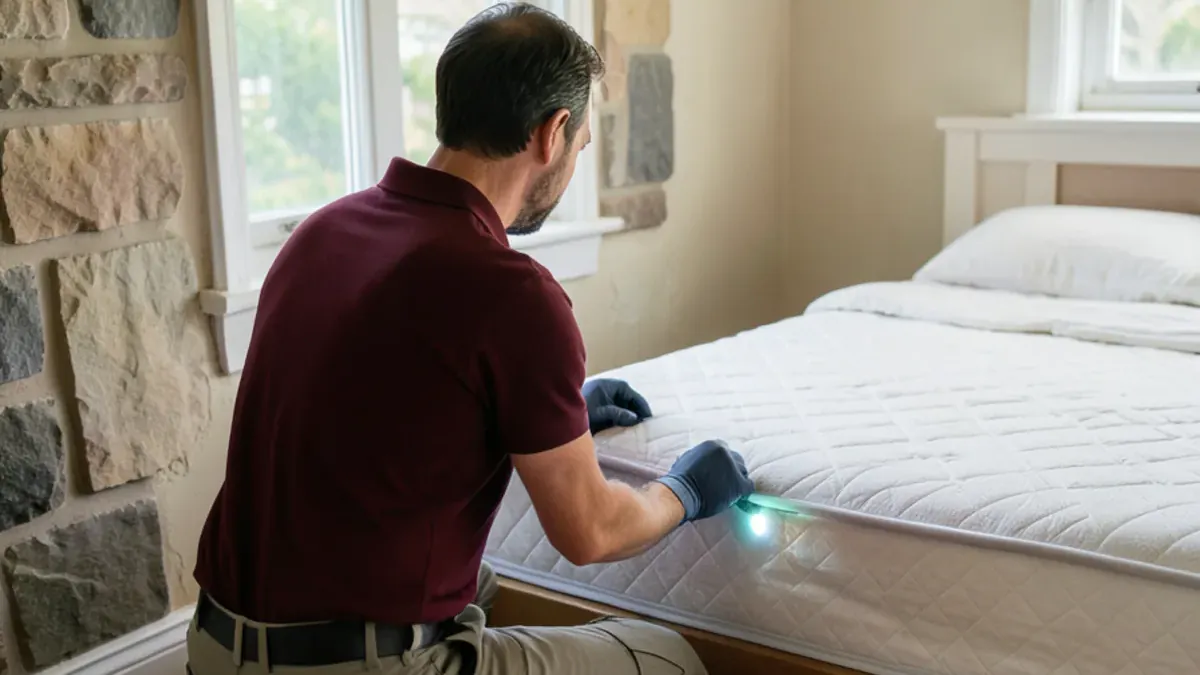
Check the mattress seams, piping and tags at the corners nearest the pillows with a flashlight.
Look behind and along the headboard
If it lifts off its wall mount, look at the back; otherwise shine a light into the gap between headboard and wall.
Check the luggage rack and nightstand
Look at the straps, joints and underside of the rack, and the drawer edges of the nightstand.
Ask for a different room if you find signs
Request a room that is not next to, above or below the first one, since bed bugs can travel between adjoining rooms.
During your stay: suitcase bed bugs start here
Most bed bugs that reach a home arrive in a suitcase that sat in the wrong spot for a few nights. Keep yours where they are least likely to crawl.
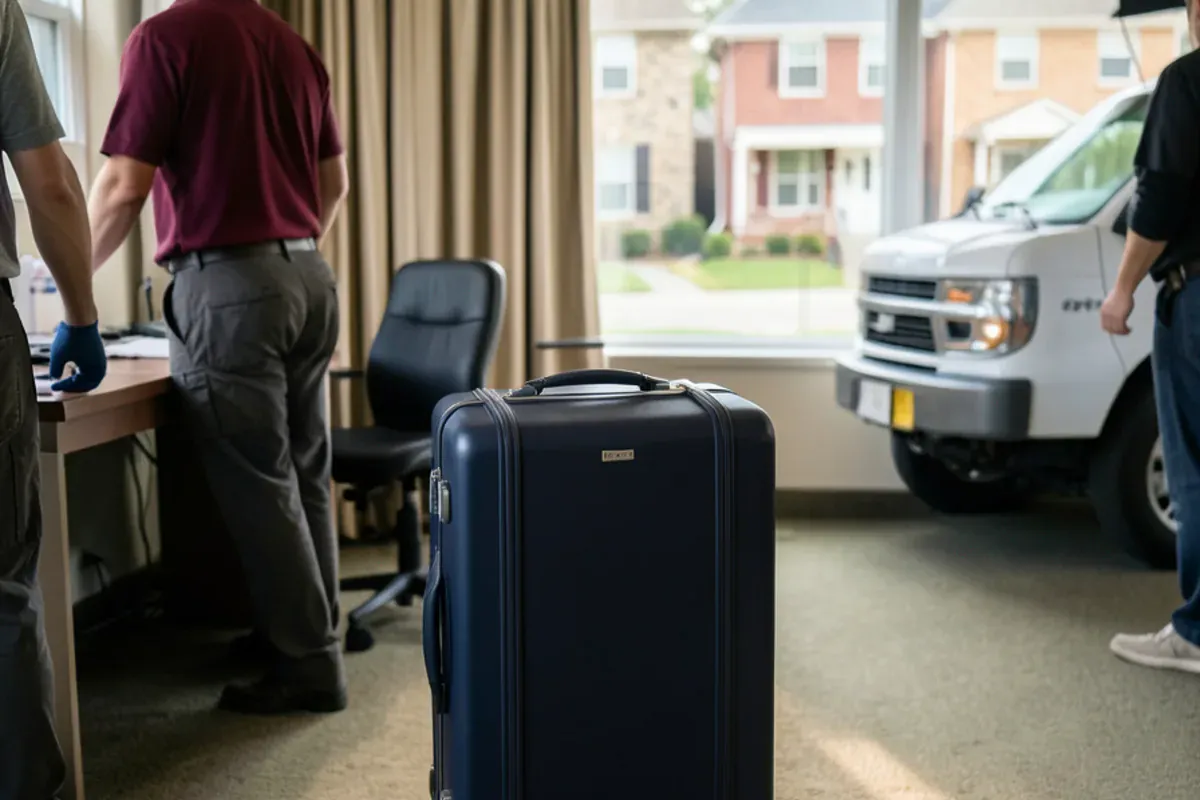
- Keep the suitcase on the luggage rack, pulled away from the wall, or on the bathroom floor.
- Never put luggage, backpacks or purses on the bed or upholstered chairs.
- Keep clothes in the suitcase or zippered bags rather than in dresser drawers.
- Zip the suitcase closed whenever you are not using it.
- Hang only what you need and keep it away from the headboard wall.
Coming home: unpack outside the bedroom
The goal is to keep anything that might carry a bed bug away from the place you sleep until it has been through the dryer or inspected.
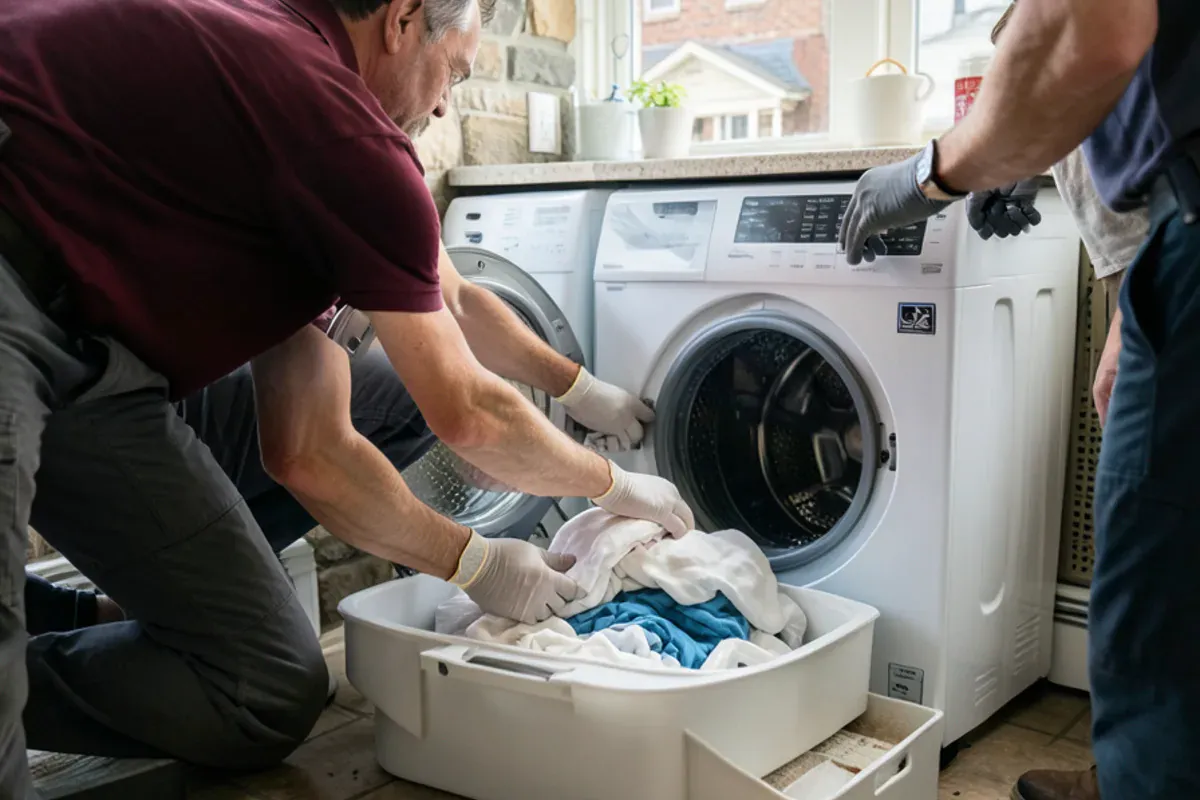
Unpack on a hard floor
Use the garage, a tiled entry or the laundry room, not the bedroom or a carpeted area.
Go straight to the dryer
Put clothing, including clean items, through a dryer on high heat for at least 30 minutes before washing or putting away.
Inspect the suitcase
Check seams, zippers, wheel wells and pockets with a flashlight, then vacuum the inside and empty the vacuum outdoors.
Store luggage away from bedrooms
A garage shelf or basement is a better home for suitcases than under the bed or in a bedroom closet.
What should you do if you think one came home with you?
Do not panic and do not start throwing out furniture. Capture a suspect insect on clear tape or in a sealed bag so it can be identified, and avoid spraying store-bought products, which can scatter bed bugs into other rooms.
Then have the home checked. Our bed bug inspection looks at beds, furniture and nearby rooms to confirm whether there is activity and how far it has spread. If treatment is needed, the bed bug treatment section explains the options and how to prepare.
What bed bug calls after a trip tend to look like
Bed bugs are one of the pests our business specializes in, and many of the early cases we inspect trace back to luggage. When we inspect after a trip, activity is often confined to one bed or one chair near where a suitcase was set down, which is much easier to deal with than a spread through several rooms.
The first thing we ask is where the suitcase went in the first day or two home. A bag opened on the bed, or left on a bedroom carpet for a week, changes where we look first. Sometimes the inspection finds nothing at all, and then the honest advice is to watch rather than treat: interceptor cups under the bed legs and a check of the mattress seams every week or so will show whether a stray bug started anything. Mattress encasements help in the same way. They make the bed easier to inspect, but they do nothing for a headboard, nightstand or chair, so we treat them as a monitoring tool, not a fix.
Media's apartments and older twins share walls, and Census (ACS) estimates put the borough's renter share near 58%. In a shared building, early reporting protects the neighbors too. Our Media pest control page covers how we work with tenants and owners in the borough.
Quick answers
Can bed bugs survive in a suitcase for a long time?
Yes. Adult bed bugs can go weeks to months without feeding, especially in cool conditions, so a suitcase stored in a closet can carry them to the next trip or back into the house. That is why we suggest inspecting and vacuuming luggage after every trip and storing it in a garage or basement rather than near beds.
Are bed bugs only found in run-down hotels?
No. Bed bugs have nothing to do with how clean or upscale a place is; they go wherever people and luggage go. Upscale hotels, vacation rentals, cruise cabins, dorms and overnight buses can all have them. The same five-minute room check applies everywhere, and the unpacking routine at home is the same after one night away or two weeks.
Do I need a professional inspection after every trip?
No. If your room check was clean and you unpacked through the dryer, there is little reason to worry. An inspection makes sense if you found signs in the room, wake up with new bites, or spot dark spots on your own mattress. We start with a free inspection and a written quote before any treatment.
Will leaving my suitcase in a hot car kill bed bugs?
Not reliably. Bed bugs and their eggs die only when the heat reaches them for a sustained period, and the inside of a packed suitcase can stay much cooler than the dashboard. A parked car in a Delaware County July may get hot enough some afternoons and not others. A dryer on high for at least 30 minutes is far more dependable for clothing, and a flashlight and vacuum handle the case itself.
The bottom line
Five minutes checking the room and a trip through the dryer at home stop most travel bed bugs. If you think one made it back with you, call (209) 563-1650 and we will set up an inspection, usually focused on the bed and the spot where the suitcase landed.
Sources
Written by the No Bugs Exterminator team
A small, family-run pest control business in Media, PA, led by owner Thom. We write about what we see on inspections in Delaware County and southeastern Pennsylvania. About us.
Services mentioned in this guide
Want a professional opinion?
Book a free inspection and get a written quote before any treatment.
- ★ 4.8 from 21 Google reviews
- Open 7 days, 8 a.m. to 7 p.m.
- Free inspection before treatment
- Family-run, based in Media, PA
Open 7 days, 8 a.m. to 7 p.m.