
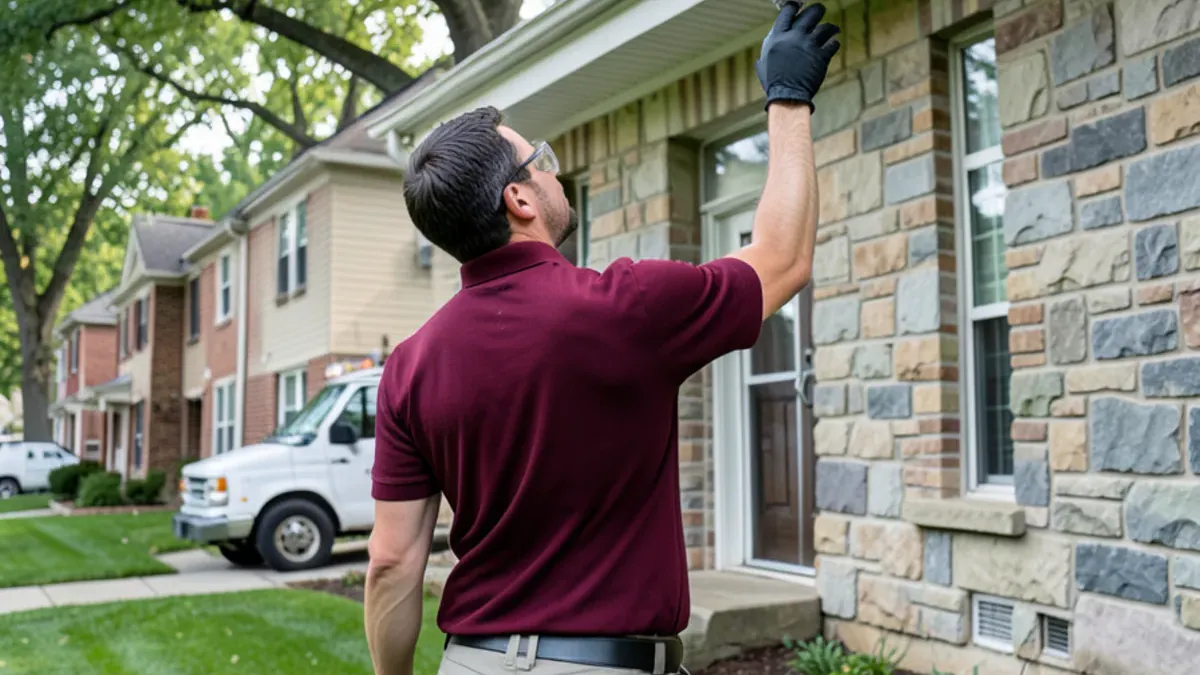
Which Stinging Insect Is Building Near Your Home?
The right treatment depends on the insect, so identification comes first. A paper wasp comb on a porch ceiling, a yellow jacket hole in the lawn and a honey bee colony in a wall need three different approaches, and getting it wrong can leave a nest alive or harm pollinators that should have been saved.
Each insect has its own page with more detail: wasp nest removal for open paper combs, hornet nest removal for enclosed gray nests, yellow jacket control for ground and wall nests, carpenter bee control for round holes in wood, and bee removal for honey bee swarms and hives. Can't tell from a safe distance? Describe it to us on the phone and we'll help narrow it down.
| Insect | How to recognize it | Where it usually nests |
|---|---|---|
| Paper wasp | Slender brown body with yellow or reddish marks; long legs dangle in flight | Open, umbrella-shaped comb under eaves, porch ceilings, rails and shutters |
| Bald-faced hornet | Black with ivory-white face and tail markings, about 3/4 inch long | Gray, football-shaped paper nest in trees, shrubs or high gables |
| European hornet | Large, often an inch or more, brown and yellow; flies after dark | Hollow trees, wall voids, attics, barns and sheds |
| Yellow jacket | Compact, bright yellow and black bands, quick darting flight | Holes in lawns and mulch, wall voids, gaps under siding |
| Carpenter bee | Large and black with a shiny, hairless abdomen; hovers near wood | Round holes about 1/2 inch wide in decks, fascia and rails |
| Honey bee | Fuzzy, amber-brown, about 1/2 inch; calm away from the hive | Swarm clusters on branches; colonies in walls, chimneys and hollow trees |
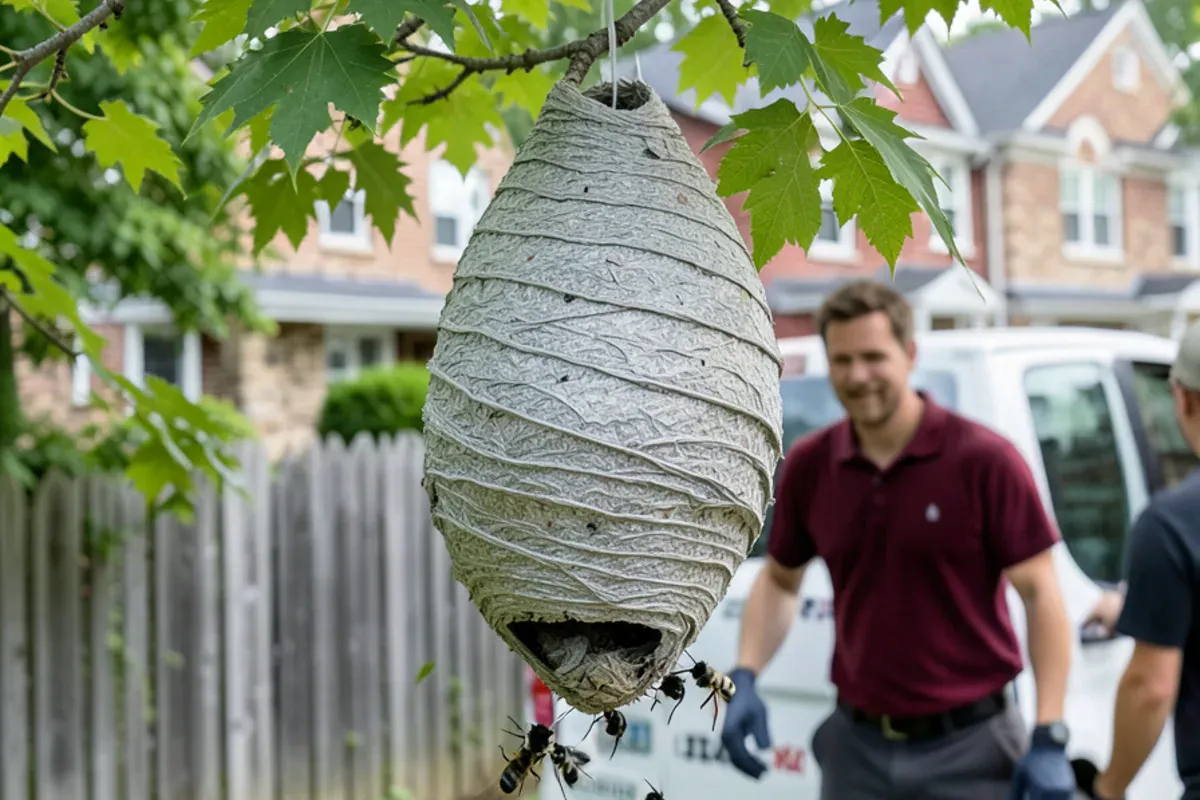
Why Wasps and Hornets Build Around Delaware County Homes
Every social wasp colony in southeastern Pennsylvania starts the same way. A single mated queen survives the winter in an attic, a woodpile, loose bark or a gap behind siding, then builds a small starter nest in April or May. Workers take over through June and July, and by August a yellow jacket or hornet colony can number in the hundreds or thousands.
Local housing and terrain give queens plenty of options. Wooded lots along Ridley Creek State Park, the Crum Woods and Darby Creek put trees and shrubs right behind houses, while older homes with wooden soffits, deep porch roofs and gaps around attic vents offer dry shelter. Mulch beds, stone retaining walls and abandoned rodent burrows suit ground-nesting yellow jackets.
The first hard frost kills the workers, and hornets and yellow jackets do not move back into old nests. New queens look for the same kind of sheltered spot the next spring, though, which is why one corner of a porch can host a nest year after year.
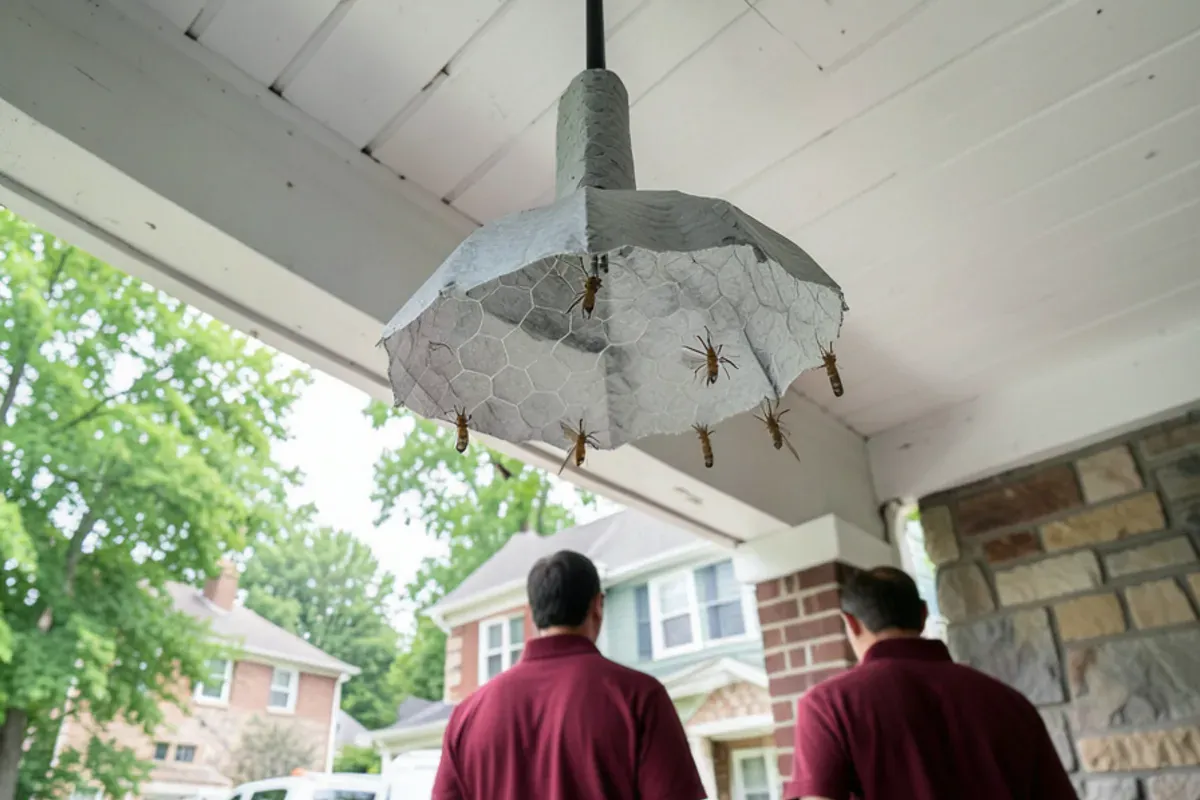
When Is a Nest Too Risky to Live With?
Not every nest needs treatment. A paper wasp comb at the far end of a fence, away from where people walk, may do more good than harm, since wasps hunt caterpillars and other garden pests. A nest becomes a problem when it sits beside a doorway, deck, play set, pool, grill or a window you open, or when someone in the household is allergic to stings.
Treat these situations as urgent: a nest in a lawn you mow, a hornet nest in a hedge you plan to trim, yellow jackets coming out of a wall or ceiling indoors, or anyone who has already been stung several times. Our emergency pest control page explains how we handle calls like these. Anyone allergic to stings should stay indoors and away from the nest, and anyone having a severe reaction should call 911 or seek medical care right away.
Please don't spray a large nest yourself, block its entrance or knock it down with a stick. Store-bought sprays rarely reach the center of a big colony, and ladder work under a nest that is already stinging is how many of the worst injuries happen.
How Our Wasp and Hornet Control Works in Media, PA
Stinging insect work follows the same careful process we use across our general pest control service, adjusted for insects that fight back. Thom and his team look at the whole property, not just the nest you called about.
Tell us what you're seeing
Describe where the insects are, roughly how many, and whether anyone at home is allergic. Same-day visits are often possible when the schedule allows — call early in the day.
Free inspection of the whole property
We check eaves, soffits, porch ceilings, decks, sheds, play sets, trees, shrubs, lawn edges and attic vents, because one nest often means others nearby.
Identification and nest count
We confirm the species at each nest and note which are active, which are old and which belong to insects that should be left alone or relocated.
Written quote
You receive a written quote listing each nest, the treatment method and any follow-up before work starts.
Targeted treatment
Each active nest is treated with a method matched to its location, often late in the day when more of the colony is home.
Removal, walk-through and advice
Exposed combs and hanging nests come down once activity stops; nests inside walls or underground are left to dry out. Before we leave, we show you what was treated, what to expect over the next day and which gaps or bare wood to seal.
Talk to us about stinging insect control
Call and speak with Thom or his team. The inspection is free, and you get a written quote before any treatment.
- ★ 4.8 from 21 Google reviews
- Open 7 days, 8 a.m. to 7 p.m.
- Free inspection before treatment
- Family-run, based in Media, PA
Open 7 days, 8 a.m. to 7 p.m.
Treatment Options for Wasps, Hornets and Bees
No single spray fits every nest. The method depends on where the colony lives and how the insects come and go, and each choice has trade-offs we'll explain before you agree to anything.
- Exposed paper wasp combs: a direct application to the comb, then removal and bagging of the nest so the spot is clear.
- Hanging hornet nests: treatment through the entrance hole, then removal once the nest is quiet. Very high nests may be left to weather after the colony is dead.
- Wall-void and ground nests: a dust formulation placed in the entrance, which returning workers carry inside. The opening must stay unsealed for several days.
- Carpenter bee galleries: treatment inside each hole, followed by sealing once the bees are gone so next spring's bees can't reuse the tunnel.
- Honey bees: a local beekeeper for swarms and, for established colonies, a beekeeper plus repair work. We'll advise on the call.
Pennsylvania Rules That Apply to Wasp, Hornet and Bee Work
Nest treatments use pesticides, so they fall under the Pennsylvania Pesticide Control Act of 1973, enforced by the Pennsylvania Department of Agriculture (PDA). PDA licenses pest control businesses and certifies the applicators who apply these products for hire, and 7 Pa. Code § 128.31 requires the business license number to be displayed on service vehicles. Before anyone treats a nest at your home, you can ask for that PDA number.
Every product also carries an EPA-registered label that sets where and how it may be used, and federal pesticide law treats use against the label as a violation. Honey bees sit in a separate lane: PDA runs the state's apiary program for registered beekeepers, which is one reason we send swarms to a local beekeeper instead of treating them. This is general information, not legal advice.
What Shapes the Price of Nest Removal
We quote every job in writing after the free inspection, because two nests that look alike from the driveway can involve very different work. These are the factors that move the price:
Timing changes the scope more than most people expect. A paper wasp starter comb spotted in May is often a quick, small job, while the same queen's colony in late August can mean a bigger nest, more defensive workers and a longer visit. On wooded lots near Ridley Creek State Park or the Crum Woods, the inspection also tends to turn up a second or third nest, and each one is listed separately on the quote.
- How many active nests are on the property, and whether more than one species is involved
- Height and access, from a ground-level hole to a third-story gable or a nest high in a tree
- Whether the nest is exposed or hidden inside a wall, soffit, chimney chase or attic
- Colony size, which grows sharply from spring to late summer
- Whether you want reachable nests removed and bagged after treatment
- Sealing of carpenter bee holes or follow-up visits included in the quote
- Commercial sites with public entrances, outdoor seating or dumpster areas
After Treatment: Timeline and Preventing New Nests
Most treated colonies quiet down within hours, though foragers that were away during the visit may circle the old nest site for a day or so. Keep children and pets back until activity has stopped, and don't seal any entrance until we say it's time.
Prevention is mostly about removing the shelter queens look for in spring:
- Walk around the house in late April and May, when nests are smallest, and look under eaves, rails and porch ceilings
- Seal gaps in soffits, fascia and siding, and repair torn attic vent screens
- Paint or stain bare wood on decks, rails and trim to discourage carpenter bees
- Keep tight lids on trash and recycling, and pick up fallen fruit in late summer
- Fill abandoned rodent burrows in the lawn before yellow jacket queens find them
- Cap the open ends of metal fence rails and swing-set tubes
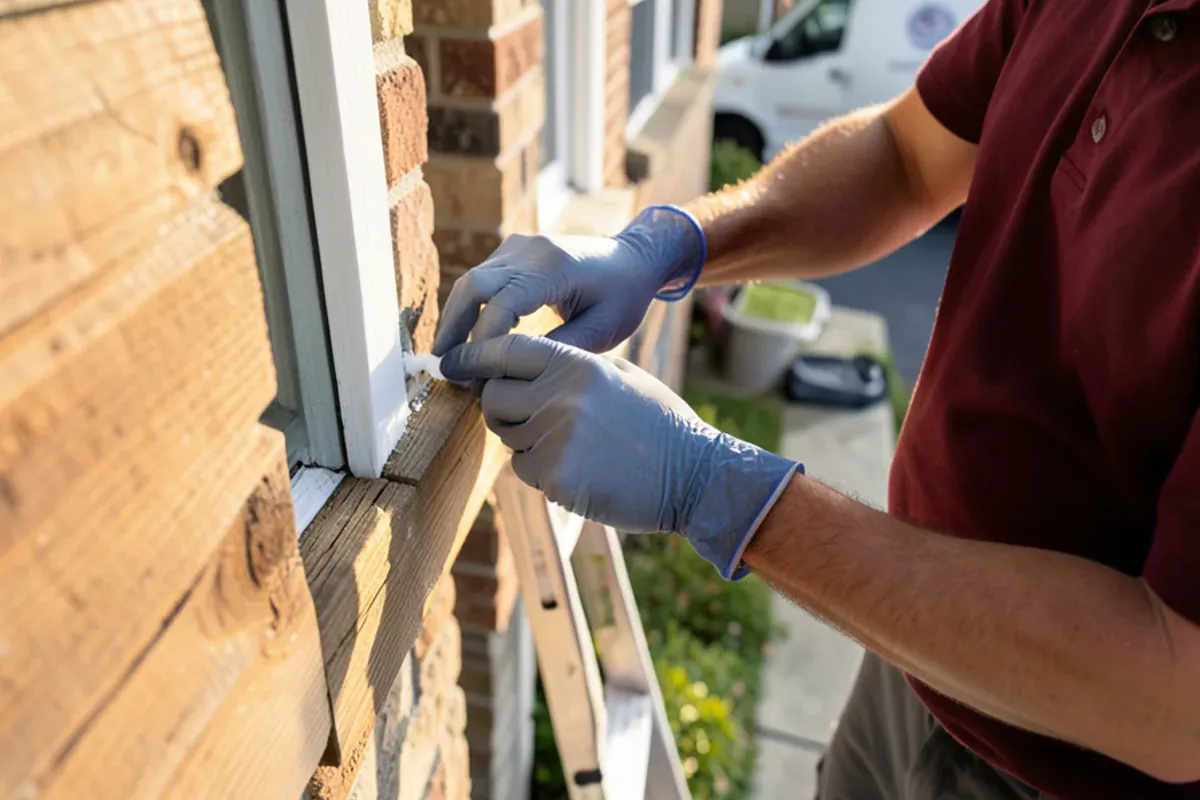
Stinging Insect Control: every service in this group
Wasp Nest Removal
Wasp Nest Removal in Media and Delaware County, PA
Learn more →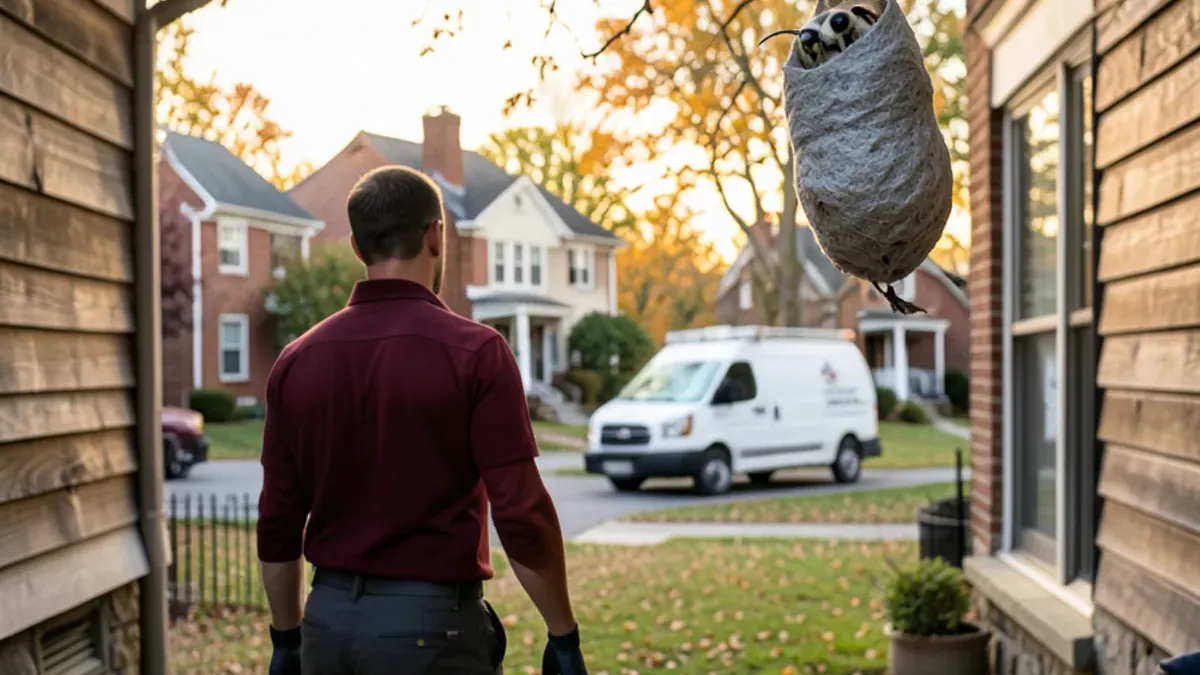
Hornet Nest Removal
Hornet Nest Removal in Media and Delaware County, PA
Learn more →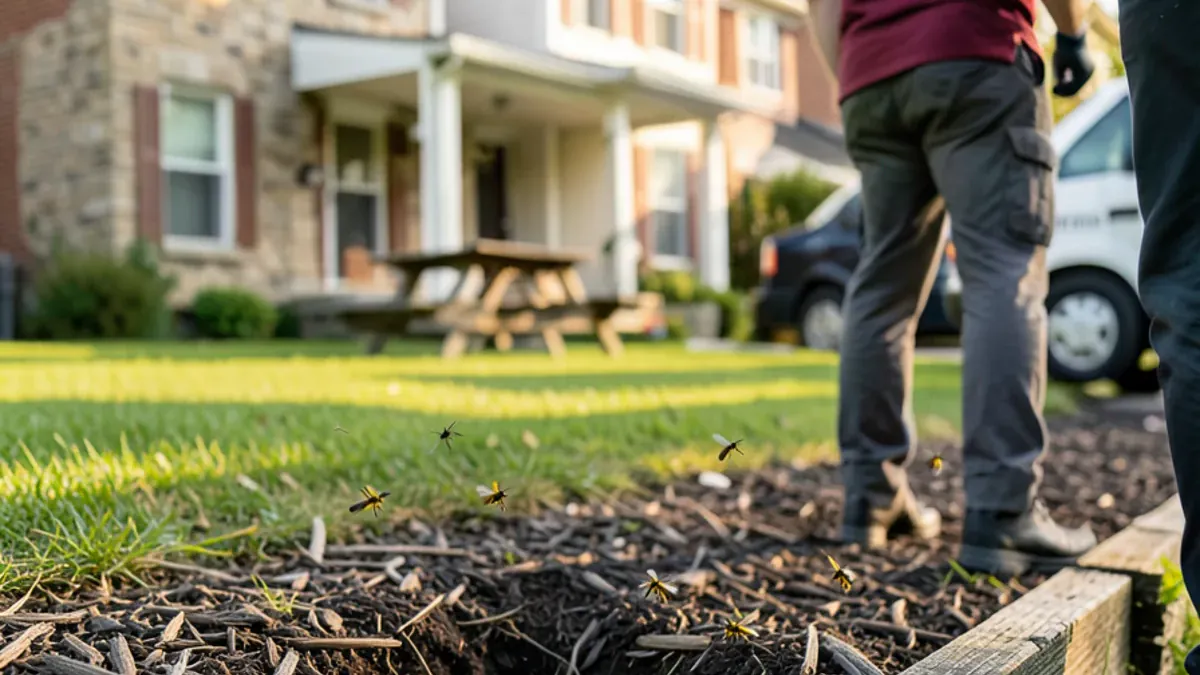
Yellow Jacket Control
Yellow Jacket Control in Media and Delaware County, PA
Learn more →
Carpenter Bee Control
Carpenter Bee Control in Media and Delaware County, PA
Learn more →
Bee Removal
Bee Removal in Media and Delaware County, PA
Learn more →What our stinging insect control includes
- Free inspection of eaves, decks, sheds, trees, lawns and attic vents
- Identification of each stinging insect and a count of active nests
- Written quote before any treatment starts
- Treatment of paper wasp, hornet and yellow jacket nests matched to their location
- Removal and bagging of reachable exposed nests
- Carpenter bee gallery treatment and sealing guidance
- Honey bee advice, including when to contact a local beekeeper
- Prevention recommendations for gaps, vents and bare wood
Why call No Bugs Exterminator for stinging insect control
We look past the first nest
Thom and his team inspect the whole property for free, and customers have told us in reviews that we found nests they had missed.
Reviewed for hornet and wasp work
We hold a 4.8-star rating from 21 Google reviews, and hornet and wasp extermination is one of the services reviewers mention.
Open 7 days
We're open 7 days, 8 a.m. to 7 p.m., and same-day visits are often possible when the schedule allows.
Small and local
We're a family-run business in Media serving homes and businesses across Delaware County and the neighboring counties.
Where we provide stinging insect control
We handle stinging insects all over Delaware County, and the wooded parts keep us busiest. Homes in Upper Providence Township back onto Ridley Creek State Park, Rose Valley sits in deep woods, and Swarthmore and Nether Providence Township border the Crum Woods and Crum Creek. Mature trees, shaded porches and older wooden trim give hornets and paper wasps more places to build there than on open lots.
- Media
Our home borough: walk-up apartments over State Street shops have parapets and flat roofs where paper wasps build, and Census (ACS) estimates show 58% of homes are rented.
- Edgmont Township
Subdivisions built around a 1991 median year back onto Ridley Creek State Park, so bald-faced hornets build in the woodland-edge trees behind many yards.
- Haverford Township
Darby Creek’s wooded banks run behind 1950s Havertown and Llanerch homes, where aging soffits and porch ceilings give paper wasp queens dry places to start combs.
- Springfield Township (Delaware County)
Post-war Cape Cods with dormers and wood trim shelter wasp combs, and Baltimore Pike retail lots draw scavenging yellow jackets to trash enclosures in late summer.
- Marple Township
Lawrence Park’s 1960s streets and the Broomall commercial strip both see yellow jackets nesting in mulch beds and foraging around patios and dumpsters.
- Aston Township
Split-levels from the 1960s and 70s along the Chester Creek valley pair wooded backyards with wooden decks, so hornet nests and carpenter bee holes often show up together.
- Newtown Township (Delaware County)
Large wooded lots around Newtown Square and the Ellis Preserve give hornets tall trees and dense hedges to build in through the summer.
- Thornbury Township (Delaware County)
Large-lot homes at Glen Mills and Cheyney addresses border open fields, where ground-nesting yellow jackets turn up in lawn edges and fresh mulch.
- Middletown Township (Delaware County)
Elwyn, Lima, Wawa and Glen Riddle mix 1970s houses with wooded open space, so both ground nests and tree-hung hornet nests are common calls.
What customers say on Google
4.8 out of 5 from 21 reviews on Google. Quoted as written by customers.
Professional service with great results!
Thom is a top-notch pest control specialist! And is one of the most genuine guys in the industry. He came to inspect a situation I had going on at the house, took his time, offered detailed advice, and didn’t take a penny.
Thom + his team were amazing. Very professional + provided me with a quote that made the most sense for my situation. Clearly I was not being gouged. Thom put the client first.
Stinging Insect Control: common questions
How do I know which stinging insect I have?
Look at the nest more than the insect. An open comb with visible cells means paper wasps, an enclosed gray paper ball means hornets, steady traffic through a hole in the lawn or siding usually means yellow jackets, and neat round holes in wood mean carpenter bees. Watch from a safe distance, tell us what you saw when you call, and we'll confirm it at the free inspection.
Is it safe to spray a nest myself?
For anything bigger than a tiny starter comb, no. Spraying from below or from a ladder puts you in the flight path of defending insects, and aerosols seldom reach the center of a large hornet or yellow jacket nest. Plugging or flooding a ground hole can push yellow jackets toward the house. If someone at home is allergic, keep them away entirely and let us handle it.
How much does nest removal cost?
It depends on the job, so we give you a written quote after a free inspection rather than a guess over the phone. The main factors are the number of active nests, height and access, whether the nest is inside a wall or underground, and how large the colony has grown. A single porch comb in May is a very different job from a late-August hornet nest in a tree.
Will a treated nest come back?
A treated colony does not recover, and hornets and yellow jackets never move back into an old nest. What does happen is that new queens pick similar sheltered spots the following spring. Sealing gaps, painting bare wood and checking the eaves in May are the habits that cut down on repeat nests in the same corner of the house.
Do you treat wasps and hornets at businesses?
Yes. We serve both homes and businesses, and stinging insects around restaurant patios, dumpster enclosures, playgrounds and storefront awnings are a frequent late-summer problem in Delaware County. For commercial sites we look at how customers and staff move around the building, plan treatment for quieter times and quote the work in writing after a free inspection.
When are stinging insects most active around Media?
Queens start nests in April and May, colonies grow through June and July, and activity peaks from mid-August into early October, when yellow jackets turn into aggressive scavengers. The first hard frost usually ends the season for workers. Carpenter bees run on a different calendar: they are most noticeable in April and May while boring new holes.
Related services
Helpful guides from our blog
Ready to get rid of the problem?
Thom and his team serve Media, Delaware County and southeastern Pennsylvania, open 7 days, 8 a.m. to 7 p.m..
- ★ 4.8 from 21 Google reviews
- Open 7 days, 8 a.m. to 7 p.m.
- Free inspection before treatment
- Family-run, based in Media, PA
Open 7 days, 8 a.m. to 7 p.m.