
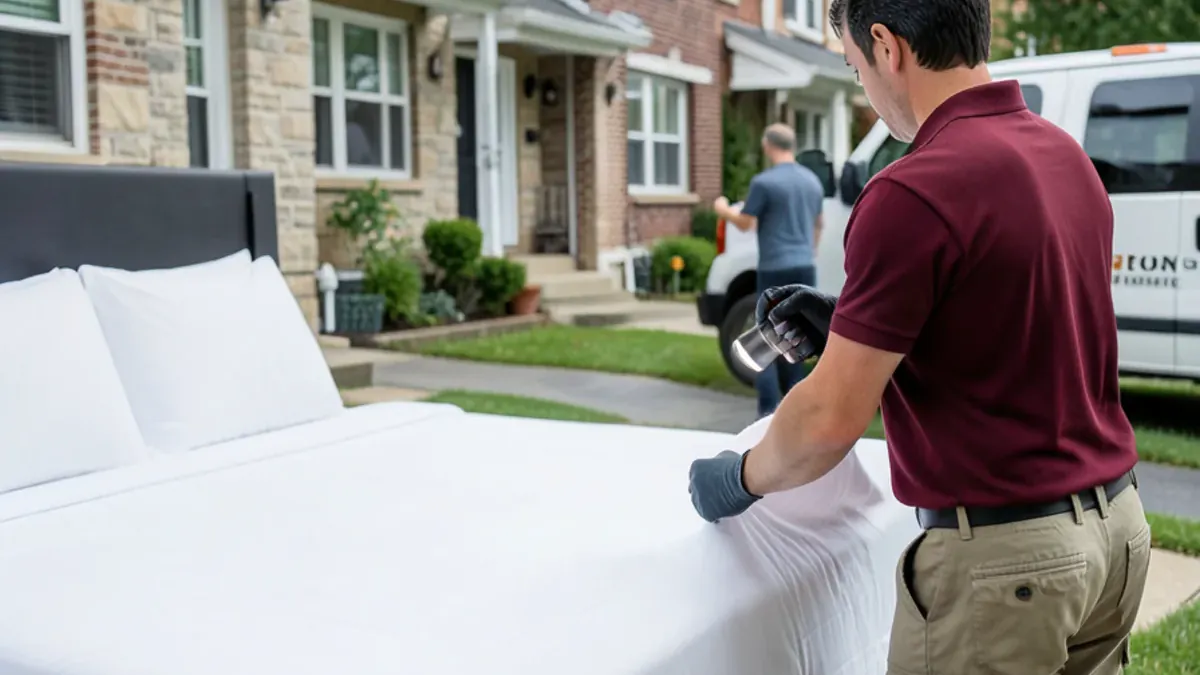
A written hotel bed bug protocol turns a guest complaint from a panic into a checklist. Bed bugs arrive in luggage no matter how clean a property is, so the goal is to catch them in one room, keep them there, and get that room back in service without guessing.
Why hospitality bed bugs are a matter of when, not if
The same plan scales down to a single short-term rental in Swarthmore or a motel on Baltimore Pike. Only the staffing changes; the order of the steps does not.
Guests carry bed bugs from one place to the next in suitcases, backpacks and coat linings. A property near Philadelphia International Airport, a college campus or a busy commuter corridor sees a constant flow of travelers from everywhere, and any one of them can bring a few bugs along without knowing it.
That is why cleanliness has little to do with it. Bed bugs feed on blood, not dirt, and a spotless room with fresh linens is just as attractive to them as a cluttered one. What separates properties that handle bed bugs well from those that end up with a reputation problem is how early they notice and how tightly they contain the first room.
What should housekeeping check in every room turnover?
Housekeeping bed bug inspection does not need to be slow. A trained housekeeper can add a focused check to each turnover in about the time it takes to make the bed, as long as they know exactly where to look and what the signs look like.
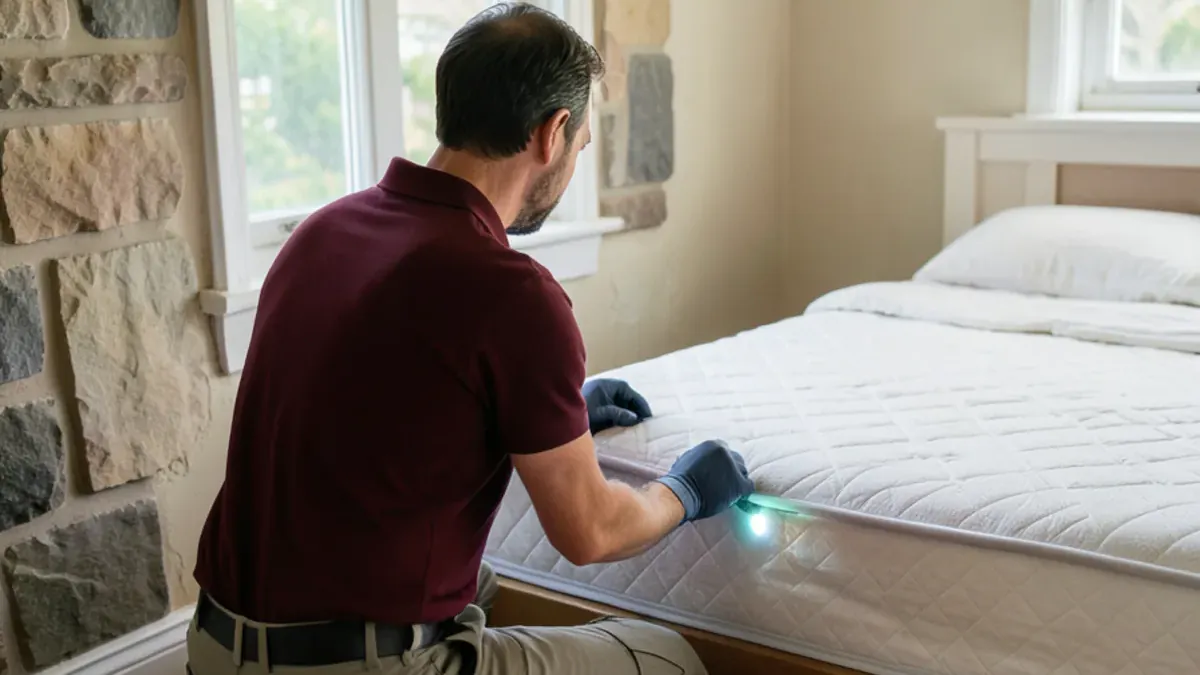
- Mattress seams and piping, especially the corners at the head of the bed, for dark ink-like spots, pale shed skins or live bugs.
- The tag and the underside of the box spring or platform base.
- The back of the headboard and where it mounts to the wall; many hotel headboards are wall-mounted and become prime harborage.
- Nightstand drawers and the joints underneath them.
- Upholstered chair seams and sofa bed mechanisms.
- The luggage rack, including the strap ends and leg joints.
- Small rust-colored stains on sheets and pillowcases from the previous stay.
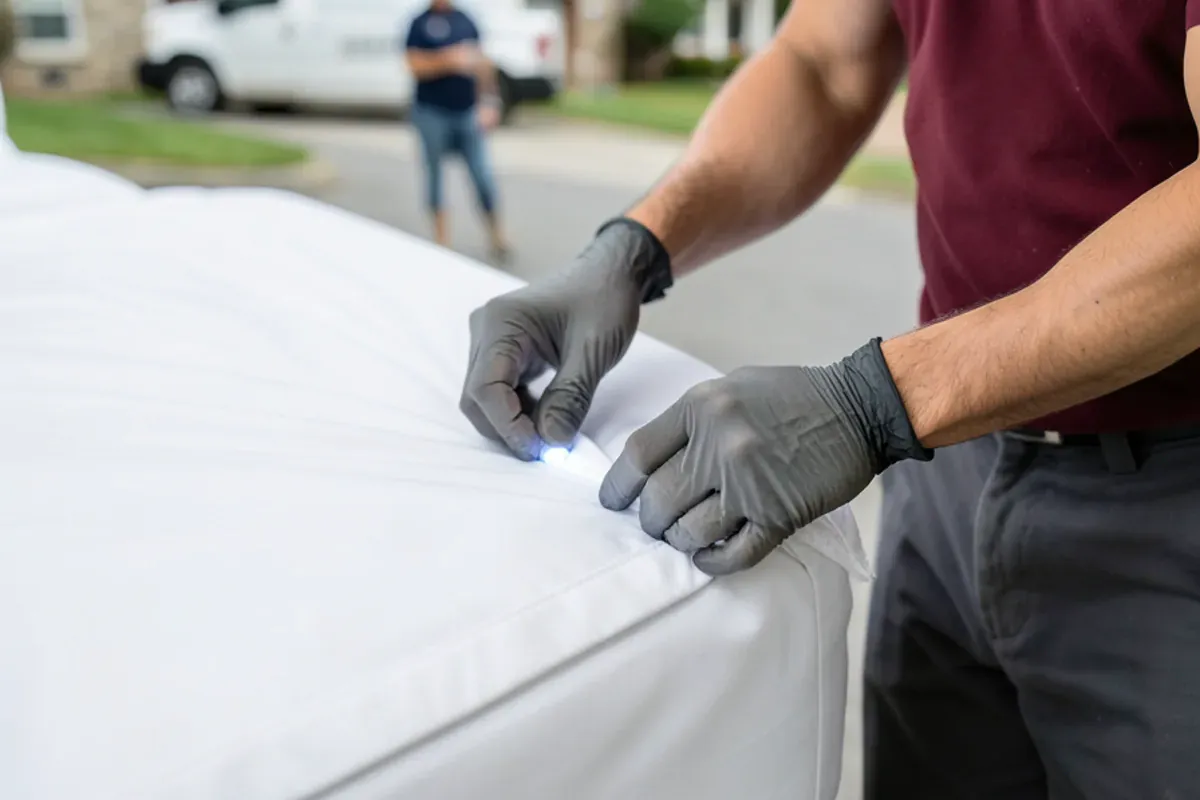
How should staff handle a bed bug guest complaint?
How staff respond in the first hour shapes both the treatment outcome and how the guest remembers the stay. Keep these steps printed at the front desk and in the housekeeping office.
Listen and relocate carefully
Take the complaint seriously and move the guest to a room that is not adjacent to, above or below the reported room. Never move them next door.
Contain the guest's belongings
Offer to bag clothing for hot-dryer laundering and advise the guest to keep luggage on a hard surface away from the new bed.
Lock out the room
Mark the room out of order in the property management system so it cannot be sold, and close it without stripping linens, which spreads bugs down the hallway.
Collect evidence
If the guest captured a bug, keep it in a sealed bag or on clear tape for identification. Note the room, date and what was reported.
Call for inspection
Have the room and the rooms on each side, above and below inspected so the treatment plan reflects how far the activity reaches.
Document follow-up
Record the inspection findings, treatment dates and the date the room returns to service in a bed bug log.
Room isolation and treatment: the core of a hotel or motel bed bug plan
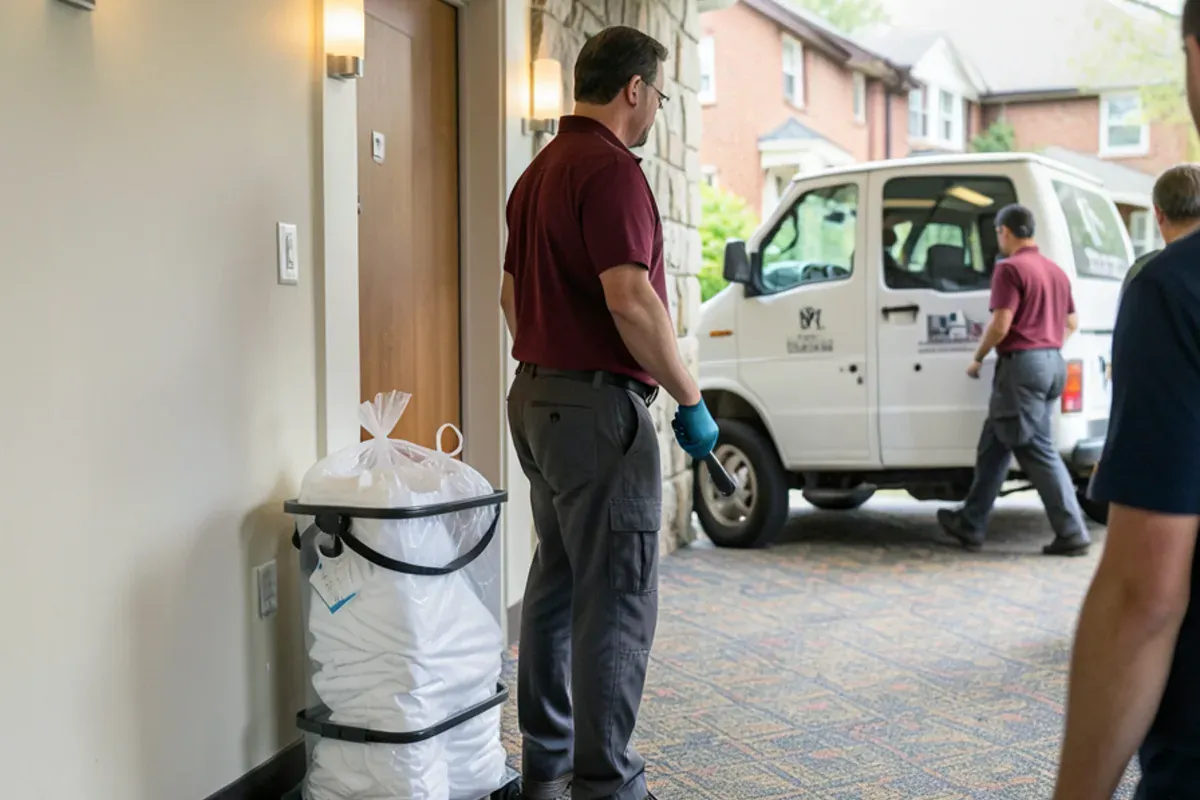
Once activity is confirmed, the affected room stays closed until treatment is finished and follow-up shows no further activity. Linens and soft goods should be bagged inside the room and carried directly to laundry, then washed and dried on high heat. Move nothing else between rooms.
Treatment usually combines a few methods: careful inspection and vacuuming of harborage, targeted liquid and dust applications into joints, voids and furniture, and mattress encasements. Whole-room heat is another option some properties use because it can return a room to service quickly; ask us whether it fits your building before planning around it. Adjacent rooms often get inspected again at follow-up even when they looked clean the first time.
Our commercial bed bug extermination service schedules around occupancy so treatment and follow-up visits can happen on days the room is already blocked.
Airbnb-style rentals and small inns: a lighter version of the same plan
Hosts with one or two units do not have a housekeeping department, but the same logic applies. Use light-colored, encased mattresses so signs are easy to spot, avoid upholstered headboards, and keep a hard-surface luggage rack by the door. Ask cleaners to run the seam and headboard check on every turnover and to text a photo of anything unusual.
When a guest reports bites, block the calendar before doing anything else. A short-term rental with back-to-back bookings can spread bugs to the next guest within a day. A professional bed bug inspection confirms whether bed bugs are present, since bites alone can come from many causes.
Lessons from hospitality jobs across Delaware County
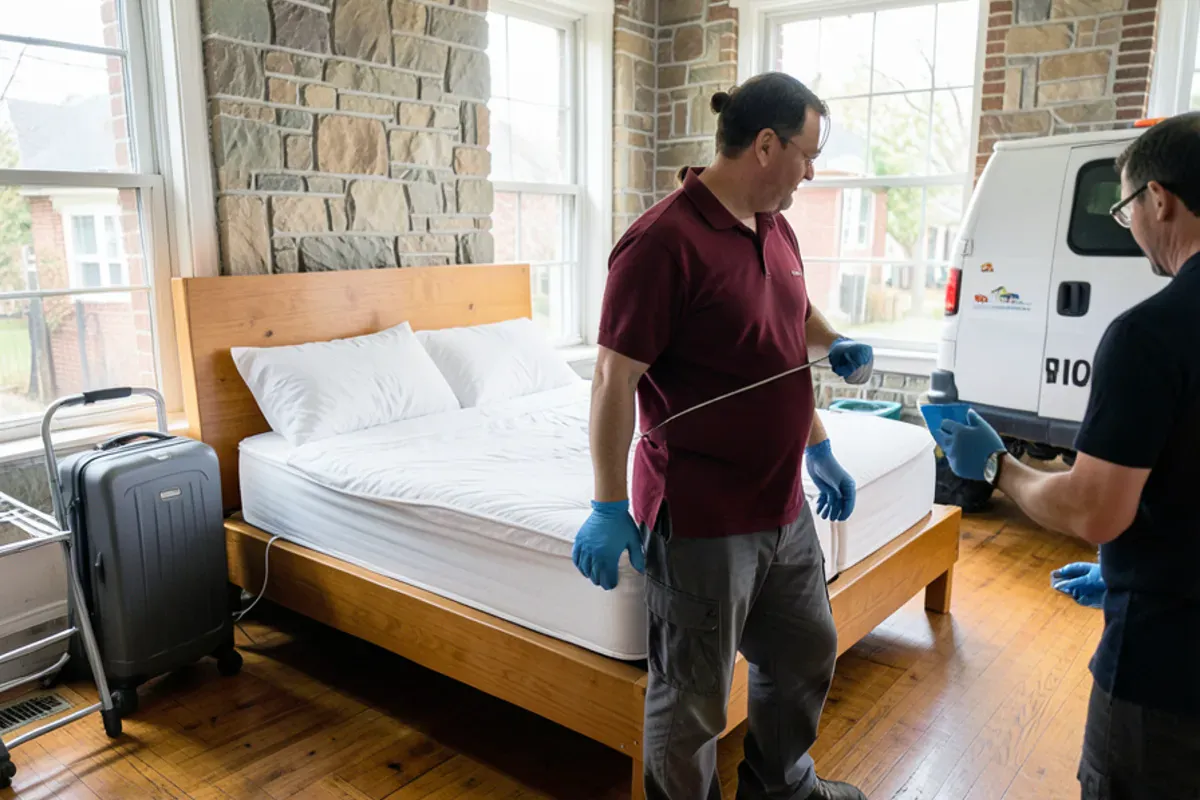
When we inspect hospitality rooms after a complaint, the bugs are usually concentrated within a few feet of the bed, and the wall-mounted headboard is the single most common hiding place. Properties that remove and inspect headboards during routine deep cleans catch problems before guests ever do.
One honest limit we explain to managers: a clean inspection of a single room is good news, not proof. An early introduction may be a handful of bugs tucked into one headboard joint, and those can be missed on the first pass. That is why we pair a negative inspection after a credible complaint with a follow-up check, and why properties near the airport in Tinicum Township, where guests turn over nightly, gain the most from scheduled inspections of rooms nobody has complained about. Catching activity on a routine visit costs one room night instead of a block of rooms.
We also see problems spread through well-meaning shortcuts: a housekeeper stripping a reported room and carrying linens down the hall in an open cart, or a manager moving a guest one door down. A written protocol prevents both, which is why we encourage properties throughout Delaware County to post one in the housekeeping office.
Quick answers
How long does a hotel room stay out of service after bed bugs?
It depends on the method and how far the activity reached. A room treated with targeted liquids and dusts usually stays blocked until a follow-up visit confirms results, while whole-room heat can shorten that window when it fits the building. Adjacent rooms may need inspection too. We put the expected timeline in the written quote after the free inspection so you can plan occupancy.
Should we tell other guests about a bed bug room?
There is no single answer, and many properties handle it case by case with guidance from their own counsel. What matters most for other guests is fast isolation of the affected room and inspection of the rooms around it so the problem does not spread. Keep thorough records of each complaint and response. This is general information, not legal advice.
How often should a hotel schedule routine bed bug inspections?
Many properties rotate through their rooms so each one gets a focused inspection a few times a year, on top of the housekeeping check at every turnover. Properties with nightly turnover, such as airport and highway lodging, often inspect more frequently than a weekend inn. We set the rotation in the written quote after a free inspection, based on room count, occupancy and any history of complaints.
Do mattress encasements protect a hotel room from bed bugs?
They help, but they do not protect the whole room. A good encasement traps any bugs already inside the mattress or box spring and leaves a smooth surface where new signs are easy to see during turnovers. It does nothing for the headboard, nightstand, chair seams or luggage rack, where many hotel infestations start. Replace any encasement with a tear, since a small rip lets bugs move freely.
The bottom line
A hotel bed bug protocol is only as good as the training behind it, so walk your staff through the checks and the complaint steps before you need them. When a room does test positive, Thom and his team can help with inspection, treatment and follow-up built around your bookings. Read more about our approach to bed bug treatment or call (209) 563-1650.
Sources
Written by the No Bugs Exterminator team
A small, family-run pest control business in Media, PA, led by owner Thom. We write about what we see on inspections in Delaware County and southeastern Pennsylvania. About us.
Services mentioned in this guide
Want a professional opinion?
Book a free inspection and get a written quote before any treatment.
- ★ 4.8 from 21 Google reviews
- Open 7 days, 8 a.m. to 7 p.m.
- Free inspection before treatment
- Family-run, based in Media, PA
Open 7 days, 8 a.m. to 7 p.m.