
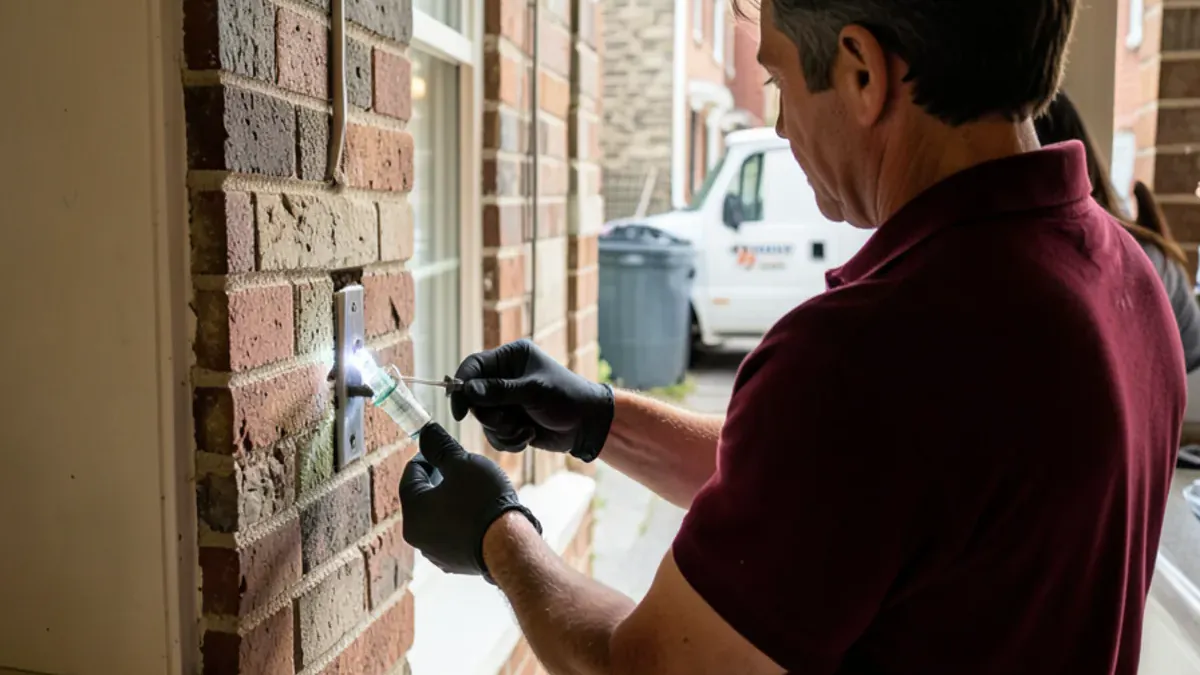
If you want to know how to get rid of German cockroaches, start by putting down the spray can. Repellent sprays kill the roaches you see and push the rest deeper into walls, appliances and, in shared buildings, the unit next door. Bait, careful placement and a clean-up plan are what actually clear an infestation.
Why is roach spray not working?
German cockroaches are small, light brown roaches with two dark stripes behind the head, and they live almost entirely indoors, close to warmth, moisture and food. The ones you see at night on the counter are a fraction of the population hiding in hinge gaps, under the stove, inside the dishwasher door and behind the refrigerator motor.
Retail sprays reach the open surfaces where you spot roaches, not the cracks where they spend their days. Many of those products are also repellent, so roaches that sense the residue simply avoid it. The population keeps breeding a few inches away from where you sprayed.
How do repellent sprays scatter roaches?
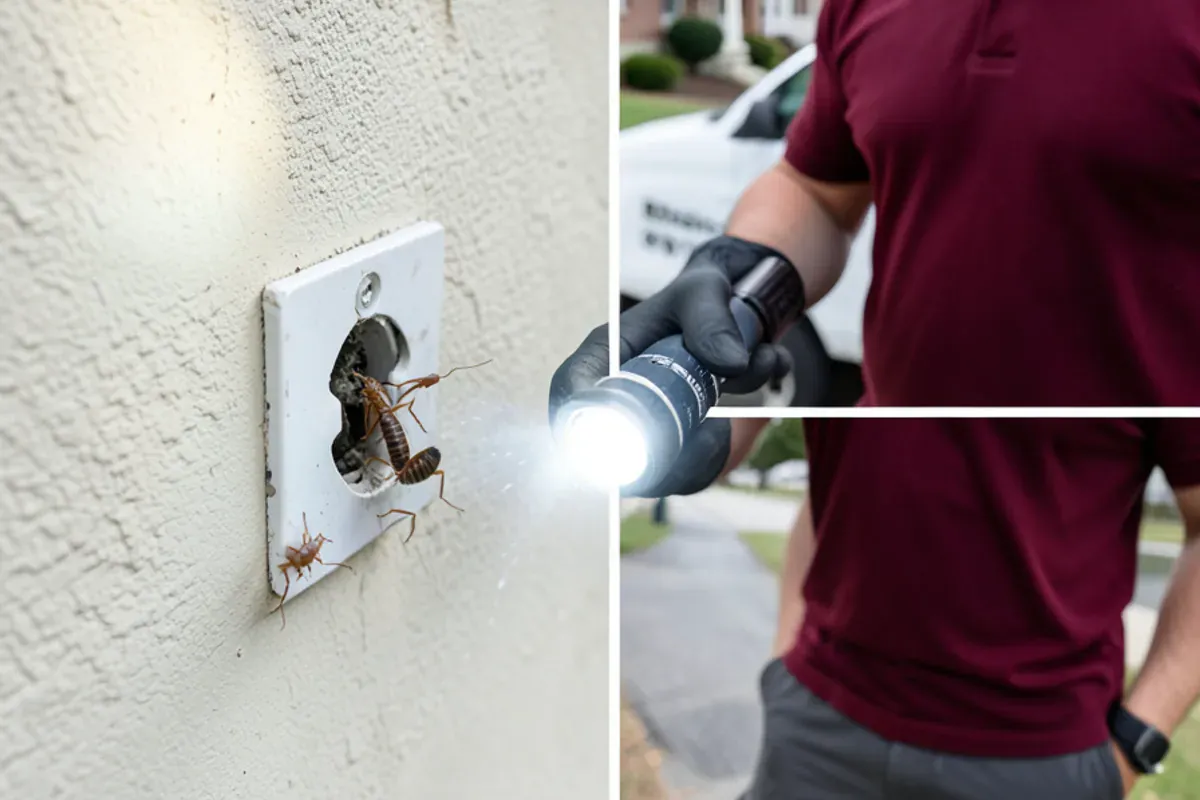
When a German cockroach colony is disturbed by a repellent, it relocates. Roaches move into wall voids, electrical outlets, cabinet framing, and along plumbing lines to other rooms. In a rowhome, twin or apartment building, those same pipe chases lead straight into the neighbor's kitchen.
The result is a spread-out infestation that is harder to treat than the single cluster you started with. Signs that spraying has scattered roaches include:
- Roaches suddenly showing up in bathrooms or bedrooms, not just the kitchen
- Activity around outlets, switch plates and light fixtures
- Neighbors in adjoining units reporting roaches soon after you sprayed
- Fewer roaches on counters but more droppings inside cabinets and drawers
- Daytime sightings, which usually mean the hiding spots are crowded
How roach bait gel reaches the ones you never see
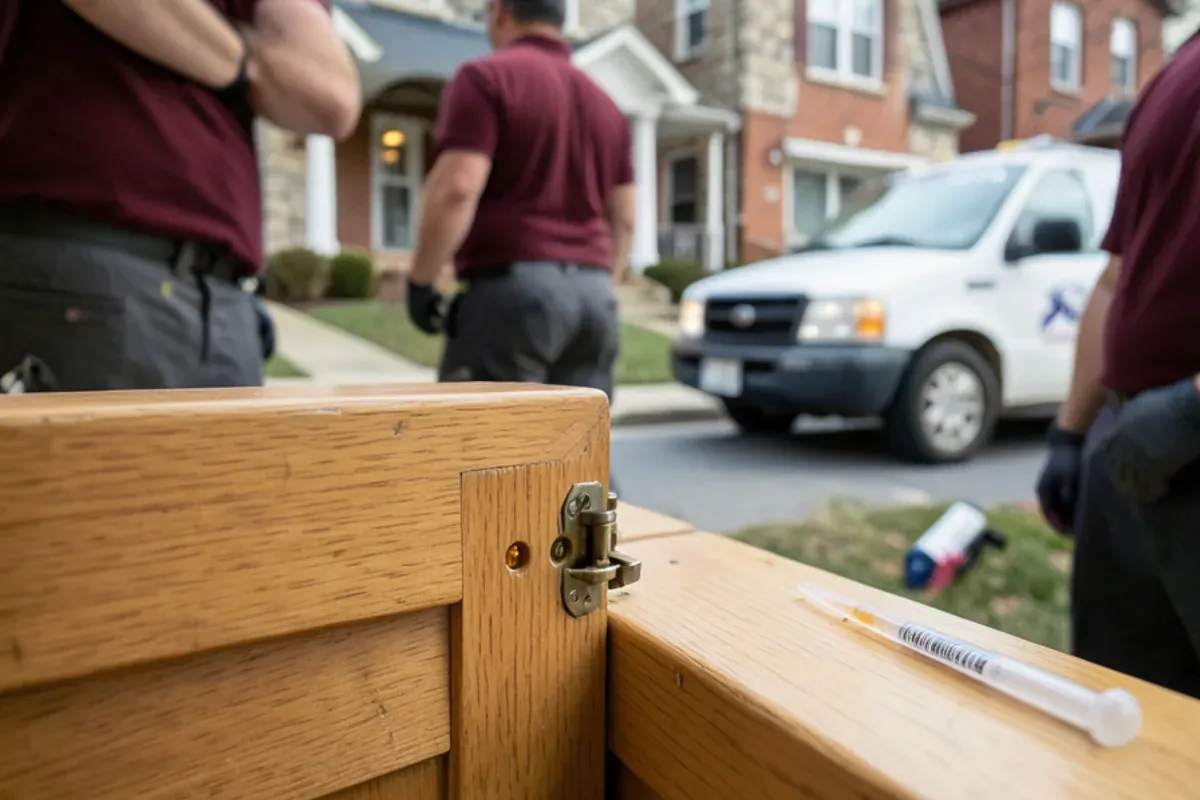
Gel bait is placed in tiny dots inside cracks, hinges and crevices where roaches already travel. Roaches eat it, return to their hiding spots, and die there. Other roaches feed on their droppings and remains, which carries the active ingredient through the group, including young nymphs that rarely leave shelter.
Bait has limits. Some German cockroach populations have learned to avoid certain sugars used in baits, so rotating formulas matters on a stubborn job. Bait also competes with every crumb and grease spot nearby, which is why sanitation is part of the treatment rather than an optional extra.
How to get rid of German cockroaches, in the order that works
Stop spraying
Clear away any repellent residue around the kitchen so it does not contaminate bait placements.
Find the hot spots
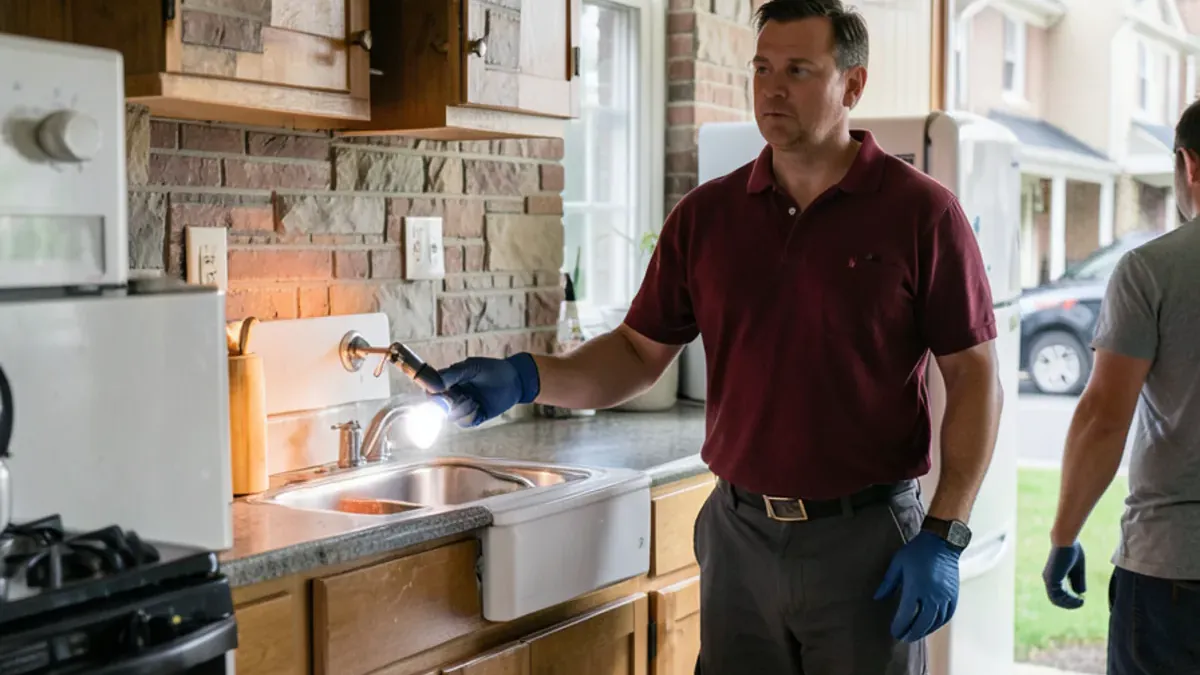
Use a flashlight at night, and sticky monitors along walls, to see where roaches concentrate: often around the stove, fridge, sink and dishwasher.
Cut off food and water
Fix dripping faucets, wipe grease from stovetops and the sides of appliances, take out trash nightly and store food in sealed containers.
Place bait in cracks, not on counters
Small dots in hinges, gaps and corners close to the hot spots, refreshed as they are eaten.
Add a growth regulator where appropriate
Insect growth regulators stop nymphs from maturing into breeding adults and pair well with bait.
Monitor and follow up
Check the monitors every week or two and re-treat where counts stay high until they read zero.
Why German cockroaches multiply so fast
A female German cockroach carries her egg case until it is nearly ready to hatch, which protects the eggs from many treatments. Each case holds dozens of eggs, and in a warm kitchen the young can reach adulthood in roughly two months. A few roaches carried in on a grocery box or appliance can become a serious problem within a season.
That reproduction rate is the reason follow-up visits matter. A single treatment often catches adults but misses eggs that hatch a few weeks later, so plan for at least one return check.
Where do German cockroaches come from in the first place?
Almost always from another building. German cockroaches ride in on corrugated boxes from stores and warehouses, secondhand microwaves, toasters and refrigerators, bags carried from an infested home, and furniture during a move. In attached housing, they also walk in from next door along plumbing.
A few habits close those doors:
- Unpack deliveries and grocery boxes on the counter, then break the cardboard down and get it out of the kitchen the same day.
- Check any used appliance with a flashlight around the motor, vents and door gaskets before it comes inside.
- Do not store paper bags or cardboard under the sink, where warmth and leaks make a ready shelter.
- Tell a landlord early if a neighbor mentions roaches, before they reach your unit.
Cockroaches in an apartment or rowhome: the shared-wall problem
In multi-unit buildings, one kitchen's success depends on its neighbors. Roaches travel through shared plumbing chases, under doors and along the gaps where walls meet floors. Treating one unit without inspecting the ones beside it often just pushes the population back and forth.
If you rent, tell your landlord or property manager early, since many leases make pest treatment the landlord's job. This is general information, not legal advice. When we take on cockroach control in a shared building, we plan for adjoining units from the start, and our broader insect control work covers the other pests that tend to come along in older multi-family buildings.
What roach jobs look like in Upper Darby's rowhome blocks
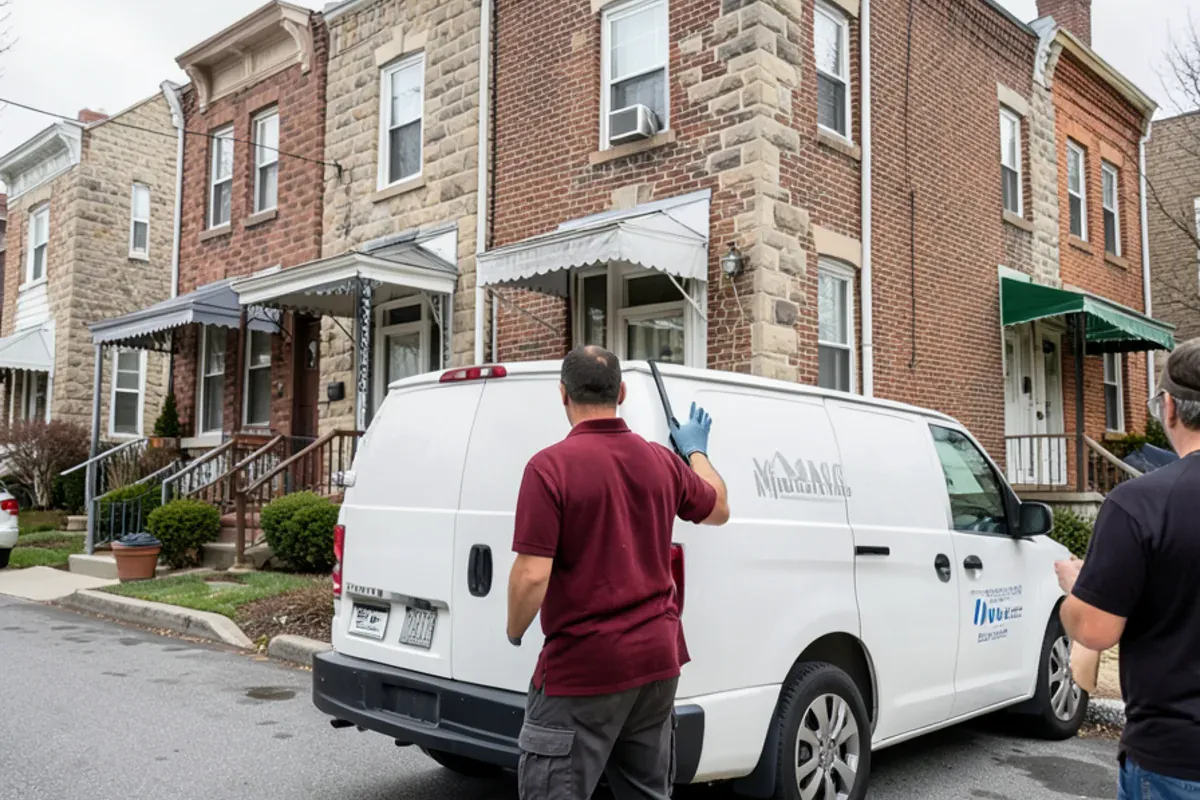
Upper Darby is Delaware County's largest municipality, with long rows of attached homes near the 69th Street Terminal and a housing stock whose median year built is 1948 (Census ACS estimates). About 43 percent of homes are rented. In blocks like that, when we inspect one kitchen, we usually ask to see the basement and the shared wall, because roaches often move along old pipe runs between houses.
When a resident has been spraying for weeks, we typically find roaches tucked into the motor housing of the refrigerator, under the stove drawer and inside the hollow trim around the kitchen door. Those are exactly the spots bait can reach. We serve all of Upper Darby Township, from rowhome blocks to apartment buildings.
Sticky monitors are our scoreboard. We leave them behind the refrigerator, under the sink and beside the stove, then read the counts at each follow-up, which tells us more than anyone's impression of how many roaches were seen last week. One honest warning we give: in the first several days after baiting, roaches may actually be more visible, because sick ones wander into the open in daylight. That is the bait working, and spraying them at that stage only sets the job back.
Quick answers
How soon will bait clear out German cockroaches?
A light infestation usually drops sharply within two weeks, and most kitchens are clear within a few follow-up visits. Heavier or scattered populations, especially in buildings where neighbors are also affected, take longer. Eggs protected inside the egg case hatch after the first treatment, which is why a return check two to three weeks later is part of a sound plan.
Can German cockroaches live outside?
Not for long in a Pennsylvania winter. Unlike the larger American cockroach, which can live in sewers and mulch, German cockroaches depend on heated indoor spaces. That is why they arrive in boxes, bags and secondhand appliances rather than from the yard, and why an infestation in a rowhome usually traces back to a kitchen, not the outdoors.
Do I have to empty my kitchen cabinets before a roach treatment?
Usually not every cabinet. Bait work needs clear access to the hot spots, typically the cabinet under the sink, the lower cabinets beside the stove and refrigerator, and the drawers where droppings show up. Empty those, wipe out crumbs and grease, and leave the rest. In rowhome kitchens with older cabinets, we may also ask you to clear the space under the bottom shelf so we can reach the toe-kick gap.
The bottom line
German cockroaches are one pest where doing more often makes things worse; the fix is quiet, targeted and patient. If you are fighting roaches in a kitchen or across a building, call (209) 563-1650; we will inspect the kitchen, check the shared walls and put a written plan in your hands.
Sources
Written by the No Bugs Exterminator team
A small, family-run pest control business in Media, PA, led by owner Thom. We write about what we see on inspections in Delaware County and southeastern Pennsylvania. About us.
Services mentioned in this guide
Want a professional opinion?
Book a free inspection and get a written quote before any treatment.
- ★ 4.8 from 21 Google reviews
- Open 7 days, 8 a.m. to 7 p.m.
- Free inspection before treatment
- Family-run, based in Media, PA
Open 7 days, 8 a.m. to 7 p.m.