
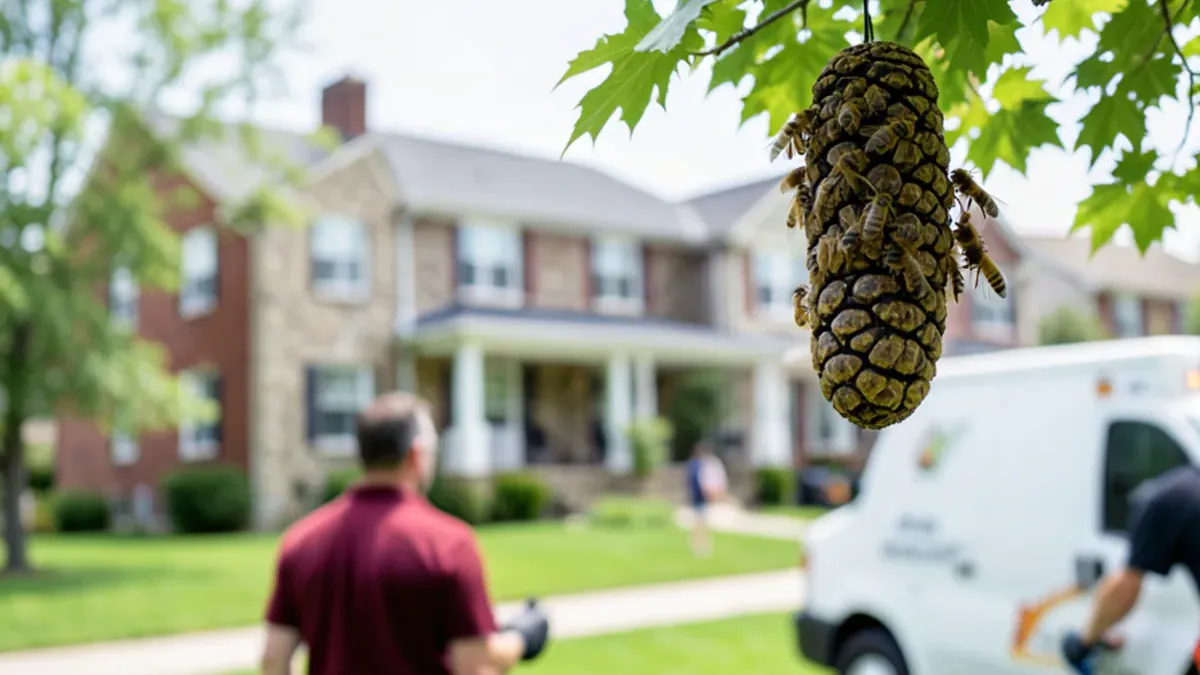
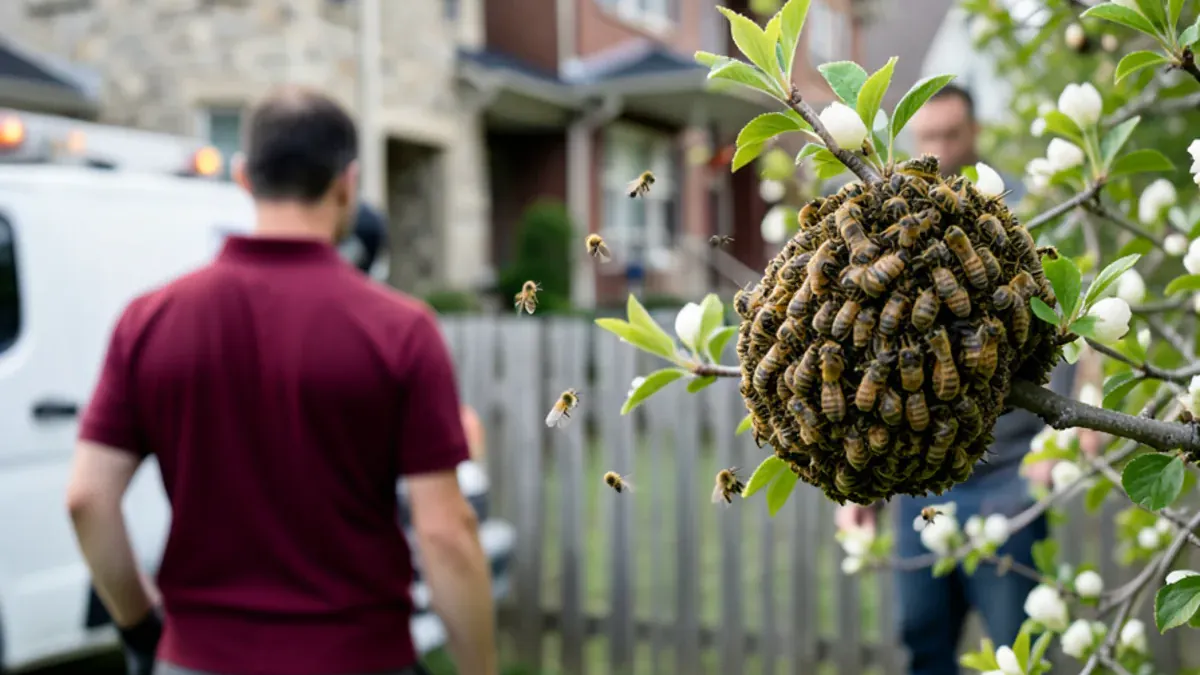
Found a honey bee swarm? What to do is simpler than it looks: keep people and pets back, do not spray it, and contact a local beekeeper. A swarm hanging from a branch looks alarming, but it is usually the calmest group of honey bees you will ever see, and it often moves on within a day or two.
Why honey bees swarm in spring
Swarming is how a honey bee colony reproduces. When a hive grows crowded, the old queen leaves with a large share of the workers to start over somewhere else, while the original colony raises a new queen. In southeastern Pennsylvania, swarm season usually peaks from late April into June, with occasional swarms later in summer.
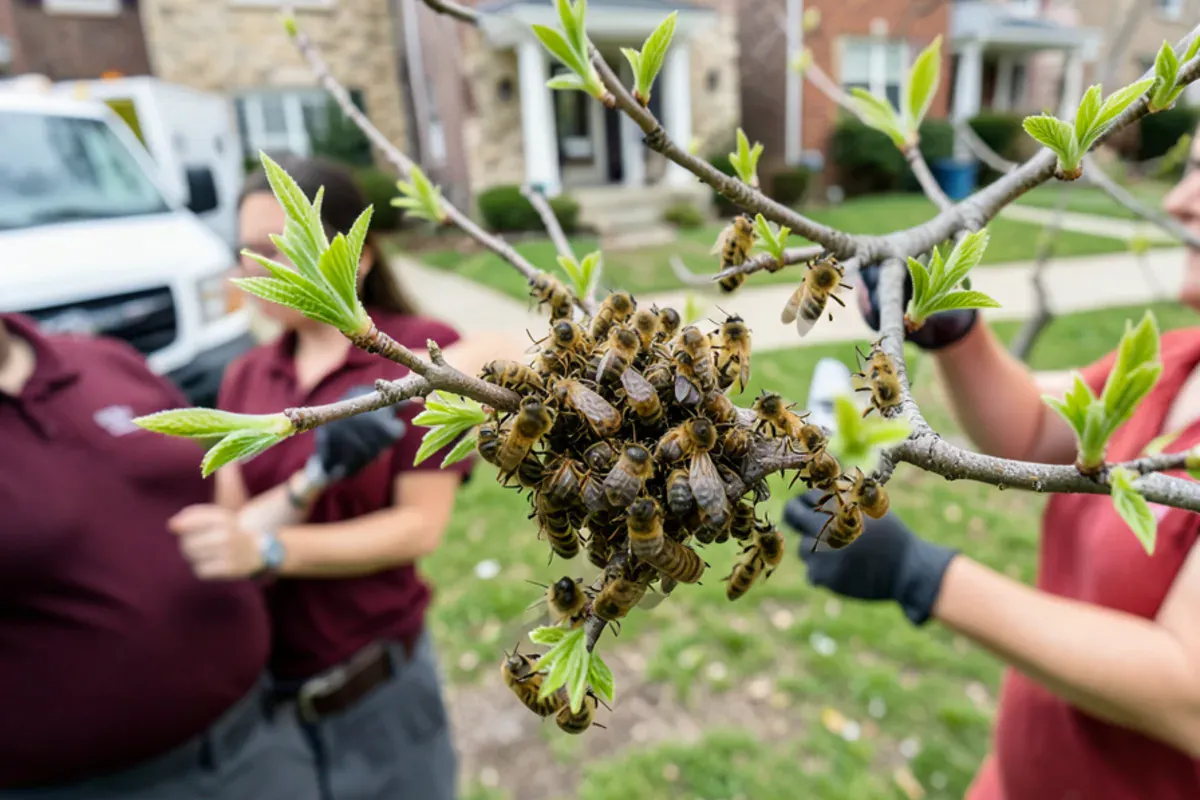
After leaving the hive, the swarm settles in a temporary cluster, often on a tree limb, fence post, mailbox or the eave of a house. Scout bees fly out to search for a permanent cavity. The cluster stays put while they decide, which can take a few hours or a couple of days.
The real problem starts only if the bees choose your house as their new home. Knowing how a swarm forms makes it easier to tell which situation you have.
Is a bee swarm on a tree dangerous?
Usually not. Bees in a swarm have filled up on honey before leaving the hive, and they have no comb, brood or stored food to defend. That makes them far less defensive than bees guarding an established nest. People often walk right past swarms without incident.
That said, any bee will sting if it is swatted, stepped on or trapped, and a disturbed swarm can become agitated. Keep children and pets away, do not throw anything at the cluster, and keep lawn mowers and leaf blowers off that part of the yard until the bees leave. Anyone with a known bee allergy should stay indoors, and anyone with trouble breathing or swelling after a sting should call 911 or seek medical care right away.
Honey bee swarm, what to do first: a calm plan
Work through these steps in order. Most swarms are resolved by the third or fourth one.
Confirm they are honey bees
Honey bees are fuzzy, golden-brown and about half an inch long. A football-shaped cluster on a branch is classic swarm behavior. Yellow jackets and wasps do not swarm this way.
Keep everyone back
Mark off the area and keep kids, pets and visitors at a distance. Close nearby windows and doors.
Do not spray or hose the cluster
Water and household sprays agitate the bees and kill valuable pollinators without solving anything.
Contact a local beekeeper
Many beekeepers in southeastern Pennsylvania will collect a reachable swarm and give it a home in a hive. Local beekeeping associations and Penn State Extension can help you find one.
Note where the bees go
If the swarm leaves on its own, watch whether it flies off or disappears into a gap in your siding, soffit or chimney. That second case needs attention.
Why a beekeeper is the right first call for a swarm
Honey bees are important pollinators for gardens, orchards and crops, and a healthy swarm is valuable to a beekeeper. When the cluster is low enough to reach safely, beekeeper swarm removal is quick and usually ends with the bees thriving in a managed hive instead of being destroyed.
Beekeepers are less likely to help when the swarm sits very high in a tree, inside a structure, or when the bees are some other insect entirely. That is where the situation changes from a swarm to a removal job.
What if the bees move into your wall?
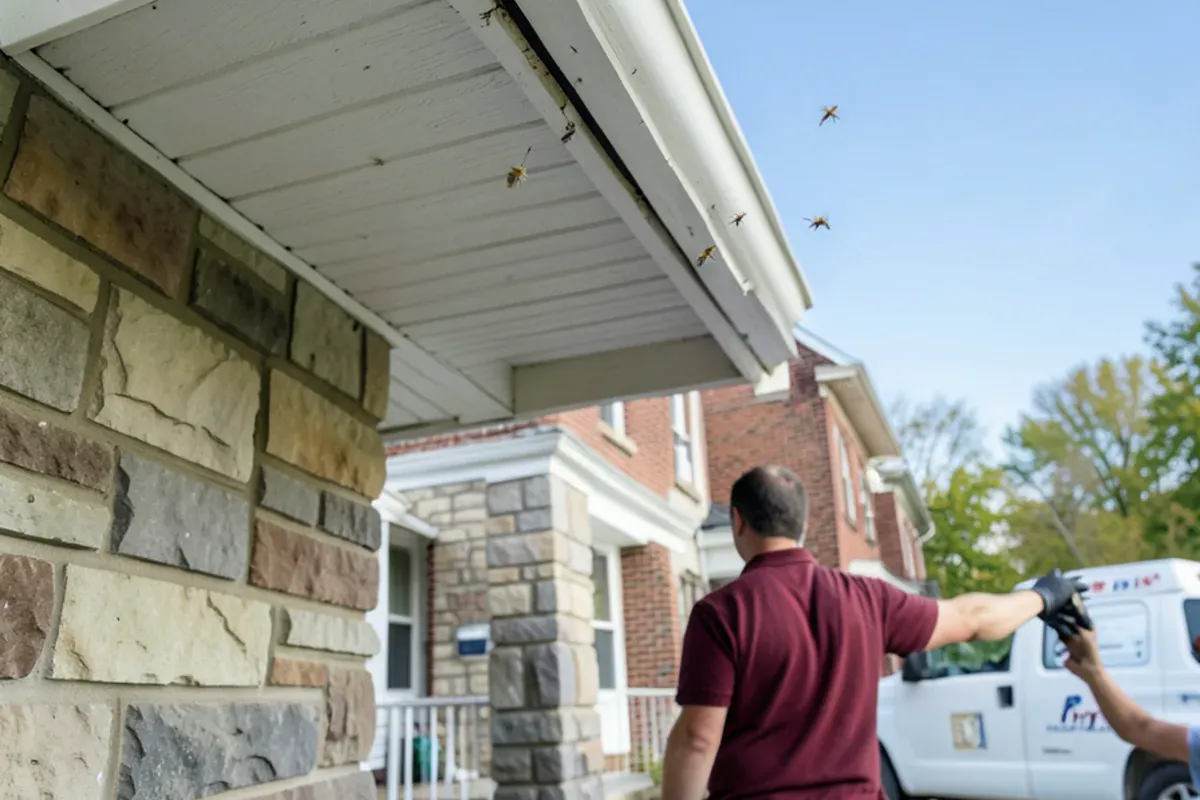
Bees in a wall are a different matter. Once a swarm moves into a wall void, soffit, attic or chimney, workers start building comb and storing honey right away. Within weeks you have an established colony that will defend itself.
Killing the colony inside the wall without removing it causes new problems. Comb and honey left behind can melt in summer heat and stain ceilings or walls, and the leftover honey and wax draw other pests such as wax moths, ants and robbing bees from elsewhere. Proper removal usually means opening the wall or soffit, taking out the comb, cleaning the cavity and sealing it so a future swarm is not drawn to the scent.
Some beekeepers do these cutouts; when they cannot, a pest control provider may help. Learn more on our bee removal page, and call (209) 563-1650 to confirm this option is available for your property.
Telling honey bees apart from yellow jackets and wasps
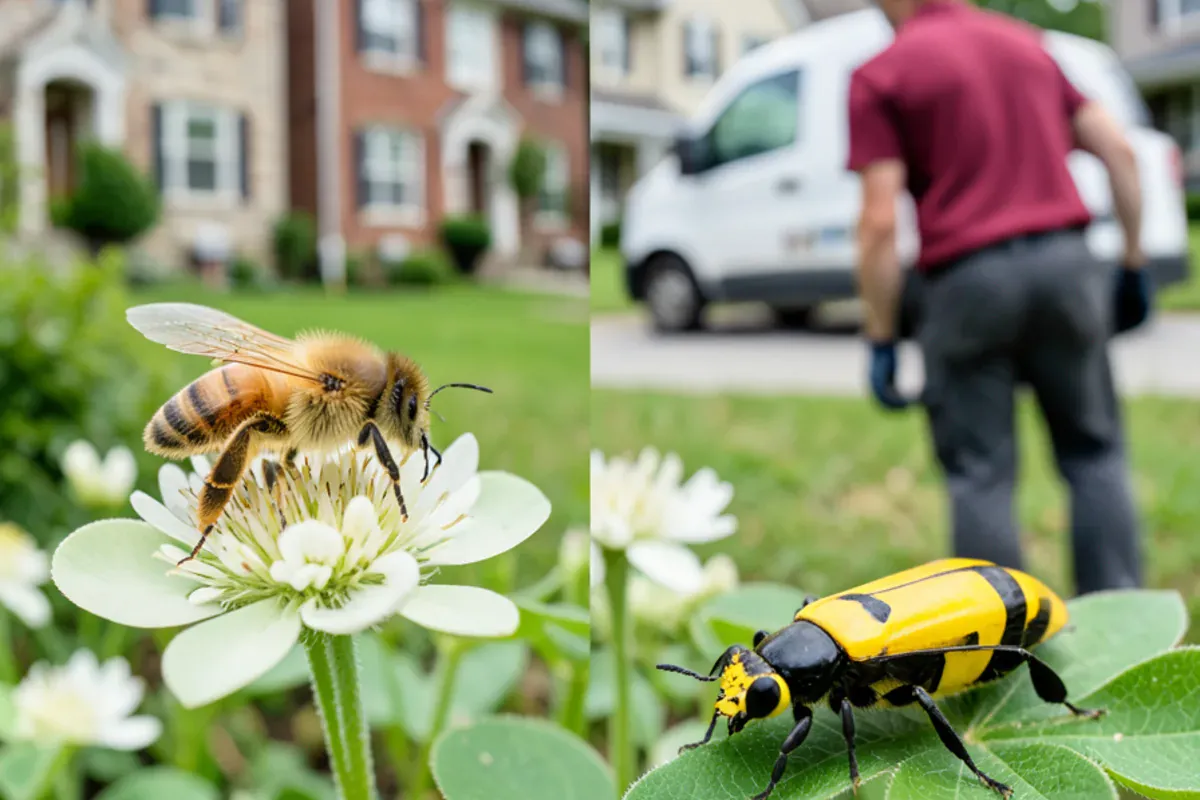
Plenty of bee removal calls turn out to involve something else. Use these quick differences before deciding who to call:
- Honey bees: fuzzy, amber-brown, gentle around flowers; build wax comb; swarm in spring.
- Yellow jackets: smooth, bright yellow and black, aggressive near nests; nest in the ground or in wall voids; never swarm on branches. See our yellow jacket control page.
- Bald-faced hornets and paper wasps: build gray paper nests in trees, shrubs and under eaves.
- Bumble bees: large and fuzzy, nest in the ground or old rodent burrows; rarely cause trouble.
- Carpenter bees: look like bumble bees with shiny black abdomens; bore holes in wood trim and decks.
Swarm season calls from around Delaware County
When homeowners call us about swarms in spring, most of the time the cluster is on a tree limb or shrub and the right answer is a beekeeper, not an exterminator. We tell callers that honestly, because those bees have somewhere better to go.
The calls that need us are the ones where bees have been going in and out of a gap in the siding, a soffit or an old chimney for a while. In older homes across Delaware County, loose mortar, gaps under roof trim and unused chimney flues give swarms plenty of cavities to choose from. Sealing those openings after a colony is removed keeps the next swarm from moving in.
With an established wall colony, we explain the trade-off plainly. Treating through the entry hole is faster and leaves the wall intact, but the comb and honey stay behind, and that is what later stains ceilings and draws ants and wax moths. A cutout means opening siding, a soffit or drywall, which is more work and needs repair afterward, yet it removes the source and the scent. On the call we will tell you which approach fits your house and who is best placed to do the cutout.
Quick answers
How long will a honey bee swarm stay in my yard?
Most swarms stay a few hours to two or three days while scout bees find a permanent home. If the cluster remains longer than that, or starts building comb in the open, it may have chosen to stay, and a beekeeper should be called. In late spring around Delaware County, swarms are common, and many move on before anyone can arrive to collect them.
Will a pest control company kill a honey bee swarm?
Honey bees are valuable pollinators, so a reachable swarm should go to a beekeeper first. Treatment is generally reserved for situations where bees are inside a structure, cannot be safely collected, or pose a direct risk to people. When we get a swarm call, we ask where the bees are and help you decide whether a beekeeper or a removal is the right step.
Can I smoke honey bees out of my chimney with a fire?
No. A fire rarely drives out an established colony, and heat can melt the wax comb and honey inside the flue, which creates a mess and a real fire risk. Close the damper and any fireplace doors, keep the room shut, and have the chimney looked at. In older Delaware County homes with unused flues, the opening at the top usually needs a cap once the bees and comb are out.
Why do bees keep moving into the same wall?
Old comb and wax leave a scent that scout bees find attractive, so a cavity that held one colony draws the next swarm, sometimes year after year. Removing the comb, cleaning the void and sealing the gap with a durable material is what breaks the pattern. Spraying alone leaves that scent behind, which is why repeat colonies are common in walls where the comb was never taken out.
The bottom line
A honey bee swarm is usually a short visit from calm bees, and a local beekeeper is the right first call. If the bees have moved into your walls or you are not sure what kind of insect you are dealing with, our stinging insect control team can help you sort it out.
Sources
Written by the No Bugs Exterminator team
A small, family-run pest control business in Media, PA, led by owner Thom. We write about what we see on inspections in Delaware County and southeastern Pennsylvania. About us.
Services mentioned in this guide
Want a professional opinion?
Book a free inspection and get a written quote before any treatment.
- ★ 4.8 from 21 Google reviews
- Open 7 days, 8 a.m. to 7 p.m.
- Free inspection before treatment
- Family-run, based in Media, PA
Open 7 days, 8 a.m. to 7 p.m.