
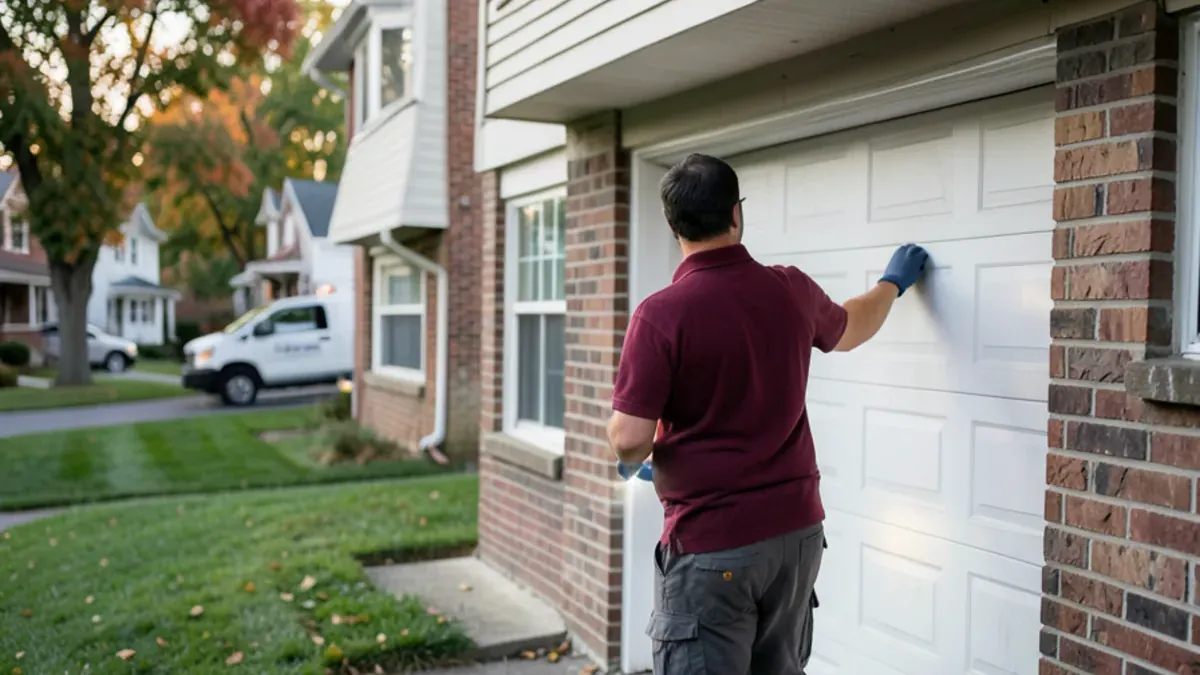
Learning how to find where mice are getting in starts outside, not at the spot where you hear scratching. A mouse can flatten itself through an opening no wider than a dime, about a quarter inch, so the openings are small and usually low: utility penetrations, garage door corners, foundation cracks and gaps under siding.
What is that scratching in the walls at night?
Mice are most active from dusk until a few hours before dawn, which is why the sound seems to start when the house goes quiet. Light, quick scratching and pattering inside a wall or ceiling, often near the kitchen or a bathroom, is typical. Heavier thumps and gnawing that you hear in daylight are more likely squirrels, especially in an attic.
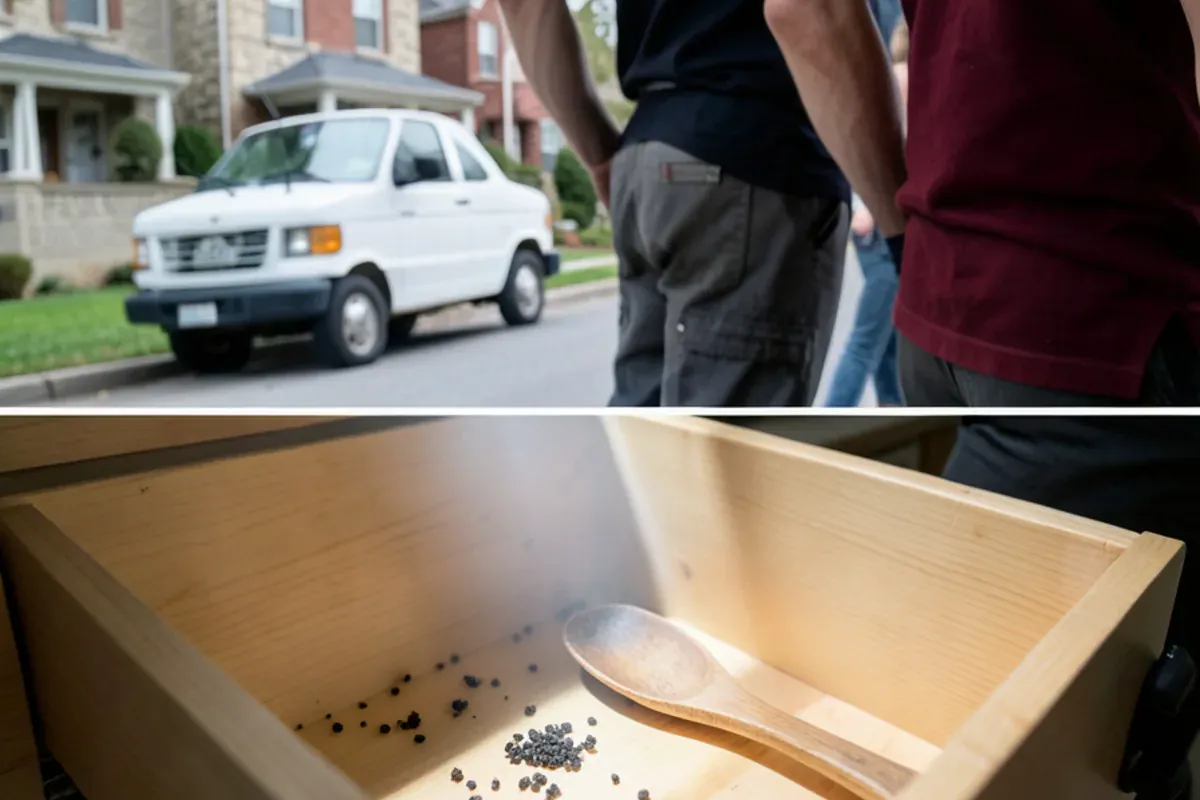
Confirm with droppings. Mouse droppings are about the size of a grain of rice, dark and pointed at the ends. You will usually find them in kitchen drawers, under the sink, behind the stove, along basement walls and on top of the sill plate. Fresh droppings look glossy and feel soft; older ones turn dull and crumble.
Once you know what to look for, a slow walk around the house with a flashlight finds most of them in an hour.
Indoor clues that point back to the gap
Mice travel along edges and inside hidden runs, so the trail they leave indoors usually bends toward the opening they use. Check these spots with a flashlight before you head outside, and write down which outside wall each clue sits against. That tells you where to start the walk-around instead of circling the whole house blind.
- Under the kitchen and bathroom sinks, where supply and drain pipes pass through a cabinet floor or back panel through a hole cut wider than the pipe.
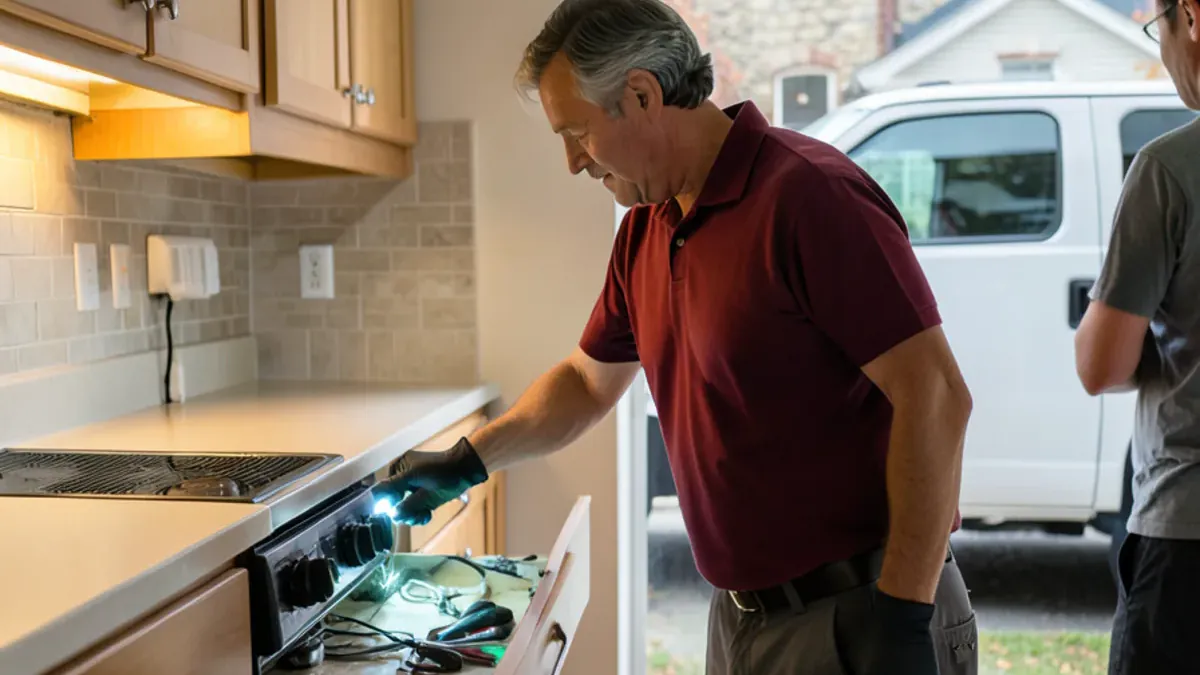
- Behind the dishwasher, range and refrigerator, where gas lines, water lines and cords come up from the basement.
- Along the top of the basement foundation wall, where droppings pile up on the sill plate directly inside an outside gap.
- Around baseboard heating pipes and radiator lines that drop through oversized holes in the floor.
- At the bottom of basement and attic doors with no sweep, which mice use to move between levels.
- In the garage, behind stored boxes, birdseed or pet food lined up against the wall shared with the house.
How to find where mice are getting in: an outside walk-around
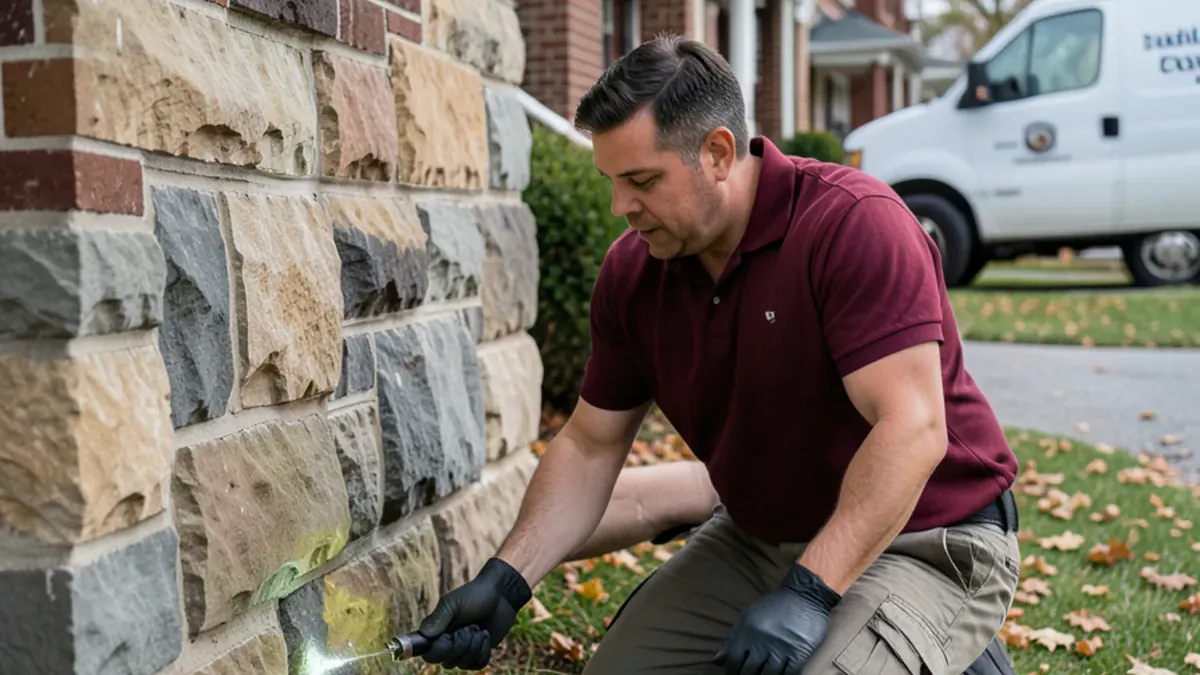
Go out in daylight with a flashlight, a small mirror and a notepad. Work your way around the house in order so nothing gets skipped:
Start where the utilities enter
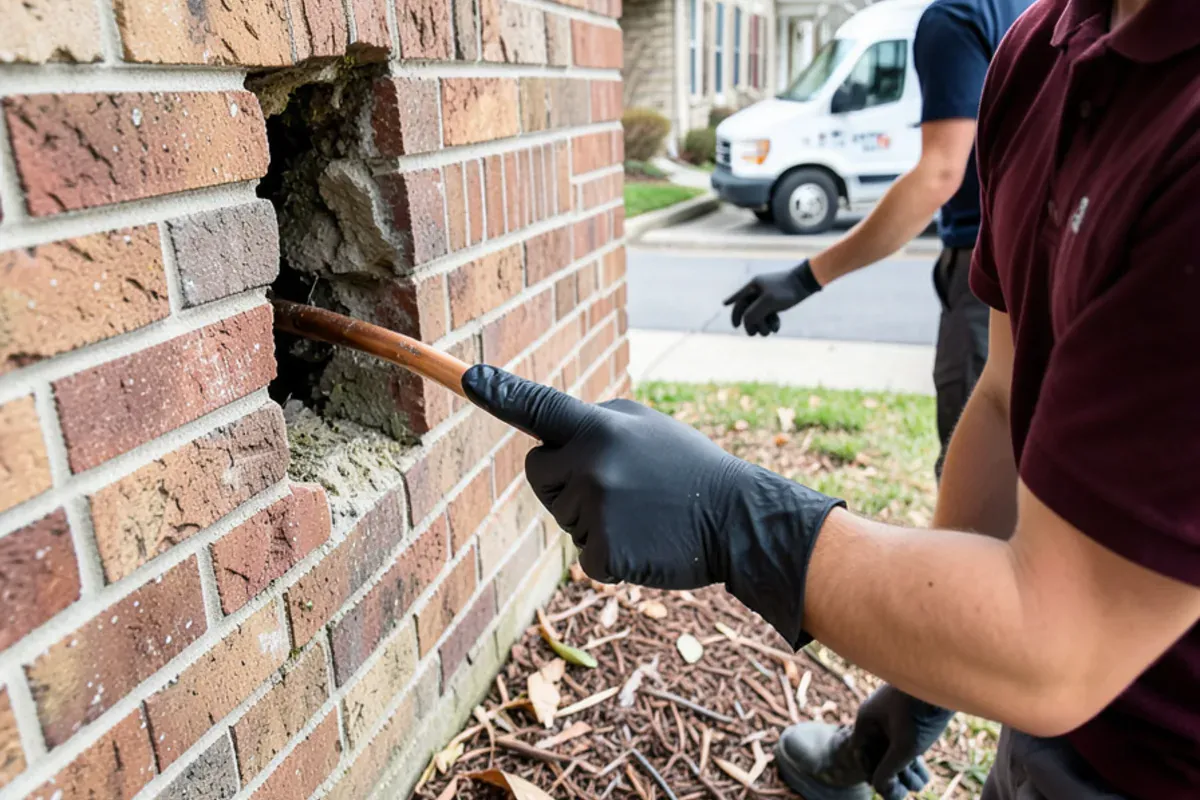
Gas lines, the electric service, cable and phone wires, the air conditioning line set and outdoor faucets all pass through the wall. Any gap around them larger than a pencil is a candidate.
Check the garage
Look at the bottom corners of the garage door, where the seal often ends early or has been chewed, and at the gap between the door frame and the wall.
Follow the foundation line
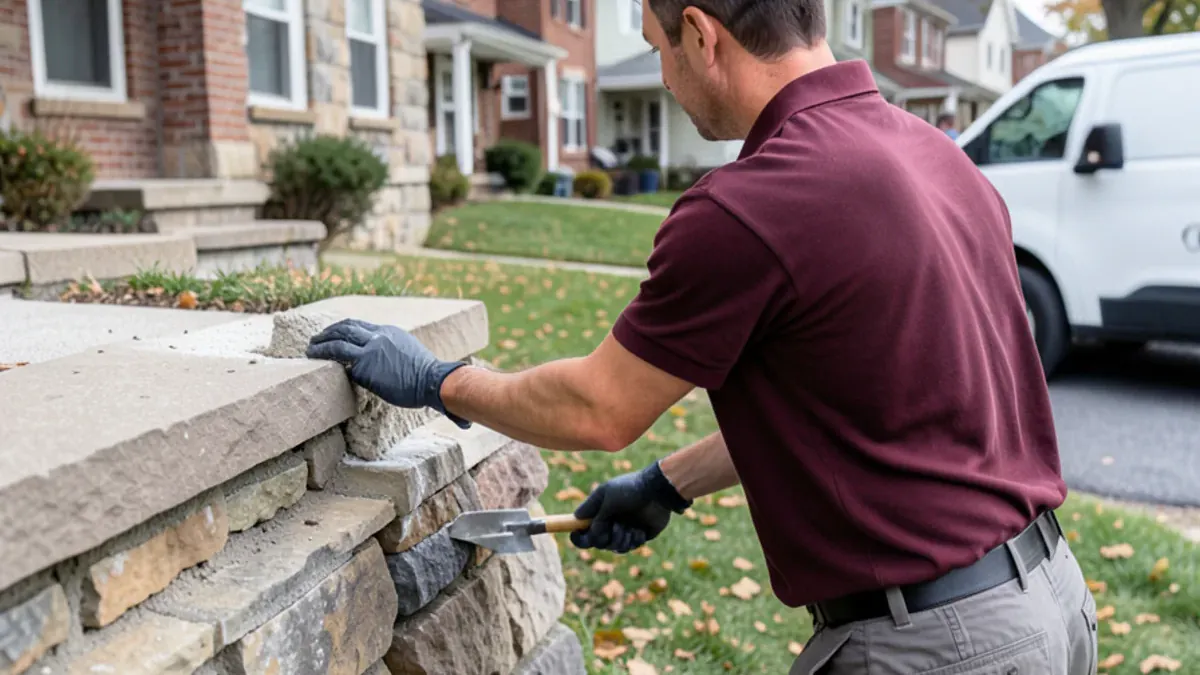
Look for cracks, missing mortar, and gaps between the foundation and the siding or the bottom of the wood sill.
Look at vents and openings
Dryer vents with broken flaps, unscreened crawl space vents and foundation vents are easy entries.
Finish at the roofline
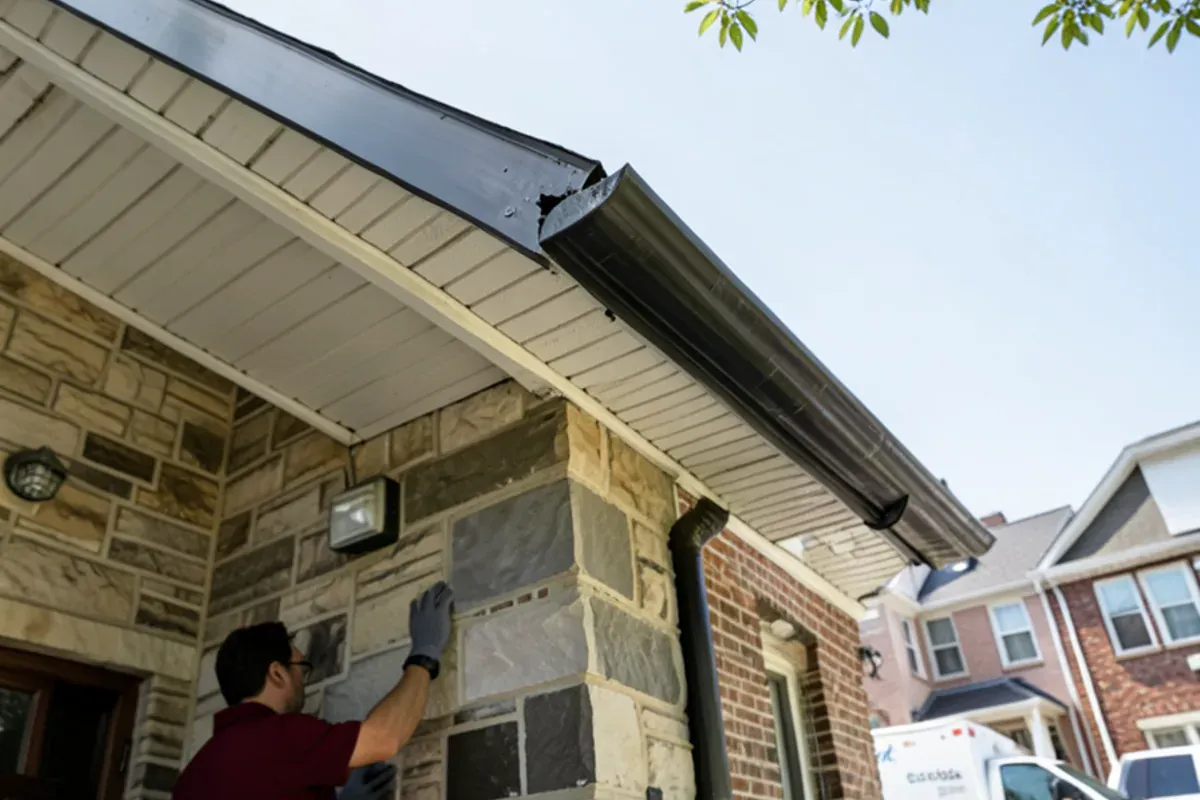
Use the mirror or binoculars to check where gutters meet the roof, soffit corners and gaps around the chimney. Mice climb brick, downspouts and vines with ease.
How can you tell which gap the mice are actually using?
Not every crack is an active entry. Look for three signs together: dark, greasy rub marks on the edges where fur brushes past, fresh gnaw marks with light-colored wood or plastic showing, and droppings within a foot or two of the opening. A gap with old cobwebs strung across it and no marks around it is probably not in use right now.
To confirm a suspect, push a loose twist of newspaper into the gap or dust a little flour on the ledge in front of it, then check the next morning. Paper pushed aside or tiny tracks in the flour mean traffic. The same trick works after sealing: an opening you missed shows itself within a night or two.
Common mouse entry points and how to seal them
Use durable materials. Mice chew through plain foam, rubber and wood, so the fix needs to resist gnawing.
| Entry point | What to look for | Lasting fix |
|---|---|---|
| Utility penetrations | Gaps around pipes and wires through siding or foundation | Copper mesh packed tight, then sealant or mortar over it |
| Garage door | Daylight at the bottom corners, chewed rubber seal | New bottom seal and rodent-resistant corner guards |
| Dryer and exhaust vents | Missing or stuck-open flaps | Replace the hood with a working damper; do not screen dryer vents tightly |
| Foundation and sill gaps | Cracks, missing mortar, gaps above the foundation | Mortar repair or sealant with mesh backing |
| Doors to the outside | Light under basement or side doors | Door sweep and threshold seal |
| Roofline and soffits | Gaps where roof meets fascia, gnaw marks | Sheet metal or hardware cloth fitted to the gap |
Mice in the attic: when the entry is up high
If droppings and noise are concentrated in the attic or upper walls, the entry is probably at the roofline. Mice climb surprisingly well, using rough brick, downspouts, vines and tree branches that touch the house. Common openings include gaps at the corners of the soffit, where a newer roof meets older trim, and around attic vents.
Look for greasy rub marks around the opening and droppings on the insulation nearby. Cutting branches back several feet from the roof removes the bridge, but the gap itself still needs sealing with metal, not foam.
Should you seal first or trap first?
Trap first when mice are active inside, then seal within a few days. Sealing a house with mice still in the walls can trap them inside, where they look for new ways out, often into living space. Set snap traps along walls where droppings are heaviest, with the trigger end facing the wall, and check them daily.
Once trap catches slow to zero for several days, seal every opening you found. Then set a few fresh traps to confirm nothing new is getting in. If catches start again, there is an entry you missed.
When to bring in professional help
Call if you cannot find the entry point, if mice keep showing up after sealing, if the gaps are high on the house, or if droppings show up in food storage. Our mouse control service combines trapping inside with a full exterior inspection, and our rodent exclusion work seals the openings with materials mice cannot chew through. The main rodent control page covers rats and other rodent issues too.
Mouse entry points we find in Marple's 1960s homes
Marple Township's houses have a Census (ACS) median build year of 1962, and many are ranches, split-levels and colonials with attached garages and lower levels set partly below grade. When we inspect homes like these, the garage is the most frequent way in, followed by the gap where the air conditioning line set enters the wall and the seam where a lower-level slab meets the foundation.
Wooded lots and open space near Delaware County Community College and around Lawrence Park give mice a steady population close to homes, and the fall push indoors comes reliably once nights turn cold. We handle these calls across Marple Township every autumn.
Our inspections run from the outside in, and we mark each opening on a rough sketch of the house so the sealing work and the trap placement line up. The honest trade-off is access. Some gaps sit behind a finished lower-level wall, under a deck or inside a boxed soffit, and they cannot be closed without opening construction. In those cases we seal everything reachable, trap inside, and spell out on the written quote which openings stayed out of reach. Garage doors are another limit: a new bottom seal helps, but if the slab has settled or the door is warped, the corners keep a gap until a metal guard is fitted. Checking traps for a couple of weeks afterward is how we know the job is actually finished.
Quick answers
How do mice get into a house with no obvious holes?
Through gaps you would not consider holes. Any opening near a quarter inch will do, so gaps around a gas pipe, the corner of a garage door seal, a cracked mortar joint or a loose dryer vent flap are enough. In split-levels, the seam between the lower-level slab and the foundation wall is a frequent and easily missed entry.
Will steel wool alone keep mice out?
Not for long. Plain steel wool rusts and breaks down outdoors, and mice can pull loose wads out of a gap. Copper mesh holds up better, and the most durable repairs pack mesh tightly into the gap and then cover it with sealant, mortar or sheet metal so it cannot be pulled out or chewed around.
Why do I only hear mice in the walls in fall and winter?
Because that is when they move in. As nights get cold, mice that spent the summer outside look for warm shelter and food, and walls, attics and basements near heat sources are ideal. The fall push is also when sealing does the most good, ideally before the first hard frost.
How long does it take to find and seal mouse entry points?
Usually a day or less of actual work. A careful outside inspection of a typical Marple ranch or split-level takes about an hour, and sealing takes a few hours to a full day depending on how many gaps turn up and how high they sit. Trapping inside runs alongside it, often for a week or two, until catches stop and the house stays quiet.
The bottom line
Scratching in the walls is only half the story; the real answer is the gap the mice used to get in. If you would like help finding and sealing it, phone (209) 563-1650 to book a whole-house inspection that starts outside, where the mice do.
Sources

Written by the No Bugs Exterminator team
A small, family-run pest control business in Media, PA, led by owner Thom. We write about what we see on inspections in Delaware County and southeastern Pennsylvania. About us.
Services mentioned in this guide
Want a professional opinion?
Book a free inspection and get a written quote before any treatment.
- ★ 4.8 from 21 Google reviews
- Open 7 days, 8 a.m. to 7 p.m.
- Free inspection before treatment
- Family-run, based in Media, PA
Open 7 days, 8 a.m. to 7 p.m.