
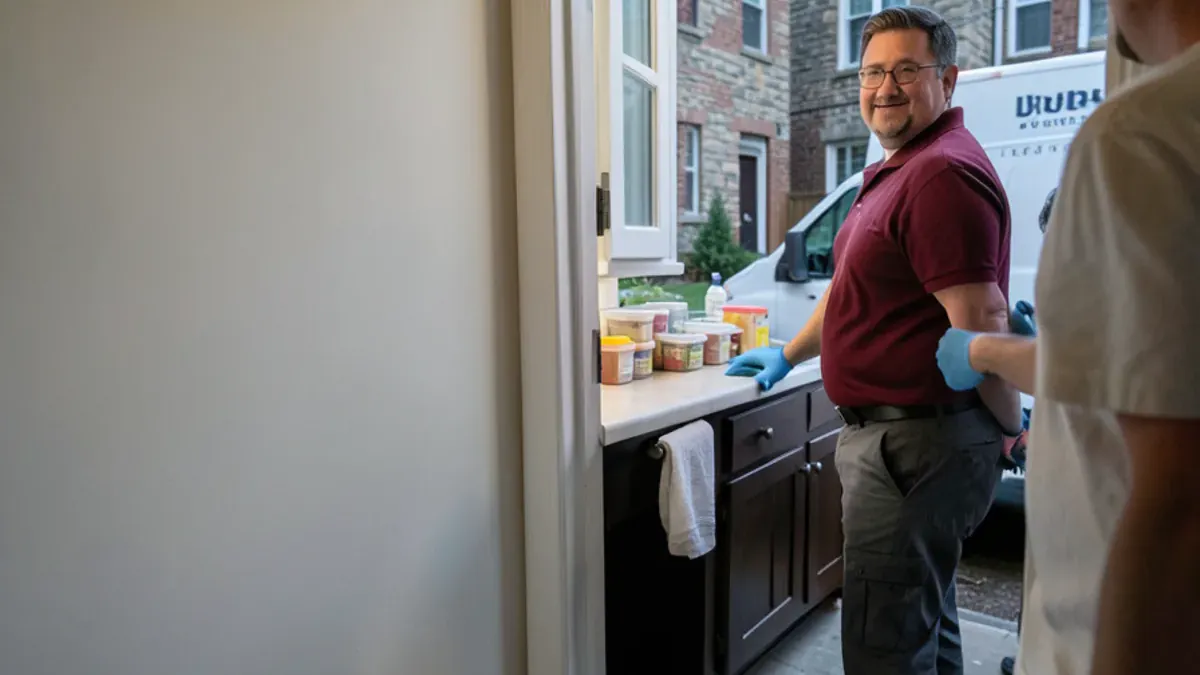
If you just saw a rat in the house, what to do first is simple: back away, get children and pets out of the room and close the door. The plan below covers the first ten minutes, the special cases of a rat in the kitchen or toilet, and how to find the gap it came through.
The first ten minutes with a rat in the house
A frightened rat wants to hide, not fight, and most bites happen when someone corners one. Keep that in mind for every step below: give it room, and give yourself time.
Stop and step back
Do not chase it, swing a broom at it or try to grab it. A cornered rat can jump and bite; one that has space will run for cover.
Move kids and pets out
Carry small children and pets to another room or upstairs and close that door. Dogs and cats may chase the rat and get bitten.
Confine the room
Close every door to the room where the rat is and roll a towel along the bottom gap. Rats squeeze under doors with surprisingly little clearance.
Offer a way out if there is one
If the room has a door to the yard or garage, open it, turn off the lights and leave the area quiet for half an hour. Some rats will leave on their own.
Take away the reward
Put pet food, fruit bowls and open snacks in sealed containers or the refrigerator, and close the trash lid.
Watch from a distance and take notes
Note where the rat goes: behind the stove, under a cabinet toe-kick, down a basement stairwell. That tells the technician where to start looking.
What if there is a rat in the toilet?
It is uncommon, but Norway rats are strong swimmers and can travel through sewer lines, so a rat in the toilet does happen. Close the lid right away and set something heavy on top, such as a stack of books or a full paint can. Do not flush repeatedly; it rarely works and can splash contaminated water.
Keep the bathroom door shut and call for help. A rat coming up through a toilet usually points to a problem with a sewer lateral, a cleanout or a vent stack, which is worth having a plumber look at once the rat itself has been handled.
Rat in the kitchen: protecting food, pets and family
Kitchens draw rats because they offer food, water and warm voids behind appliances. Until the rat is removed, treat the room as off-limits for food prep and run through this list:
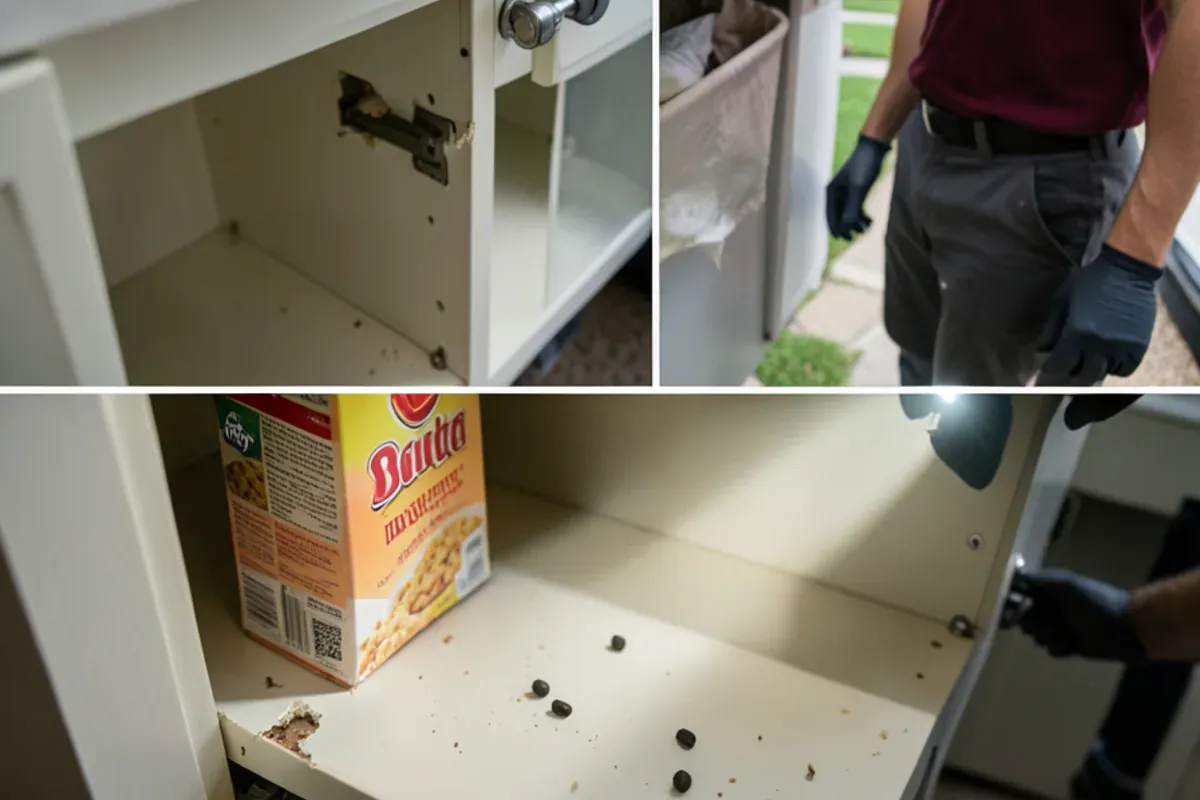
- Throw out any food in bags or boxes with chew marks or droppings nearby.
- Move dry goods, cereal and pet food into hard plastic or glass containers with tight lids.
- Pick up pet food and water bowls at night.
- Do not set loose poison, glue boards or open snap traps where children or pets can reach them.
- Clean droppings wet, not dry: wear gloves, spray them with disinfectant, wait a few minutes, then wipe up. Do not sweep or vacuum dry droppings.
- Anyone who is bitten or scratched should seek medical care.
How did a rat get in? Entry points in older Upper Darby rowhomes
Rats need a gap about the size of a quarter. In Upper Darby Township, where Census (ACS) estimates put the median home's build year at 1948 and about 43% of homes are rented, rowhomes share long party walls and basements that were built long before modern sealing standards. One open gap in the row can affect several houses.
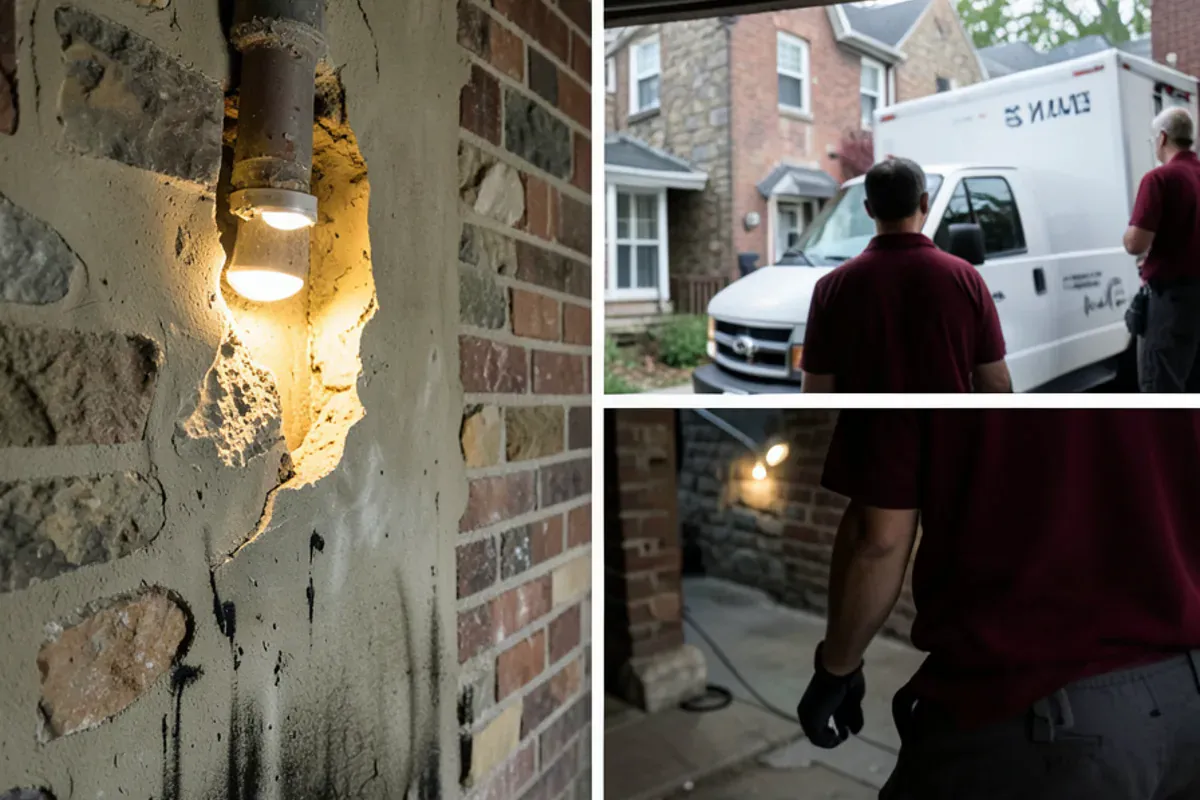
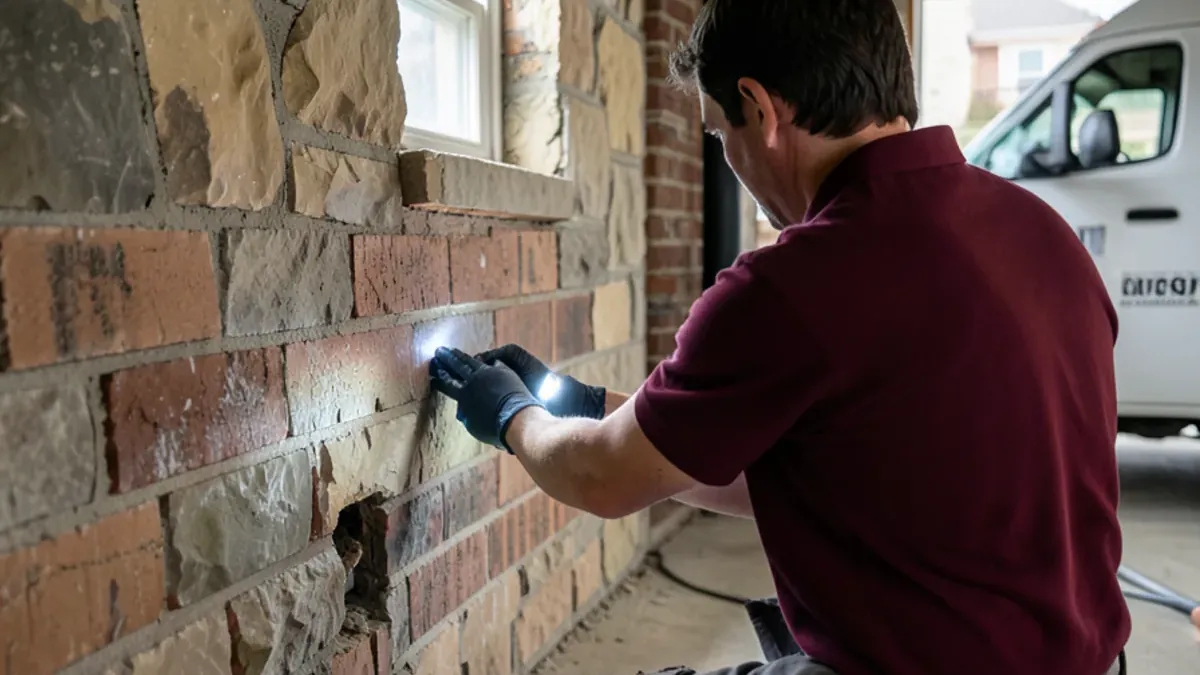
The usual openings are a worn basement door sweep, a cracked floor drain cover, gaps where gas, water or cable lines pass through the foundation, a damaged vent screen, and burrows dug along rear alleys and back patios. Rats also follow broken sewer laterals into basements. A careful inspection checks all of these, plus the neighboring wall lines, before anything gets sealed.
Why not just put out poison tonight?
Loose rodenticide in a home with children or pets is a real exposure risk, and a poisoned rat often dies inside a wall or ceiling where the smell lingers for weeks. Poison also does nothing about the gap that let the rat in, so the next rat follows the same path.
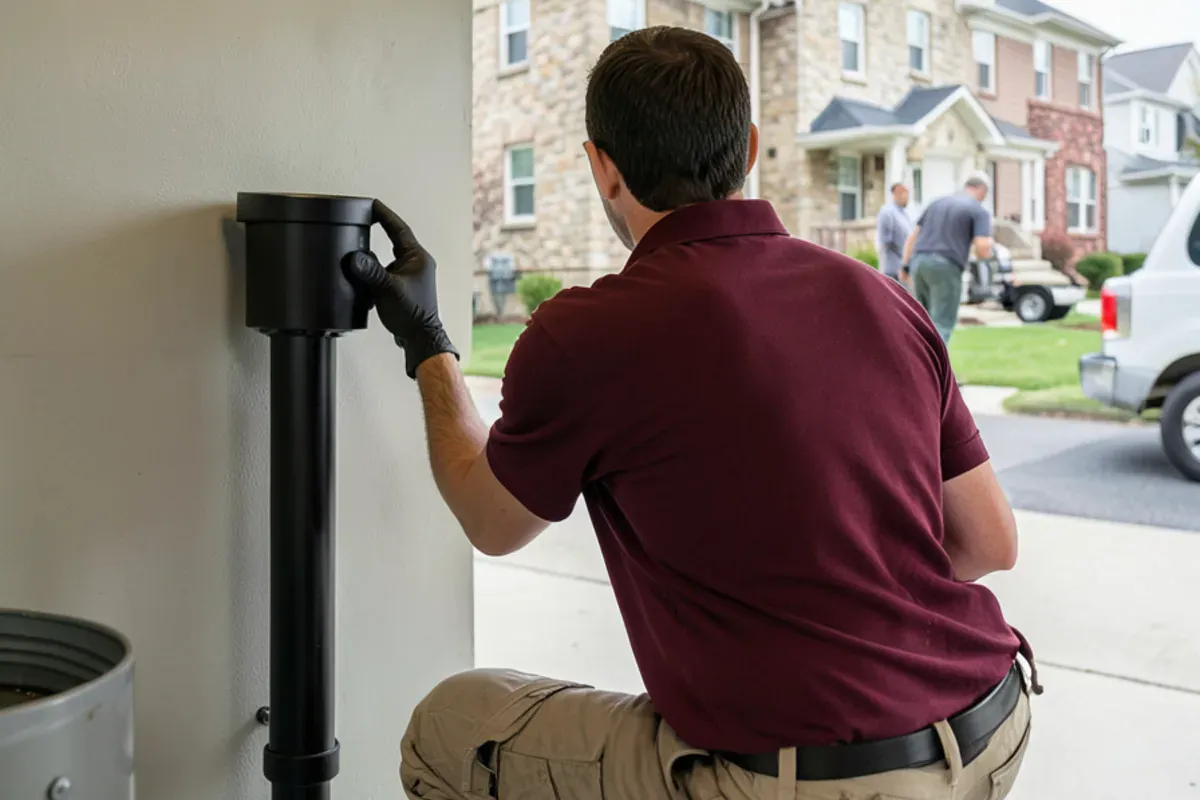
Traps work better when they sit along the walls the rat actually travels, inside tamper-resistant stations where little hands and paws cannot reach. Getting placement right is a big part of what a professional visit adds.
What happens on an emergency rodent visit?
We are open seven days a week from 8 a.m. to 7 p.m., and same-day visits are often possible when the schedule allows, so call early. Our emergency rodent removal page outlines how urgent calls are handled.
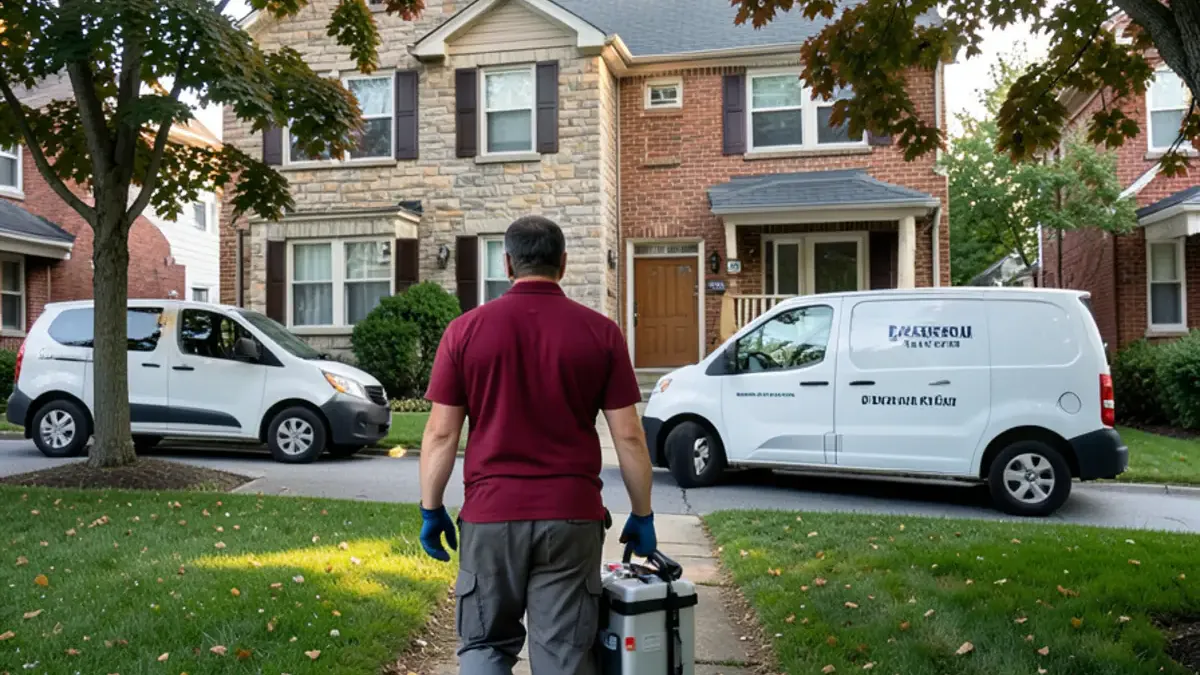
The technician starts with a free inspection: confirming rat or mouse from droppings and gnaw marks, tracing runways and rub marks, and finding where the animal is getting in. Trapping is set up where it will work, you get a written quote before work starts, and the entry points are explained so they can be closed. Follow-up visits check the traps and confirm activity has stopped.
If the problem turns out to be a longer-term infestation rather than one intruder, our rodent control services cover exclusion and ongoing monitoring. For homes in Upper Darby Township, we are roughly 15 minutes from our Media base. Call (209) 563-1650 and describe where you last saw the rat.
What rat calls in rowhome blocks tend to show
When we inspect after a rat sighting in an attached home, the trail usually leads to the basement first: greasy rub marks along a joist, gnawing at a door bottom, or soil pushed up near a floor drain. Rats travel the same routes night after night, so those marks show us where to place traps.
We also look past the property line. In a row of attached houses, a gap in one basement can feed activity next door, so we point out shared-wall openings and suggest that neighbors check their own basements too.
Outside, we walk the rear foundation, the edge of any back patio slab, the ground under sheds and the area around alley trash cans. An active burrow has a smooth, packed opening and a fan of fresh soil; an old one collects leaves. The trade-off we explain on these calls is speed versus permanence. Indoor traps can catch the rat that got in within a few nights, but if the burrow outside stays active and the basement gap stays open, another rat usually takes its place.
Quick answers
Will a rat in my house leave on its own?
Sometimes, if it wandered in through an open door and finds the way back out. More often a rat that has found food and shelter stays and returns each night along the same route. If you see droppings, hear scratching in walls or ceilings, or spot it a second time, it has settled in and needs trapping and an entry point closed.
How can I tell a rat from a mouse?
Size is the quickest clue. An adult Norway rat is far larger than a house mouse, with a thick body, blunt nose and heavy tail. Rat droppings are roughly the size of a raisin, while mouse droppings look like grains of rice. The distinction matters because traps, bait placement and entry-point sizes differ for each.
Is it safe to stay in the house tonight with a rat inside?
Yes, for most households. Keep the rat's room closed with a towel under the door, put all food away, and keep pets and young children in other rooms overnight. Rats are most active after dark, so you may hear it moving. Do not leave out loose poison or glue boards to deal with it while you sleep; set up a visit in the morning and note any sounds and where they came from.
The bottom line
A rat in the house is unsettling, but a calm sequence works: confine the room, protect the people and animals in the home, and find the gap rather than reaching for poison. If you want a hand with any of those steps, we can usually talk you through it on the first call.
Sources

Written by the No Bugs Exterminator team
A small, family-run pest control business in Media, PA, led by owner Thom. We write about what we see on inspections in Delaware County and southeastern Pennsylvania. About us.
Services mentioned in this guide
Want a professional opinion?
Book a free inspection and get a written quote before any treatment.
- ★ 4.8 from 21 Google reviews
- Open 7 days, 8 a.m. to 7 p.m.
- Free inspection before treatment
- Family-run, based in Media, PA
Open 7 days, 8 a.m. to 7 p.m.