
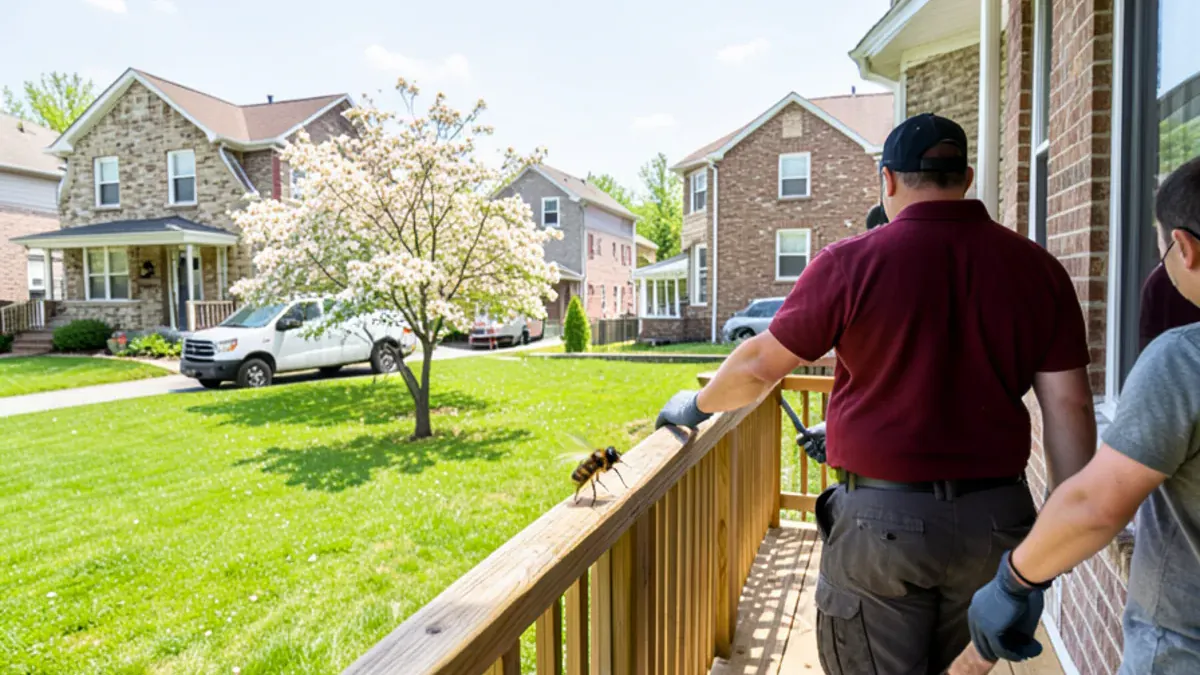
The most reliable answer to how to stop carpenter bees is to make your wood unappealing before spring and deal properly with the holes they already made. A painted surface, treated and sealed holes and good timing will protect a deck, fascia boards and trim far better than swatting at bees in May.
How do you know carpenter bees are the problem?
Carpenter bees prefer bare or weathered softwood, and they return to old galleries year after year, extending them a little further each season. So the first job is working out which boards they have already claimed.
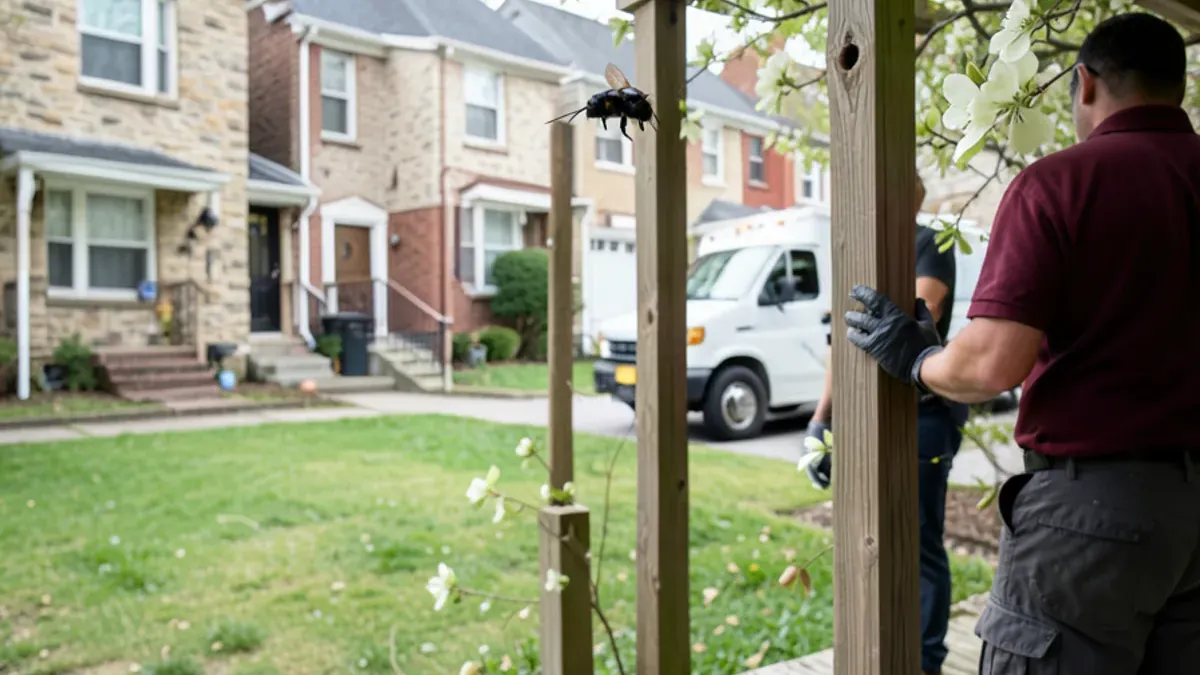
Large black and yellow bees hovering around the deck rail are a clue, but the wood itself tells the story. Look for these signs, usually on the underside of rails, fascia boards, eaves and exposed beam ends.
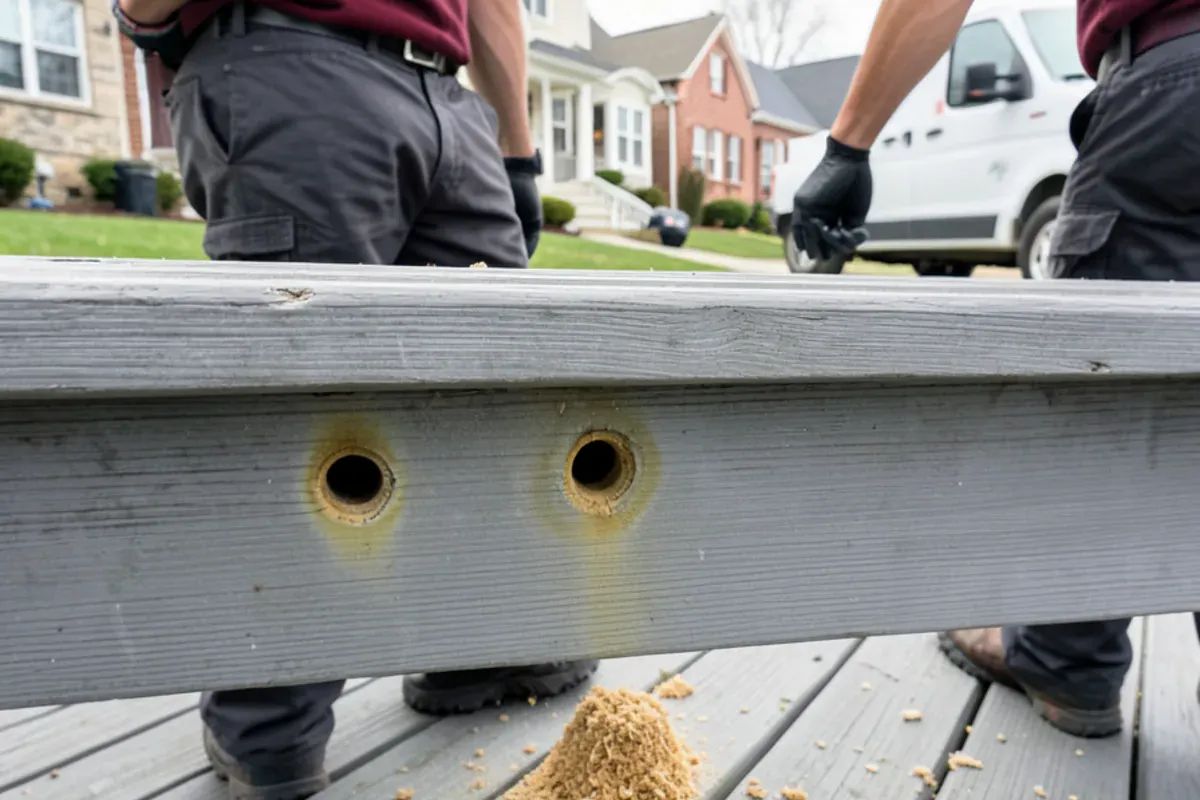
- Perfectly round carpenter bee holes about 1/2 inch across, often on the underside of a board.
- Small piles of coarse sawdust on the deck or ground directly below a hole.
- Yellowish-brown streaks staining the wood below an entrance.
- Torn, splintered wood where woodpeckers have dug after the larvae inside.
- Bees with shiny, mostly hairless black abdomens, which separates them from bumble bees.
Why carpenter bees keep coming back to the same deck
Female carpenter bees do not eat wood. They chew a tunnel, turn it at a right angle to run along the grain, and lay eggs in a row of small chambers stocked with pollen. New adults emerge in late summer, feed, and then spend the winter back inside the same galleries.
Each spring, bees reuse and extend old tunnels rather than starting from scratch. One gallery can grow for years, and a board with several of them weakens over time. Woodpeckers make it worse by ripping open the wood to reach larvae, so the cosmetic damage often looks far worse than the bee damage underneath.
Carpenter bee season in PA, month by month
Timing matters because treating or sealing holes at the wrong time either misses the bees or traps them where they can chew a fresh exit.
| Time of year | What the bees are doing | What you should do |
|---|---|---|
| Late winter (February to March) | Adults resting in old galleries | Mark every hole; plan painting and board replacement |
| Spring (April to May) | Adults emerge, mate, and females drill or extend galleries | Have active holes treated, then seal them a few days later |
| Early summer (June to July) | Larvae developing inside sealed chambers | Watch for woodpecker damage and new sawdust |
| Late summer (August to September) | New adults emerge and feed on flowers | Repaint bare spots and finish exposed wood while it is dry |
| Fall (October to November) | Adults return to galleries for winter | Inspect fascia and rails; schedule repairs before spring |
Paint vs. stain: what protects deck wood from carpenter bees?
Carpenter bees look for soft, unfinished or weathered wood such as pine, cedar and redwood. A solid film of paint is the most effective finish because it gives the bees a hard, unnatural surface to drill into. Solid-color stains are next, followed by semi-transparent stains and clear sealers, which mostly leave the grain exposed.
Pressure-treated lumber is less attractive while it is new, but once it weathers and grays, bees will drill it too. Composite decking, vinyl and aluminum trim are rarely touched. Whatever finish you choose, it only helps while it is intact, so peeling or worn areas need attention every year or two.
How to stop carpenter bees on decks, fascia and trim
Prevention works most reliably as a set of small jobs done before the bees emerge in spring.
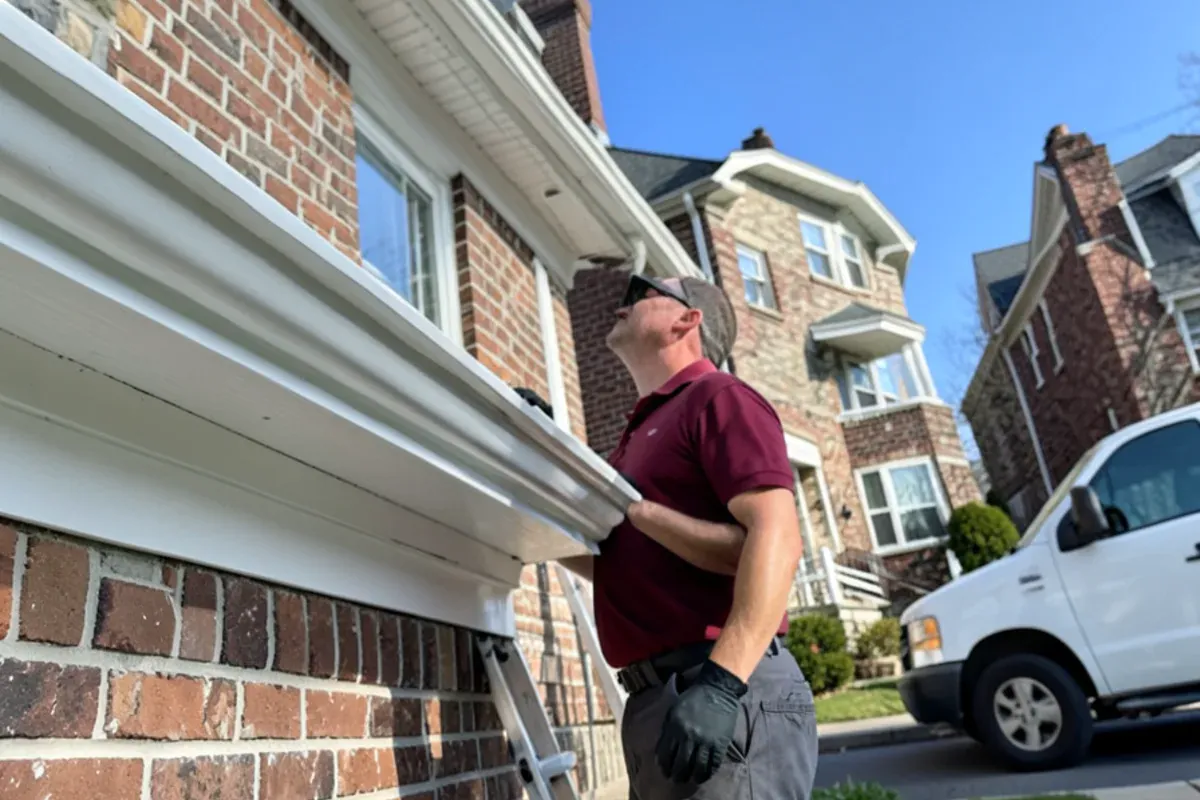
- Paint or finish every exposed surface, including the undersides of rails, end grain and the backs of fascia boards where bees like to start.
- Cover exposed beam and joist ends with metal flashing or a painted cap.
- Consider aluminum or vinyl wrap on long runs of fascia that keep getting drilled.
- Replace boards that have several galleries or obvious woodpecker damage.
- Fill old, treated holes with a wood dowel and wood filler, then paint over the patch so it does not invite a return visit.
- Keep gutters clear so fascia boards stay dry and sound.
Do traps work, and do carpenter bees sting?
Carpenter bee traps catch some bees, but they rarely catch enough to protect a deck that already has active galleries. Treat them as an extra, not a fix. Males, the ones that hover and dive at people, cannot sting; females can but seldom do unless handled. Anyone with a known severe reaction to stings should avoid working near nests and call 911 or seek medical care right away if a serious reaction occurs.
Carpenter bees also pollinate, so we focus treatment on the wood they are damaging rather than the whole yard. Our carpenter bee control service treats active galleries and advises on sealing and finishing afterward. The wider stinging insect control section covers wasps, hornets and yellowjackets.
Carpenter bee damage we see on Marple and Broomall homes
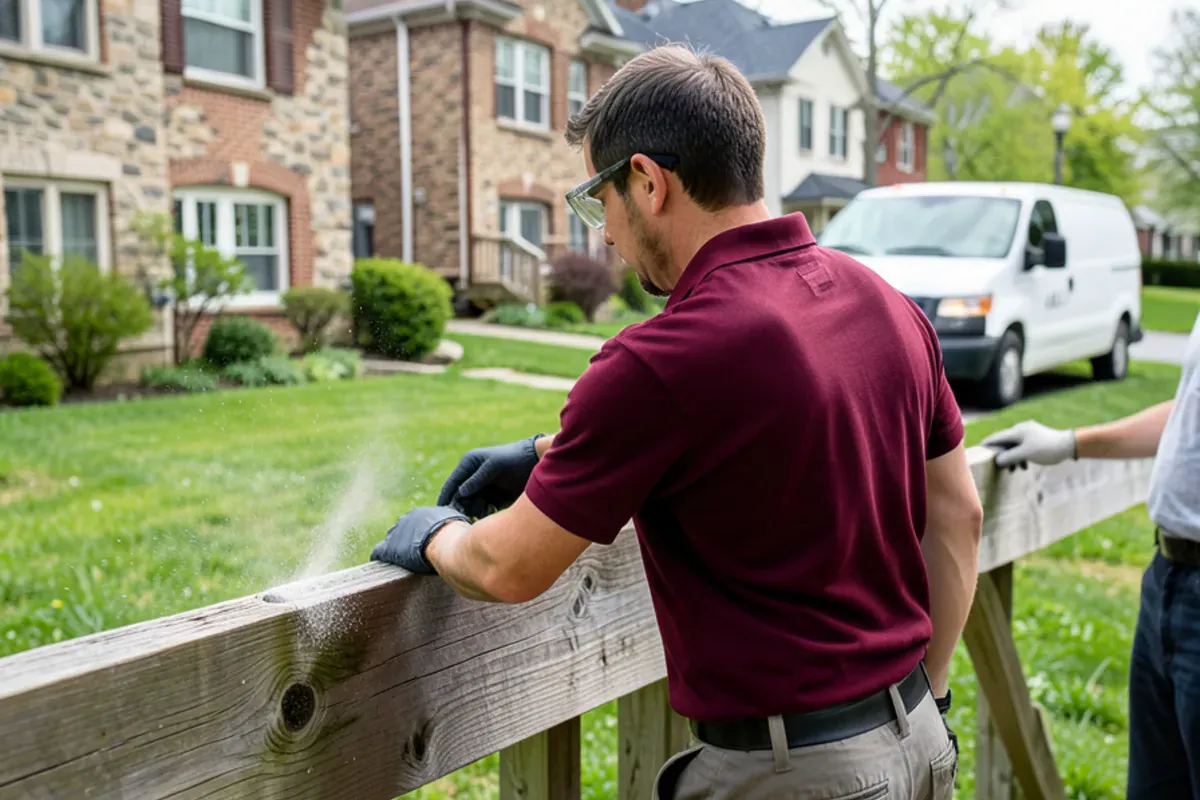
When we inspect homes in Marple Township, many of them 1960s split-levels and ranches, the damage concentrates on wood that was added or never fully finished: a deck built later with unpainted rails, original fascia boards under the gutter line, and exposed rafter tails on a porch. Census (ACS) estimates put the township's median home at 1962, so much of that trim has weathered sixty-odd winters.
We are upfront about what treatment can and cannot do. Treating active galleries in spring stops the bees using those tunnels, but if the rail stays bare, next year's bees will simply drill the board beside it. That is why our advice on a typical Marple deck is treat first, plug and paint later, and replace any rail or joist end with several galleries rather than patching it again. We also leave foraging bees on flowers alone; the target is the wood they nest in, not every bee in the garden.
Marple is about 10 minutes from our Media base. Our Marple Township pest control page explains what else we see in the area.
Quick answers
Should I fill carpenter bee holes right away?
Not until the gallery has been treated. Plugging an active, untreated hole can trap bees that simply chew a new exit nearby. In southeastern Pennsylvania, the usual approach is to treat active holes in spring, wait a few days for returning bees to contact the treatment, then plug with a dowel and filler and paint over it.
Can carpenter bees ruin a deck?
Over several seasons, yes. One gallery does little harm, but bees reuse and extend tunnels every year, and several in the same rail or joist weaken it. Woodpecker damage speeds things up. Inspect the undersides of rails and beams each winter, and replace any board with multiple galleries before it becomes a safety concern.
Do carpenter bees drill into painted wood?
Less often, but it happens. Bees look for weak points in the finish: peeling paint on a rail, an unpainted cut end, the back of a fascia board or a bare spot under a gutter. A solid, intact paint film on every face of the board is what keeps them away. On older Delaware County homes, we often find fresh holes in exactly the strip of trim the last paint job missed.
Why are woodpeckers tearing holes in my fascia?
They are usually hunting carpenter bee larvae inside the galleries. Woodpeckers can hear the developing larvae in early summer and rip the wood open to reach them, so torn, splintered fascia is a strong sign of active tunnels behind it. Deal with the bees first, then repair or replace the damaged boards and paint them so neither the bees nor the birds have a reason to return.
The bottom line
Paint the wood they like, treat and seal the holes in the right order, and carpenter bees will look elsewhere. If your deck or fascia already has several active galleries, call (209) 563-1650 and we will set up a free inspection before the spring flight starts.
Sources
Written by the No Bugs Exterminator team
A small, family-run pest control business in Media, PA, led by owner Thom. We write about what we see on inspections in Delaware County and southeastern Pennsylvania. About us.
Services mentioned in this guide

Want a professional opinion?
Book a free inspection and get a written quote before any treatment.
- ★ 4.8 from 21 Google reviews
- Open 7 days, 8 a.m. to 7 p.m.
- Free inspection before treatment
- Family-run, based in Media, PA
Open 7 days, 8 a.m. to 7 p.m.