
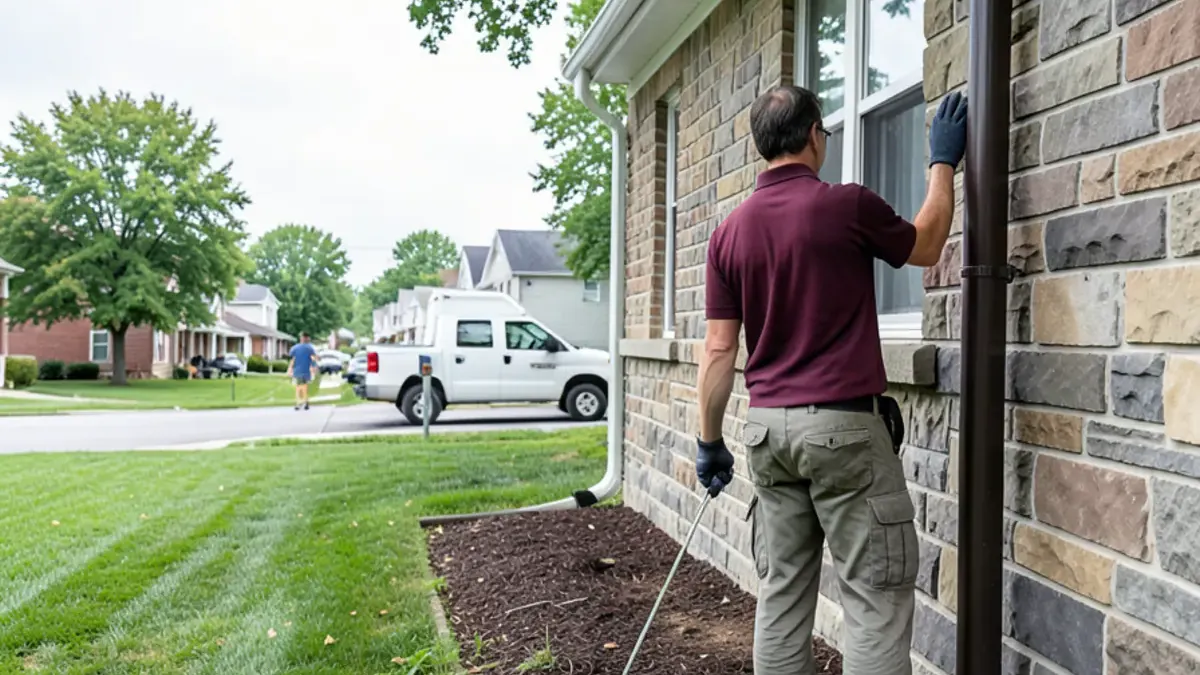
Termite treatment cost in PA is driven mainly by the size of your home's footprint, how the foundation is built and whether you choose a liquid barrier or a bait system. This guide explains how termite jobs are measured, what adds work, and what any written agreement should spell out.
How is termite treatment cost in PA measured?
Liquid work puts most of the effort up front, while bait spreads it across years of monitoring, so the two are priced in very different shapes. Before the method enters the picture, though, the job has to be measured.
Most termite quotes start with the perimeter of the structure, often measured in linear feet around the foundation. A liquid treatment has to reach the soil along every foot of that line, and a bait system needs stations spaced around it. A sprawling ranch house and a compact twin with the same square footage can have very different perimeters.
The inspection then adds detail: where termites are active, whether there is visible damage, and which parts of the foundation are hard to reach. Two homes on the same street can end up with different scopes because one has a slab porch and a finished basement and the other does not.
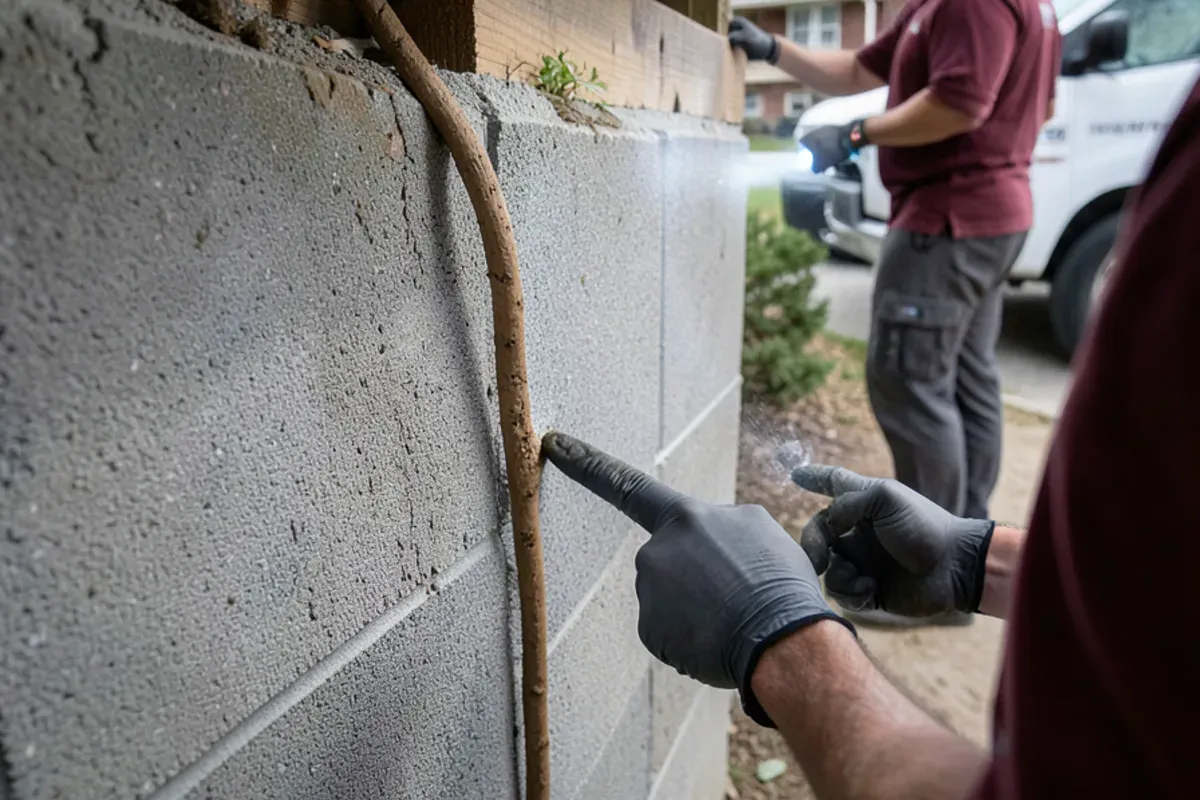
Construction details that add labor
Southeastern Pennsylvania lies in a moderate-to-heavy subterranean termite zone, and our housing stock makes the work varied. These features commonly change the scope of a liquid termite treatment or bait installation:
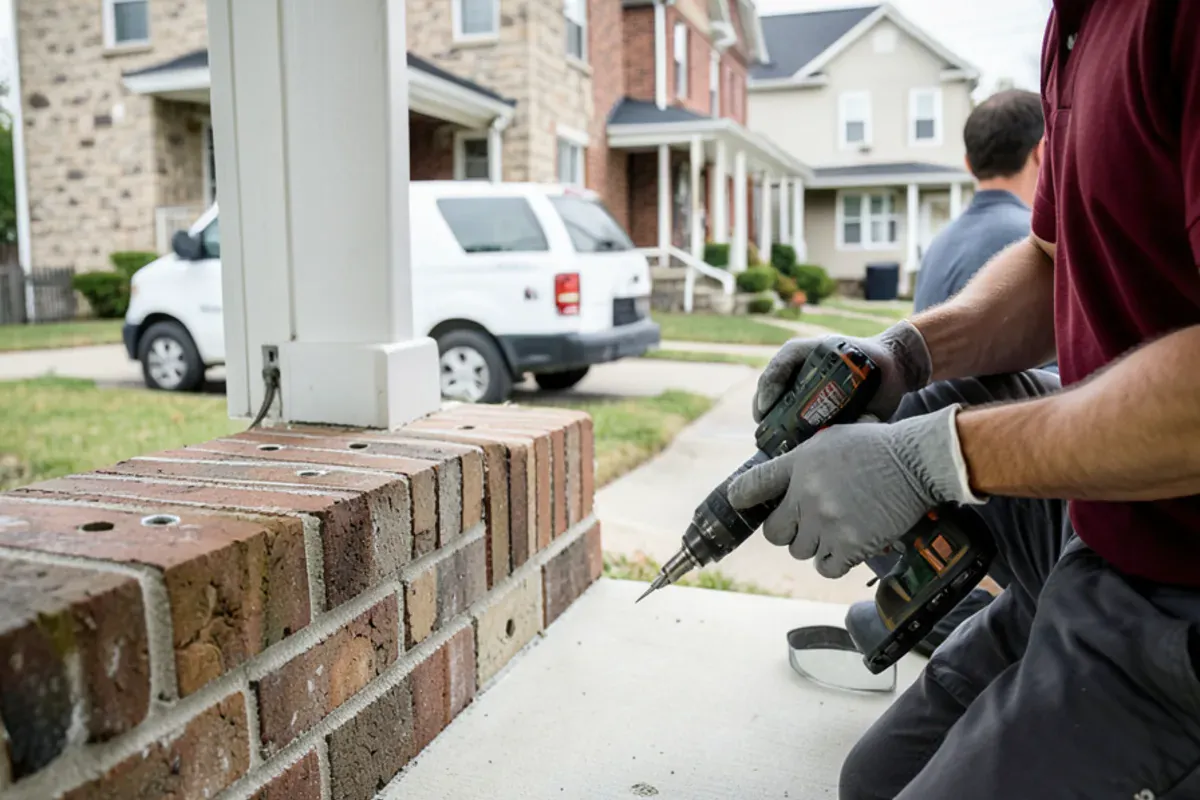
- Concrete slabs, patios, porches and driveways against the foundation, which may need drilling to reach the soil beneath.
- Finished basements, where walls and flooring limit access to the inside of the foundation.
- Crawlspaces with low clearance or poor access.
- Stone or block foundations with hollow cores and mortar gaps that termites can travel through.
- Attached garages and additions built on separate footings.
- Wells, cisterns or nearby water features, which may rule out certain treatment zones and favor a different method.
- Existing wood damage that needs repair by a contractor after treatment.
Liquid vs. bait: how the pricing is structured
Liquid termite treatment cost is mostly a one-time, up-front charge. The work involves trenching soil along the foundation and drilling through slabs where needed, then applying a non-repellent liquid termiticide that termites pass through and share with the colony. After that, the main ongoing item is any inspection or renewal agreement you choose to keep.
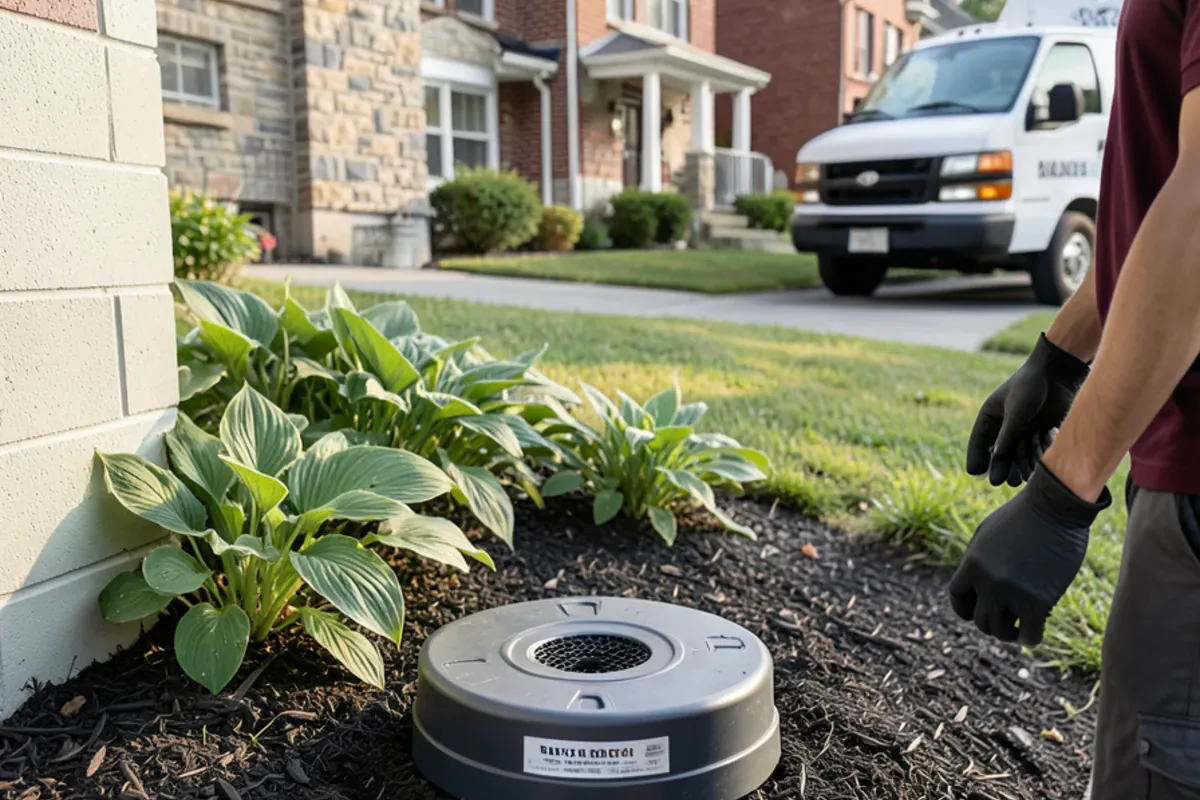
Termite bait station cost works the other way. Installation of in-ground stations is usually less disruptive and less labor-intensive on day one, but the system depends on regular monitoring visits and bait replacement for as long as it stays in place. Over several years, those visits are a real part of the total.
| Item | Liquid barrier | Bait stations |
|---|---|---|
| Up-front work | Heavier: trenching, drilling, treating the full perimeter | Lighter: installing stations around the structure |
| Ongoing visits | Optional inspections under a renewal agreement | Required monitoring and bait servicing |
| Where cost concentrates | At installation | Spread across the life of the system |
| Disruption to the property | More: soil and concrete work | Less: small in-ground stations |
What should a termite warranty or renewal agreement cover?
This is where quotes differ most, and where the most attractive quote at first glance can turn out to offer the thinnest coverage. Before you sign with any provider, ask for the re-treat or warranty terms in writing and check what they actually promise.
Look for answers to these points: Does the agreement cover re-treatment only, or also repair of new damage? How often are inspections done, and are they included? What is the renewal term and how is it priced in later years? What conditions void the agreement, such as remodeling, new additions or moisture problems? Is it transferable if you sell the house? Comparing those terms side by side matters as much as comparing the installation price.
Can you shrink the job before anyone arrives?
You cannot treat termites yourself in any meaningful way, but you can remove the conditions that draw them closer and make the inspection more accurate. A few hours of yard work before the visit also makes it easier to see the foundation, which keeps the quote from leaning on guesswork.
Start with water and wood. Extend downspouts so roof water lands several feet from the house, pull mulch back from the siding so a strip of foundation shows, and move firewood, lumber and old landscape timbers away from the walls. Clear stored boxes from the basement perimeter so the sill plate and foundation can be seen. If a crawlspace hatch is blocked, open a path to it. Do not spray or disturb mud tubes; they show the inspector exactly where termites are traveling.
Why the termite inspection comes before any price
A termite inspection confirms whether termites are active, maps where they are and notes conditions that invite them, such as wood touching soil, leaking downspouts or mulch piled against siding. Without that, a quote can only guess at the perimeter and the obstacles.
We offer a free inspection before treatment and a written quote afterward. Because liquid and bait treatments depend on property conditions, call (209) 563-1650 to confirm which options are available for your home. The full range of approaches is on our termite control page, and the termite bait stations page explains how monitoring works.
What we see in Haverford and other pre-war neighborhoods
When we inspect older homes in Haverford Township, where Census (ACS) estimates put the median build year at 1950, the termite story is often about access. Stone foundations, enclosed porches added long after the original build and finished basements all hide the spots termites use to come up from the soil.
Wooded lots along Darby Creek keep soil moist and add fallen wood and stumps near houses, both of which favor termites. In those settings we spend more time on the inspection itself, because the scope of the treatment depends on what we find behind paneling and under porches.
The method question usually narrows itself once we have walked the property. A private well close to the house, a stone foundation that would need heavy drilling, or a finished basement that blocks the inside of the walls often points toward bait stations. A house where mud tubes already run up the sill and the soil line is easy to reach often points toward a liquid barrier. We put that reasoning in the written quote, so the choice of method is explained rather than assumed.
Quick answers
Does liquid or bait treatment cost less over time?
It depends on how long you keep the bait system serviced. Liquid treatment concentrates the expense at installation, with optional renewals afterward. Bait stations usually start lighter but carry monitoring visits for years. Ask each provider to describe the first year and the following years in writing, then compare the totals across the period you expect to own the home.
Does termite treatment include repairing damaged wood?
Usually not. Treatment stops the termites; replacing a damaged sill plate, joist or porch post is carpentry work done by a contractor, ideally after treatment so new wood is protected. Our free inspection notes visible damage so you can plan both. If an agreement offers any damage repair coverage, read the written terms closely, since they vary widely between providers.
Is treatment always needed if the inspection finds only old termite damage?
Not always. Old damage with no live termites, dry and crumbling mud tubes, and signs of a past treatment may call for monitoring and repair rather than a new treatment. The inspection looks for live workers, fresh tubes and soft wood that is still moist. In older Haverford and Havertown homes, earlier treatments are common, so ask the seller or your records what was done and when.
The bottom line
Termite pricing reflects your home's perimeter, its construction and the method you choose, plus the terms you sign up for afterward. Get an inspection, ask for written renewal and re-treat terms, and compare the first year and the long run. When you would like a clear written quote, we are glad to come out and look.
Sources

Written by the No Bugs Exterminator team
A small, family-run pest control business in Media, PA, led by owner Thom. We write about what we see on inspections in Delaware County and southeastern Pennsylvania. About us.
Services mentioned in this guide
Want a professional opinion?
Book a free inspection and get a written quote before any treatment.
- ★ 4.8 from 21 Google reviews
- Open 7 days, 8 a.m. to 7 p.m.
- Free inspection before treatment
- Family-run, based in Media, PA
Open 7 days, 8 a.m. to 7 p.m.