
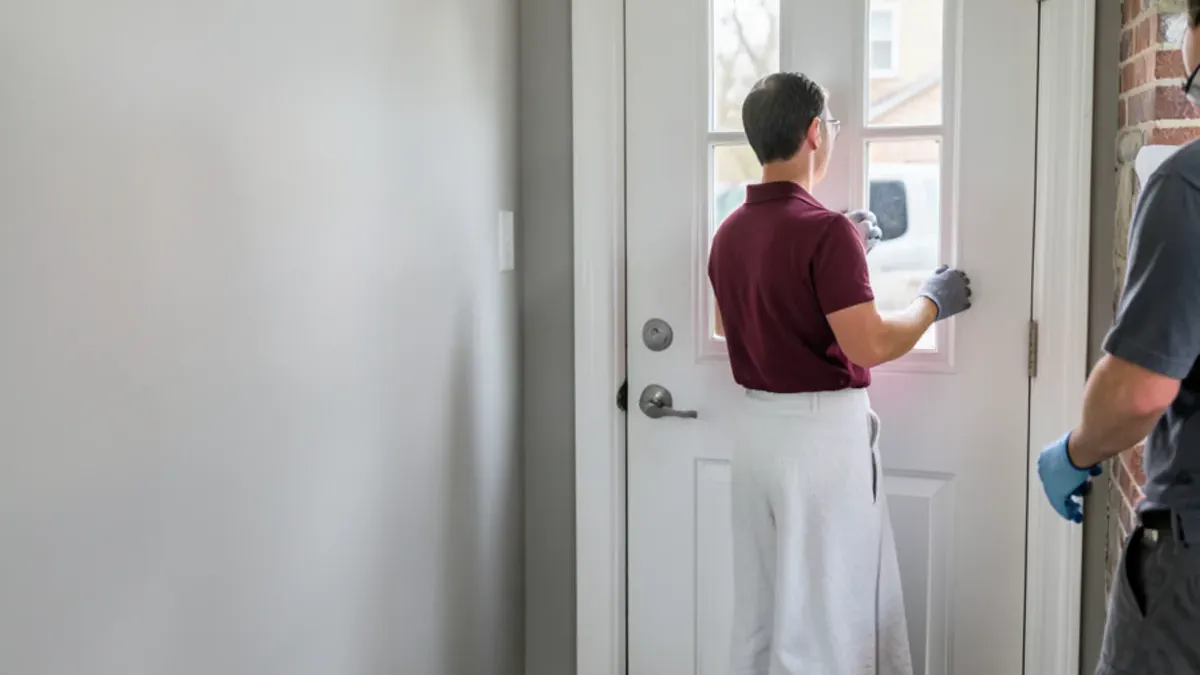
Found wasps in the house and not sure what to do? Get people and pets out of the room, shut the door behind you and put a towel along the gap at the floor. This guide covers indoor wasps, nests by the door and what to do if someone is stung.
One stray wasp or wasps inside the house all week?
The next move depends on one question: is this a single wasp that flew in, or a steady trickle coming from somewhere inside the walls?
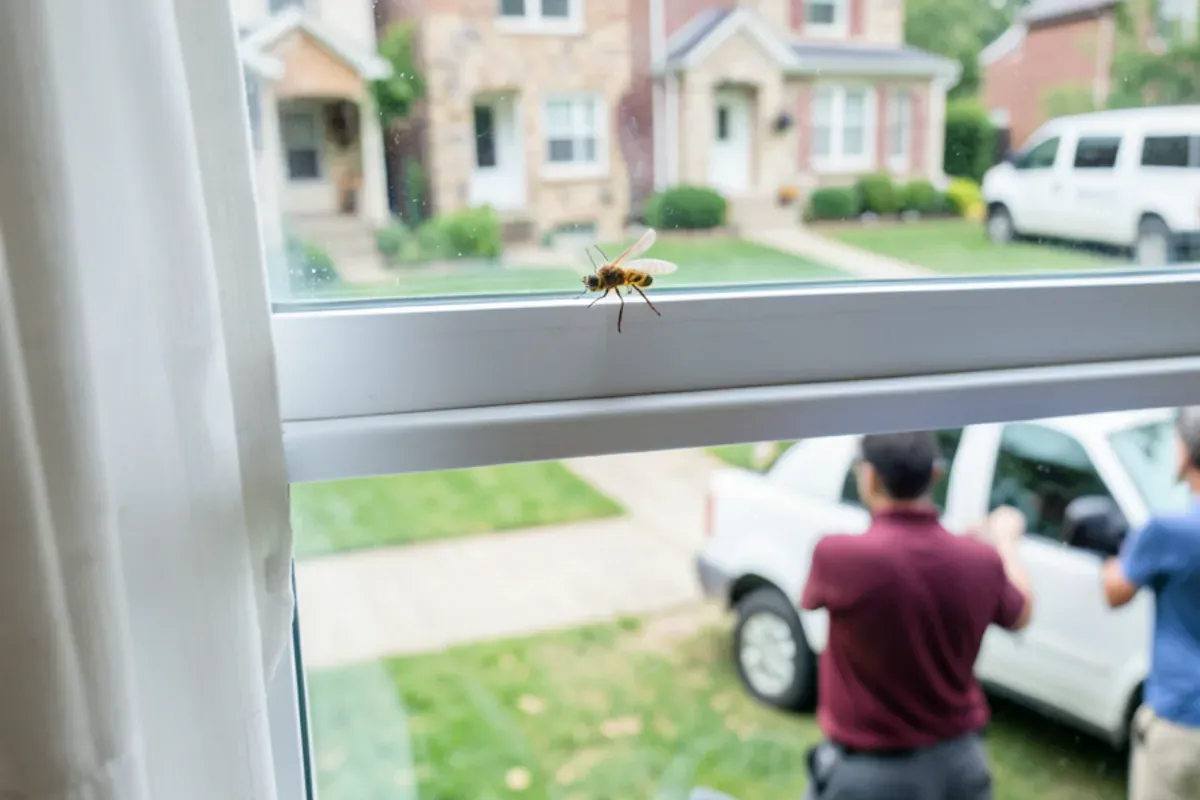
A single wasp buzzing at a window usually came through an open door, a torn screen or a gap around a window air conditioner. Close interior doors, open the window in that room, switch off the lights and let it find the daylight. If it stays put, a glass and a stiff piece of card will trap it against the pane without a fight.
Several wasps a day, or new ones appearing after you have dealt with the first, is a different situation. That pattern almost always means a nest in a wall void, attic, soffit, chimney chase or window frame, with a second exit that opens indoors. Yellowjacket colonies grow all summer and hit their peak size in late summer, which is why August and September bring the most indoor sightings.
On warm winter days you may also see slow, sluggish wasps near sunny windows. These are usually queens that tucked into the attic or walls in fall to wait out the cold. They are rarely aggressive, but they tell you there is a way in.
Wasps coming from the wall: do not seal the hole yet
The instinct is to caulk or tape the outside gap the wasps are using. Please don't. A blocked yellowjacket colony will look for another way out, and the easiest route is often inward: through a light fixture, an outlet box, a recessed ceiling can or a soft patch of drywall they can chew through.
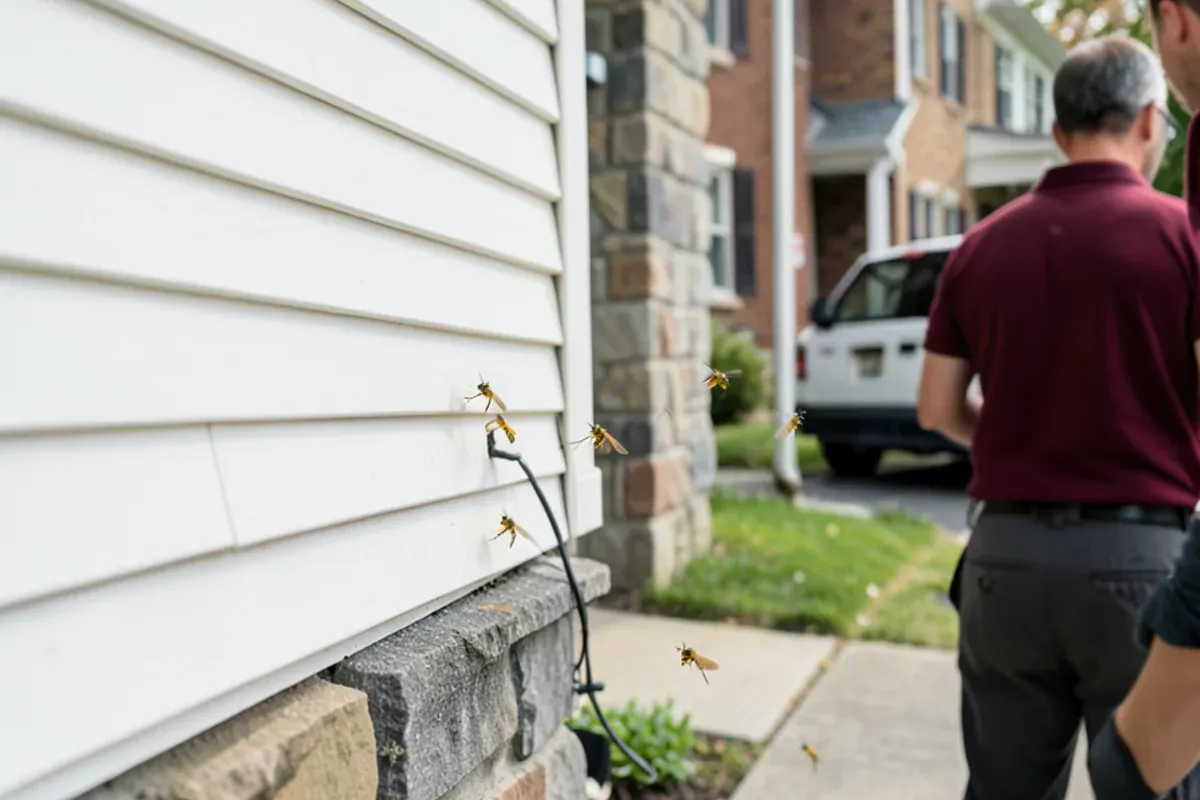
Instead, find the exterior entry from a safe distance and note it for the technician. Watch for a steady line of wasps flying in and out at one spot, often where a cable or pipe enters, along a loose fascia board or at a crumbling mortar joint. Keep children and pets away from that side of the house.
If wasps are emerging inside through a specific fixture or vent, close that room off, leave the light switched off and keep the door towel in place. Sealing should wait until the colony has been treated and activity has stopped.
Is a wasp nest near the door dangerous?
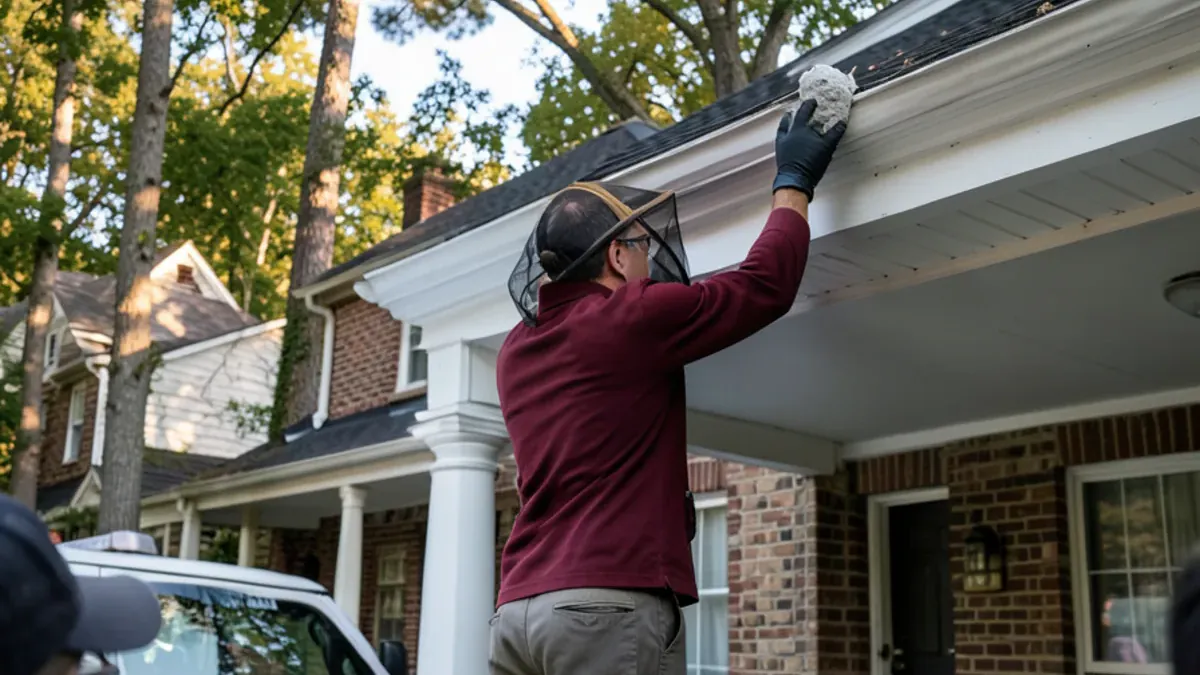
It depends on the builder. Paper wasps hang open, umbrella-shaped combs under eaves, railings and door frames; they are less defensive than yellowjackets but will sting when someone brushes the nest. Yellowjackets often nest underground beside steps, walkways and foundation plantings. Bald-faced hornets build gray, football-shaped paper nests in shrubs and trees and defend them hard.
For any nest near an entrance, switch to another door for now and tell everyone in the house which one to avoid. Hold off on mowing, string-trimming or using a leaf blower near a ground nest, since vibration sets off the whole colony. Never pour gasoline into a ground nest or try to burn a nest under the eaves; both create fire and contamination hazards that are far worse than the wasps.
Stung by a wasp: what to do right away
Walk calmly but quickly away from the nest area and get indoors. Stinging wasps release an alarm scent that draws others, so staying put and swatting tends to bring more stings.
If the person stung has trouble breathing, swelling of the face or throat, dizziness, or has been stung many times, call 911 or seek medical care immediately. Anyone with a known sting allergy should follow the plan their doctor has given them. Once everyone is safe, the nest can be dealt with.
Quick reference: what the situation calls for
| What you are seeing | Do this now | When to call |
|---|---|---|
| One wasp at a window | Close the room, open the window, lights off | Only if more appear |
| Wasps indoors every day | Shut the room, towel under the door, note the outside entry | Same day if possible |
| Wasps chewing through drywall or a ceiling | Leave the room closed and keep everyone out | Right away |
| Paper wasp nest on a door frame | Use a different entrance | Soon, before the nest grows |
| Ground nest by the front steps | Rope off the area, no mowing nearby | Soon, especially with kids or pets |
| Someone allergic in the household | Keep them indoors and away from the area | Today |
Getting emergency wasp removal in Delaware County
Our phones are staffed every day of the week from 8 a.m. until 7 p.m. When the schedule allows, a same-day nest visit is often possible, and a morning call gives you the strongest chance of one before evening. You can read how an urgent nest visit works on our emergency wasp and hornet removal page.
When a technician arrives, the first job is finding the nest and every exit it uses, inside and out. The colony is treated at the entrance, reachable nests are removed when it is safe to do so, and you get clear advice on when the gap can be sealed. Every visit starts with a free inspection and a written quote before work begins.
For seasonal nest problems that are not urgent, our stinging insect control page covers the full range of wasps, hornets and bees. Our emergency pest control overview lists the other situations we treat as urgent, and we cover homes throughout Delaware County. Call (209) 563-1650 and tell us where the wasps are coming in.
Where indoor wasps usually trace back to in Delco homes
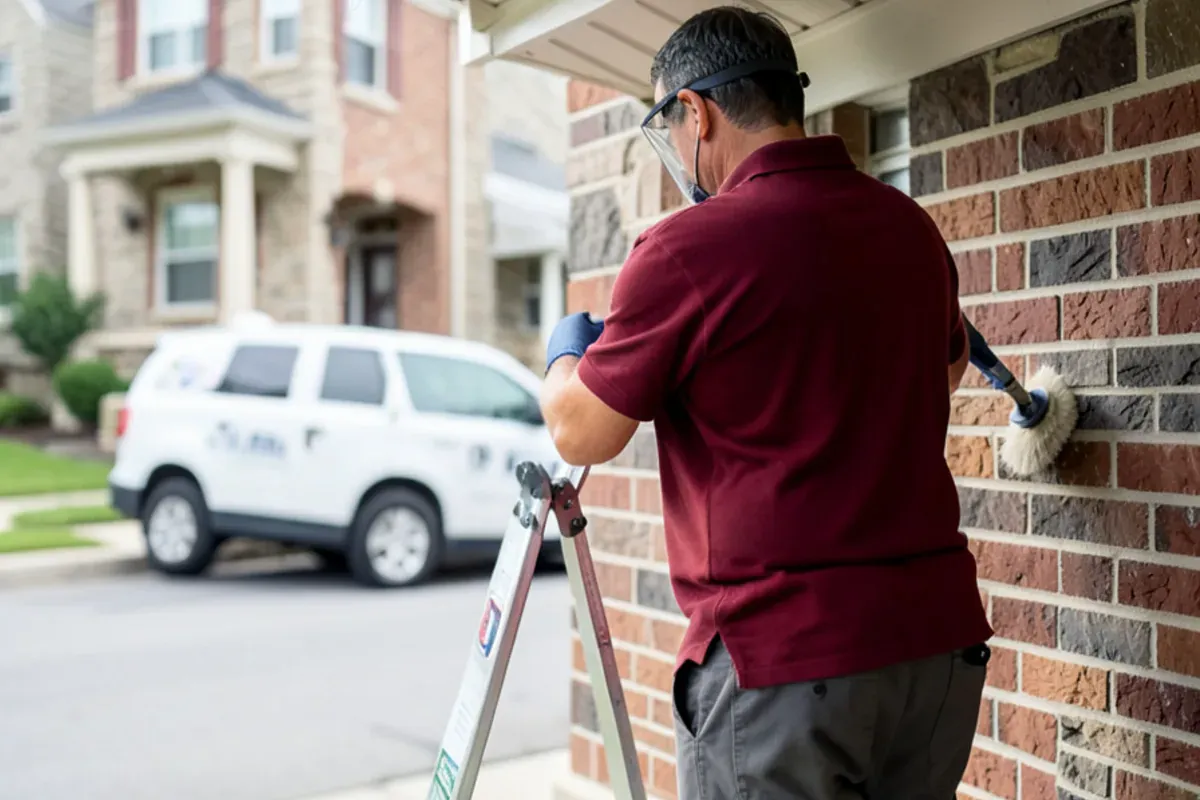
When we follow wasps back from a kitchen or bedroom, the nest is most often in a wall cavity, the space behind a soffit or a corner of the attic. The way in tends to be ordinary: a gap where cable service enters, a vent with a torn screen, or a missing piece of mortar in an old stone foundation.
Homes with stone walls, deep window wells and older wood trim give wasps more of those small openings, which is common across the pre-war neighborhoods of eastern Delaware County. Once the colony is gone, closing those gaps is what keeps next summer's queens from moving into the same spot.
Expect a taper, not a switch. After a wall colony is treated at its entrance, returning foragers keep landing at the gap for a day or two, and a few stragglers may still find the indoor exit, so the room stays closed a little longer. We rarely recommend cutting open drywall to pull out a dead nest; the paper and larvae dry out inside the cavity. The trade-off is that the gap must stay open until activity stops, which can feel wrong to a homeowner who wants it caulked that afternoon.
Quick answers
Will wasps in my wall go away on their own?
Eventually, but not soon enough for most families. A yellowjacket colony in a wall keeps growing until cold weather kills the workers in late fall, and new queens may winter in the same structure. Until then the risk of wasps breaking through indoors rises each week, so treating the nest in late summer is usually the safer course.
Can I spray a wasp nest myself?
A small, visible paper wasp nest with a handful of wasps is something some homeowners handle. Hidden nests in walls, attics or the ground are another story: spraying the entrance can push angry wasps toward you or into the house. For those, and for any household with a sting allergy, an inspection is the safer choice before anyone touches the nest.
Why do I find wasps in the house in winter?
Winter wasps are usually queens that crawled into attics, wall voids or window frames in fall to wait out the cold. A warm afternoon or a heated room wakes them, and they wander toward light. They are slow and seldom sting, but they show you where the house has gaps worth sealing before spring.
Should we sleep in a room where wasps keep getting in?
Not until the nest is treated. Yellowjackets and paper wasps settle down after dark, but a bedside lamp or a phone screen can draw a stray toward the bed, and stings in bed tend to happen when someone rolls onto a wasp. Close that room for the night, keep the towel at the door and sleep elsewhere. Tell the technician which fixture or vent they were using.
The bottom line
Close the door, protect anyone who might react badly to stings and leave the nest entrance alone until it can be treated. Those few steps keep a wasp problem from turning into a stinging incident, and when you are ready for help, our team is a phone call away.
Sources
Written by the No Bugs Exterminator team
A small, family-run pest control business in Media, PA, led by owner Thom. We write about what we see on inspections in Delaware County and southeastern Pennsylvania. About us.
Services mentioned in this guide
Want a professional opinion?
Book a free inspection and get a written quote before any treatment.
- ★ 4.8 from 21 Google reviews
- Open 7 days, 8 a.m. to 7 p.m.
- Free inspection before treatment
- Family-run, based in Media, PA
Open 7 days, 8 a.m. to 7 p.m.