
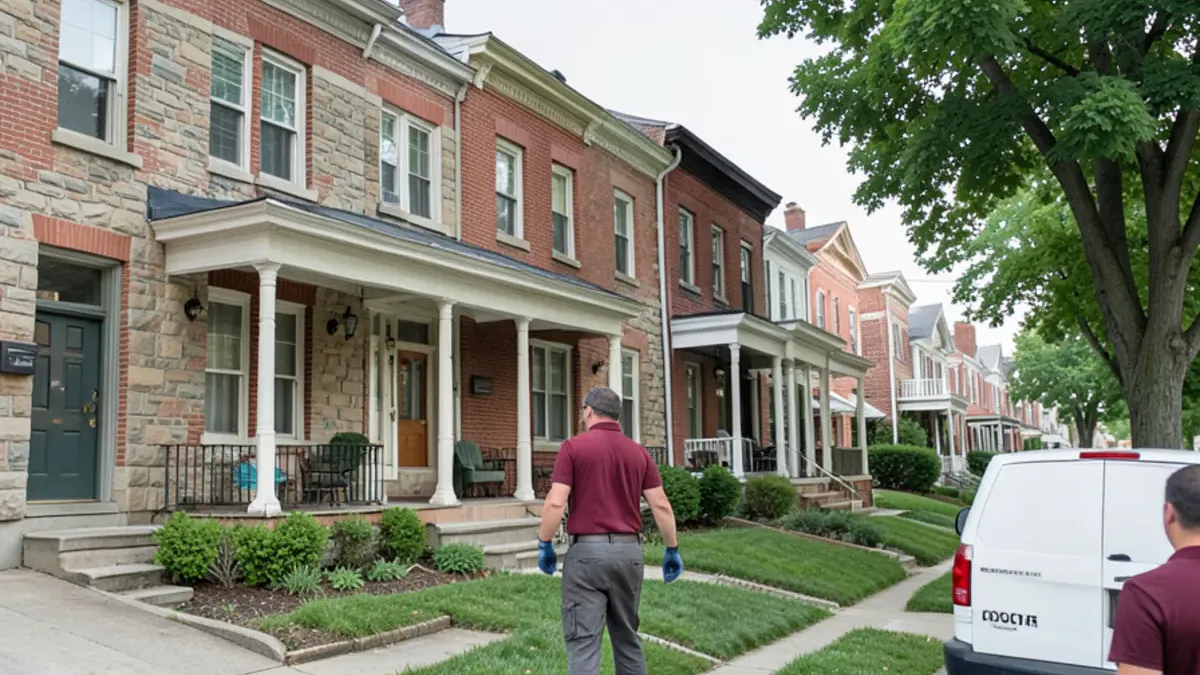
Effective pest control for rowhomes in Upper Darby starts with one fact: your house is not a closed box. Shared party walls, connected roof lines and old basements let mice, German cockroaches and bed bugs move between homes, so treating one unit in isolation often buys only a few quiet weeks. This guide covers what to watch for in attached housing and how to break the cycle.
Rowhome pest control in Upper Darby: why shared walls matter
Upper Darby is Delaware County's largest municipality, and much of it is built as blocks of attached homes. Census (ACS) estimates put the township's median home build year at 1948, with roughly 43 percent of homes renter-occupied. That combination means old construction, many hands maintaining it, and frequent move-ins and move-outs.
In a detached house, pests have to cross open ground to reach you. In a row, the wall you share with a neighbor is full of the same pipes, wires and gaps that run through yours. A pest problem two doors down can become your problem without anything coming through your front door.
Which rowhome pests travel between units?
Not every pest uses shared walls the same way. These are the ones we find moving between attached homes most often:
- House mice, which follow pipe chases and gaps along the top of foundation walls from basement to basement
- German cockroaches, which ride plumbing and electrical openings between kitchens and bathrooms that sit back to back
- Bed bugs, which crawl through outlet boxes, baseboard gaps and wall voids when one unit is treated and they scatter
- Norway rats, which burrow along rear yards and alleys where trash is stored
- Odorous house ants, which can nest in a shared wall and forage in both homes
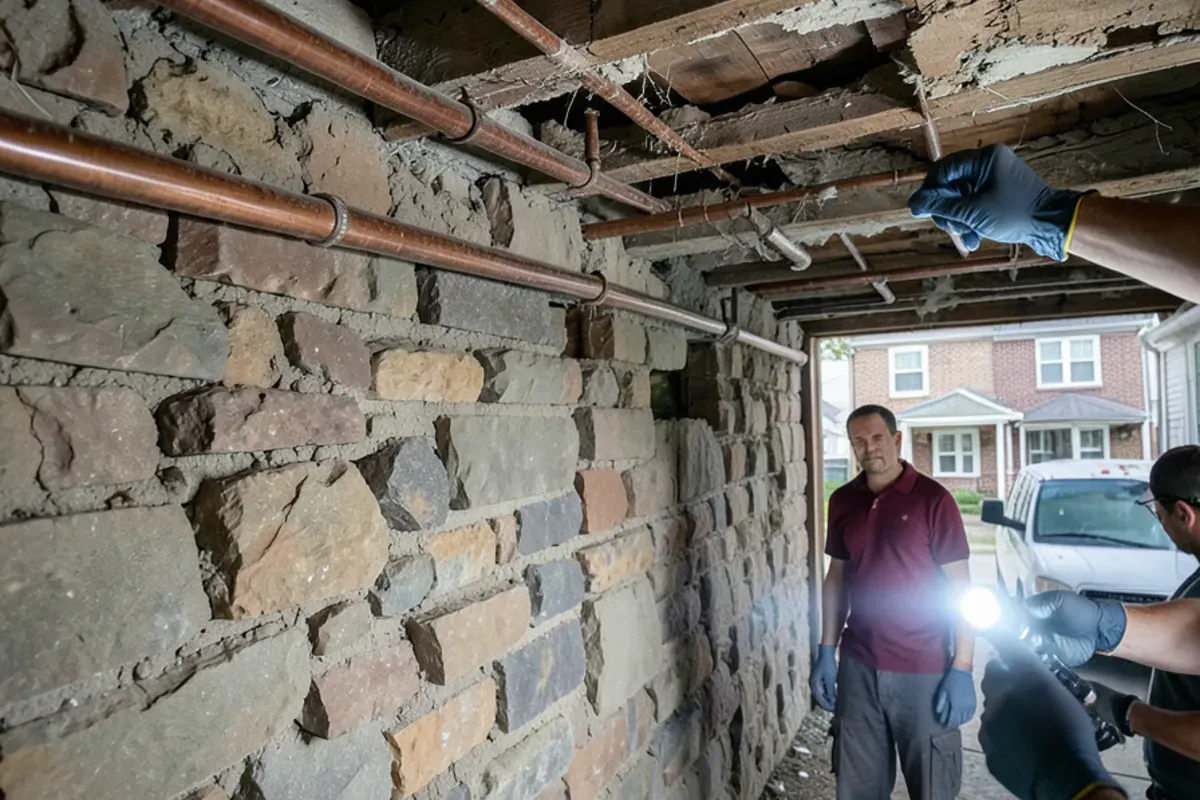
Pre-war home pests start in the basement
Older stone and block foundations crumble at the mortar joints, and generations of plumbing work leave holes where old pipes used to run. Basement windows with rotted frames, coal chute openings that were never fully closed, and floor drains without covers all give rodents and roaches a way in.
Many twin and rowhome basements also stay damp. Moisture draws cockroaches, silverfish, centipedes and camel crickets, and it softens wooden sills enough for carpenter ants to move in. Running a dehumidifier and fixing gutter downspouts that dump water against the foundation does as much good as any treatment.
Rear driveways, alleys and porch roofs
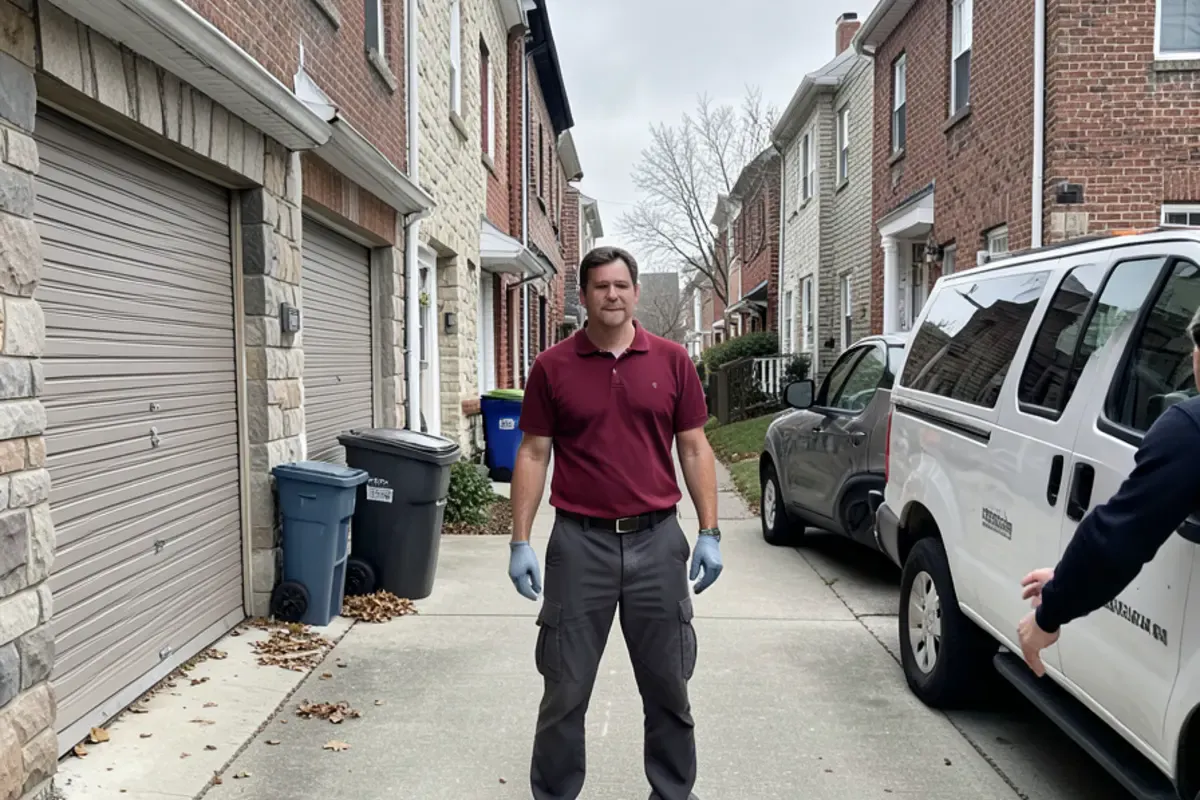
Behind many Upper Darby blocks runs a shared driveway or alley with garages tucked under the homes. Those spaces collect trash cans, recycling, leaf piles and stored items, which is exactly what rats want. A gap under a garage door gives them a straight line into the basement.
Up front, connected porch roofs and shared cornices give squirrels and stinging insects a continuous route along the block. Gaps where flashing meets brick or where a neighbor's cornice has rotted can lead into your attic even when your own trim is sound.
How do you treat one home in a row of twenty?
You cannot control the whole block, but you can make your unit the hardest one to enter and coordinate where it counts. The approach we recommend:
Inspect your own unit fully
Basement, kitchen, bathrooms, attic access and the walls you share, with notes on where activity is heaviest.
Seal what you control
Fill pipe and wire penetrations, close gaps along the top of the foundation wall, add door sweeps, and screen floor drains.
Treat with the walls in mind
Use targeted baits and dusts placed in voids and along shared walls instead of broad sprays that push pests next door and back.
Talk to the neighbors
Ask whether they are seeing the same thing. One conversation can turn two separate fights into one coordinated treatment.
Follow up
Recheck after a few weeks. Attached homes often need a second visit because pests keep arriving from beyond your walls.
Renting a rowhome: who handles the pests?
With so many Upper Darby homes rented, the question of responsibility comes up constantly. A 1979 Pennsylvania Supreme Court decision, Pugh v. Holmes, established an implied warranty of habitability for residential tenants, and leases on rowhomes frequently assign routine pest work to one side or the other. Infestations that clearly spread through a building, like roaches or bed bugs, often need the owner's involvement because neighboring units must be treated too. This is general information, not legal advice.
For owners of several units, our apartment pest control service is set up for buildings where treating one unit at a time does not work. If bed bugs are part of the picture, see our bed bug treatment page for how inspections of neighboring units fit in.
What should you check in the first week after moving into a rowhome?
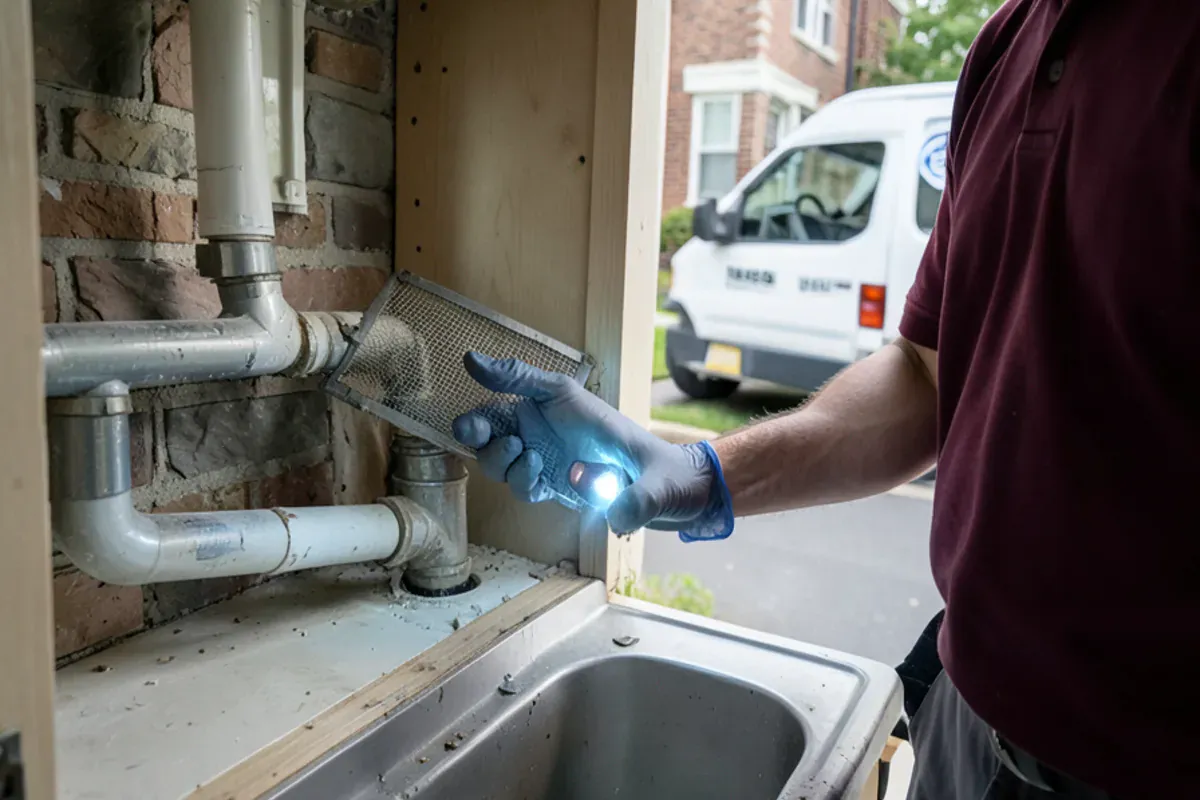
With so many Upper Darby homes changing hands or tenants, a move-in is the best moment to find a problem the last occupant left behind. Empty rooms make it easy to see. Spend twenty minutes with a flashlight on these spots before the boxes go in:
Ask the owner or landlord for any treatment history on the unit, and write down what you find with photos and dates. If something turns up, it is far easier to sort out before your furniture is in the way.
- Under the kitchen sink and behind the refrigerator, looking for German cockroach droppings that look like ground pepper and brown smears in cabinet corners.
- Along the top of the basement foundation wall and on the sill, where mouse droppings collect beside the party wall.
- The basement floor drain, to see whether it has a cover and whether the trap holds water.
- The rear basement or garage door, checking for daylight along the bottom and corners.
- Seams and corners of any furniture, carpeting edges or mattresses left behind, for bed bug spotting or shed skins.
- The attic hatch or top-floor closet ceilings, for droppings or insulation pulled loose under the shared roof line.
What attached homes in Upper Darby tend to show us
When we inspect a twin or row in Upper Darby Township, the basement usually tells the story first. We look along the top of the shared foundation wall, around the main water line and under the basement stairs, where droppings and roach staining collect. Kitchen cabinets on the shared wall come next, especially behind the sink and under the stove.
Our most useful step is often pointing out the two or three openings that matter most rather than treating every room. Upper Darby is about 15 minutes from our base in Media, and our residential pest control visits start with a free inspection and a written quote before any treatment.
Attached housing also has a limit we explain up front. We can inspect, treat and seal the unit we are hired for, but if the home next door has an active roach or bed bug population, some pressure will keep crossing the party wall until that side is handled too. Dusts placed carefully in wall voids and outlet boxes last longer than sprays and do not chase insects into the neighbor's kitchen, but they take more time to place well. Sealing your side of a pipe chase closes your door, not theirs. When a problem clearly runs through several units, we suggest the owner or the neighbors schedule together rather than paying for repeat visits to one house.
Quick answers
Will my neighbor know if I get pest control in a twin?
Only if you tell them, but in a twin it often helps to. The two halves share a wall, a roof line and sometimes a basement crawl area, so mice or roaches treated on one side tend to drift to the other. A short conversation lets both households seal and treat at about the same time.
Why do mice keep coming back after I seal my rowhome?
Usually because the gaps that matter are along the shared foundation wall or in the cornice, and those connect to neighboring homes you cannot see into. Check where the basement ceiling joists meet the party wall and around old pipe openings. Steel wool alone loosens over time, so pair it with sealant or metal mesh.
Can bed bugs travel from the house next door in a twin?
Yes, though less often than people fear. Bed bugs mostly spread on belongings, but in attached homes they can crawl through gaps around outlets, baseboards and pipes in a shared wall, especially when a neighbor treats and the insects scatter. If you share a wall with a known infestation, check bed seams and headboards weekly and ask about coordinating inspections on both sides.
The bottom line
Attached homes need a plan that accounts for the walls you share, the basement below and the alley out back. If you own or rent a twin or rowhome in the area and want a clear picture of where pests are getting in, call (209) 563-1650.
Sources
Written by the No Bugs Exterminator team
A small, family-run pest control business in Media, PA, led by owner Thom. We write about what we see on inspections in Delaware County and southeastern Pennsylvania. About us.
Services mentioned in this guide
Want a professional opinion?
Book a free inspection and get a written quote before any treatment.
- ★ 4.8 from 21 Google reviews
- Open 7 days, 8 a.m. to 7 p.m.
- Free inspection before treatment
- Family-run, based in Media, PA
Open 7 days, 8 a.m. to 7 p.m.