
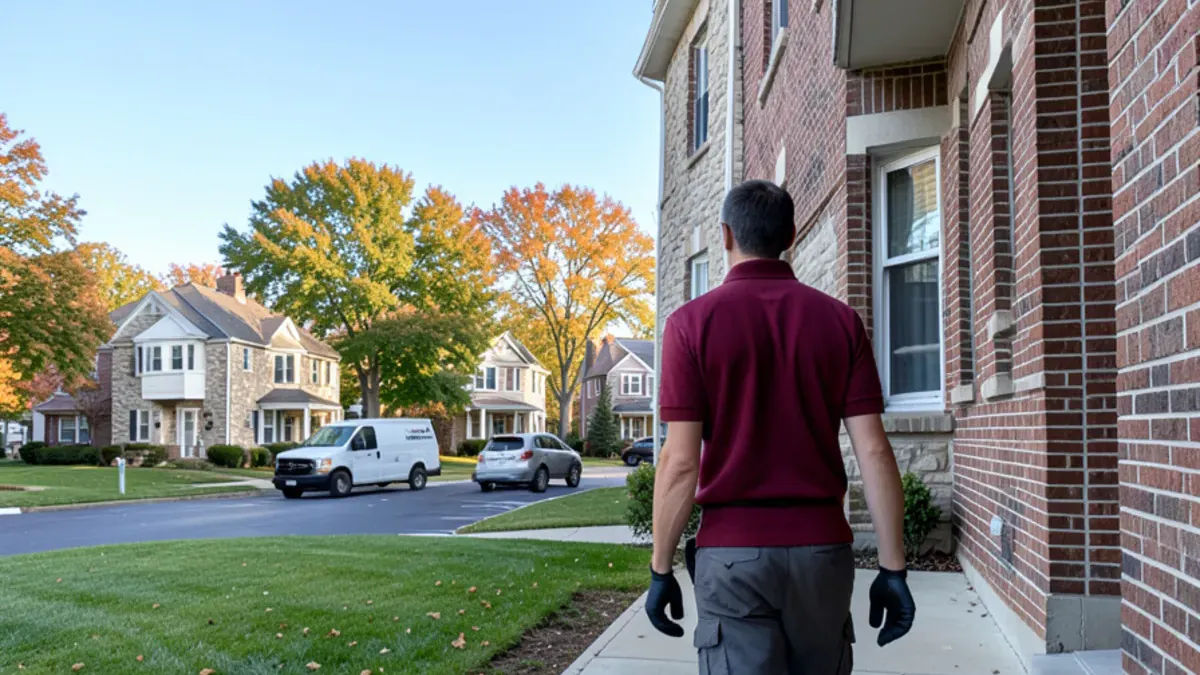
Why apartments in Delaware County see repeat pest problems
Renters make up a large share of many local communities. Census (ACS) estimates put renter-occupied housing at 68% in Lima, 60% in Chester, 58% in Media borough and 55% in Yeadon. Much of that housing is either older converted twins and walk-ups or garden apartments with shared utility runs.
In both cases, units connect through plumbing chases, electrical runs, shared laundry rooms and trash areas. German cockroaches, mice and bed bugs use those paths, and frequent move-ins and move-outs carry them in on furniture and boxes. One untreated unit can keep a whole stack reinfested.
The warning signs in a building tend to show up in the same places: German cockroaches in the cabinet under the kitchen sink, droppings along the wall of a shared trash room, or new bites a few weeks after the unit next door changed tenants. When two or more households report the same pest, treat it as a building problem rather than a single-unit one.
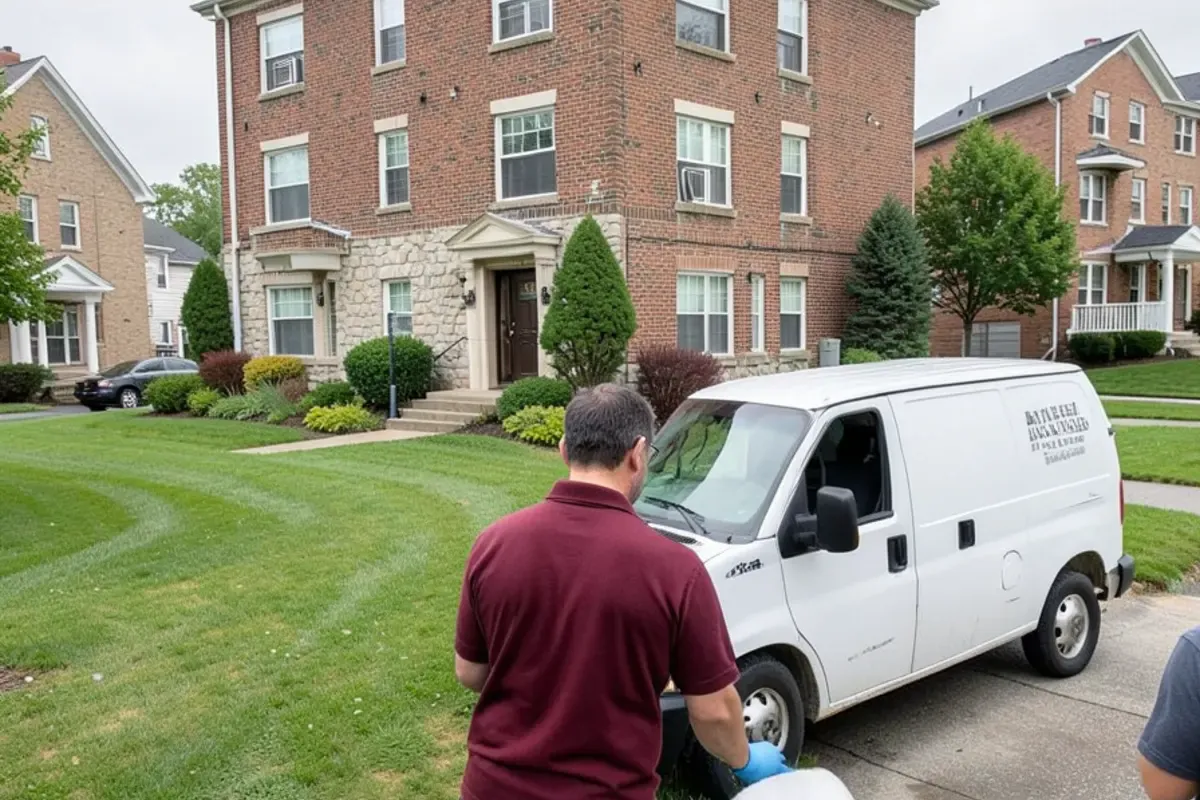
Tenant and landlord pest control in PA: who handles what?
Pennsylvania courts recognize an implied warranty of habitability in residential leases (Pugh v. Holmes, 1979), which generally means a rental must be fit to live in. Leases often assign routine pest responsibility, and who pays for a problem spreading through the building can differ from who pays for one kitchen's ants.
Read your lease first, then put the problem in writing to the landlord or property manager with dates and photos. Landlords can share our written inspection findings with tenants so everyone works from the same facts. This is general information, not legal advice.
Can one unit be treated without the whole building?
Often, yes, for pests that stay put, such as a single ant trail or a fruit fly problem from one kitchen. For German cockroaches, bed bugs and mice, treating one unit alone usually just pushes them next door.
Our usual approach is unit by unit with a ring check: we treat the unit with the complaint and inspect the units above, below and on each side. If those show activity, they go into the plan too. Bed bug cases follow a dedicated apartment bed bug treatment protocol, and roach work follows our cockroach control process.
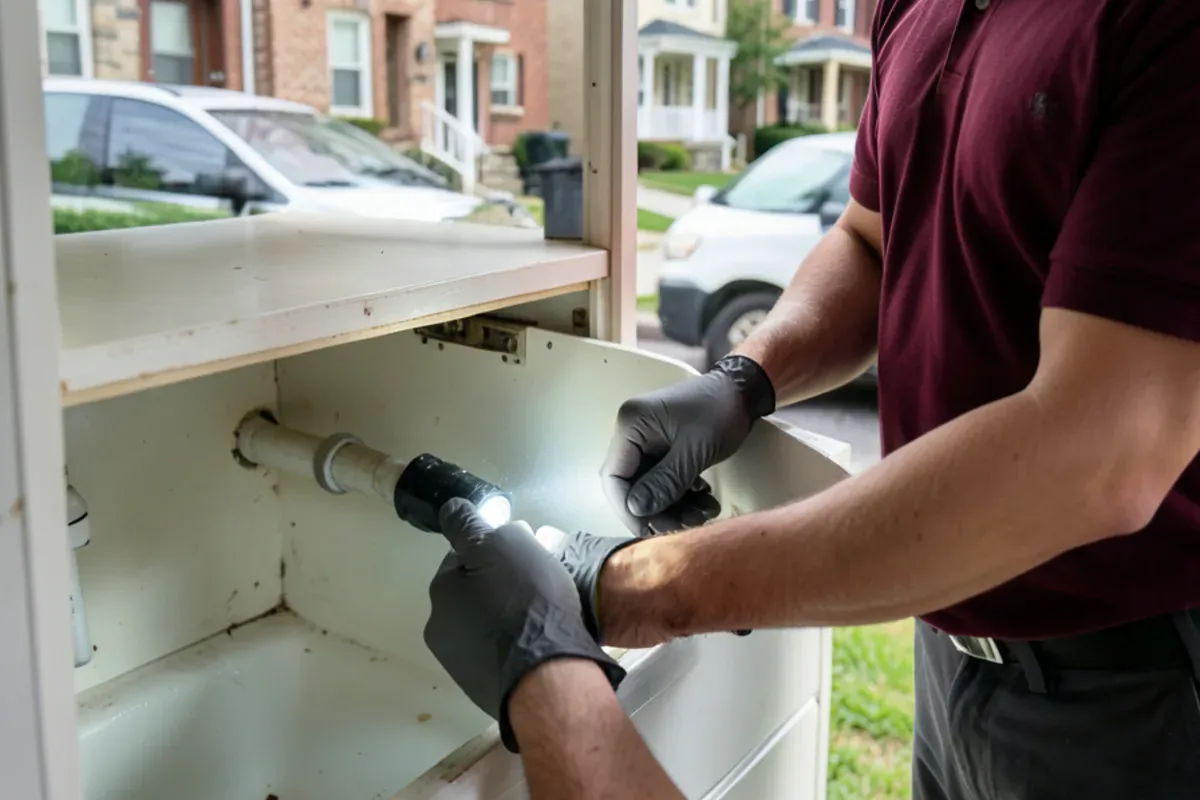
How an apartment treatment visit works
Report and access
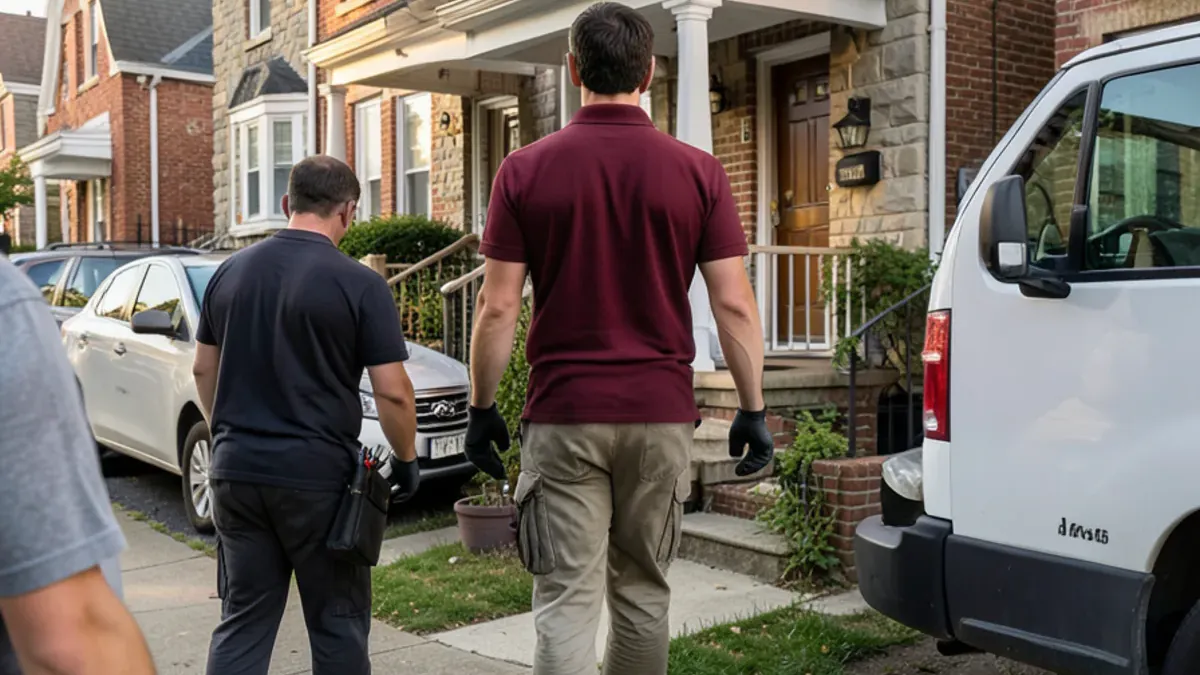
The tenant or manager reports the problem, and the manager arranges entry notices for every unit we need to see.
Free inspection of the unit and its neighbors
We confirm the pest and check adjoining units, common hallways, laundry and trash areas.
Written quote
The quote lists which units are included, the method for each and the prep each resident needs to do.
Prep sheet to residents
Each household gets clear prep steps, such as emptying under-sink cabinets for roach work.
Treatment and sealing
We treat each unit, seal shared pipe penetrations where practical and treat common areas as needed.
Follow-up and report
We return on schedule and leave written notes on each unit's results for the manager's file.
Talk to us about apartment pest control
Call and speak with Thom or his team. The inspection is free, and you get a written quote before any treatment.
- ★ 4.8 from 21 Google reviews
- Open 7 days, 8 a.m. to 7 p.m.
- Free inspection before treatment
- Family-run, based in Media, PA
Open 7 days, 8 a.m. to 7 p.m.
PDA licensing and pesticide rules in occupied Pennsylvania buildings
Treating an occupied building is regulated work. The Pennsylvania Department of Agriculture (PDA) licenses pest control businesses and certifies applicators under the Pesticide Control Act of 1973, and 7 Pa. Code § 128.31 requires the business license number on service vehicles. Managers and condo boards can ask any provider for that number before signing.
Product labels carry legal weight in apartments, since they set re-entry times and where a product may go in rooms people live in. Ask for written notes listing what was applied in each unit and common area, keep them in the building file, and share the re-entry times with residents, especially households with infants, pets or asthma.
Notices, prep sheets and records
Multi-unit work lives or dies on communication. Residents need notice of entry, a plain-language prep list and a time window. Managers need a record of which units were inspected, what was found, what was applied and which residents did not prepare.
We leave written notes for each unit after every visit. Those records help when a lease renews, when a new tenant asks about pest history, or when a building owner wants to see whether a problem is shrinking. Owners with several properties can read how we handle portfolios on our property management pest control page.
What drives the cost of apartment pest control in Delaware County, PA?
Every building is quoted after inspection, because a single studio and a 24-unit garden complex are different jobs.
The ring check sets the size of the job. If the units around the complaint come back clean, the quote stays with one unit; if two neighbors show activity, they join the plan and the visit count grows with them.
Building age and layout matter too. A converted twin with two units and one basement is simpler to seal than a garden complex where plumbing stacks run through three floors. Resident prep is the factor owners can influence most: when every unit is ready on treatment day, follow-ups stay on schedule and fewer return trips end up on the bill.
- Number of units involved, including adjacent units that test positive
- The pest: bed bugs and German cockroaches require several visits
- Common areas such as laundry rooms, trash rooms and basements
- Resident prep and access, since missed units mean return trips
- Sealing of shared plumbing and electrical penetrations
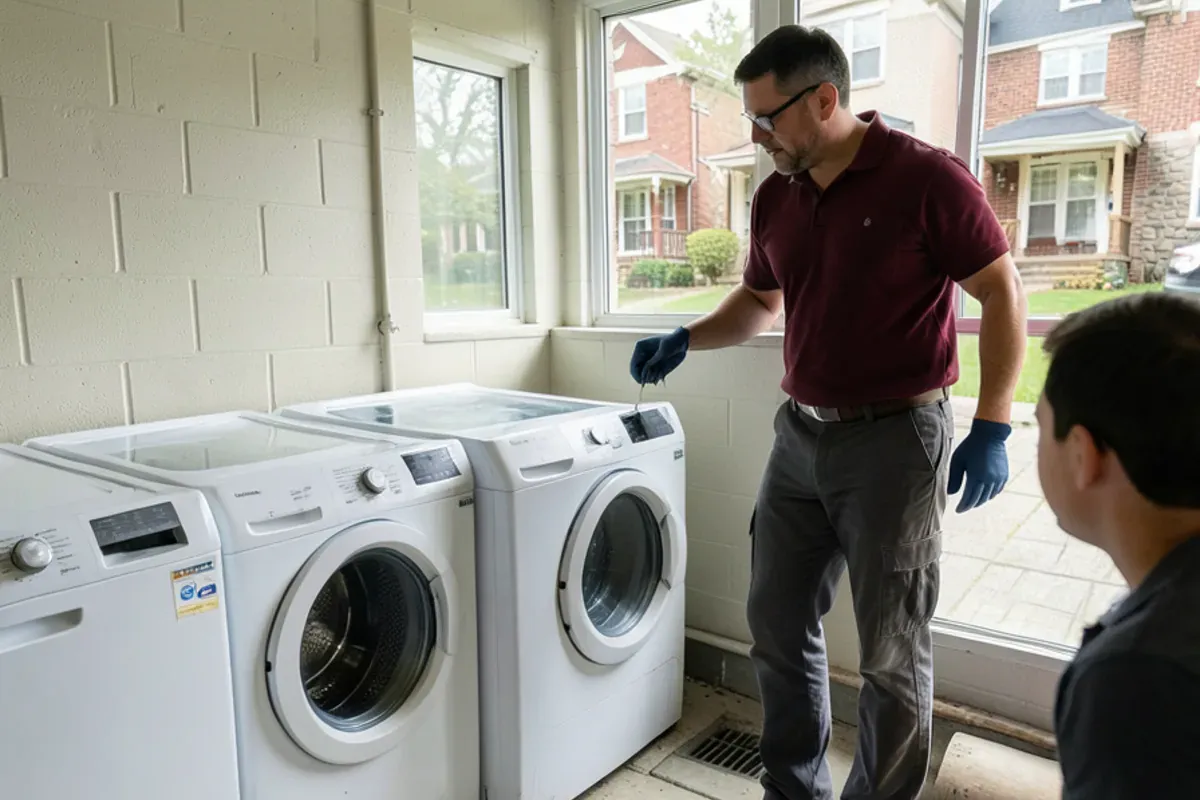
Scheduling access in occupied buildings
We are open 7 days, 8 a.m. to 7 p.m., which helps when residents work during the day. Weekend and early-evening visits make it easier to reach units where nobody is home on weekdays.
For condos, the association usually coordinates common areas while owners book their own units; we can line those visits up on the same day. Families who prefer Spanish can find information on our exterminador en español page. Moving into a unit rather than living in one? See new home pest control.
What our apartment pest control includes
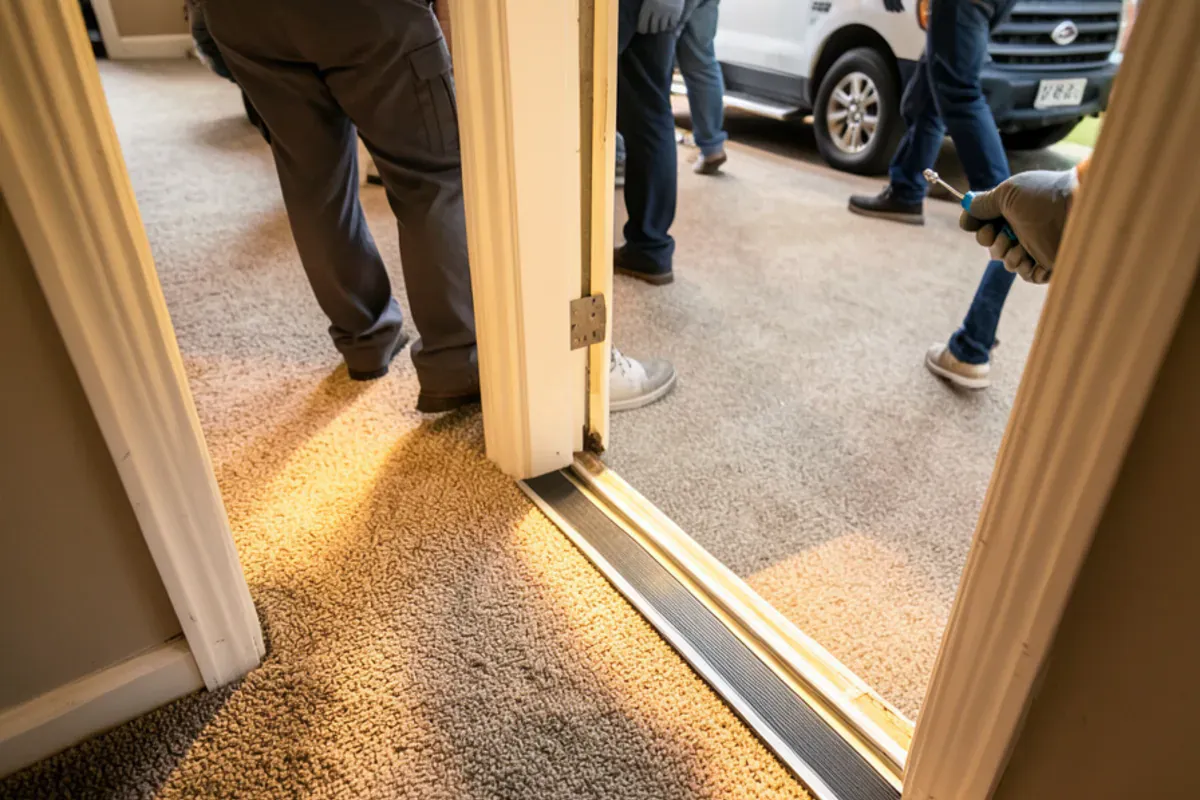
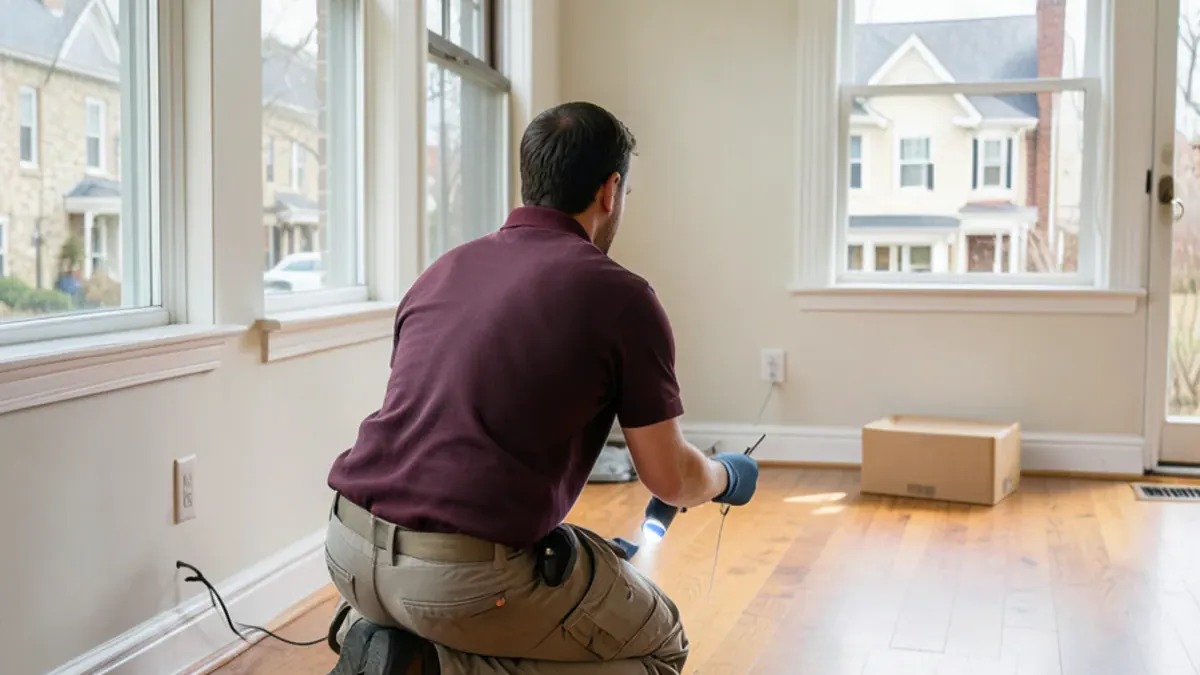
- Free inspection of the reported unit
- Ring check of units above, below and beside it
- Written quote naming every unit and common area included
- Resident prep sheets
- Treatment plus sealing of shared pipe penetrations where practical
- Scheduled follow-up visits for multi-visit pests
- Written unit-by-unit notes for the manager or owner
Why call No Bugs Exterminator for apartment pest control
Bed bug focus
The business specializes in bed bugs, the pest that most often spreads between apartments.
Open evenings and weekends
Visits run 8 a.m. to 7 p.m. every day, which makes resident access easier to arrange.
Findings on paper
Every job starts with a free inspection and a written quote that tenants and owners can both read.
Family-run in Media
Thom and his team run a small family business in Media, a short drive from most Delaware County rentals.
Rated by customers
We hold a 4.8-star rating from 21 Google reviews.
When a unit can’t wait
Same-day visits are often possible when the schedule allows — call early in the day.
Where we provide apartment pest control
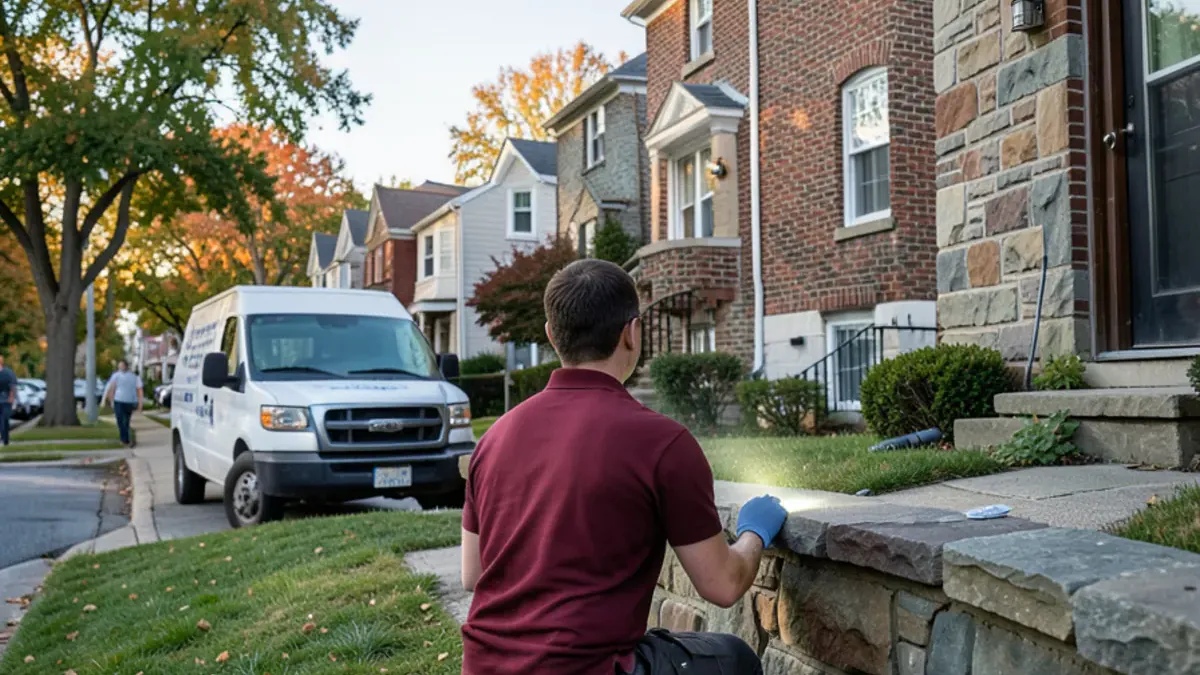
Apartment work takes us across eastern Delaware County. In Lima, garden complexes near the Promenade at Granite Run share long utility runs. Drexel Hill mixes brick twins with the large Drexelbrook community, Chester has older rowhomes converted to units, and in Media, walk-up apartments sit above State Street storefronts, sharing old walls with the shops below.
- Chester
About 60% of households rent, many in older rowhomes split into units, so roaches and mice move through shared walls and basements.
- Millbourne
With a 66% renter share beside the Market-Frankford Line’s Millbourne station, pre-war buildings need unit-by-unit checks.
- Marcus Hook
In this river port town, where 64% of households rent and the median home dates to 1944, older units often share walls and cellars.
- Rosemont
Apartment buildings off Lancaster Avenue near Rosemont College turn over often, which carries bed bugs and roaches in with furniture.
- Linwood
Older homes near Route 13, with a median build year of 1947 and a 48% renter share, include rentals with shared plumbing and walls.
- Chester Township
Toby Farms and the Chester Creek edge mix single homes with rentals, and a 45% renter share means frequent move-in inspections.
- Trainer
Riverfront rentals near the Monroe Energy refinery sit in homes from around 1957, where shared basements let mice travel between units.
- Upper Chichester Township
Rental units along the Route 322 corridor in Boothwyn, Twin Oaks and Ogden turn over regularly, and each move can bring cockroaches or bed bugs in.
- Clifton Heights
In this former mill borough on Darby Creek, about a quarter of homes are rented, and buildings from around 1951 share walls and plumbing runs.
- Lower Chichester Township
Next to the Marcus Hook refinery complex, more than half of households rent, many in homes from around 1948 with shared walls and cellars.
What customers say on Google
4.8 out of 5 from 21 reviews on Google. Quoted as written by customers.
Thom + his team were amazing. Very professional + provided me with a quote that made the most sense for my situation. Clearly I was not being gouged. Thom put the client first.
Excellent Exterminator! Very courteous and professional! always arrives on time and will take care of any bugs!
Professional, thorough, great communication, timely, respectful of people and property…
Apartment Pest Control: common questions
Who pays for an exterminator in a Pennsylvania rental?
It depends on the lease and the cause. Pennsylvania courts recognize an implied warranty of habitability, while leases often assign routine pest upkeep to one side; an infestation moving between units in a Delaware County building may be treated differently from one unit's ants. Read your lease and put the problem in writing to the landlord with dates and photos. This is general information, not legal advice.
Can you treat one unit without treating the whole building?
For contained problems like a single ant trail, yes. For German cockroaches, bed bugs and mice, treating one unit alone often pushes them next door, so we inspect the units above, below and beside it. Only the units that show activity go into the plan, which keeps the job no bigger than it needs to be.
How do you stop pests moving between apartments?
By treating the connections, not just the rooms. We seal gaps where pipes and wires pass between units, treat wall voids behind kitchens and baths, and handle common areas like laundry and trash rooms. Follow-up visits catch anything that hatched after the first round. Resident prep in every involved unit matters as much as the treatment.
Do I need to tell my landlord before calling an exterminator?
In most cases you should, and many leases require it. The landlord may already have a provider, may be responsible for the cost, and may need to arrange access to neighboring units. If you book us directly, the written inspection findings give you something concrete to share. This is general information, not legal advice.
How should I prepare my apartment for treatment?
It depends on the pest, and we hand you a prep sheet with the quote. For cockroaches, empty the cabinets under sinks and clear countertops. For bed bugs, bag and launder bedding and clothing per the sheet and do not move furniture to another unit. For mice, clear the floor of cabinets where droppings were found.
Related services
Helpful guides from our blog
Ready to get rid of the problem?
Thom and his team serve Media, Delaware County and southeastern Pennsylvania, open 7 days, 8 a.m. to 7 p.m..
- ★ 4.8 from 21 Google reviews
- Open 7 days, 8 a.m. to 7 p.m.
- Free inspection before treatment
- Family-run, based in Media, PA
Open 7 days, 8 a.m. to 7 p.m.