
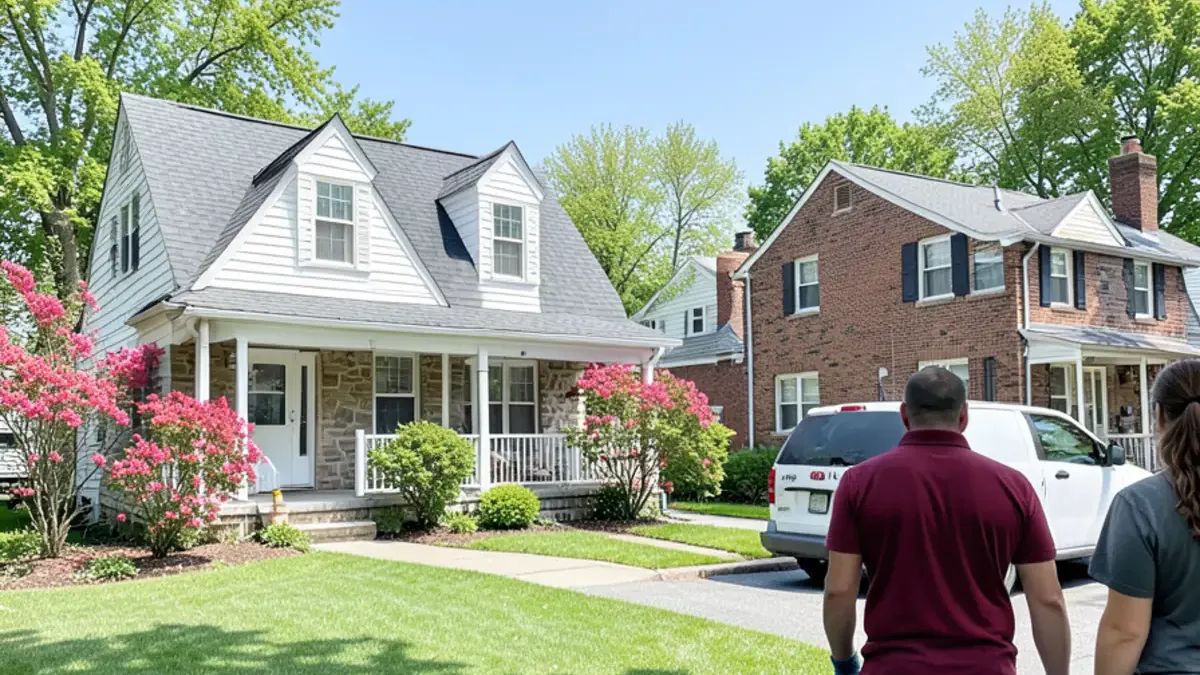
The key to how to prevent wasp nests is timing: every nest around your house this summer started in spring as a single queen building a cell the size of a thumbnail. Catch those early nests, close the gaps that lead into walls, and remove the food and water that draw foragers, and you face far fewer large colonies by August.
Why does wasp nest prevention start in spring?
In Pennsylvania, only newly mated queens survive the winter, tucked under bark, in woodpiles or inside wall gaps. Old nests are not reused. When warm weather returns in April and May, each queen picks a sheltered spot and builds a small paper nest by herself, raising the first workers alone.
At that stage a nest may hold a handful of cells and one wasp. By late summer, a yellowjacket colony can reach thousands of workers. That difference is why a weekly look around the house in spring does more than anything you can do in August.
Here is where to look, location by location, and what to do at each spot, from the eaves down to the lawn.
Eaves, soffits and porch ceilings
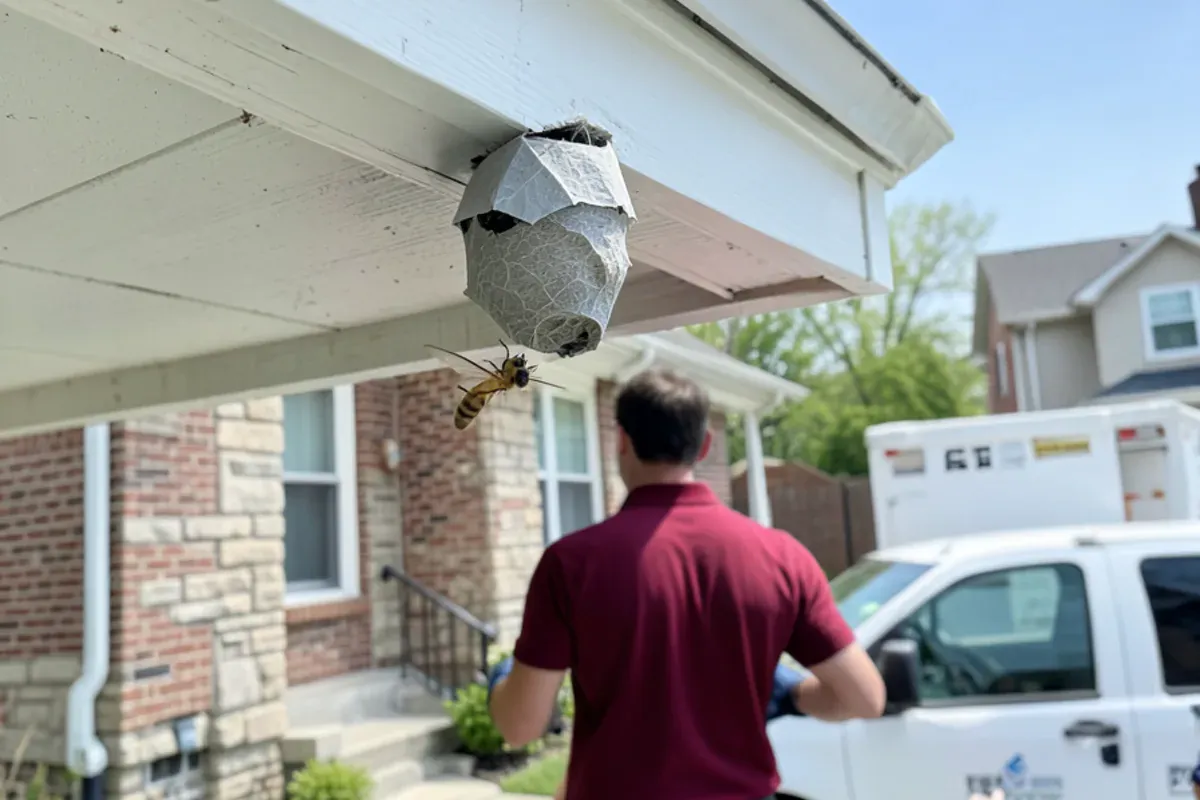
Eaves wasp nests are the most common kind homeowners notice. Paper wasps build open, umbrella-shaped combs under overhangs, porch ceilings, deck rails and window frames, often on the sunny side of the house.
- Walk around the house weekly from April through June and look up at eaves, gutters, porch ceilings and the tops of window frames.
- Knock down any golf-ball-sized or smaller nest with a long broom handle while it is cool in the early morning, and only if no one nearby has a sting allergy.
- Repair loose soffit panels and gaps where the soffit meets the wall; these lead into the roof cavity.
- Keep porch lights off when not needed, since lights draw the insects wasps feed on.
Ground nests in lawns and garden beds
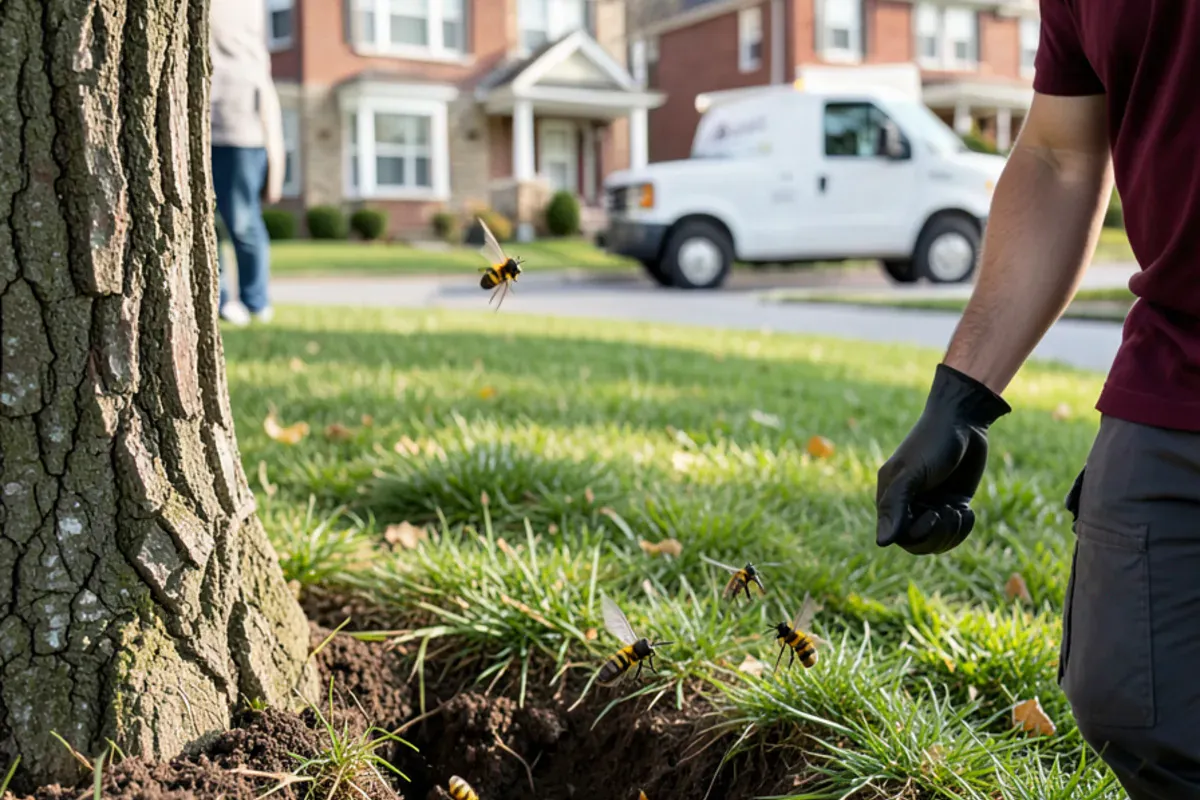
Yellowjackets often nest underground, frequently in an old rodent burrow or a hollow under a stump, landscape timber or rock. The entrance is a small hole with steady traffic in and out, and the nest itself can be much larger than the opening suggests.
- Fill old rodent burrows and holes in the lawn in spring before queens move in.
- Watch for wasps flying low and straight into one spot in the grass, mulch or a retaining wall.
- Mark any ground nest you find and keep children and mowers away from it.
- Never pour gasoline or other fuels into a nest; it is dangerous and contaminates the soil.
Wall voids, attics and vents
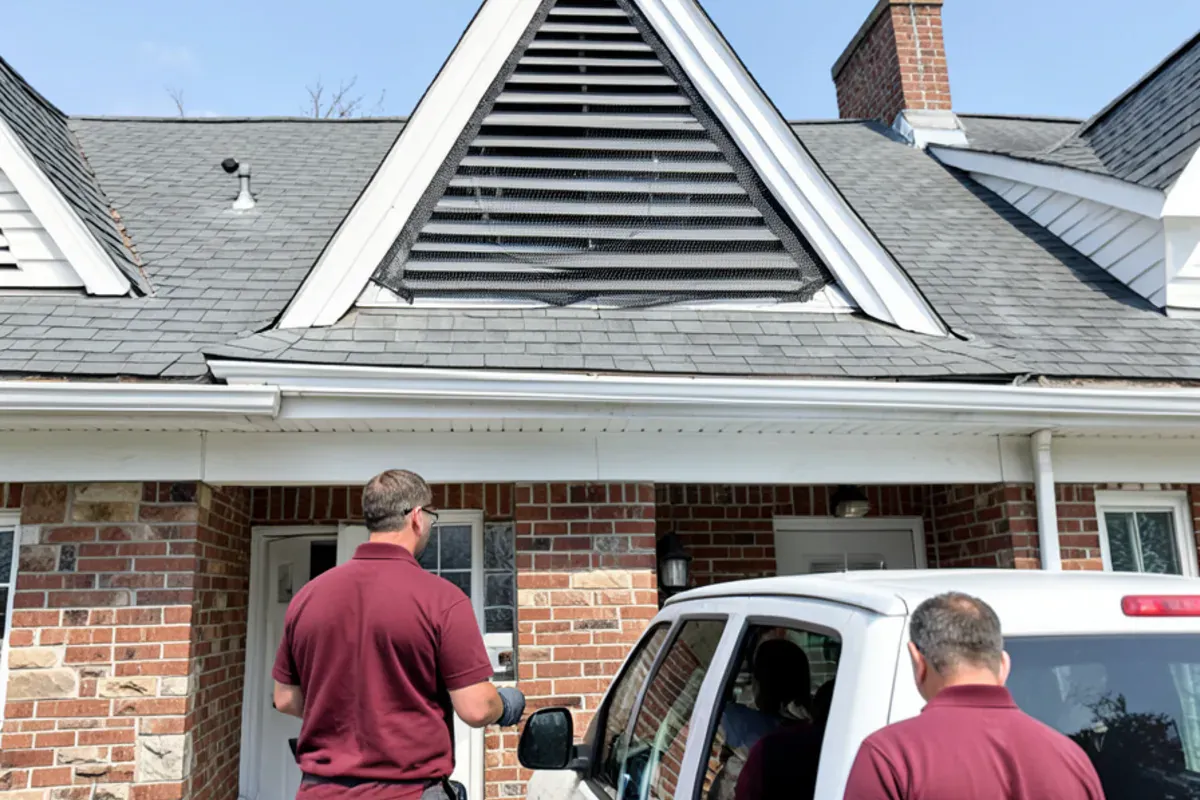
A nest inside a wall or attic is the hardest to deal with and the most likely to send wasps into living space. Queens find their way in through small gaps in siding, unscreened vents and spaces around utility lines.
Seal these openings in early spring or late fall, when no colony is active. Do not seal an opening where wasps are going in and out during summer; blocked yellowjackets can chew through drywall and come out inside the house.
- Screen gable, soffit and attic vents with fine mesh.
- Caulk gaps where siding meets trim and around window frames.
- Seal around dryer vents, exhaust fans and utility lines.
- Check the inside of the attic in spring for small starter nests on rafters.
Prevent wasp nests on sheds, play sets, grills and trees
Anything that sits undisturbed for weeks is a candidate. Bald-faced hornets build gray, football-shaped nests in trees, shrubs and on the sides of buildings, while paper wasps like the undersides of grill lids, play set platforms and mailbox posts.
- Open and use sheds, grills and play sets regularly in spring so queens do not settle.
- Check under deck stairs, inside hollow railings and the upper corners of sheds.
- Trim shrubs near walkways so a hornet nest is spotted while it is still small.
- Plug the open ends of metal swing set and fence tubing.
How do you keep wasps away from the patio in late summer?
By August, worker wasps shift from protein to sugar, and that is when they crowd picnics. Removing what draws them is the most useful wasp deterrent.
Cover food and drinks
Use lids on drinks and pour sodas into cups so a wasp cannot hide inside a can.
Clean up fallen fruit
Pick up apples, pears and plums from under trees every few days.
Keep trash sealed
Use lidded cans, rinse them now and then, and keep them away from the patio.
Bring in pet food
Do not leave pet bowls outside between meals.
Skip the decoys as a sole fix
Fake paper nests sometimes discourage paper wasps but do little against yellowjackets.
When is a nest a job for a professional?
Call for help with any nest larger than a softball, any ground or wall-void nest, any nest in a spot you have to reach on a ladder, or any nest near someone with a known sting allergy. If someone has a severe reaction to a sting, call 911 or seek medical care right away.
Our wasp nest removal service handles paper wasps and open nests. For ground and wall nests, see yellow jacket control, and for large gray tree nests, hornet nest removal.
Wasp patterns we see on Springfield's post-war homes
When we inspect Cape Cods and colonials in Springfield Township, the nests cluster in predictable spots: the gap where a dormer meets the roof, the underside of an aluminum awning, and loose soffit panels on older additions. Census (ACS) estimates put the township's median home at 1955, and seventy years of weather open small gaps in that trim.
In April and May, many of the calls we get are for nests no bigger than a golf ball on a porch ceiling, and we will say plainly when a homeowner without a sting allergy can knock one down with a broom at dawn. The nests that do need us by July tend to be in the dormer gaps and soffit returns, where yellowjackets have moved into the roof cavity and the only sign outside is a steady line of wasps at one crack. There we treat the entrance, wait for traffic to stop, and only then recommend sealing, so the colony is not pushed into the bedroom ceiling.
Springfield is about 10 minutes from our Media base, and mature trees along its streets mean hornet nests often show up only after leaves fall. Our Springfield Township pest control page has more on the area.
Quick answers
Do fake wasp nests really work?
Only partly. Paper wasps are territorial and may avoid building near what looks like another colony, so a decoy under an eave can help a little. Yellowjackets nesting in the ground or walls ignore them. We treat decoys as a small extra; the weekly spring check and sealing gaps into walls do far more to prevent nests around a home.
Will wasps come back to the same nest next year?
No. In Pennsylvania, the colony dies off in late fall and only new queens overwinter elsewhere. The old nest is not reused. However, a spot that sheltered one nest often attracts another queen the next spring, so removing old nests in winter and sealing the gap or vent behind them is a good habit.
Do wasp traps help prevent nests?
A little, if you place them well. Traps hung in spring can catch some queens before they found colonies, and in late summer they pull yellowjacket workers away from people. The catch is that a baited trap attracts wasps, so hang it at the far edge of the yard, not beside the patio table. Traps never remove a nest that is already established in a wall or the ground.
What month should I start looking for starter wasp nests?
Start in mid-April in southeastern Pennsylvania and keep checking weekly through June. That is when overwintered queens build alone, and a starter nest may be just a few cells under an eave or grill lid. On mature, tree-lined Springfield streets, also look at shrubs near walkways, where bald-faced hornets sometimes start nests that leaves hide until fall.
The bottom line
A short look along the eaves each spring week, sealed gaps into walls and a tidy patio in late summer prevent most large nests. If you find one that is big, hidden in a wall or out of reach, call (209) 563-1650 for a free inspection.
Sources
Written by the No Bugs Exterminator team
A small, family-run pest control business in Media, PA, led by owner Thom. We write about what we see on inspections in Delaware County and southeastern Pennsylvania. About us.
Services mentioned in this guide
Want a professional opinion?
Book a free inspection and get a written quote before any treatment.
- ★ 4.8 from 21 Google reviews
- Open 7 days, 8 a.m. to 7 p.m.
- Free inspection before treatment
- Family-run, based in Media, PA
Open 7 days, 8 a.m. to 7 p.m.