

Bald-Faced Hornet or European Hornet: Which Do You Have?
Two insects get called hornets around Delaware County, and they behave differently. The bald-faced hornet is actually an aerial yellow jacket that builds its nest in the open; the European hornet is a true hornet, introduced to North America from Europe in the 1800s, and it prefers enclosed cavities.
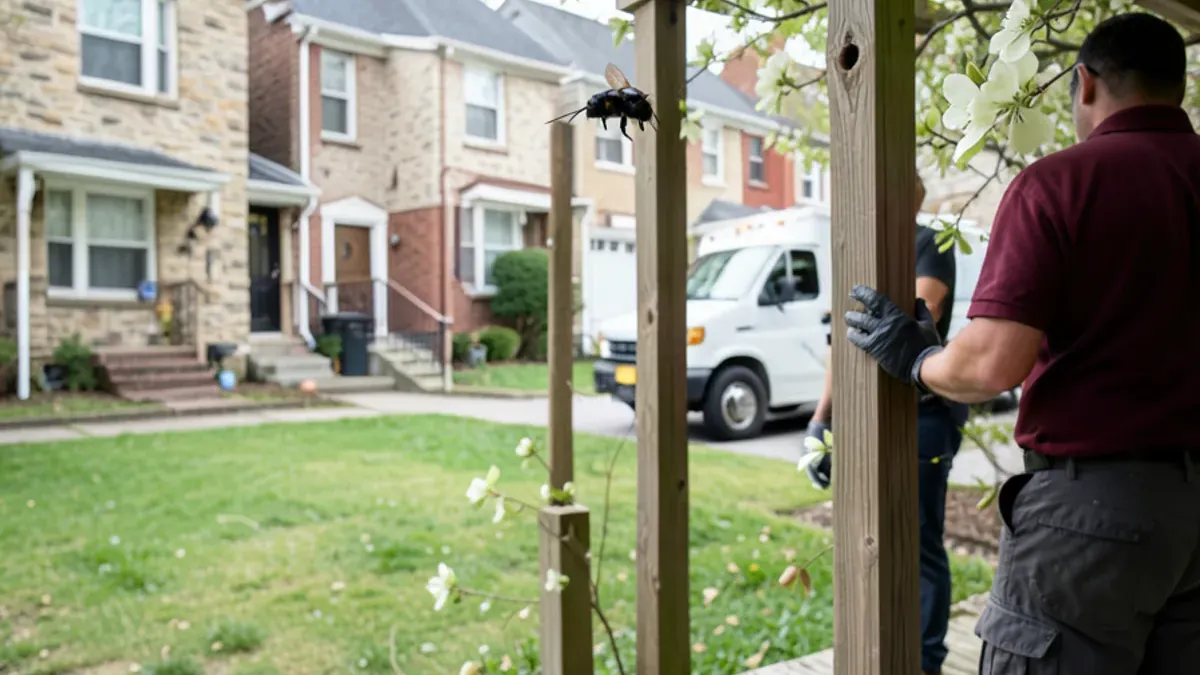
Large, shiny black bees hovering around a deck or fascia are neither one. Those are carpenter bees, covered on our carpenter bee control page.
| Trait | Bald-faced hornet | European hornet |
|---|---|---|
| Color | Black with ivory-white markings on the face and tail | Brown and yellow, with a reddish-brown head and thorax |
| Size | About 3/4 inch | About 1 inch; queens are larger |
| Nest | Gray paper ball or teardrop with one entrance near the bottom | Brown paper nest hidden inside a cavity |
| Location | Tree branches, shrubs, hedges, high eaves and gables | Hollow trees, wall cavities, attics, old barns and sheds |
| Activity | Daytime | Day and night; drawn to lit windows after dark |
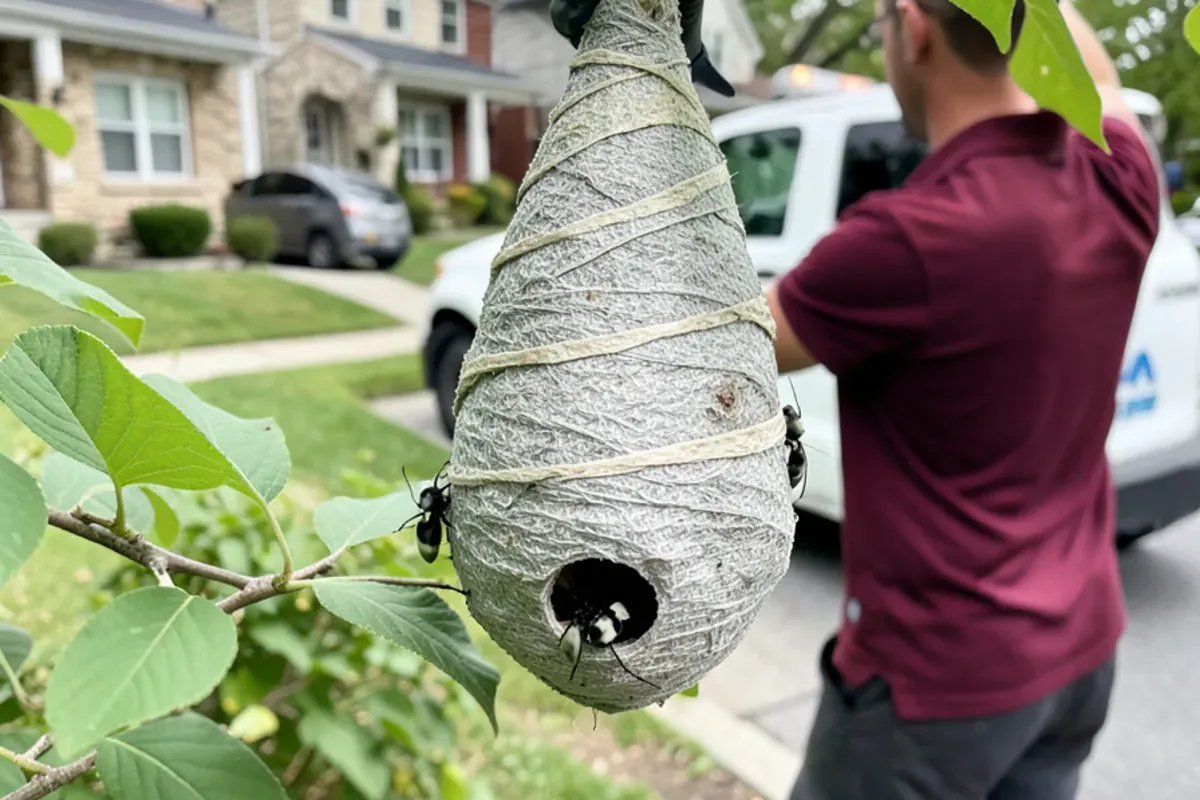
Where Hornet Nests Hide Around Delaware County Yards
A bald-faced hornet queen starts a nest in spring that is no bigger than a golf ball, usually screened by leaves. By late summer the same nest can be larger than a basketball and hold several hundred hornets. Many people first notice one in September, when leaves begin to drop, or when a hedge trimmer bumps into it.
Wooded lots near Ridley Creek State Park, the Darby Creek valley and the larger yards of Edgmont and Newtown Square give hornets tall trees and dense shrubs to build in. European hornets prefer older hollow trees and the attics, barns and wall cavities of older homes, and they strip bark from lilac and birch branches for nest material.
Evergreen privacy screens are another common hiding place. Arborvitae, holly and yew planted along property lines stay dense all year, so a nest can sit at chest height for months without anyone seeing it. Dry spells in late summer also push foraging hornets toward patios, gutters and birdbaths, which is often when a homeowner finally traces their flight path back to the shrub.
When Does a Hornet Nest Become a Real Hazard?
Bald-faced hornets guard a wide zone around the nest and react to vibration, so mowing, trimming or a ball hitting the shrub can trigger a mass defense. Each hornet can sting more than once. A nest at head height beside a walkway, driveway or play area should be treated promptly.
Don't hit the nest, throw things at it, hose it or try to cut down the branch. If you find one while trimming, walk away calmly, leave the trimmer if you have to and keep everyone back. Anyone allergic to stings should stay well clear of the area, and a severe reaction calls for 911 or immediate medical care. Our emergency wasp and hornet removal page covers what to do in the first hour.
Reaching Hornet Nests in Trees, Hedges and Gables
Height and access shape every hornet job. During the free inspection we look at where the entrance hole faces, what sits underneath the nest, and whether it can be reached safely from the ground or a ladder.
For a nest high in a tree and well away from where anyone walks, the honest answer is sometimes to leave it: the colony dies at the first hard frost and the nest is never reused. When a high nest hangs over a deck, driveway or play set, we'll explain the options for reaching it and what they mean for the quote.
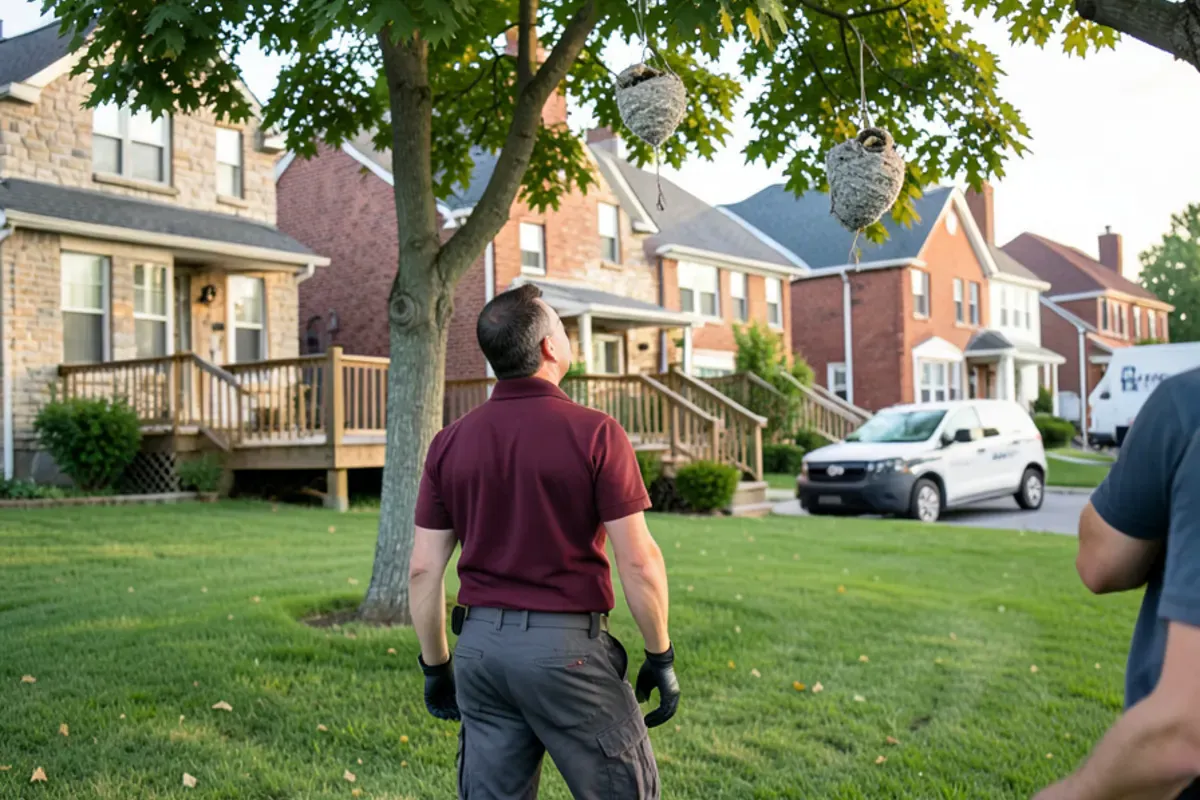
Hornet Nest Treatment Options and Trade-Offs
A good hornet exterminator aims to kill the whole colony, including the queen and the brood inside, not just the hornets flying outside. European hornets in a wall void are handled much like yellow jackets in a wall: treatment goes in through the existing opening, which stays unsealed so returning hornets carry it inside.
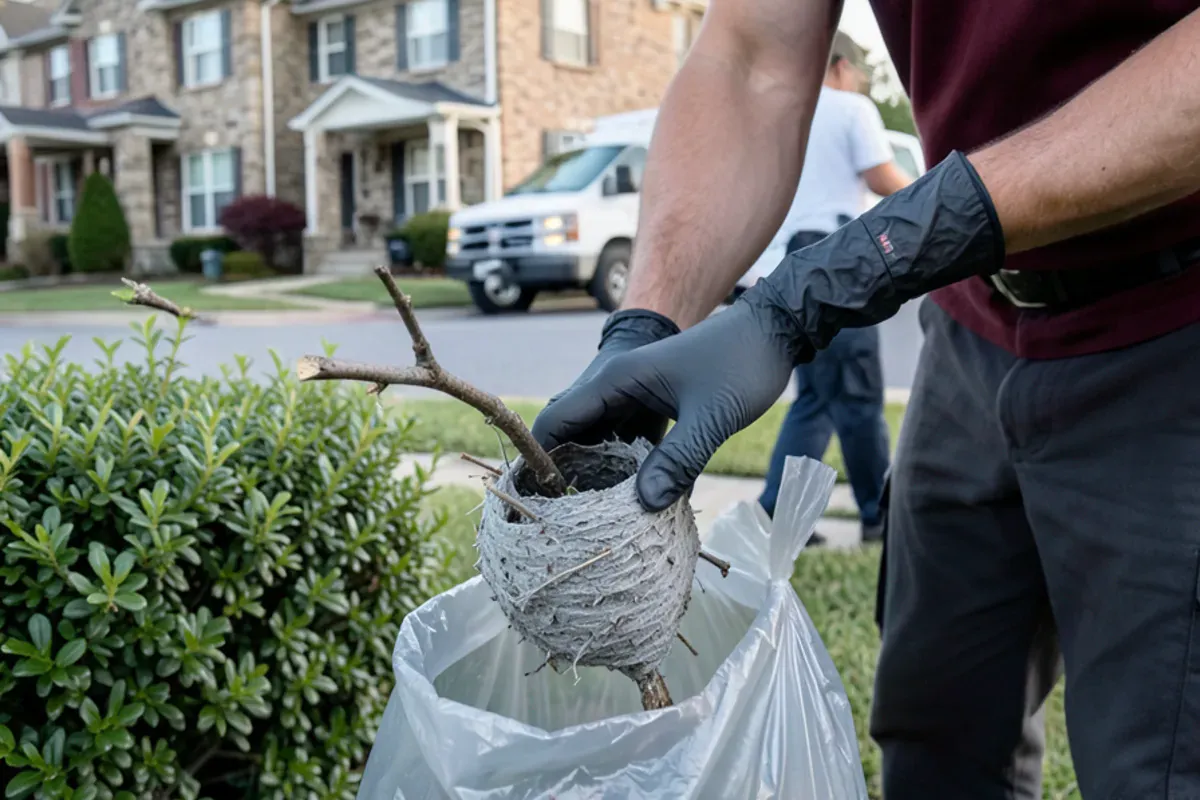
- Treat through the entrance, then remove: the most complete option for nests in shrubs and low branches. The nest is cut down and bagged once activity stops.
- Treat and leave in place: for nests too high to take down safely. The dead nest weathers apart over the winter.
- Cavity treatment: for European hornets in walls, attics or hollow trees, with sealing delayed until no more hornets appear.
- No treatment: a fair option for a nest far from people late in the season, since frost will end the colony.
Talk to us about hornet nest removal
Call and speak with Thom or his team. The inspection is free, and you get a written quote before any treatment.
- ★ 4.8 from 21 Google reviews
- Open 7 days, 8 a.m. to 7 p.m.
- Free inspection before treatment
- Family-run, based in Media, PA
Open 7 days, 8 a.m. to 7 p.m.
Pennsylvania Licensing and Label Rules for Hornet Treatment
Hornet treatments for hire are regulated under the Pennsylvania Pesticide Control Act of 1973. The Pennsylvania Department of Agriculture (PDA) licenses pest control businesses, certifies the applicators who work for them, and under 7 Pa. Code § 128.31 expects the business license number to be shown on its vehicles. Asking for that number is a fair first question for any company you call.
The product label carries legal weight as well. Most insecticide labels forbid applying directly to water, which matters when a nest hangs over a pond, a backyard stream or the bank of a creek such as Ridley or Crum, and it is one reason the method for those nests may differ. This is general information, not legal advice.
The Hornet Nest Removal Visit
Hornet visits are planned around safety for you, your neighbors and our technician.
Describe the nest by phone
Tell us its height, what it hangs from, what's beneath it and whether anyone at home is allergic.
Free inspection
We confirm the species, find the entrance and check nearby trees and eaves for more nests.
Written quote
The quote explains how we'll reach each nest and whether it will be removed or left to weather.
Set a safe zone and treat the colony
People, pets and cars stay clear of the area under and around the nest. Treatment goes into the entrance, ideally late in the day when most of the hornets are inside.
Remove reachable nests
Once the nest is quiet, low nests are cut free, bagged and taken away.
Review and next steps
We tell you how long to stay back and what to watch for over the next day.
What Goes Into Hornet Nest Cost?
Every hornet job is quoted in writing after the free inspection. These factors make the biggest difference:
Season plays a big part too. A June nest the size of a softball, low in a shrub, is a short treatment with an easy takedown. The same colony in September can be larger than a basketball, more defensive and higher in the canopy as the branch grows, so it takes more care to reach. A European hornet colony inside a hollow limb or wall cavity is quoted differently again, because treatment goes in through the opening and the nest itself usually stays put.
- Nest height and whether it can be reached from the ground or a ladder
- What's underneath the nest, such as a deck, roof, driveway or pond
- Hornet type, since European hornet nests inside walls or trees need a different approach
- Nest size, which grows quickly from July into September
- Whether the nest is removed and hauled away or left to weather
- Additional hornet, wasp or yellow jacket nests found during the inspection
Hornet Nest Removal in PA: After Treatment and Next Season
Hornets that were out foraging return to the treated nest and contact the treatment over the next several hours. Give the area at least a full day before mowing or trimming nearby, and call us if you still see steady traffic at the entrance after two days.
Old hornet nests are not reused, but new queens may build in the same tree or hedge next year. A few habits help:
- Walk the yard in June, when nests are softball-sized or smaller, and look up into trees and shrubs near the house
- Check hedges carefully before trimming in July and August
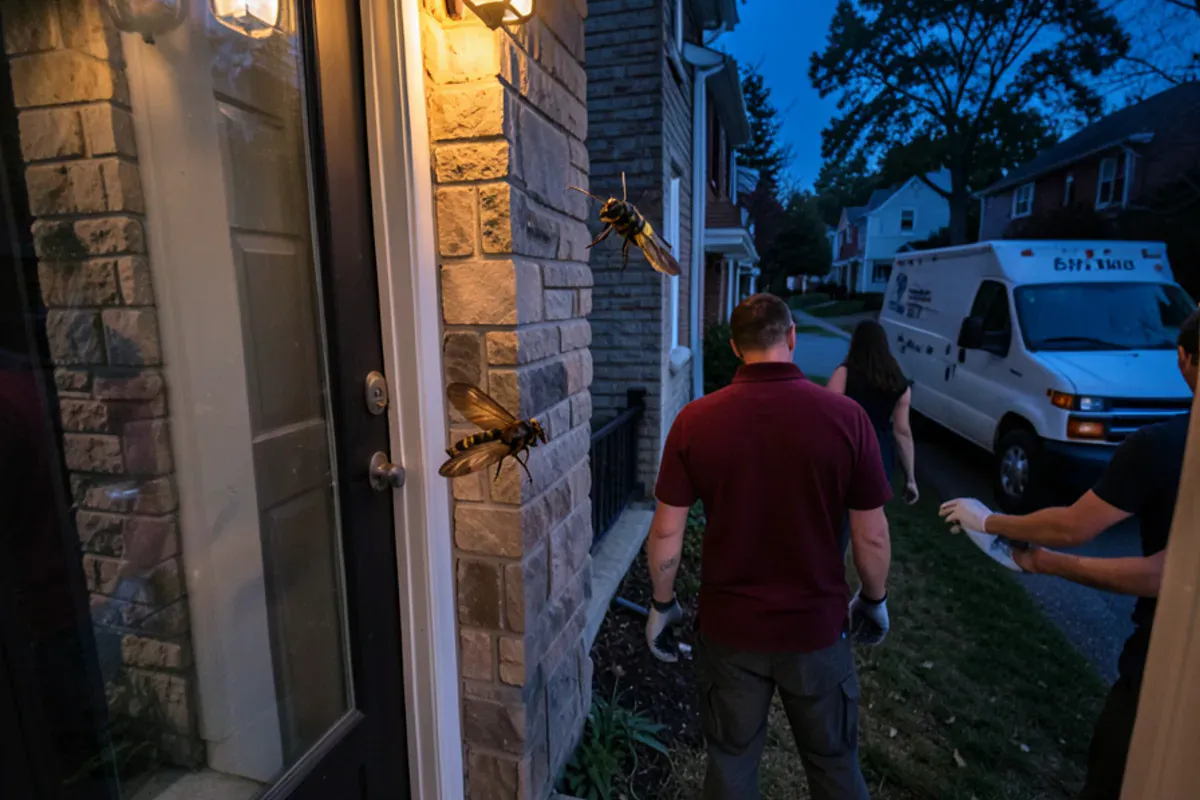
- Use yellow bug lights or switch off porch lights at night so European hornets aren't drawn to windows
- Have hollow or dying trees near the house looked at by an arborist
- Seal gaps in attic vents and siding where European hornets could move into a wall
What our hornet nest removal includes
- Free inspection of trees, hedges, eaves and outbuildings
- Identification of bald-faced versus European hornets
- Written quote describing how each nest will be reached
- Treatment of the colony through the nest entrance
- Cutting down and bagging reachable nests
- Cavity treatment for European hornets in walls, attics or hollow trees
- Advice on lighting, hedge trimming and early-season checks
Why call No Bugs Exterminator for hornet nest removal
Honest answers on high nests
After a free inspection, Thom and his team tell you whether a nest can be reached safely and put the plan in a written quote.
Open 7 days
Hornet nests often turn up during weekend yard work, and we're open 7 days, 8 a.m. to 7 p.m.
Local to Media
We're a family-run business in Media, so wooded Delaware County yards are close to home for us.
A plan for every nest we find
If the free inspection turns up a second hornet nest in the tree line, it goes on the same written quote with its own method, so you can decide on each one.
Where we provide hornet nest removal
Tall trees and thick hedges make hornets a common late-summer find in Delaware County's more wooded townships. Edgmont Township borders Ridley Creek State Park, Newtown Township has large lots around Newtown Square, Haverford Township follows the wooded banks of Darby Creek, and Thornbury Township mixes large-lot homes with open fields and tree lines. Each is roughly 15 to 20 minutes from our Media base.
- Rose Valley
Deep woods around Hedgerow Theatre put mature trees and shrubs right against homes, the kind of cover bald-faced hornet queens pick in spring.
- Upper Providence Township (Delaware County)
Rose Tree Park and the Ridley Creek State Park edge leave woods behind most houses, so hornet nests often hang in the tree line behind the deck.
- Nether Providence Township
Wallingford and Garden City yards along Crum Creek and Smedley Park have tall trees where nests stay hidden until the leaves drop in September.
- Swarthmore
The Crum Woods and large pre-war homes, with a 1949 median build year, give European hornets old trees, attics and wall cavities to move into.
- Chadds Ford Township
Wooded properties along the Route 1 corridor near the Brandywine Battlefield combine mature trees and outbuildings, both favored hornet nest sites.
- Concord Township
Garnet Valley subdivisions with a 1997 median build year keep tree lines and young landscape hedges where bald-faced hornets build at mowing height.
- Radnor Township
Main Line properties in St. Davids, Wayne and Rosemont have mature shade trees and tall hedges that hide hornet nests until fall trimming.
- Villanova
Large estate homes off Spring Mill Road have old shade trees and outbuildings where European hornets settle into hollow limbs and wall voids.
What customers say on Google
4.8 out of 5 from 21 reviews on Google. Quoted as written by customers.
Professional service with great results!
Thom is a top-notch pest control specialist! And is one of the most genuine guys in the industry. He came to inspect a situation I had going on at the house, took his time, offered detailed advice, and didn’t take a penny.
Thom + his team were amazing. Very professional + provided me with a quote that made the most sense for my situation. Clearly I was not being gouged. Thom put the client first.
Hornet Nest Removal: common questions
How dangerous is a bald-faced hornet nest?
Dangerous enough to leave to a professional once it is bigger than a softball. Bald-faced hornets defend aggressively, respond to vibration from mowers and trimmers, and can sting repeatedly, so one bump can bring dozens out at once. For people allergic to stings the risk is higher still. If you find a nest, mark the spot, keep everyone back and call us.
Can you reach nests high in a tree?
Often, yes, but it depends on the height, the branch and what is underneath. At the free inspection we'll tell you plainly whether we can treat and remove it safely. A nest high in a tree far from the house is sometimes left alone, because the colony dies at the first hard frost and hornets never return to an old nest.
Are European hornets active at night?
Yes. Unlike most wasps, European hornets fly after dark and are drawn to lights, so they often bump against lit windows and porch fixtures on summer nights. That habit is a clue to where the nest is, usually a hollow tree, wall void or attic nearby. Switching to yellow bug lights helps until the colony is found and treated.
Should I take down an empty hornet nest in winter?
You can, once several hard frosts have passed and you have watched it for a few days with no activity. The colony is dead by then, and hornets never reuse an old nest, so it poses no further risk. Many people simply leave it for birds and weather to pull apart. If you see any hornets coming and going, leave it alone and call us.
Why are hornets stripping bark off my lilac?
That's typical European hornet behavior. They chew bark from lilac, birch and similar shrubs for sap and nest material, often leaving ringed, peeled branches. The damage is a sign that a colony is living within flying distance, often in a hollow tree, shed or wall void, and we look for that nest during the free inspection.
Related services
Helpful guides from our blog
Ready to get rid of the problem?
Thom and his team serve Media, Delaware County and southeastern Pennsylvania, open 7 days, 8 a.m. to 7 p.m..
- ★ 4.8 from 21 Google reviews
- Open 7 days, 8 a.m. to 7 p.m.
- Free inspection before treatment
- Family-run, based in Media, PA
Open 7 days, 8 a.m. to 7 p.m.