

Stink bugs in Pennsylvania follow a predictable schedule: they feed outdoors all summer, then crowd onto sunny walls in September and October looking for a protected place to spend the winter. Your attic and wall voids fit that need perfectly. Sealing the house before that migration starts is the single most effective step you can take.
Stink bugs in Pennsylvania: how the brown marmorated stink bug arrived
The brown marmorated stink bug is native to East Asia. It was first recorded in the United States near Allentown, Pennsylvania, in the late 1990s, most likely after arriving in shipping material. From the Lehigh Valley it spread across the Mid-Atlantic and well beyond, and Pennsylvania homeowners were among the first to deal with it inside their houses.
You can recognize it by its shield shape, mottled brown back, and light bands on the antennae and along the edges of the abdomen. Crushed or disturbed, it releases the sharp odor that gives it the name.
Is it a stink bug or a look-alike?
Several insects crowd onto Pennsylvania siding in the same October weeks, and not all of them are the invasive species. A quick look at the shape sorts them out:
- Western conifer seed bug: longer and narrower than a stink bug, with flattened, leaf-like widenings on the hind legs and a loud buzz when it flies. It also overwinters indoors and smells when handled, but does not gather in the same numbers.
- Spined soldier bug: a native stink bug with sharp points on its shoulders. It hunts caterpillars and beetle larvae in gardens, so it is worth leaving outside.
- Boxelder bug: black with red-orange lines, smaller and slimmer, usually clustered near boxelder or maple trees.
- Brown marmorated stink bug: rounded shield shape, white bands on the antennae and a checkered edge along the abdomen.
Why do stink bugs come into the house in fall?
Shorter days and cooler nights trigger the adults to look for overwintering shelter. In the wild they would squeeze under loose bark or into rock crevices. A house offers something better: dry, insulated gaps in siding, soffits, attics and wall voids that stay above freezing.
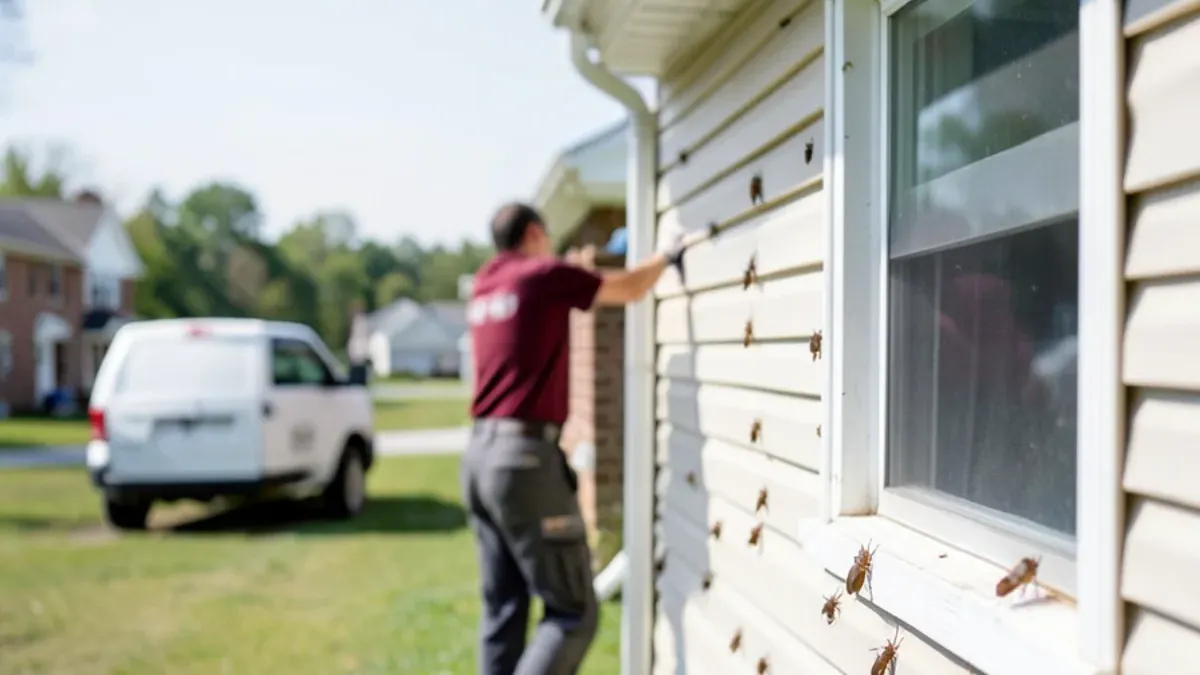
They gather first on the warmest surfaces, which are south- and west-facing walls in the afternoon sun. From there they work into any gap they can find. Once inside, they go dormant and do not breed, feed or damage the structure. The trouble starts on warm winter days and in early spring, when they wake up and wander toward windows, lights and living spaces.
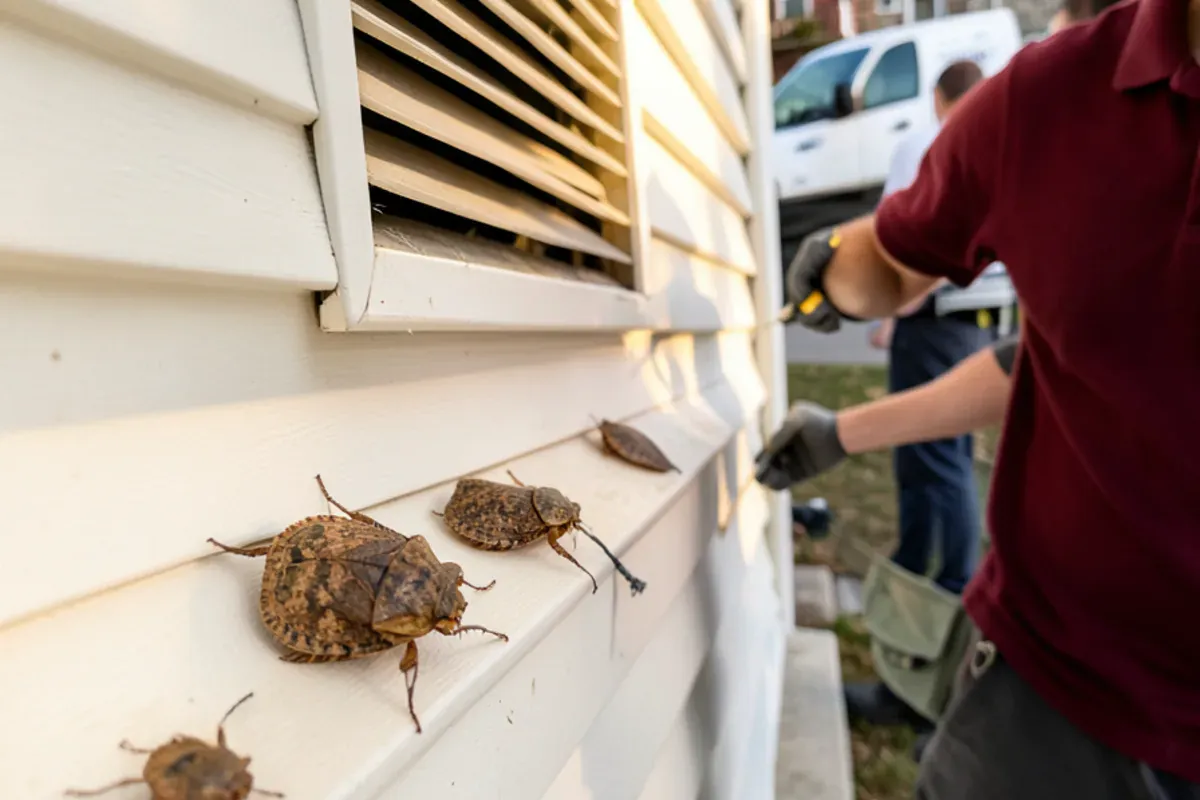
Where do stink bugs get into a house?
Stink bugs are flatter than they look and slip through surprisingly narrow openings. On most homes, the bulk of them come through a short list of places:
- Gaps around window and door frames where caulk has cracked or pulled away
- Window air conditioners and the openings around them
- Torn or loose window screens and the space where screens meet the frame
- Attic, soffit and ridge vents without fine screening
- Openings where cable, phone and electrical lines enter the house
- Siding seams, corner boards and the joint where siding meets the foundation
- Chimney flues and fireplace dampers that do not close tightly
How to keep stink bugs out: a late-summer sealing plan
Walk the sunny sides first
In August, check the south and west walls closely. That is where the insects will gather, so gaps there matter most.
Re-caulk windows and trim
Use a quality exterior sealant around frames, corner boards and anywhere two materials meet.
Screen the vents
Cover attic and soffit vents with fine mesh that still allows airflow.
Seal utility openings
Fill gaps around wires, pipes and dryer vents with sealant or expanding foam rated for exterior use.
Fix screens and remove window units
Repair tears and pull window air conditioners before the first cool nights if you can.
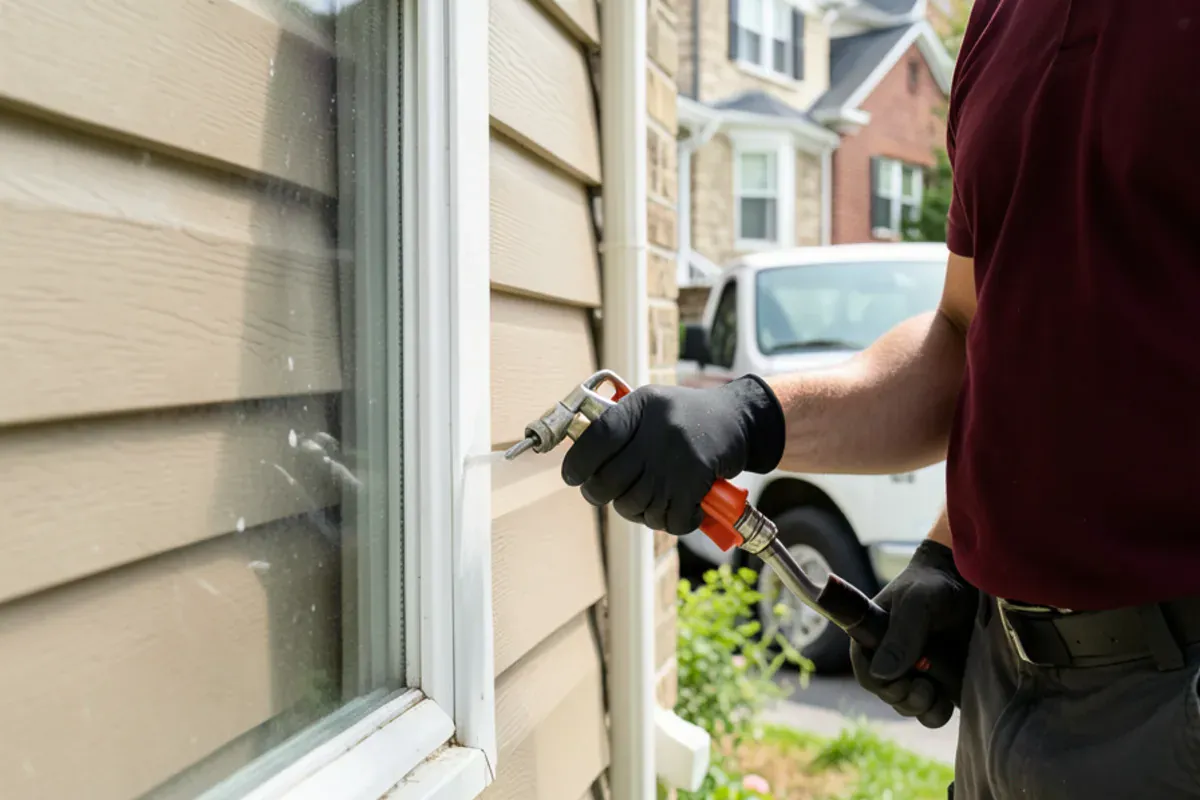
Consider an exterior treatment
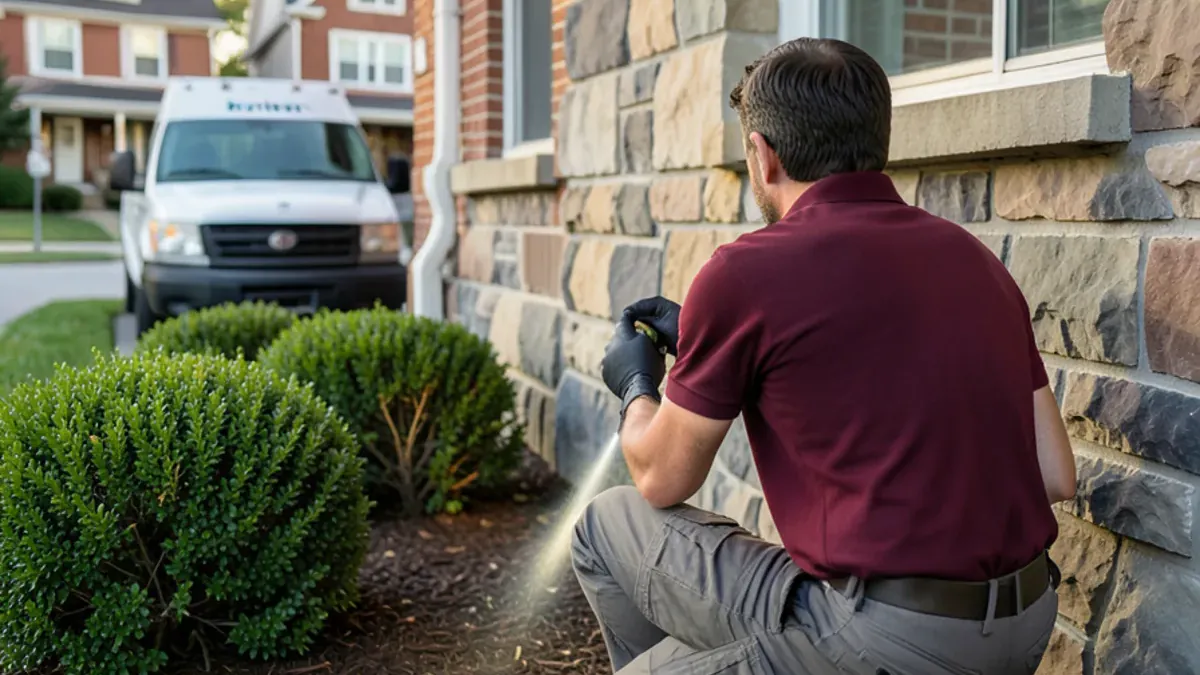
A professional application to the sun-facing walls just before peak migration can reduce how many reach the gaps you could not seal.
What to do with stink bugs already inside
Spraying indoors does little. The insects are hidden in voids you cannot reach, and dead ones in a wall can attract carpet beetles that feed on them. Instead, deal with the ones that appear.
A vacuum works well, ideally a shop vacuum or a stocking secured inside the hose so you can empty it outside and avoid the smell lingering in your household vacuum. Another simple trick is knocking them into a container of soapy water. Avoid crushing them on fabric or walls, which can leave odor and stains. If dozens appear daily in winter, that points to a large group in the attic or walls and a sealing job that needs another look.
Do stink bug traps help or make it worse?
Indoor light traps can help in the right spot. A small commercial light trap, or a pan of soapy water under a desk lamp in a dark attic or spare room, draws wandering stink bugs on winter nights and keeps them off windowsills. It catches the ones already inside; it does nothing about the gaps they used.
Outdoor pheromone traps are a different story. The scent lures stink bugs from a wide area, and many land on nearby siding and plants instead of entering the trap. Hanging one beside the house in September can bring more insects to your walls, not fewer. If you try one, set it well out in the yard, away from doors and windows, and empty it often.
Why some Marple homes see more of them
Census (ACS) estimates put the median home build year in Marple Township at 1962. Split-levels and ranches from that era often have aluminum or vinyl siding added over original materials, and the seams, J-channels and window trim from those retrofits leave plenty of gaps. Homes with large sunny walls facing open lawns tend to collect the most insects.
Mature trees and the wooded edges around Lawrence Park and the Crum Creek corridor give stink bugs plenty to feed on all summer, so populations are already high when fall arrives. If you also see swarms of boxelder bugs or lady beetles on the same walls, the same sealing work handles them; see our boxelder bug and lady beetle control page for those specifics.
What fall inspections in Marple and Broomall turn up
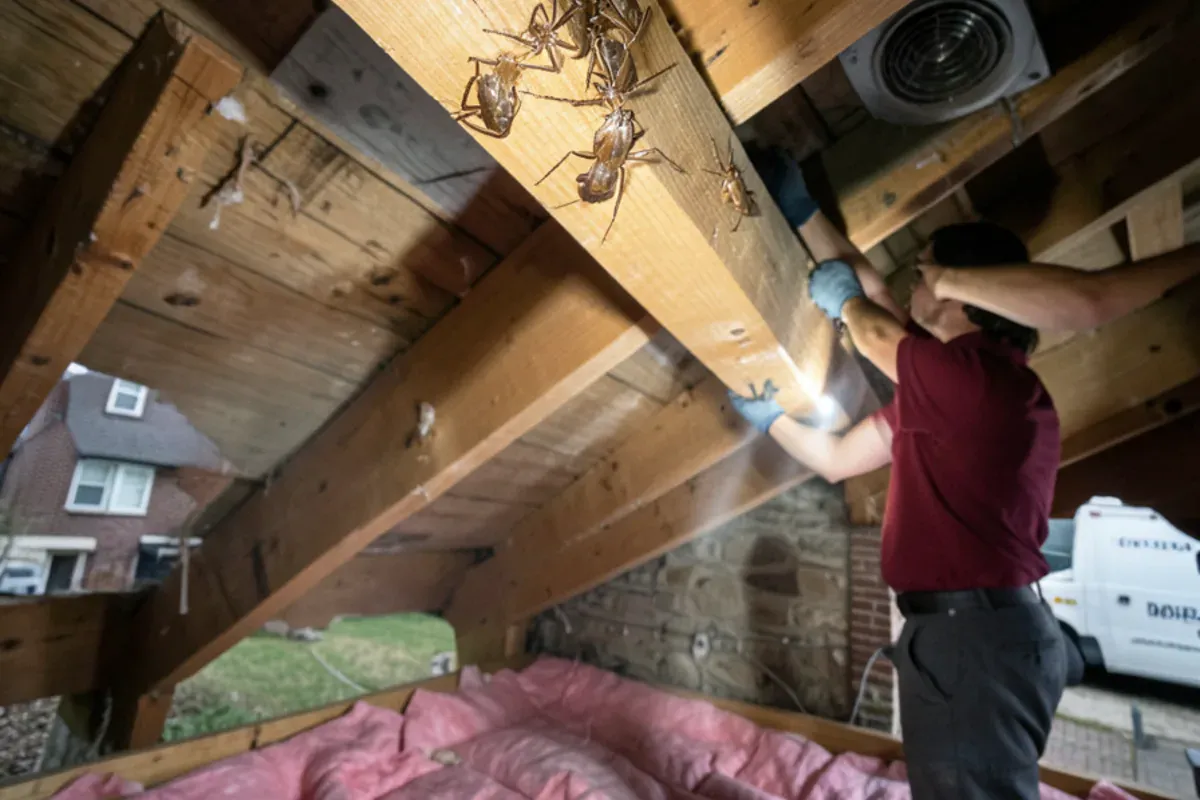
When we inspect a home with a stink bug problem, the attic usually confirms it: clusters tucked along the ridge, in the soffit return and around the attic fan or vent opening. On the exterior, we often find gaps behind window trim on the second floor that homeowners cannot see from the ground.
Marple Township is about 10 minutes from our Media base, and our stink bug control work combines sealing advice with exterior treatment timed to the migration. Each job starts with a free inspection and a written quote. For other insects that tend to show up indoors in the same season, our insect control page covers the full list.
An exterior treatment has a short window and real limits, and we explain both before booking it. Applied too early in August, sun and rain break the residue down before the main flight; applied after the insects are already behind the trim, it misses them. Product labels also limit how close it can go to vegetable beds and blooming plants against the house. We do not fog attics for stink bugs, because the dormant insects sit deep in insulation and wall voids where a fog will not reach, and dead ones left in the walls feed carpet beetles. Sealing does more, and some of the worst gaps, high on second-floor trim, need a ladder and a contractor's caulk gun.
Quick answers
Do stink bugs bite or harm pets?
No. Brown marmorated stink bugs do not bite people or pets, carry disease or damage wood, wiring or fabric. They are a nuisance because of their numbers and odor. Vacuuming them from floors and sills keeps curious pets from playing with them and spreading the smell.
When is it too late to seal a house against stink bugs?
Once they are inside the walls, sealing traps them in rather than keeping them out, and they will still find their way into living areas. In southeastern Pennsylvania, the practical window for sealing runs from midsummer through early September. If you miss it, focus on interior gaps such as outlet covers, light fixtures and window trim instead.
Will stink bugs lay eggs inside my house?
No. The adults that move in for winter stay dormant and do not reproduce indoors. They mate and lay eggs on plants outdoors after they leave in spring. Seeing small young stink bugs indoors is extremely unusual and usually means they came in on potted plants or produce rather than from a breeding colony.
The bottom line
Stink bugs cannot be kept off your siding, but they can be kept out of your living room with a few weekends of sealing in late summer. If you want help finding the gaps or treating before the fall rush, call (209) 563-1650.
Sources
Written by the No Bugs Exterminator team
A small, family-run pest control business in Media, PA, led by owner Thom. We write about what we see on inspections in Delaware County and southeastern Pennsylvania. About us.
Services mentioned in this guide
Want a professional opinion?
Book a free inspection and get a written quote before any treatment.
- ★ 4.8 from 21 Google reviews
- Open 7 days, 8 a.m. to 7 p.m.
- Free inspection before treatment
- Family-run, based in Media, PA
Open 7 days, 8 a.m. to 7 p.m.