
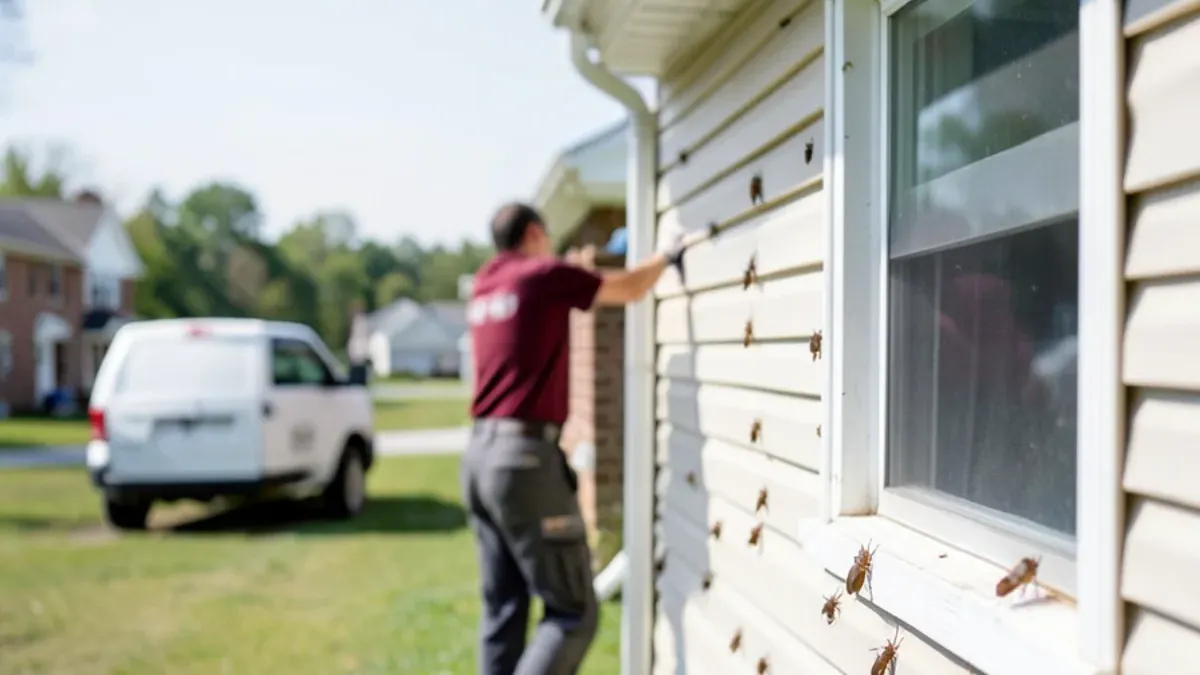
The Brown Marmorated Stink Bug, a Pennsylvania Story
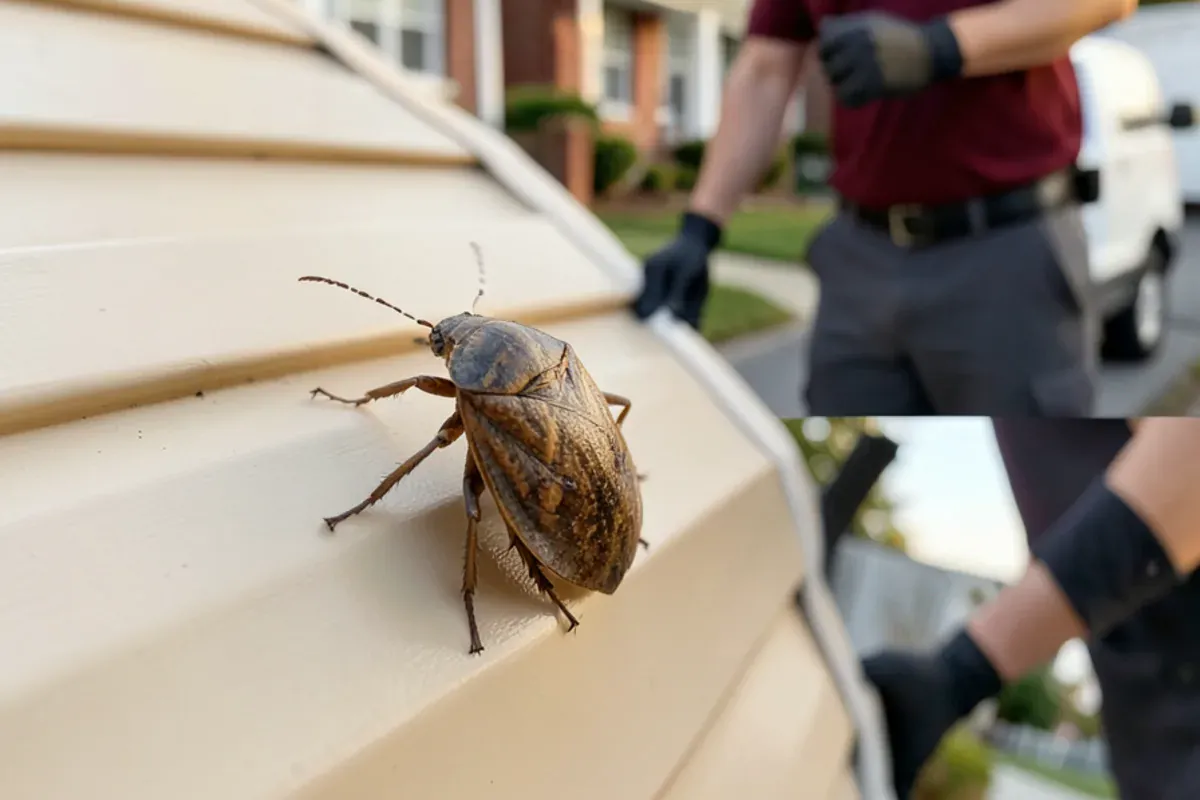
The brown marmorated stink bug is an Asian species whose first U.S. record came from near Allentown, Pennsylvania, in the late 1990s. It is shield-shaped, roughly 5/8 inch long and mottled brown, with pale bands on the antennae and along the edge of the abdomen. All summer it feeds on fruit, vegetables and ornamental trees, then spends the winter sheltered, ideally inside a heated building.
Stink bugs do not bite, sting, breed indoors or damage wood. The trouble is volume and odor: hundreds can gather on a single wall, and crushing or startling them releases the smell that gives them their name.
Stink Bug Control Timing: When Do They Come Inside?
Shortening days and cooler afternoons set the timing. Once highs start slipping into the 60s, stink bugs leave crops, fruit trees and ornamentals to look for a winter site, and they pick the warmest surface they can find: light siding, brick and stone that soak up the afternoon sun. A run of warm days right after the first cold snap often brings the biggest wave of the year.
The local landscape shifts the pressure. Houses at the edge of fields, orchards and wooded tree lines in western Delaware County see the heaviest arrivals, while rowhome blocks in the east usually see smaller numbers because there is less summer food nearby. Upper-floor windows and attic gable vents on the sunny side are where most of them find a way in.
In Delaware County the move indoors usually begins in mid-to-late September as nights cool, and it follows a predictable calendar:
| Time of year | What stink bugs are doing | What to do |
|---|---|---|
| June–August | Feeding outdoors on gardens, fruit trees and ornamentals | Repair screens and caulk gaps |
| Late August–September | Clustering on south- and west-facing walls in afternoon sun | Exterior treatment window opens |
| Late September–October | Pushing into soffits, window frames, siding seams and attic vents | Treat and seal; vacuum any that get in |
| November–February | Dormant inside walls and attics | Leave the walls alone; vacuum strays |
| Warm winter days and March | Waking and wandering toward lamps and windows | Vacuum and bag; plan exterior work for next fall |
Signs Stink Bugs Are Overwintering in Your Walls
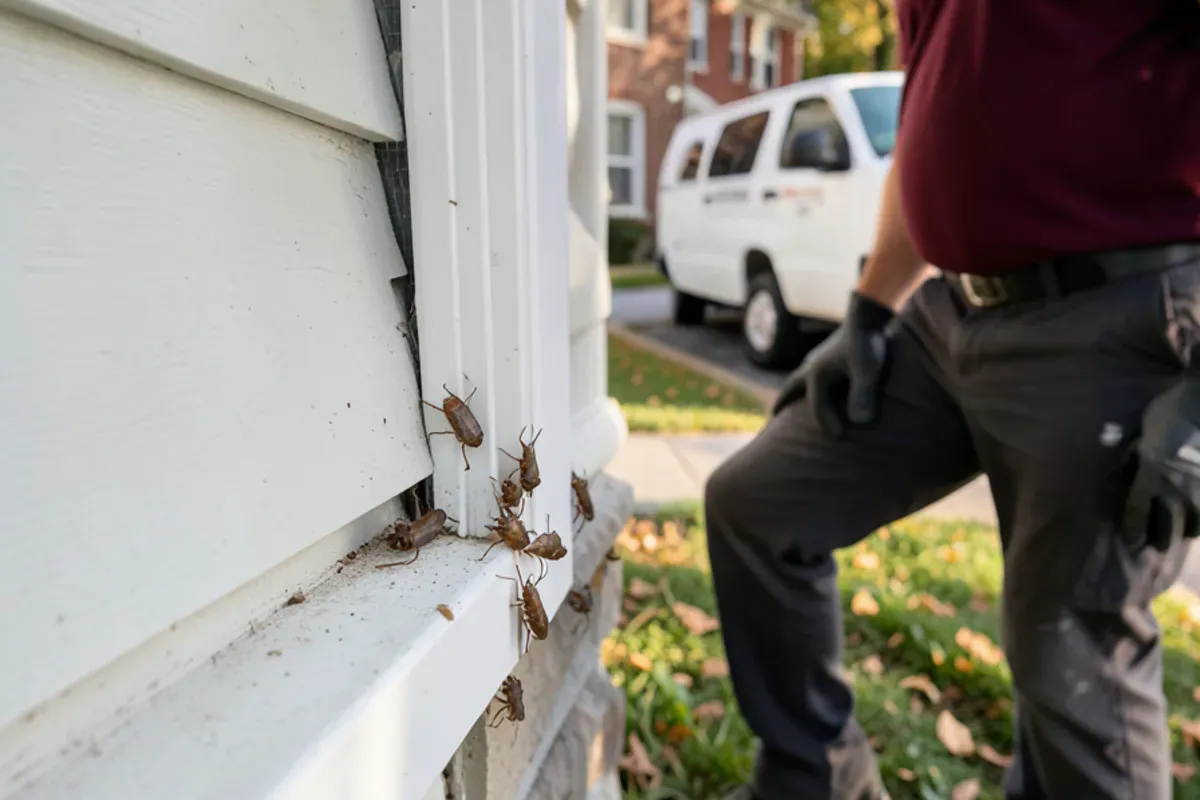
Numbers give it away: dozens on the siding on a warm October afternoon, or clusters along window frames, attic vents and soffits. Indoors, they buzz around lamps and windows on mild winter days and crawl out of outlets, ceiling fixtures and window casings.
Homes facing open fields, orchards or woods get hit hardest. Large-lot houses in Thornbury, subdivisions in Concord and Bethel built on former farmland, and the split-levels along Aston's Chester Creek valley all sit right where stink bugs feed through the summer.
Fall Stink Bug Treatment and Sealing: What Works and What Doesn't
Here is how the common approaches hold up:
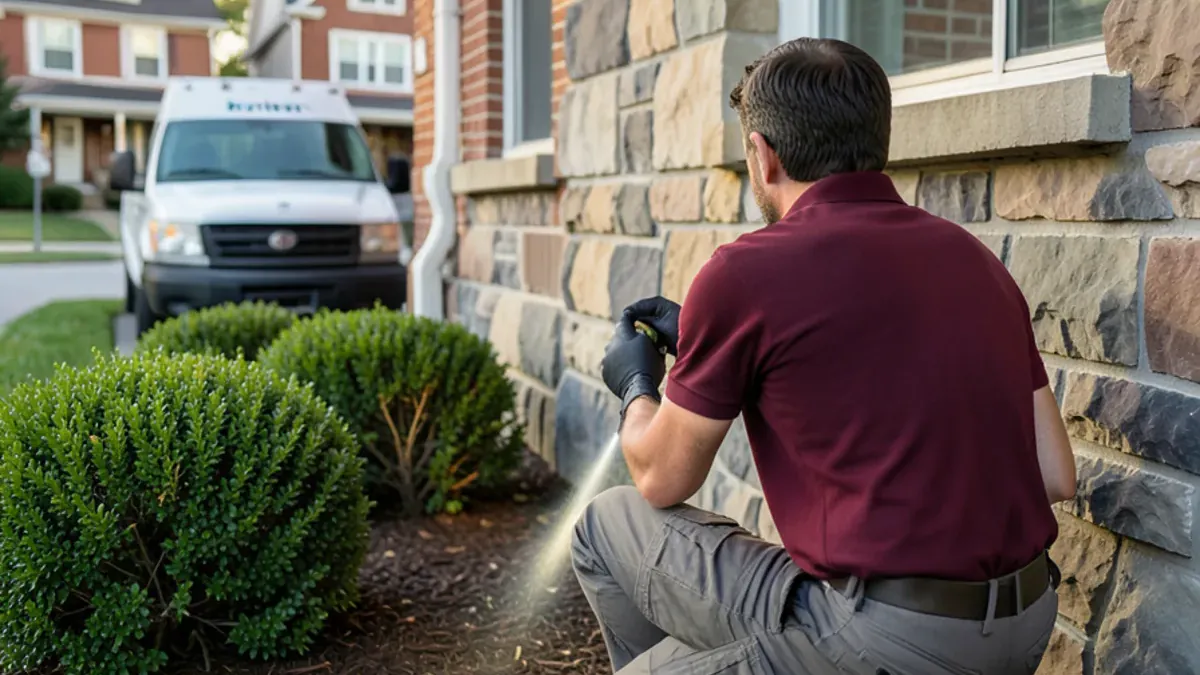
- Exterior residual treatment (works): applied in late summer to the sunny walls, window and door frames, soffits, eaves and vents where stink bugs land. It reduces how many get in; sun and rain break it down, so timing matters.
- Sealing entry points (works, takes effort): caulking trim and siding seams, screening attic and soffit vents, replacing worn door sweeps. The longest-lasting step, though every gap counts.
- Treating inside wall voids (usually a bad idea): killing stink bugs inside walls leaves dead insects that attract carpet beetles and other scavengers, so we rarely recommend it.
- Indoor sprays and foggers (do not help): they kill a few visible bugs and do nothing about the ones already tucked into the walls.
- Vacuuming (works for strays): a shop vac or a bagged vacuum removes indoor bugs without crushing them; empty it outdoors right away.
Talk to us about stink bug control
Call and speak with Thom or his team. The inspection is free, and you get a written quote before any treatment.
- ★ 4.8 from 21 Google reviews
- Open 7 days, 8 a.m. to 7 p.m.
- Free inspection before treatment
- Family-run, based in Media, PA
Open 7 days, 8 a.m. to 7 p.m.
Our Stink Bug Visit, Step by Step
Most stink bug work happens outside, on the walls the bugs actually use.
Exterior walk-around
We check the south and west sides first, where afternoon sun draws stink bugs, then rooflines, vents and window frames.
Entry point mapping
We note gaps in trim, siding seams, utility lines and attic vents, plus missing or torn screens.
Written quote
The treatment and any sealing recommendations are written out before work begins.
Exterior application
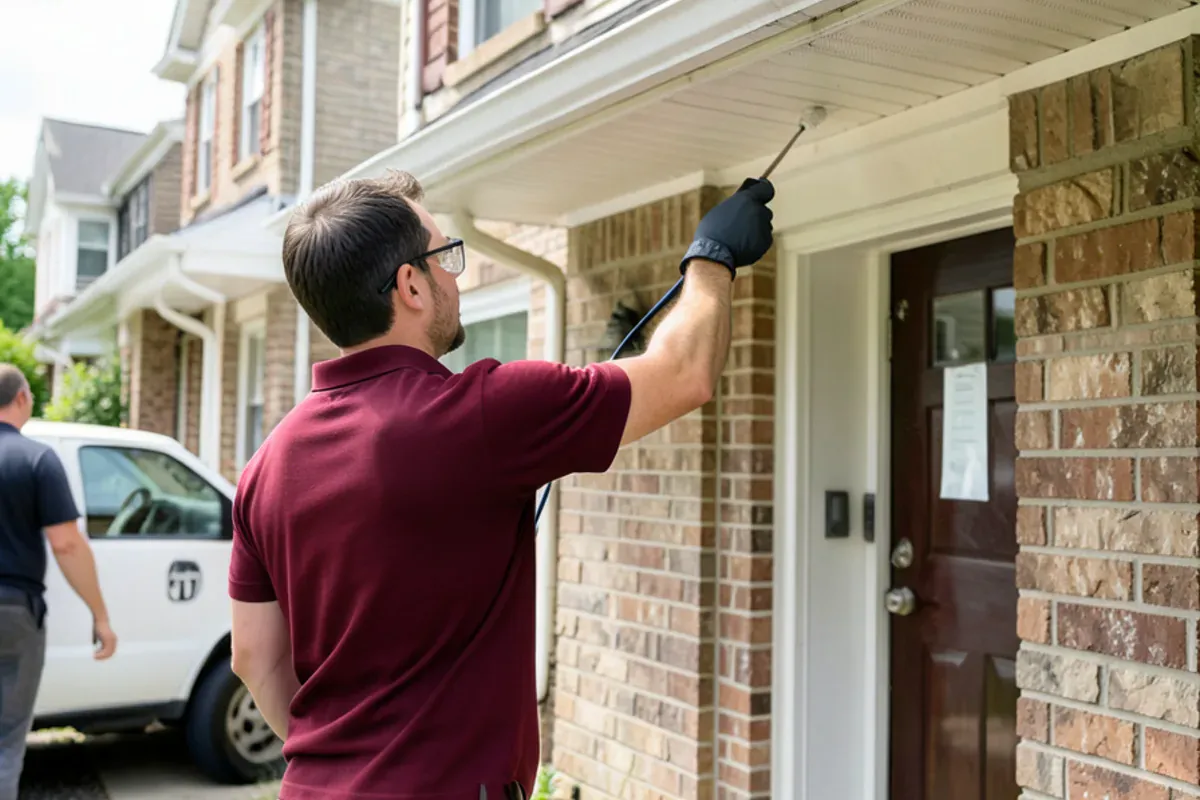
A residual treatment goes on the walls, frames, eaves and vents where stink bugs land and enter, not inside living areas.
Sealing plan
We tell you which gaps to caulk or screen first and which repairs belong with a contractor.
Winter guidance
You get a simple routine for the strays that show up on warm days so none get crushed indoors.
What Does Stink Bug Control Cost?
Height is the biggest variable around Delaware County. A three-story Victorian in Lansdowne or Ridley Park has tall gables, dormers and soffits that take ladder work, while a ranch in Brookhaven can be treated largely from the ground. Siding matters as well: old wood clapboard and cedar shakes have far more gaps than vinyl or brick, and a stone house's mortar joints and deep window returns need closer attention.
Setting plays a part too. A house backing onto fields or a tree line may get a heavier first wave and do better with a second fall application, while a twin with one exposed side wall often needs less product and time than a detached house with four.
The written quote follows the free inspection. These factors change it:
- Size and height of the house and how many sun-facing walls need treatment
- Number of windows, vents and soffits on the treated sides
- Whether the property borders fields, orchards or woods
- Timing: a late-summer treatment versus a visit after the bugs are already in the walls
- Whether a second fall application is needed
- Whether boxelder bugs or lady beetles are using the same walls
Wall Treatments, PDA Rules and the Lanternfly Quarantine
Stink bugs are not a regulated pest in Pennsylvania, but the products sprayed on your walls are. Exterior work done for hire falls under the Pesticide Control Act of 1973, administered by the Pennsylvania Department of Agriculture (PDA), which licenses pest control companies and certifies their applicators; ask any provider for its PDA license number. Product labels also set how close a wall treatment may come to vegetable gardens, fruit trees and downspouts that drain to a storm sewer.
A second invasive does carry rules. PDA's spotted lanternfly quarantine covers Delaware, Chester, Montgomery, Bucks and Philadelphia counties, and lanternflies gather on the same sunny walls and decks in late summer. Businesses moving goods out of the zone need a PDA permit, and residents are asked to check vehicles and outdoor items before traveling. Our spotted lanternfly control page explains that side.
Stink Bug Prevention in Pennsylvania: A Homeowner Checklist
Keeping stink bugs out is a summer project; work through this list before Labor Day, sunniest walls first. If the same walls attract other fall swarms, see boxelder bug and lady beetle control.
Gaps that admit stink bugs also let in other insects. Silverfish often settle into the same damp siding seams and attic insulation, which our silverfish control page covers, and when squirrels or raccoons tear through vent screens, fleas can follow them inside; see flea control.
- Caulk gaps around window and door trim, especially on south and west walls
- Replace torn window screens and add fine mesh behind attic and soffit vents
- Seal around air conditioner lines, dryer vents, cables and outdoor faucets
- Install or replace door sweeps and garage door seals
- Remove window air conditioners by early September, or seal tightly around them
- Keep a bagged vacuum handy for the few that still find a way in
What our stink bug control includes
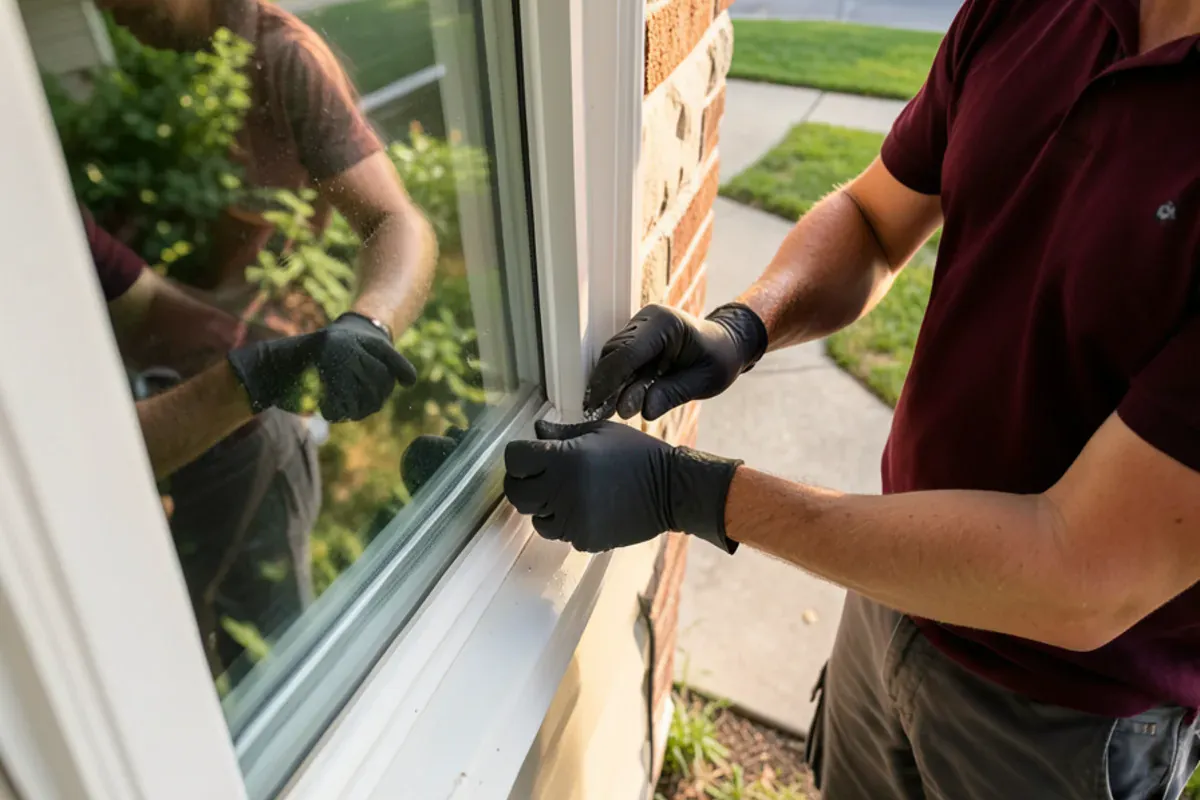
- Free exterior inspection focused on sun-facing walls and rooflines
- Map of gaps, vents and screens that need attention
- Written quote before treatment
- Late-summer residual treatment on walls, frames, eaves and vents
- Prioritized sealing plan you or a contractor can follow
- Guidance for handling indoor strays through winter
Why call No Bugs Exterminator for stink bug control
Ready for the fall rush
We are open seven days, 8 a.m. to 7 p.m., when stink bug calls pick up in late summer.
Inspection first
A free inspection maps the sunny walls and gaps on your house, and the written quote lists exactly what gets treated.
Local family business
Thom runs a small Media business, with Delaware County first on the route, then Chester, Montgomery and Bucks counties.
Homes and commercial buildings
Stink bugs cover office and storefront walls too, and we serve both.
Booked ahead or same day
We take bookings in advance for late August, the best window for exterior work. Same-day visits are often possible when the schedule allows — call early in the day.
Where we provide stink bug control
Stink bugs hit hardest where homes face open land. Large-lot houses in Thornbury Township and the subdivisions of Concord Township, with a 1997 median build year in Census (ACS) data, sit beside the fields and tree lines where the bugs feed. In Aston, 1960s and 1970s split-levels along the Chester Creek valley have aging window trim, and Middletown homes around Glen Riddle and Wawa see the same fall wave on their sunny walls.
- Chester Heights
Newer townhome communities off Route 452 have long rows of sun-facing vinyl siding and attic vents where stink bugs bunch up each September.
- Upper Chichester Township
Homes along the Route 322 corridor in Twin Oaks and Ogden, median built 1974, back onto tree lines that feed stink bugs all summer.
- Boothwyn
Early-1970s houses near Naamans Creek have aging window trim and soffit gaps that let fall stink bugs slip into upstairs walls.
- Edgmont Township
Subdivisions from around 1991 border Ridley Creek State Park, so fields and woodland edges send a heavy stink bug wave toward sunny siding.
- Upper Providence Township (Delaware County)
Wooded lots near Rose Tree Park and the state park edge put the trees stink bugs feed on within yards of 1960s rooflines.
- Marple Township
Split-levels and ranches from the early 1960s near Lawrence Park have attic gable vents and window units that stink bugs exploit each fall.
- Chester County
Orchards, horse farms and mushroom country west of Route 202 grow the summer food that sends large stink bug numbers into nearby homes.
- Chester Township
Toby Farms houses along the Chester Creek edge sit next to wooded stream banks, a summer feeding ground for brown marmorated stink bugs.
- Woodlyn
Post-war homes off MacDade Boulevard, median built 1957, often have original wood trim with gaps that stink bugs find on warm October afternoons.
What customers say on Google
4.8 out of 5 from 21 reviews on Google. Quoted as written by customers.
No Bugs Exterminator is the best I have seen. The owner is the nicest person in the world, he doesn’t rush anything, and is very thorough in job.
Excellent service, very professional and friendly! Most importantly the results gave me peace of mind! Highly recommended!
Very happy with the service, they helped me quickly to control the problem.
Stink Bug Control: common questions
Why are stink bugs such a problem in southeastern Pennsylvania?
Because they arrived here first and found everything they need. Brown marmorated stink bugs were first recorded near Allentown in the late 1990s and spread through the region's orchards, farms and wooded suburbs. Southeastern Pennsylvania's mix of fruit trees, ornamental plantings and older houses with gaps in their trim gives them food in summer and shelter in winter, and cold winters make heated homes especially inviting.
When should I treat for stink bugs?
Late August through mid-September. Exterior treatment pays off most just before the bugs start clustering on sunny walls, which in Delaware County is typically the second half of September. Sealing can happen any time before then. Once they are inside the walls, treatment does little until spring, so call in summer if last fall was bad.
Can stink bugs hurt my house?
No. They do not damage wood, wiring or insulation, and they do not breed indoors. The harm is nuisance and odor, plus stains if they get crushed on light fabric or walls. Large numbers dying inside wall voids can attract carpet beetles, which feed on dead insects and then move on to wool and stored fabrics. That is why we focus on keeping stink bugs out rather than killing them inside walls.
Should I vacuum stink bugs or squish them?
Vacuum them. Crushing releases the odor and can leave a stain. A shop vac or a vacuum with a disposable bag works well, and some people slip a knee-high stocking into the hose to catch the bugs, then tie it off and throw it away. Empty or remove the bag outdoors right away. A jar of soapy water handles a few at a time.
Will stink bugs return to my house next fall?
Often, yes. Stink bugs are drawn to spots where other stink bugs have gathered and to the same warm, sun-facing walls year after year. A house that had a heavy season is likely to see them again unless the entry points are sealed and the walls are treated before the fall move-in. Sealing the south and west sides makes the biggest difference.
Related services
Helpful guides from our blog
Ready to get rid of the problem?
Thom and his team serve Media, Delaware County and southeastern Pennsylvania, open 7 days, 8 a.m. to 7 p.m..
- ★ 4.8 from 21 Google reviews
- Open 7 days, 8 a.m. to 7 p.m.
- Free inspection before treatment
- Family-run, based in Media, PA
Open 7 days, 8 a.m. to 7 p.m.