
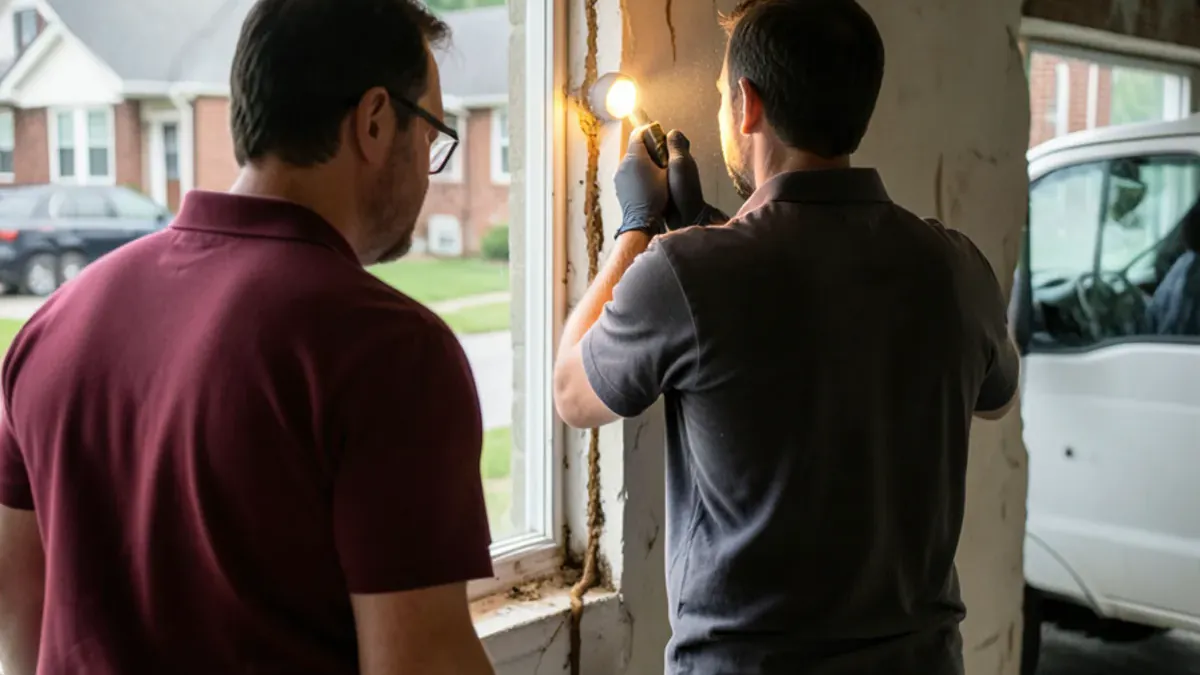
What does termite damage look like? In southeastern Pennsylvania, where Eastern subterranean termites do almost all of it, the clearest signs are pencil-width mud tubes on foundation walls, wood that rings hollow when tapped or gives way to a screwdriver tip, and paint that bubbles or ripples where nothing seems wet.
Mud tubes: the most reliable termite sign
In an older home, those signs tend to show up first in the basement, along the sill plate and around porches and door frames. Of all of them, mud tubes are the easiest to confirm.
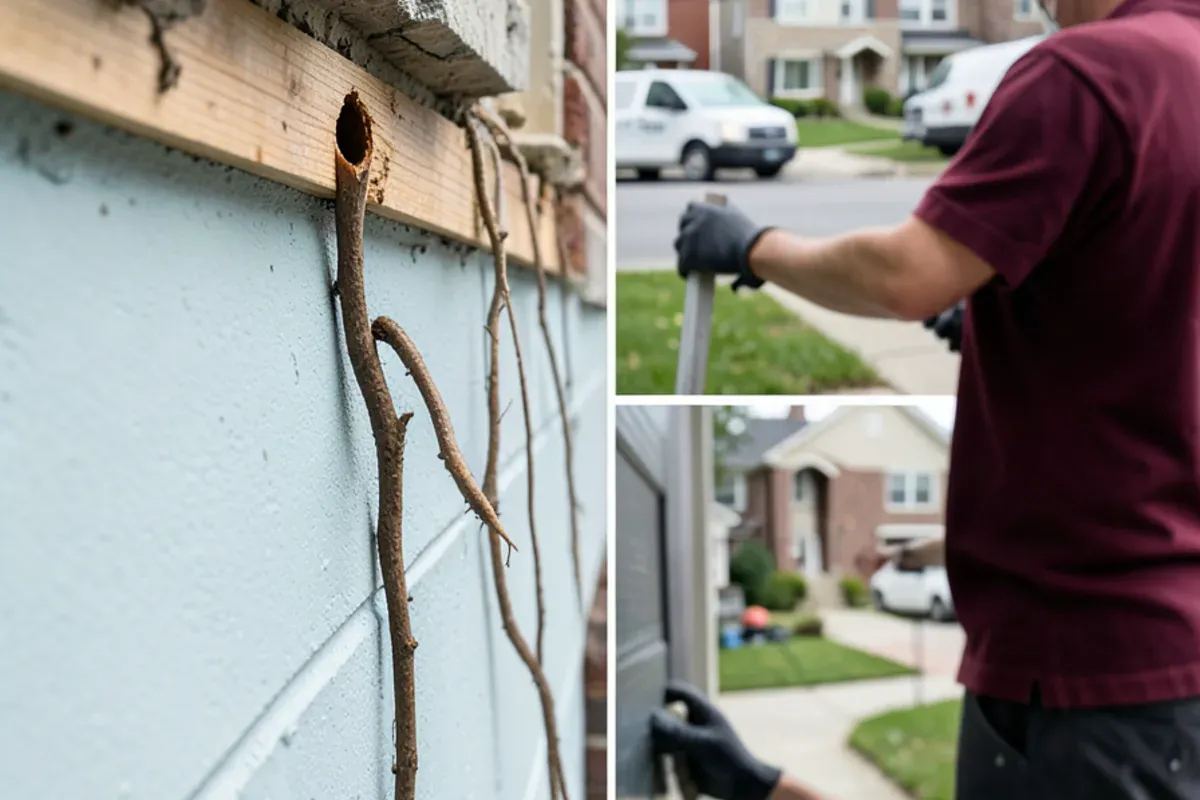
Subterranean termites live in the soil and dry out quickly in open air, so they build shelter tubes of soil, saliva and droppings to travel from the ground up to the wood they feed on. The tubes are usually about the width of a pencil, flat or slightly rounded, and run up foundation walls, piers, chimney bases and the backs of basement steps.
Break a small section open. If you see small, pale, soft-bodied insects inside, the tube is active. If it is dry and empty, it may be old, but old tubes still mean termites reached the house once and may be using another route now. Do not scrape tubes away before an inspection; they show exactly where the colony enters.
What does termite damage look like inside the house?
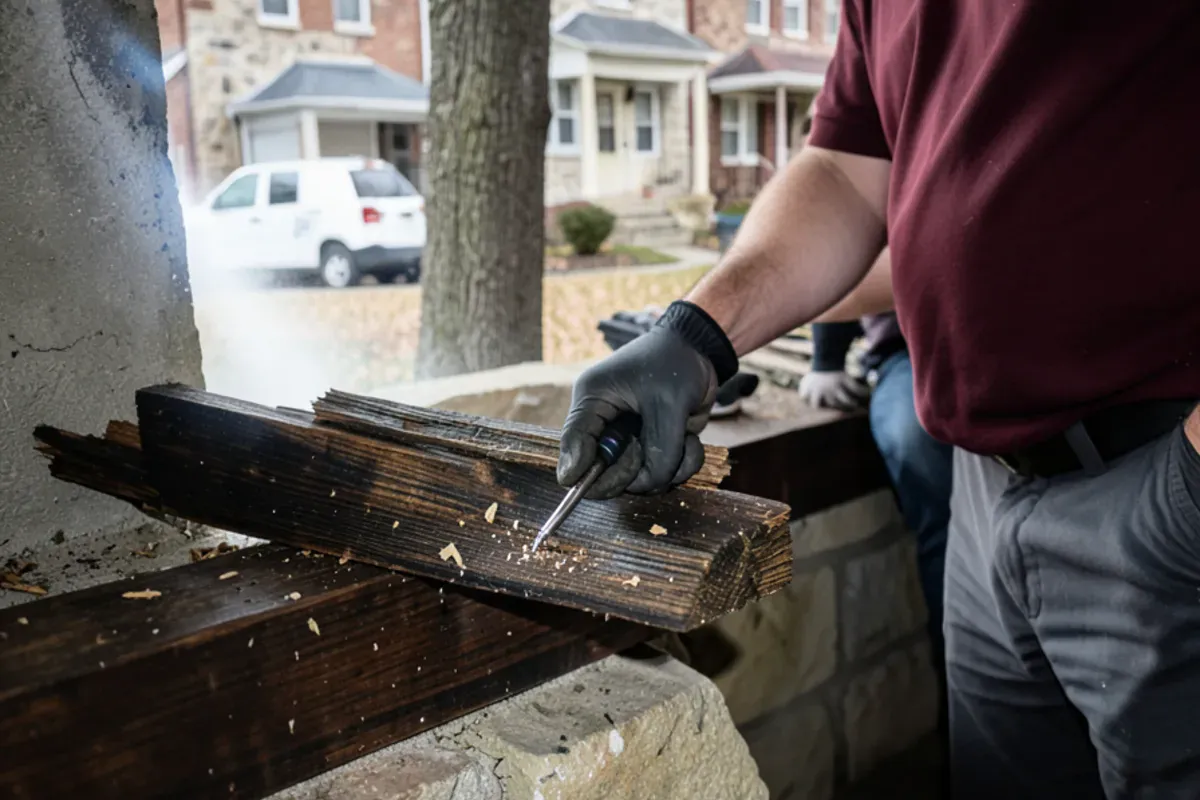
Termites eat wood from the inside out and leave a thin outer shell, so damage often stays hidden until it is advanced. Tap baseboards, door frames and window trim with the handle of a screwdriver; damaged wood sounds dull and papery instead of solid. A screwdriver tip that sinks in easily is a strong warning sign.
Other indoor clues include paint that blisters or ripples on wooden trim, drywall with faint tracks or pinholes, floors that feel spongy or slightly uneven, and doors and windows that suddenly stick. Inside the wood, termite galleries run along the grain, are dirty with soil and droppings, and leave the harder layers standing in thin sheets.
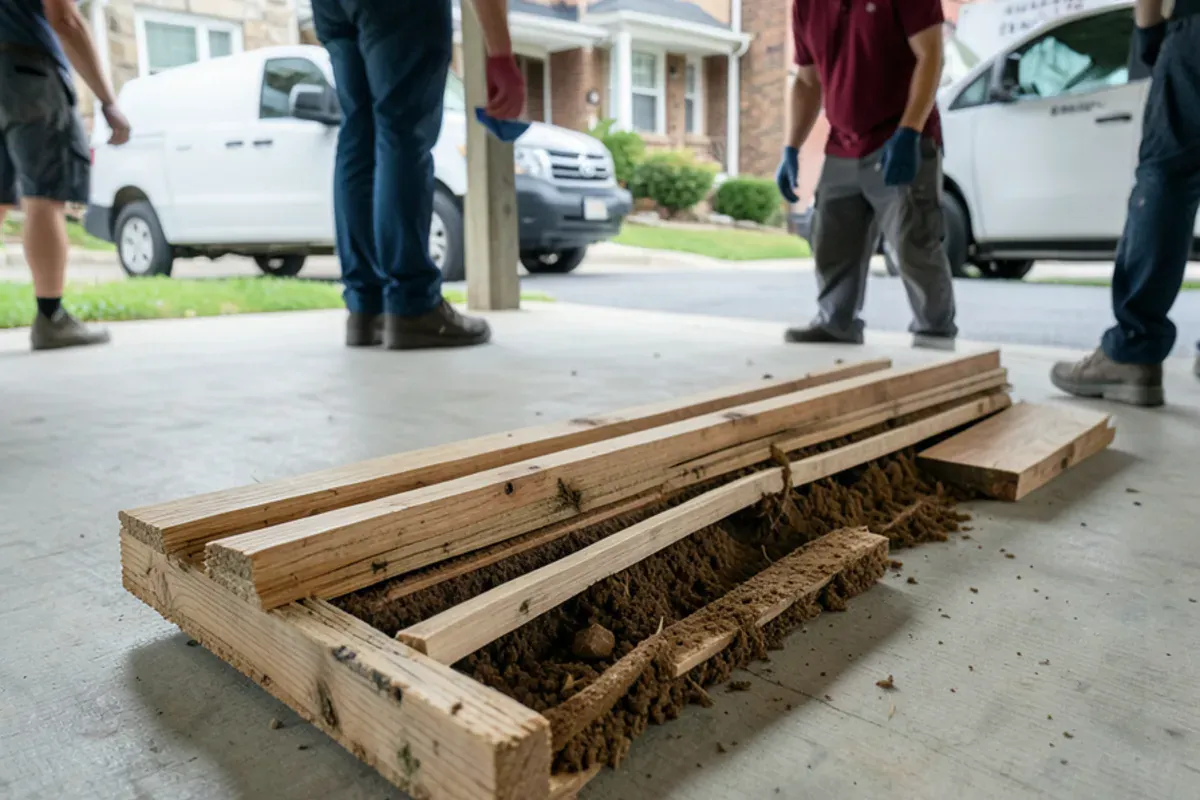
Where to look for termite damage in a basement, step by step
Most termite activity in our area starts low. A flashlight and a screwdriver are all you need for a first look.
Walk the outside first
Look along the foundation where soil, mulch, a porch, steps or a patio slab touch the house. Check under decks and around downspouts that dump water against the wall.
Check the sill plate
In the basement, shine your light along the wooden sill that sits on top of the foundation, and press it every few feet with the screwdriver.
Inspect the band joist and floor joist ends
These rest on the sill and are often where tunnels first enter the framing.
Look at concrete cracks and pipe penetrations
Termites can enter through cracks narrower than a credit card and through gaps where pipes pass through the slab.
Finish at wood touching the floor
Basement stair stringers, door frames, shelving and old paneling resting on concrete are frequent targets.
Termite swarmers are a sign of a nearby colony
On a warm spring day, often after rain, a mature colony sends out winged reproductive termites. A swarm indoors, or a pile of identical shed wings near a window, baseboard or basement light, usually means the colony is already feeding in or under the structure.
Swarmers are easy to confuse with flying ants. Termite swarmers have straight, thick waists, straight antennae and two pairs of equal-length wings. If you find any, seal a few in a zip-top bag so they can be identified.
Is it termites, or something else?
Older houses collect wood damage from several causes, and not all of it calls for termite treatment. These are the most common look-alikes:
- Moisture rot: wood that is soft, dark and cracked across the grain in a checkerboard pattern, usually near a leak, with no soil or tunnels inside
- Carpenter ants: smooth, clean tunnels, with sawdust-like debris and bits of dead ants piled below the damage
- Powderpost beetles: tiny round exit holes in hardwood floors, beams or furniture with flour-fine powder underneath
- Old, inactive termite damage: real termite galleries but dry and abandoned, often from a past treatment that is no longer in effect
Why does termite damage show up more in older Delaware County homes?
Building-code hazard maps rate our corner of the state moderate-to-heavy for subterranean termites, and an older house adds risk on top of that. Houses built before modern building codes often have wood framing closer to the soil, porches and additions that bridge the foundation, and years of grading changes that pile soil or mulch above the original sill line.
Past termite treatments also do not last forever. A house treated long ago may have no protection left, which is why we recommend a professional termite inspection when you buy an older home or find any of the signs above. If the damage turns out to be beetles rather than termites, our powderpost beetle control page explains that treatment instead.
Where termites turn up in Ridley Township's 1950s homes
In Ridley Township, where the typical home dates to 1957 by Census (ACS) estimates, neighborhoods such as Holmes, Secane and Milmont Park hold many brick and frame houses. When we inspect houses of that era, the spots we check most carefully are concrete front steps and porches poured against the foundation, slab additions such as family rooms, and basement windows set low to the grade.
Those details create hidden soil-to-wood contact that a homeowner rarely sees. We often find tubes running up behind basement stair stringers or inside a finished wall where paneling meets the concrete. You can read more about local service in Ridley Township, and about treatment options on our termite control page.
The honest limit of any visual inspection is what it cannot see. Behind finished drywall, under carpet laid over a slab, or inside a boxed-in porch, we can only read the edges: a tube coming out at a baseboard, a bubble in the paint, a soft spot at the bottom of a door casing. When a key area is covered, we note it in writing as not visible rather than calling it clear, so you know exactly what was and was not checked.
Quick answers
Can termite damage be repaired?
Usually, yes. Damaged sill plates, joists and trim can be reinforced or replaced by a contractor, but only after the termites themselves are treated; otherwise new wood becomes new food. We focus on the termite treatment and will point out damaged areas during the inspection so you can have a carpenter or structural professional evaluate what needs repair.
How fast does termite damage happen?
Slowly, which is both good and bad news. A typical Eastern subterranean termite colony takes years to cause serious structural damage, so a discovery is rarely an emergency that requires leaving the home. But damage keeps growing quietly every season the colony feeds, so act within weeks rather than months once signs appear.
Do I need a termite inspection when buying an older home?
It is a good idea, and lenders on many loans, often FHA and VA, require a wood-destroying insect report, commonly on the NPMA-33 form. Even when it is not required, an inspection on a house built in the 1950s or earlier can reveal past damage, old treatments and active conditions that affect your plans.
Can you hear or smell termite damage?
Rarely in a way you would notice. Subterranean termites work almost silently, though soldiers sometimes tap their heads against tunnel walls when disturbed, which can make a faint clicking in a very quiet room. Heavy activity may leave a musty, mildew-like smell near damaged wood. Neither is a reliable test; tubes, hollow-sounding trim and shed wings are far better evidence, so check those first.
The bottom line
Mud tubes, hollow wood and blistered paint are the termite signs worth taking seriously, especially low in an older home. If you find any of them, call (209) 563-1650 to book a free inspection; a written plan follows.
Sources

Written by the No Bugs Exterminator team
A small, family-run pest control business in Media, PA, led by owner Thom. We write about what we see on inspections in Delaware County and southeastern Pennsylvania. About us.
Services mentioned in this guide

Want a professional opinion?
Book a free inspection and get a written quote before any treatment.
- ★ 4.8 from 21 Google reviews
- Open 7 days, 8 a.m. to 7 p.m.
- Free inspection before treatment
- Family-run, based in Media, PA
Open 7 days, 8 a.m. to 7 p.m.