
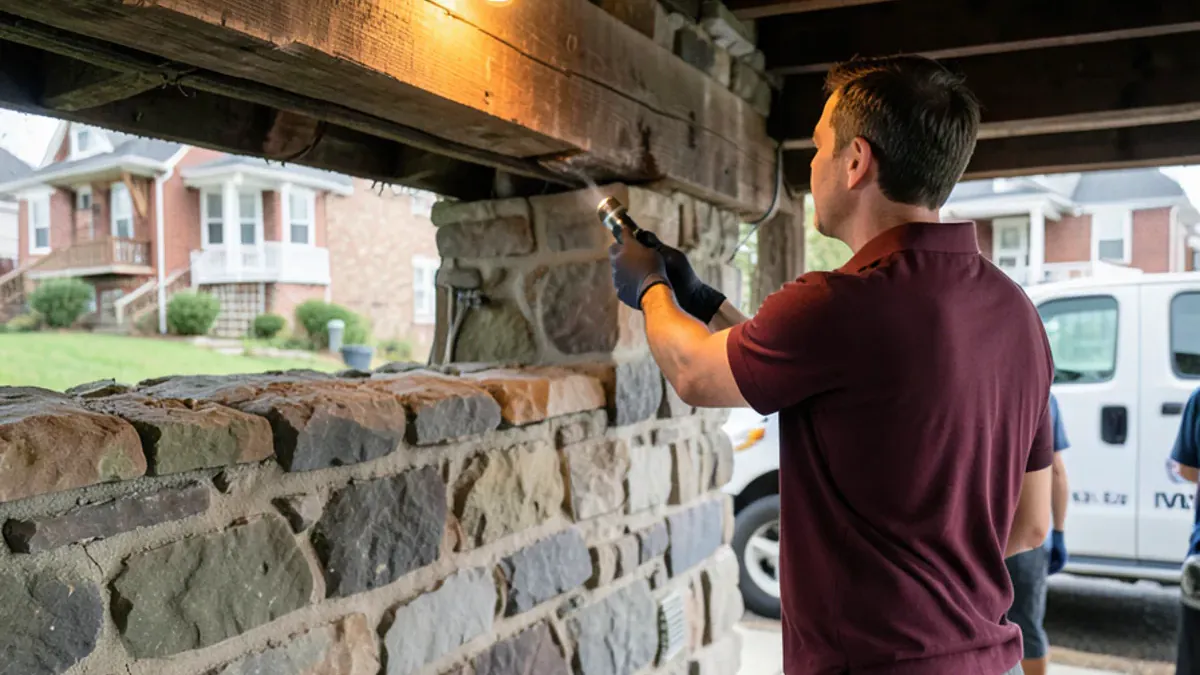
Signs of powderpost beetles: tiny holes and fine powder
Wood-boring beetle larvae spend a year or more tunneling inside the wood before adults chew out to mate. The holes you see are exits, not entrances, so damage inside is usually more extensive than the surface suggests.
Timing is a clue in our climate. Adults of the common species emerge from late spring into summer, so fresh powder that appears in a stone basement between April and August deserves a call, while dusty holes in a beam that never change through a whole summer usually belong to beetles that died out years ago.
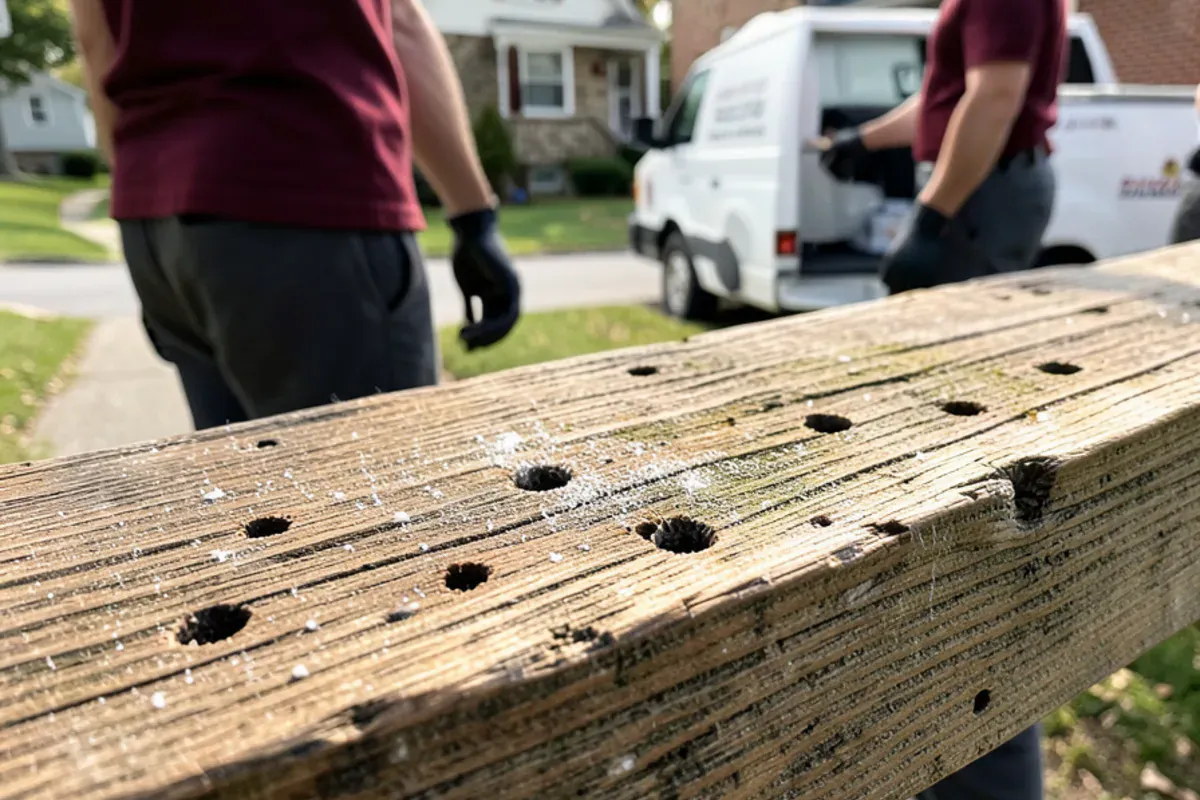
- Round exit holes about the size of a pencil lead or a pinhead in beams, joists, floors or furniture
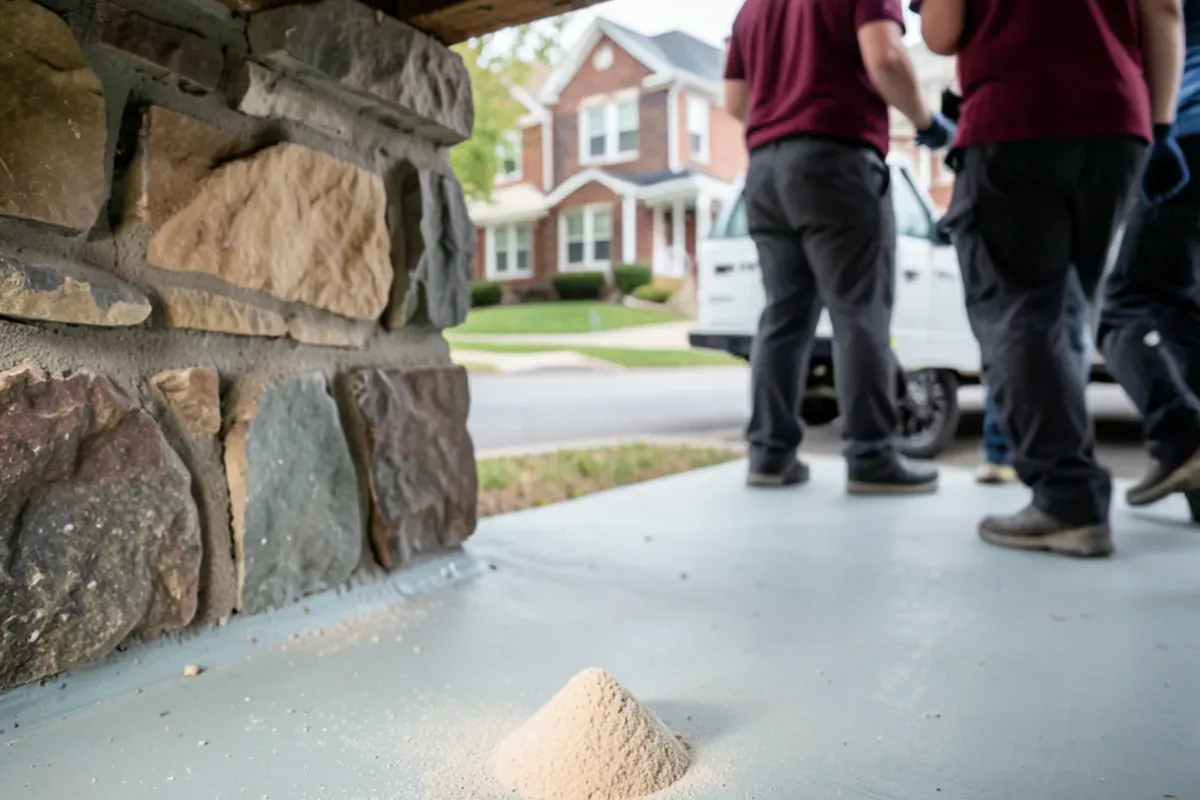
- Small piles of fine, flour-like or gritty powder below the holes
- Fresh holes with sharp, light-colored edges among older, darkened ones
- Wood that crumbles to powder under a screwdriver just below a thin surface layer
- Tiny reddish-brown to black beetles near windows in spring and early summer
Is the infestation active or old?
This is the most important call to get right, because many old houses carry holes from beetles that died out long ago. Active infestations show powder that looks fresh and pale, piles that reappear after you sweep or vacuum them, and new holes with crisp edges. Old holes are dark inside, with dusty, settled powder.
A simple test: clean the area, mark the existing holes with a pencil or tape, and check again over the next spring and summer. New powder or unmarked holes mean the beetles are still working.
Why do pre-war homes and old beams attract wood-boring beetles?
Two main groups cause the trouble here. Lyctid powderpost beetles attack the sapwood of hardwoods such as oak and ash, leaving flour-fine powder; they often arrive in hardwood flooring, paneling or furniture. Anobiid beetles, sometimes called deathwatch or furniture beetles, prefer softwood and hardwood framing that stays damp, and leave gritty, pellet-like powder.
That makes older southeastern PA houses a natural fit. Damp fieldstone basements, crawl spaces with bare soil, unheated barns and carriage houses, and original oak joists in houses from the 1940s and earlier all keep wood at the moisture these beetles like. Beams in a dry, heated living space tend to dry out over time, which is why many old infestations stop on their own.
How we inspect for powderpost beetles
We look at the pattern of holes and powder, the wood species, and whether the surface is bare or finished. Paint, varnish and sealers block egg-laying, so finished wood is rarely reinfested. We probe the wood near the holes to judge how deep the damage runs and note moisture in the area, especially in basements and crawl spaces.
The inspection also rules out look-alikes. Large sawdust piles with insect parts point toward carpenter ants, and soil-packed galleries mean termites. If you'd rather have a broader check of the whole house, a termite inspection covers all wood-destroying insects.
Wood beetle treatment options and trade-offs
For most homes, a combination of moisture correction and treatment of bare wood is the starting point. The written quote explains what fits your situation.
- Moisture control: dehumidifying the basement, fixing drainage and covering crawl space soil. Slow, but it addresses why anobiid beetles thrive.
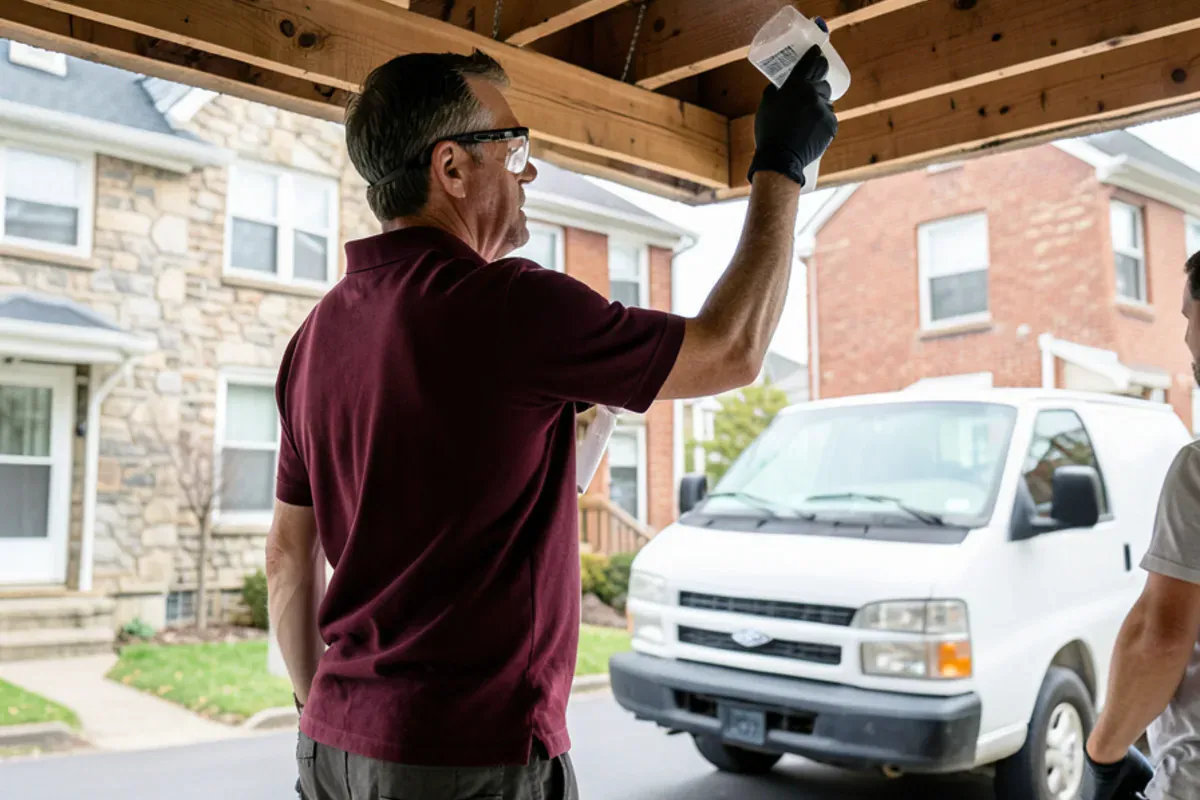
- Borate treatment on bare, unfinished wood: soaks into the surface and kills larvae as they feed or chew out. Doesn't penetrate paint or varnish.
- Replacing or reinforcing badly damaged pieces, which a carpenter handles when a joist or sill has lost strength.
- Removing infested furniture, flooring scraps or firewood so beetles don't spread.
- Fumigation of a structure or an item, a specialized option reserved for severe, widespread infestations.
Talk to us about powderpost beetle control
Call and speak with Thom or his team. The inspection is free, and you get a written quote before any treatment.
- ★ 4.8 from 21 Google reviews
- Open 7 days, 8 a.m. to 7 p.m.
- Free inspection before treatment
- Family-run, based in Media, PA
Open 7 days, 8 a.m. to 7 p.m.
Pennsylvania rules for borate treatment and fumigation
Borate wood treatments are registered pesticides, so applying them for hire in a Pennsylvania home falls under the Pesticide Control Act of 1973, enforced by the Pennsylvania Department of Agriculture (PDA). PDA licenses the businesses that apply them and certifies the applicators, and 7 Pa. Code § 128.31 requires the business license number on company vehicles. Ask for it before work starts.
Fumigation sits in a stricter class. Structural and commodity fumigants are restricted-use pesticides under federal law, so only a certified applicator trained in fumigation may use them, the building or item must be sealed and cleared before anyone goes back in, and the label governs every step. If fumigation comes up for your beams or furniture, ask who will perform it and how re-entry will be confirmed.
Our powderpost beetle visit, step by step
Describe what you've found
Tell us where the holes and powder are, and whether you've seen piles return after cleaning.
Free inspection
Thom or one of his team checks the affected wood, nearby framing and moisture conditions.
Active or old?
We give you our read on whether the infestation is current and how far it extends.
Written quote
If treatment makes sense, you receive a written quote listing the areas, method and any prep.
Treatment and moisture steps
Bare wood is treated as quoted, and we point out the moisture fixes that keep beetles from returning.
Monitor
Mark old holes and watch for new powder over the next emergence season.
Powderpost beetle treatment cost factors
The age and use of the space drive most of the scope. A finished family room with varnished oak floors rarely needs more than an inspection, while an unfinished fieldstone basement under a Lansdowne Victorian or a bare-joisted crawl space beneath an old rowhome addition may need borate treatment across many joists, plus moisture work so the result holds.
Outbuildings and stored wood are separate items. Carriage houses, barns and sheds with bare framing, reclaimed lumber, firewood and antique furniture are each handled on their own, and fumigation, when an item or structure truly needs it, is specialist work priced apart from the rest. The written quote lists each area so you can decide where to start.
- Square footage of joists, beams or flooring involved
- Bare wood versus painted or finished wood
- Access in crawl spaces, attics or barns
- Whether damaged pieces need replacing before or after treatment
- Moisture correction needed in the basement or crawl space
- Infested furniture or stored items to deal with separately
Preventing wood beetles from coming back
Keep basements and crawl spaces dry with a dehumidifier, good gutter drainage and a vapor barrier over bare soil. Seal or finish exposed wood where practical. Inspect secondhand furniture, antique pieces and reclaimed lumber before bringing them inside, and don't store firewood indoors.
Selling an older home? Reinfesting wood-boring beetles are one of the insects a WDI inspection report records, so it helps to know whether old holes are active before the buyer's inspector arrives.
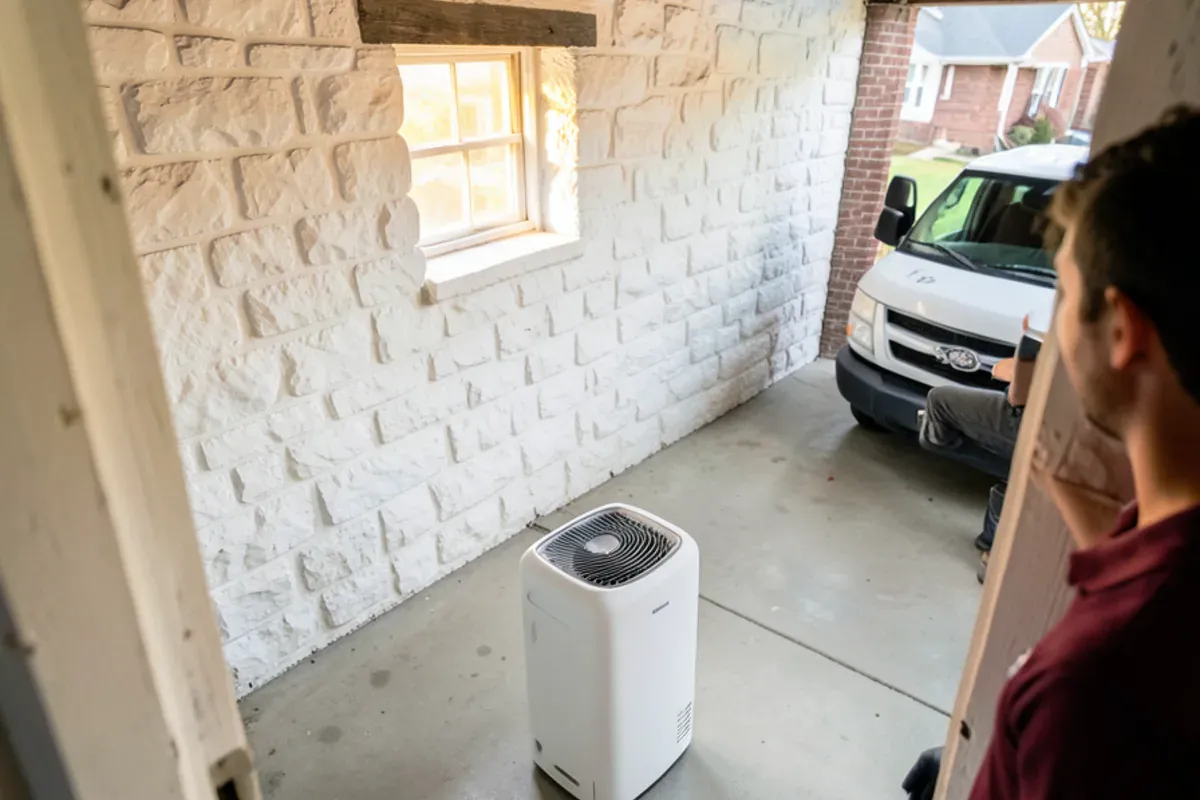
What our powderpost beetle control includes
- Free inspection of affected beams, joists, floors and nearby framing
- Our assessment of whether the infestation is active or old
- Identification of powderpost beetles versus carpenter ants or termites
- Moisture check of basement or crawl space conditions
- Written quote naming the areas and method
- Treatment of bare wood as described in the quote
- Guidance on marking holes and monitoring for new activity
Why call No Bugs Exterminator for powderpost beetle control
Active or not, answered first
Our free inspection focuses on whether beetles are still working before any written quote, so you don't treat history.
Used to old houses
We're a Media-based family business working in the stone basements and older framing common across Delaware County.
Every day, 8 to 7
We're open seven days a week from 8 a.m. to 7 p.m. to answer questions about holes or powder you've found.
Thom and his team
A small, family-run business from Media looks at your beams in person before anything is recommended.
Same-day when possible
Same-day visits are often possible when the schedule allows — call early in the day.
Where we provide powderpost beetle control
Powderpost beetles show up in the area's oldest houses. In Lansdowne, Victorian homes keep original oak joists over damp basements. Upland and Darby have creekside mill-town houses on stone foundations along Chester and Darby creeks, and in Wayne, older rail-suburb homes and carriage houses often have bare beams in unheated spaces where moisture lingers.
- Rutledge
A turn-of-the-century planned borough with a 1938 median build year, where original joists and bare basement framing are still common.
- East Lansdowne
Pre-war twins built around 1938 often keep their original basement joists, and damp cellars keep that wood attractive to anobiid beetles.
- Swarthmore
Large pre-war homes near the Crum Woods have old oak floors, attic framing and outbuildings where exit holes and powder turn up.
- Rose Valley
Arts-and-Crafts era houses from a community founded in 1901, set in deep woods, combine old timber with the moisture beetles need.
- Chadds Ford Township
Historic houses and barns around the Brandywine Battlefield area hold bare beams and stored wood where powderpost beetles can persist.
- Marcus Hook
River-town homes with a 1944 median build year sit on damp ground, and their older basement framing is worth checking for fresh powder.
- Aldan
Pre-war homes around the Clifton-Aldan rail stop often have original hardwood floors and joists that can carry old or active beetle holes.
- Clifton Heights
Older houses in this former Darby Creek mill borough sit near the creek, where damp stone basements keep framing at beetle-friendly moisture.
- Merion Station
Pre-war stone colonials with a 1938 median build year have original framing and hardwood that warrant an active-or-old check.
What customers say on Google
4.8 out of 5 from 21 reviews on Google. Quoted as written by customers.
Very professional and knowledgable service providers. They mainly solved our problems in one visit!
Easiest experience, very professional, well done 👍
Thom is a top-notch pest control specialist! And is one of the most genuine guys in the industry. He came to inspect a situation I had going on at the house, took his time, offered detailed advice, and didn’t take a penny.
Powderpost Beetle Control: common questions
What causes tiny holes and powder under old beams?
Usually powderpost or other wood-boring beetles. Their larvae tunnel inside the wood for a year or more, then adults chew round exit holes, pushing out fine powder. Lyctid beetles leave flour-like powder in hardwoods, while anobiid beetles leave gritty pellets in damp framing. The key question is whether the holes are new, which a free inspection and simple monitoring can answer.
Are powderpost beetles active in pre-war homes?
Sometimes, but not always. Many old Delaware County houses carry holes from infestations that ended long ago as the wood dried out. Active beetles are most likely where wood stays damp, such as stone-foundation basements, crawl spaces over bare soil, porches and unheated outbuildings. Fresh, pale powder that comes back after cleaning is the clearest sign.
Can treated wood be left in place?
In most cases, yes. Wood with light to moderate damage is usually treated and left in place, especially once moisture is under control. Pieces that have lost real strength, such as a joist end crumbling at the sill, should be evaluated by a carpenter for reinforcement or replacement. Treatment stops the insects; it doesn't restore lost wood.
Will the beetles spread to my furniture?
They can, but mainly into bare, unfinished wood. Finished furniture and painted trim resist egg-laying, which is why infestations stay mostly in basement framing, raw flooring and unfinished antiques. If you've brought home a piece with fresh holes and powder, keep it away from other wooden items until it's been checked.
How long do powderpost beetles take to cause serious damage?
Usually years. Each generation can take a year or longer inside the wood, so damage builds slowly. That's good news for planning, but it also means a slow infestation can go unnoticed for a long time in a basement you rarely visit. Catching it while it's limited keeps repairs smaller.
Related services

Helpful guides from our blog
Ready to get rid of the problem?
Thom and his team serve Media, Delaware County and southeastern Pennsylvania, open 7 days, 8 a.m. to 7 p.m..
- ★ 4.8 from 21 Google reviews
- Open 7 days, 8 a.m. to 7 p.m.
- Free inspection before treatment
- Family-run, based in Media, PA
Open 7 days, 8 a.m. to 7 p.m.