
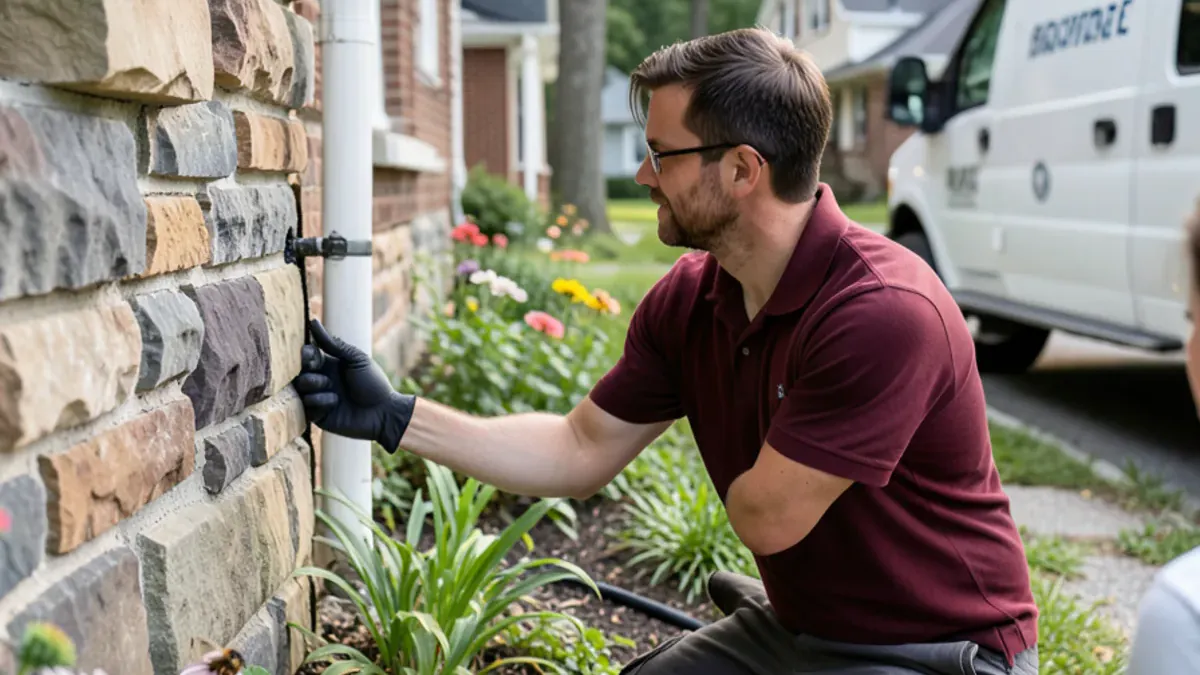
Signs a low-toxicity approach fits your situation
Green pest control works well when a problem is caught early and its source can be found. A few ants on the counter, the first mouse droppings in a pantry, silverfish in a bathroom or spiders in the basement are all good candidates.
It also fits households where exposure matters most: infants and toddlers who crawl on floors, cats and dogs that lick their paws, someone with asthma, a pregnancy, or a vegetable garden and a pollinator bed you want left alone. Tell us about any of these on the first call. In a shared building, one unit's choices affect the next, so renters should also read about apartment pest control.
It fits less well when activity is heavy and spread across the house, such as cockroaches in every kitchen cabinet or mice in several rooms. Even then, the plan still leans on sealing and baiting, with a short stronger phase only where the inspection shows it is needed.
Why pests find their way into Delaware County homes
Most indoor pest problems here trace back to three local conditions. First, older housing: many boroughs have median build years in the 1940s and 1950s, per Census (ACS) estimates, with fieldstone foundations and plaster walls full of small gaps. Mice need an opening only about the size of a dime.
Second, water. Crum, Ridley, Chester and Darby creeks keep yards and basements damp, which draws camel crickets, millipedes, silverfish and moisture-loving ants. Third, cold winters push mice, stink bugs and boxelder bugs indoors every fall. Fixing those conditions is the backbone of any eco-friendly plan, because a sealed, dry house needs far less product.
How we inspect before choosing a method
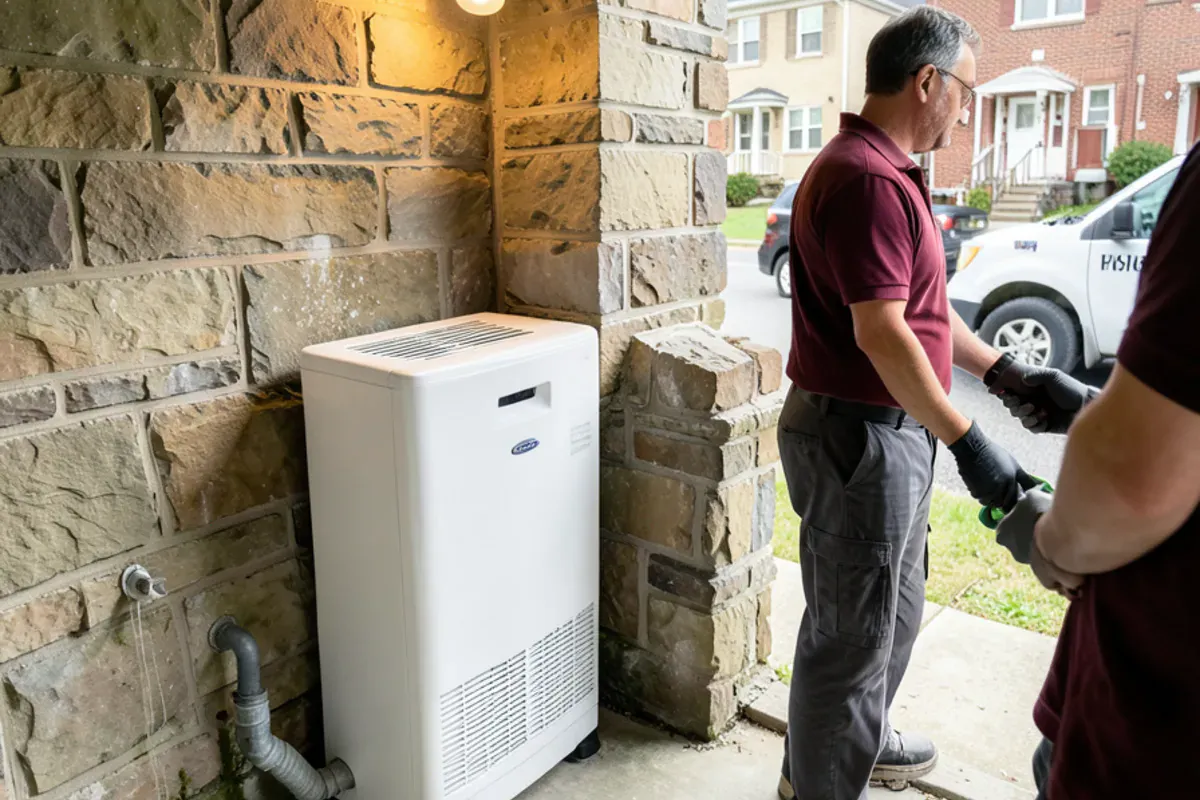
Integrated pest management starts with identification. The right species tells us which low-toxicity tools will work: a sugar-feeding ant takes a different bait than a protein-feeding one, and carpenter ants need their nest found rather than a perimeter spray.
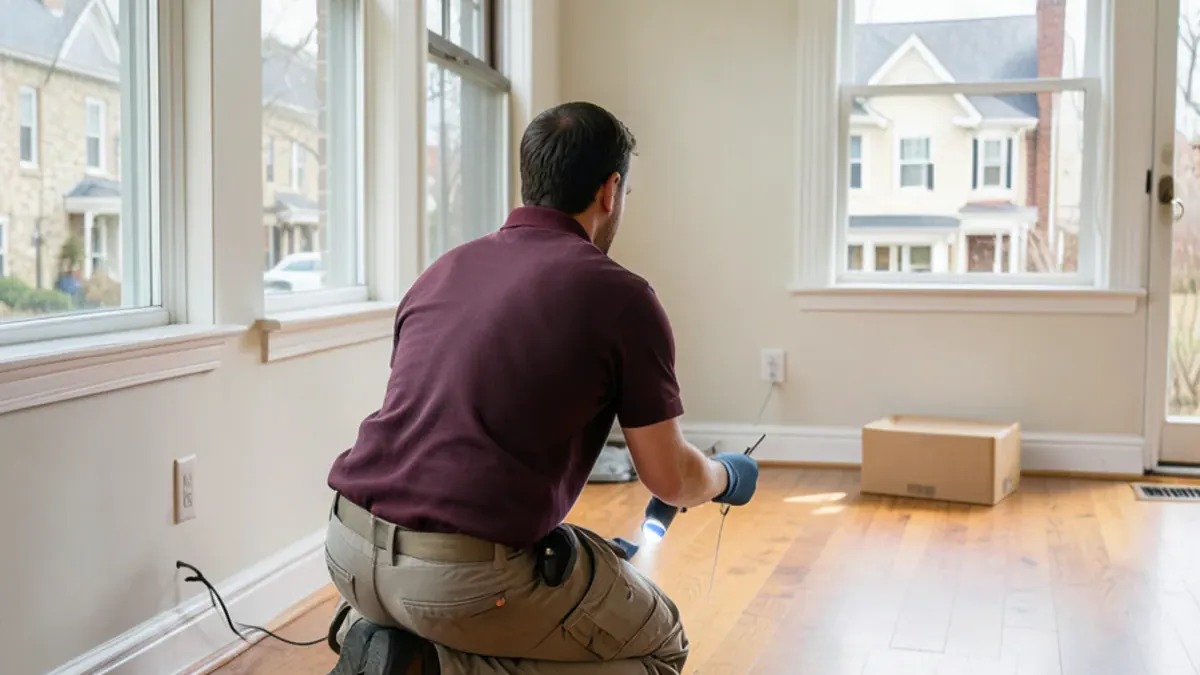
We walk the house inside and out, look for entry gaps, moisture and food sources, and may place sticky monitors to measure activity before and after treatment. The written quote then lists what we will seal, what we will place and where.
Green pest control options and their trade-offs
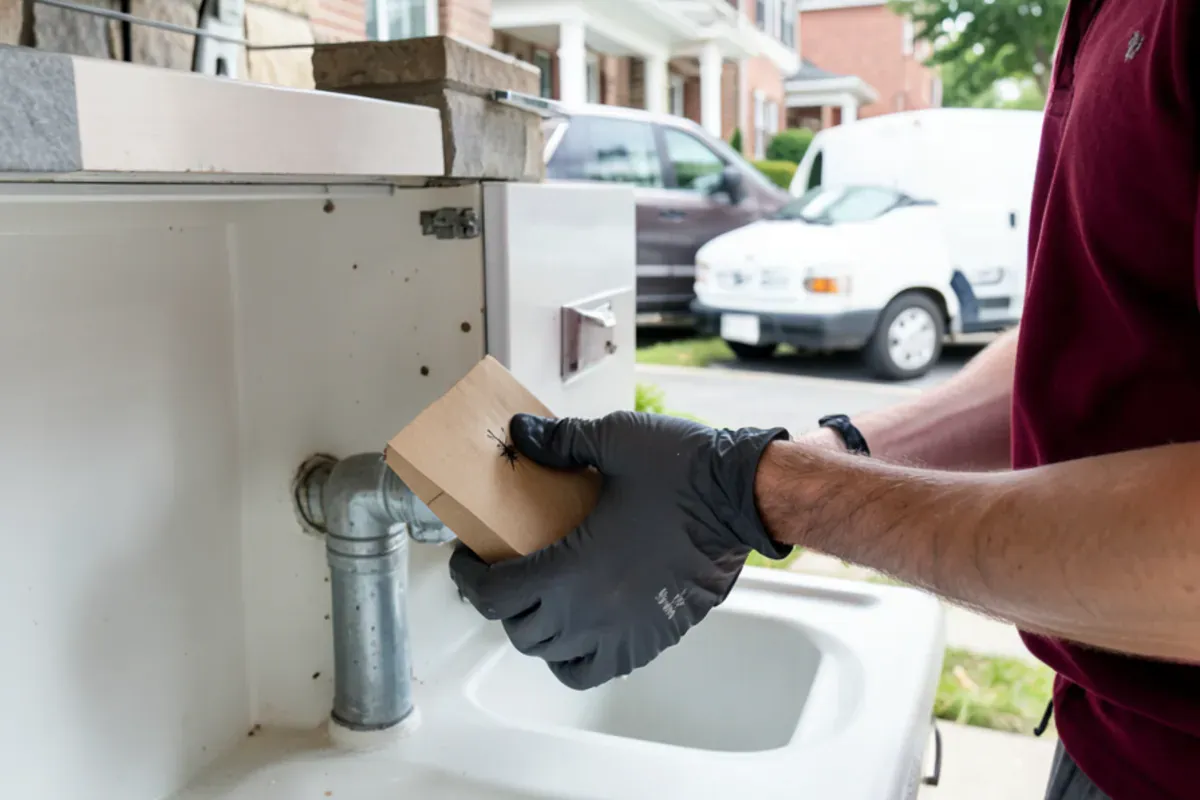
No method is free of trade-offs, and no pesticide is risk-free, including botanical ones. Active termite colonies and bed bugs usually need dedicated methods, covered under termite control and bed bug treatment. For everyday pests, the low-toxicity options compare like this:
| Method | Where it fits | Trade-off |
|---|---|---|
| Exclusion and sealing | Mice, stink bugs, spiders, wasps entering through gaps | Takes labor up front; some gaps need a contractor |
| Bait gels and stations | Ants, cockroaches, mice | Slower than a spray; works over days as pests share the bait |
| Mineral dusts in wall voids | Cockroaches, silverfish, ants in voids | Must stay dry and out of reach; slow acting |
| Insect growth regulators | Cockroaches, fleas | Stops breeding rather than killing adults right away |
| Traps and monitors | Mice, crawling insects | Need regular checks; not enough alone for heavy activity |
| Plant-oil products | Some outdoor and contact uses | Short residual; may need repeat applications |
What happens during an eco-friendly treatment visit
Confirm the pest and the household
We review the species, the rooms involved, and any pets, children or health concerns in the home.
Fix the way in
We seal gaps around pipes, vents and baseboards where practical and note anything that needs a contractor.
Remove what draws them
We point out food, water and clutter conditions, such as a leaking trap under a sink or pet food left out overnight.
Place, do not broadcast
Baits, dusts and gels go into cracks, voids and stations rather than onto open floors and counters.
Set monitors
Sticky monitors or rodent stations go in place so we can measure whether activity is falling.
Explain re-entry and next steps
You get written notes on what was placed, where, and when we will check back.
Talk to us about eco-friendly pest control
Call and speak with Thom or his team. The inspection is free, and you get a written quote before any treatment.
- ★ 4.8 from 21 Google reviews
- Open 7 days, 8 a.m. to 7 p.m.
- Free inspection before treatment
- Family-run, based in Media, PA
Open 7 days, 8 a.m. to 7 p.m.
Act 35, PDA and the Pennsylvania law behind IPM
Pennsylvania put integrated pest management into law for schools with Act 35 of 2002, which requires public schools to adopt IPM plans and notify parents and staff about pesticide applications. The same approach carries over to houses, even though no law requires it there.
All pest control work in the state, low-toxicity or not, falls under the Pesticide Control Act of 1973, which the Pennsylvania Department of Agriculture (PDA) enforces by licensing businesses and certifying applicators. Plant-based and mineral products count as pesticides too when they are sold to kill or repel pests, so their labels govern how they may be used. Ask any provider for its PDA license number and the label of each product it plans to place.
How fast does integrated pest management work?
Slower in the first week, steadier afterward. Baits need time to spread through a colony, so you may see more ants for a day or two as workers feed, then a sharp drop. Cockroach baits and growth regulators usually show results over two to three weeks.
Mouse work is quickest when entry points are sealed on the first visit; trapping then removes the mice already inside. After treatment, leave bait placements and monitors alone, do not spray store-bought products over them, and keep notes on where you still see activity so the follow-up can target it.
What affects the price of eco-friendly pest control in Delaware County, PA?
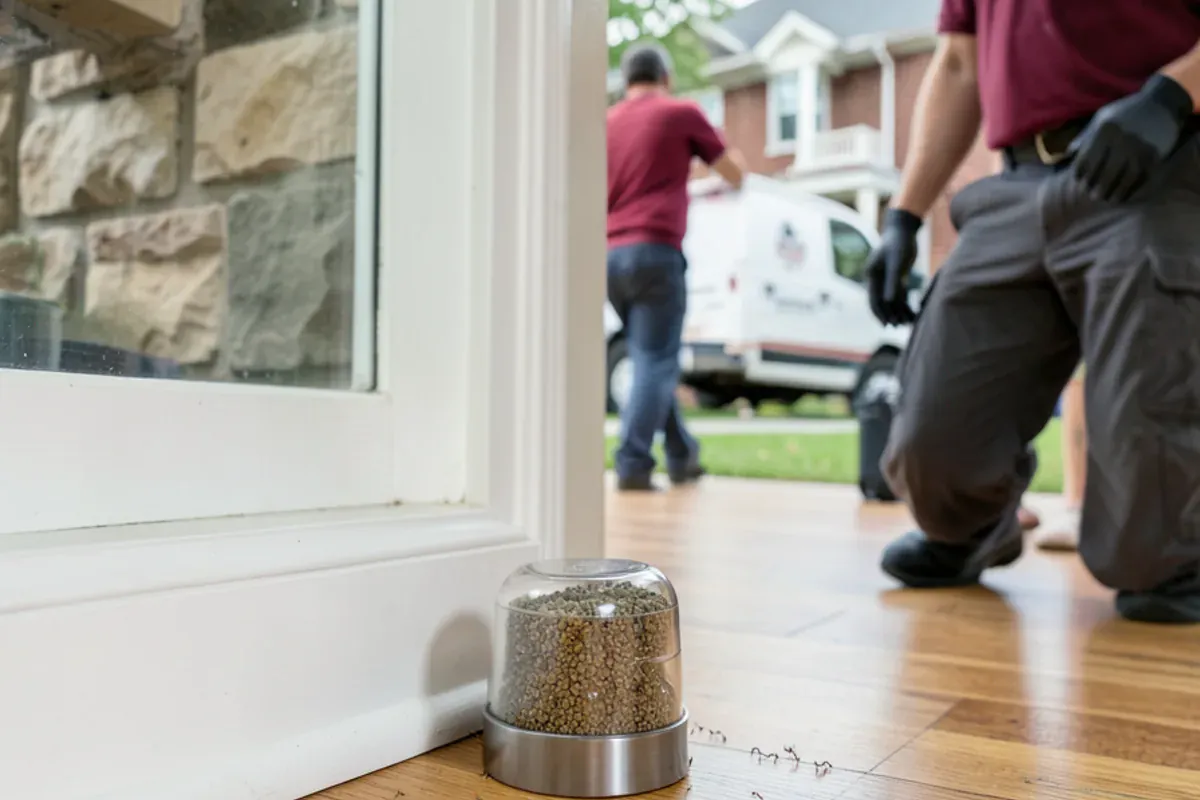
Eco-friendly work tends to put more time into inspection and sealing and less into product. We quote after the free inspection, based on:
Because this approach trades product for labor, the biggest swing in price is usually the sealing. A 1950s Cape Cod with a block foundation and a few pipe gaps is a short job; a fieldstone basement with open joist pockets and a shared party wall can take much longer to close properly.
Monitoring adds a smaller, steady cost. Each station or sticky monitor has to be checked and logged, and a plan with more follow-ups costs more than one with a single return visit. The written quote breaks out sealing, placements and follow-ups so you can see where the time goes.
- The pest species and how established it is
- How many entry gaps need sealing, and how hard they are to reach
- Number of bait stations, monitors or traps placed
- Follow-up visits needed to check monitors and adjust placements
- Size and layout of the home, including basements and crawl spaces
Prevention you can do without any pesticide
These steps are easiest before furniture arrives, which is why new home pest control visits often start with them.
- Pull mulch back several inches from the siding and keep firewood away from the house
- Run a dehumidifier in damp basements, especially in creek-side homes
- Store pantry food and pet food in sealed hard containers
- Fix dripping faucets and leaking sink traps
- Fit door sweeps and repair torn window screens before fall
- Clean gutters so water drains away from the foundation
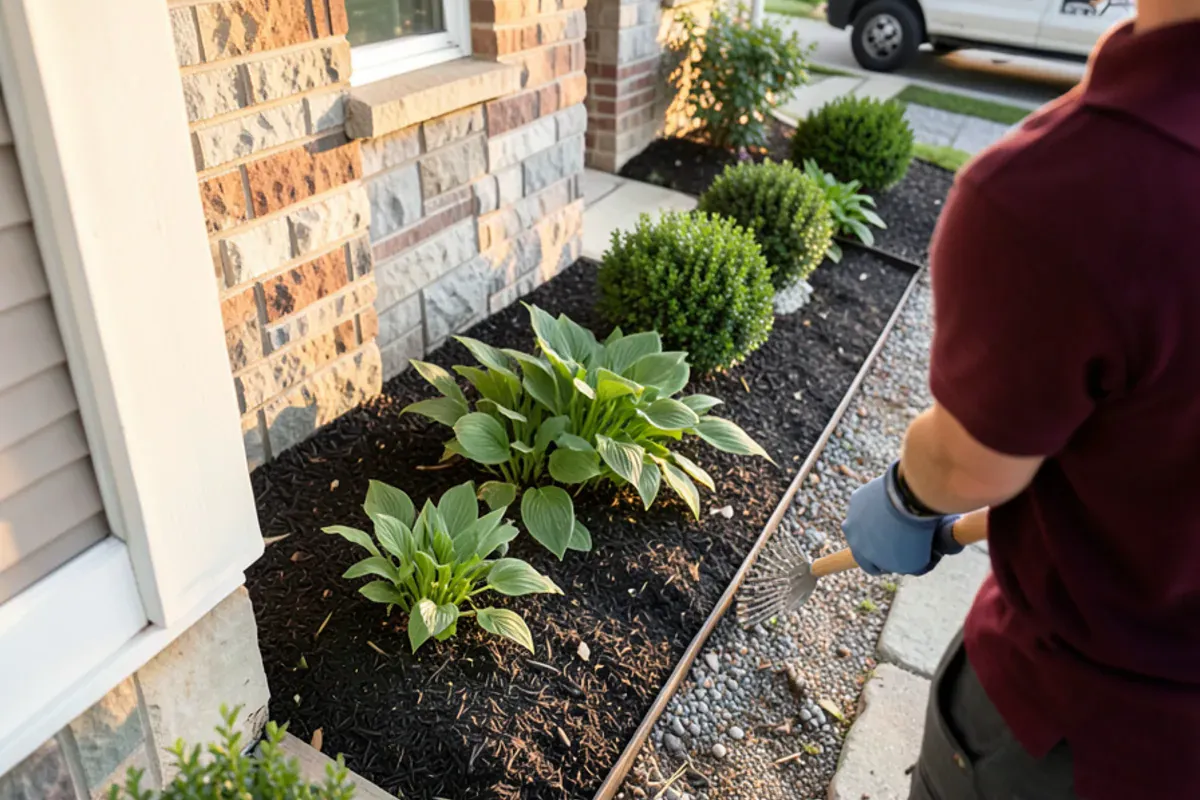
What our eco-friendly pest control includes
- Free inspection with species identification
- Written quote listing what will be sealed and placed
- Gap sealing at practical entry points
- Targeted bait, gel and dust placements instead of broadcast spraying
- Monitors or stations to track activity
- Written notes on placements and re-entry
- Follow-up check to adjust the plan
Why call No Bugs Exterminator for eco-friendly pest control
Inspection drives the method
We inspect for free and choose the lowest-impact method that fits what we find, then put it in a written quote.
Small family team
Thom and his team are based in Media and explain each placement so you know where it is and why.
Flexible scheduling
We are open 7 days, 8 a.m. to 7 p.m., so follow-up checks can fit around your week.
Rated by customers on Google
Customers have rated us 4.8 stars in 21 Google reviews.
Short-notice visits
Same-day visits are often possible when the schedule allows — call early in the day.
Where we provide eco-friendly pest control
Low-toxicity plans fit many of the homes we serve. In Rose Valley, deep woods and gardens make pollinator-friendly work a priority. Swarthmore homes beside the Crum Woods deal with damp basements and camel crickets, Nether Providence houses along Crum Creek see spring ants, and in Media, apartments over shops benefit from baiting rather than spraying shared spaces.
- Edgmont Township
Subdivisions from around 1991 border Ridley Creek State Park, where deer trails and gardens make low-impact, targeted treatment the sensible first choice.
- Radnor Township
Main Line homes along Lancaster Avenue, built around 1962, often have mature gardens where owners prefer sealing and baiting over broad spraying.
- Wayne
Victorian rail-suburb houses near downtown Wayne have porches, stone foundations and planted yards that respond well to exclusion-first pest work.
- Villanova
Large estate homes off Spring Mill Road sit on wooded, landscaped grounds where targeted placements protect pollinator beds and pets.
- St. Davids
Homes near the Eastern University campus, with a median build year of 1958, have older basements where sealing and drying cut silverfish and cricket problems.
- Folcroft
Bordering the John Heinz refuge and its Darby Creek tidal wetlands, homes here call for careful, minimal outdoor treatment near sensitive habitat.
- Tinicum Township
Essington’s riverfront and the Heinz refuge marsh sit beside homes, so moisture control and indoor baiting come before any outdoor product.
- Darby Township
Sections such as Briarcliffe lie near the Darby Creek tidal marsh, where damp-loving pests are best handled by drying and sealing first.
- Colwyn
Where Cobbs Creek meets Darby Creek at the city line, older twins from around 1951 benefit from exclusion work that keeps creek-side pests outside.
- Eddystone
Homes from around 1948 near the Crum Creek mouth on the Delaware River stay damp, so dehumidifying and sealing do much of the work.
What customers say on Google
4.8 out of 5 from 21 reviews on Google. Quoted as written by customers.
Thom + his team were amazing. Very professional + provided me with a quote that made the most sense for my situation. Clearly I was not being gouged. Thom put the client first.
Excellent Exterminator! Very courteous and professional! always arrives on time and will take care of any bugs!
Professional, thorough, great communication, timely, respectful of people and property…
Eco-Friendly Pest Control: common questions
What makes a pest treatment eco-friendly?
Using the least product needed, in the most targeted place. That means fixing entry gaps and moisture first, then placing baits, gels or dusts inside cracks and stations rather than spraying open surfaces. It is the integrated pest management approach that Pennsylvania's Act 35 asks public schools to follow, applied to a house.
Are your treatments safe around pets and children?
No pesticide is risk-free, so the honest answer is that placement and timing make the difference. We use tamper-resistant stations and put gels and dusts in cracks and voids that kids and pets cannot reach, and we tell you when treated areas can be used again. Tell us about pets, fish tanks and anyone with asthma before the visit.
Does eco-friendly pest control work on termites and bed bugs?
Only in part. Prevention, moisture control and monitoring help with both, but an active subterranean termite colony in southeastern Pennsylvania's moderate-to-heavy termite zone usually needs a dedicated soil or bait treatment, and bed bugs need a multi-visit protocol. We explain those options during the inspection.
Is organic pest control the same as eco-friendly?
Not exactly. Organic usually means a product comes from plant or mineral sources, such as plant oils or diatomaceous earth. Those can be useful, but natural does not automatically mean harmless, and some act only on contact. Eco-friendly pest control is the broader approach of preventing pests first and using any product sparingly and precisely.
Why do I see more ants right after a bait treatment?
Because the bait is working. Worker ants find the bait and recruit others to carry it back to the nest, so activity can rise for a day or two before it falls. Resist wiping the trail with cleaners or spraying it, since that cuts off the supply line. In most homes the drop shows within a week.
Related services

Helpful guides from our blog
Ready to get rid of the problem?
Thom and his team serve Media, Delaware County and southeastern Pennsylvania, open 7 days, 8 a.m. to 7 p.m..
- ★ 4.8 from 21 Google reviews
- Open 7 days, 8 a.m. to 7 p.m.
- Free inspection before treatment
- Family-run, based in Media, PA
Open 7 days, 8 a.m. to 7 p.m.