This option depends on the property. Call (209) 563-1650 and we'll confirm whether it's the right fit before anything is scheduled.
What Rodent Cleanup and Sanitation Covers
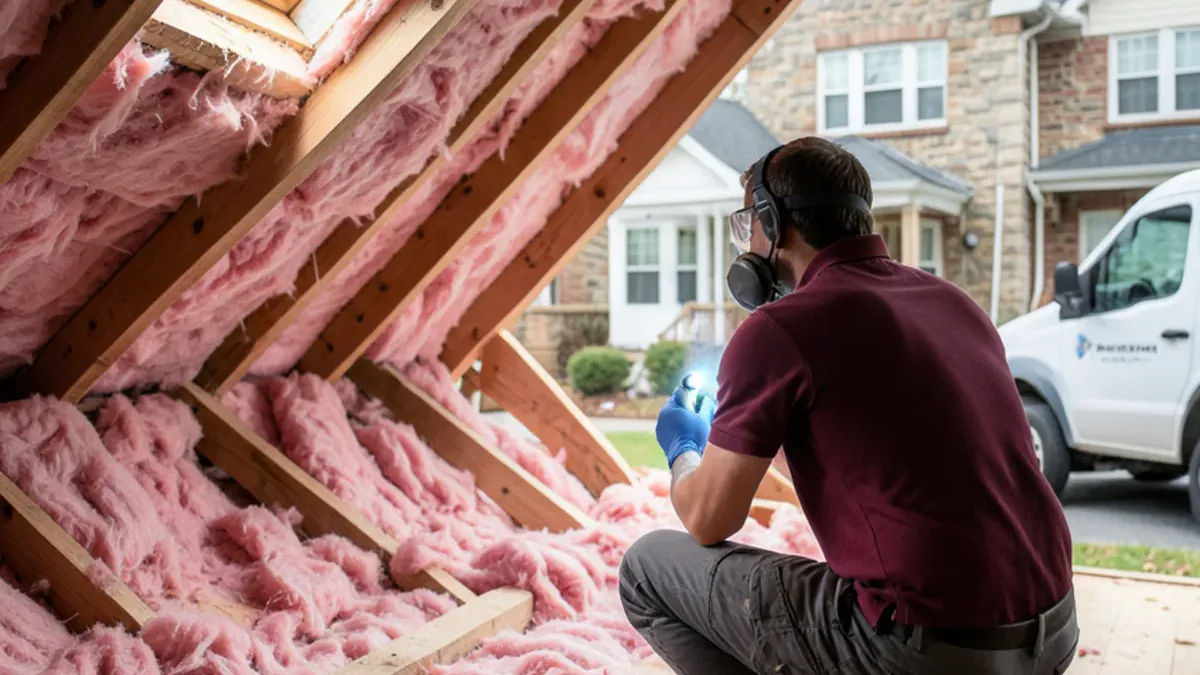
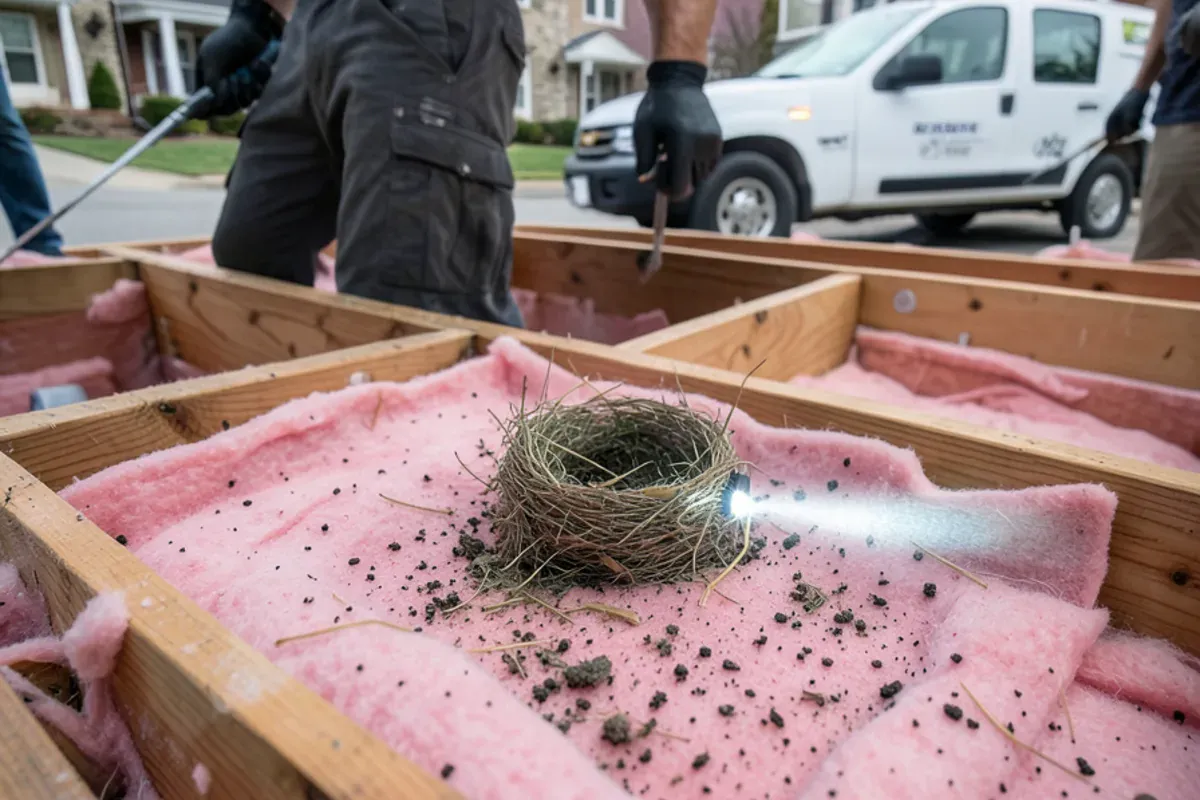
Rodent sanitation deals with what the animals leave behind. A few droppings in a kitchen drawer are easy to handle yourself with the precautions below, but months of activity in an attic, crawlspace or basement storage area leave a layer of droppings, urine staining, shredded nesting and soiled insulation that is a bigger job.
The work usually fits after a long-running infestation, when you are selling or moving into a house with old activity, or when rodent odor will not go away. It should always come after the rodents are removed and the entry points sealed; cleaning while animals are still active just resets the problem.
Why Does Rodent Droppings Cleanup Call for Care?
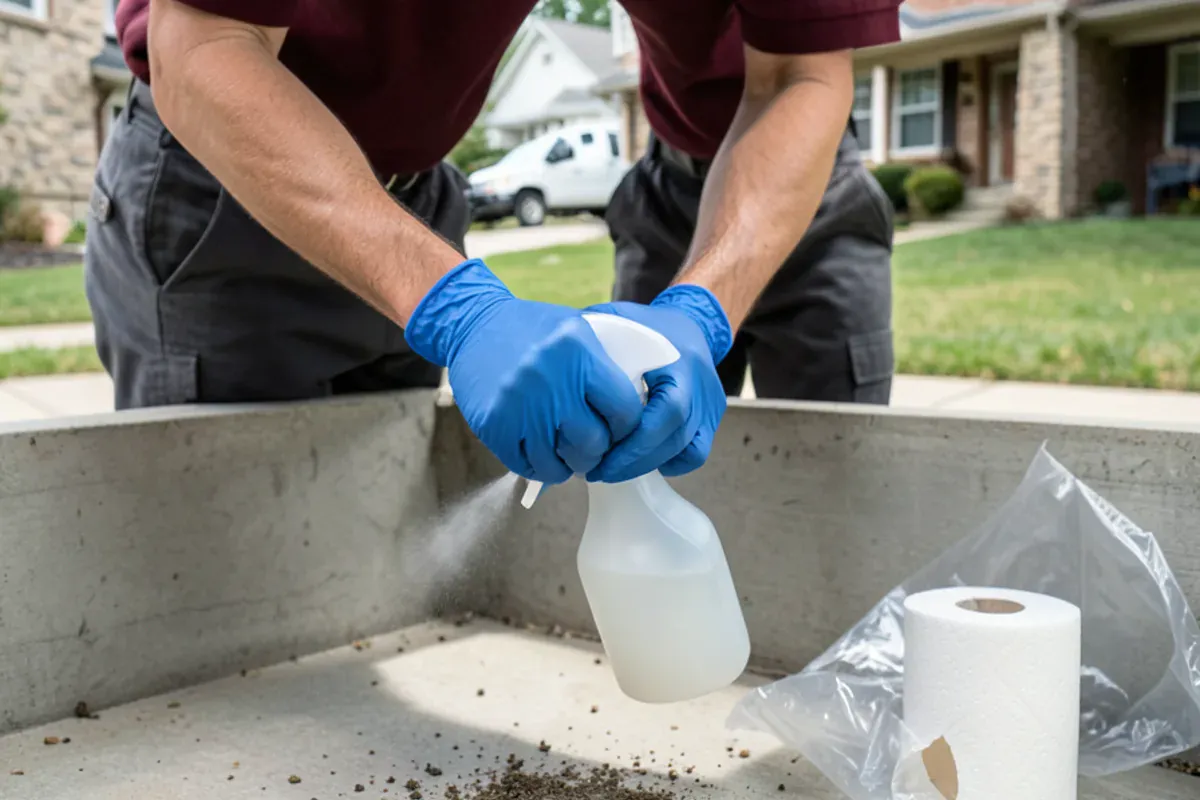
Dried rodent droppings and urine can carry bacteria and viruses, and sweeping or vacuuming them breaks particles loose into the air you breathe. The U.S. Centers for Disease Control and Prevention (CDC) recommends a wet method instead: air the space out first, wear gloves, soak droppings and nesting with a disinfectant or a diluted bleach solution, let it sit, then wipe up with paper towels and bag the waste.
Hantavirus is the reason behind that advice. It is carried mainly by deer mice, which do turn up in garages, sheds and attics on wooded lots here, though cases are rare in the eastern United States. Rodent dander and droppings can also aggravate allergies and asthma. If anyone in the house gets sick after a cleanup, seek medical care and mention the rodent exposure.
Around Delaware County the heaviest buildup turns up in predictable places: attics over 1950s Cape Cods and split-levels where mice nested for several winters, low crawlspaces under ranch homes, and detached garages and sheds on wooded lots near Ridley Creek State Park, where deer mice are more common than house mice.
Cleanup Options, From Spot Sanitizing to Insulation Removal
The right scope depends on how much was soiled and where.
- Spot sanitizing — small areas such as cabinets, drawers and basement shelves are disinfected with the wet method and wiped clean.
- Area sanitation — larger floors, crawlspaces or storage rooms get droppings and nesting removed and surfaces treated with disinfectant.
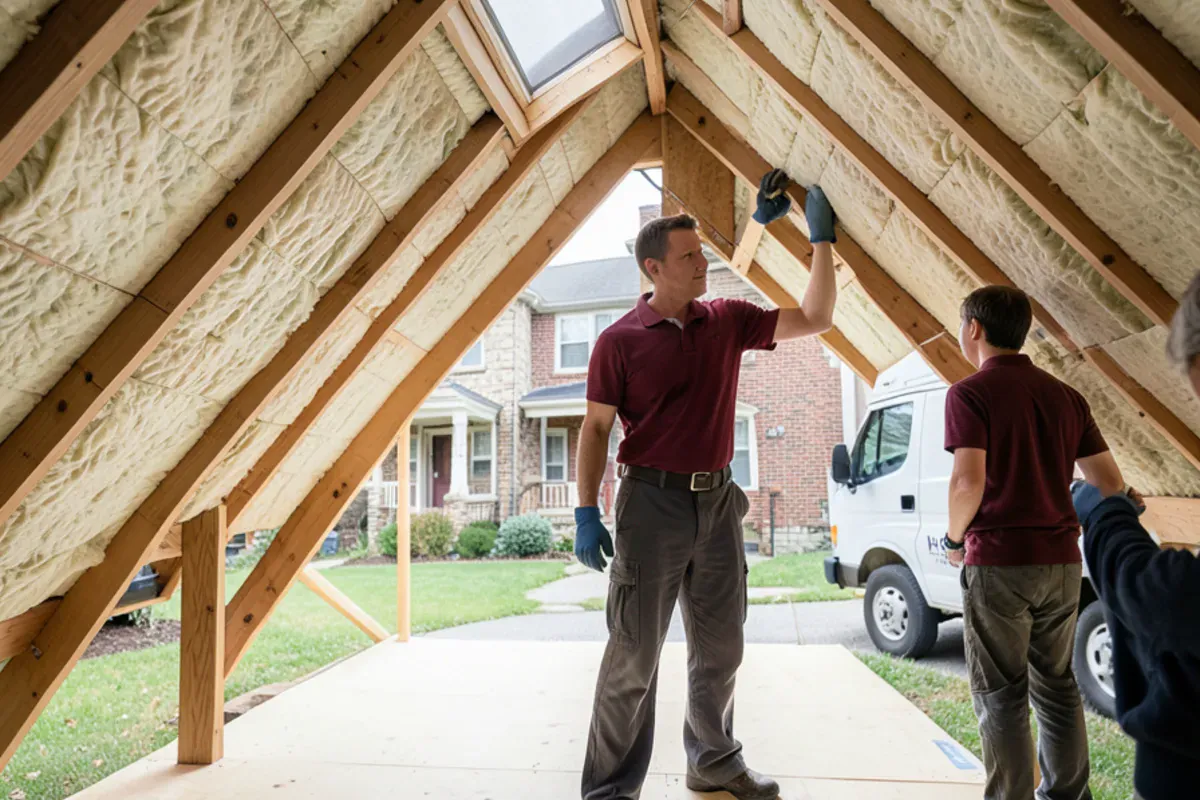
- Attic insulation removal — when insulation is heavily soiled or packed with tunnels and nests, removal is usually more effective than cleaning around it; replacement may involve an insulation contractor.
- Odor treatment — removing the source and treating stained wood or concrete with an enzyme-based cleaner.
- Stored-item triage — helping you decide which boxes, fabrics or papers can be cleaned and which should be discarded.
How a Rodent Sanitation Job Runs
Confirm activity has stopped
Traps and checks show no fresh droppings or gnawing, and entry points are sealed.
Assess the area
The attic, crawlspace or room is inspected to measure the soiled area and spot nests, staining and insulation damage.
Written scope and quote
You receive the plan in writing, including what will be cleaned, removed or referred out.
Ventilate and protect
The space is aired out, and protective gear is worn before anything is disturbed.
Wet removal
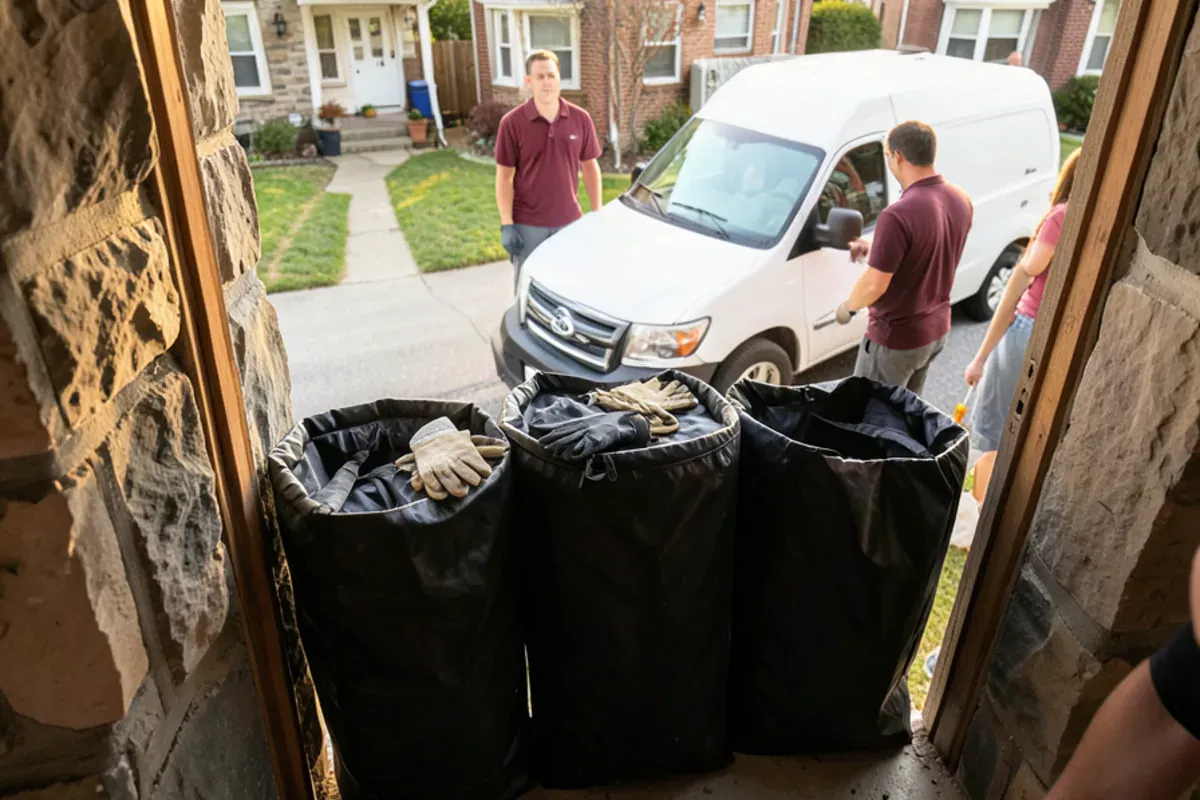
Droppings and nesting are soaked with disinfectant, picked up rather than swept, and bagged.
Disinfect and deodorize
Surfaces are treated and odor sources addressed; the area is checked again once dry.
Talk to us about rodent cleanup and sanitation
Call and speak with Thom or his team. The inspection is free, and you get a written quote before any treatment.
- ★ 4.8 from 21 Google reviews
- Open 7 days, 8 a.m. to 7 p.m.
- Free inspection before treatment
- Family-run, based in Media, PA
Open 7 days, 8 a.m. to 7 p.m.
What Affects the Price of Rodent Sanitation?
The size of the soiled area and how long the animals lived there set most of the scope. A kitchen-cabinet cleanup in a Media apartment is a short visit, while an attic over a Marple ranch house where mice tunneled through the insulation for several winters can mean removal, bagging and a second trade for replacement.
Access and belongings come next. Low crawlspaces in older Ridley Township homes, finished attics with knee walls and storage rooms packed with boxes all add time, and the written quote spells out what is cleaned, what is removed and what is referred out.
- Square footage of the affected attic, crawlspace or room.
- How heavily droppings, urine and nesting have built up.
- Whether insulation has to be removed and replaced.
- Access: low crawlspaces and tight attics take longer.
- Amount of stored belongings that must be moved or sorted.
- Whether a dead rodent or hidden nest has to be located for odor.
Pennsylvania Rules and Safety Codes Behind Rodent Sanitation
Cleanup sits under more than one set of rules. Disinfectants used on droppings are EPA-registered products, and the label sets the dilution and contact time. Where bait or other pesticides are part of the wider rodent job, the Pennsylvania Department of Agriculture (PDA) oversees that work under the Pesticide Control Act of 1973, and you can ask any provider for its PDA business license number.
Older attics add one more check. Some hold loose vermiculite insulation, which the EPA advises leaving undisturbed because it may contain asbestos; asbestos removal in Pennsylvania is overseen by the Department of Labor & Industry, so that material goes to an abatement contractor, not a pest crew. In rentals, the lease usually says who arranges cleanup. This is general information, not legal advice.
Getting Rid of Rodent Odor
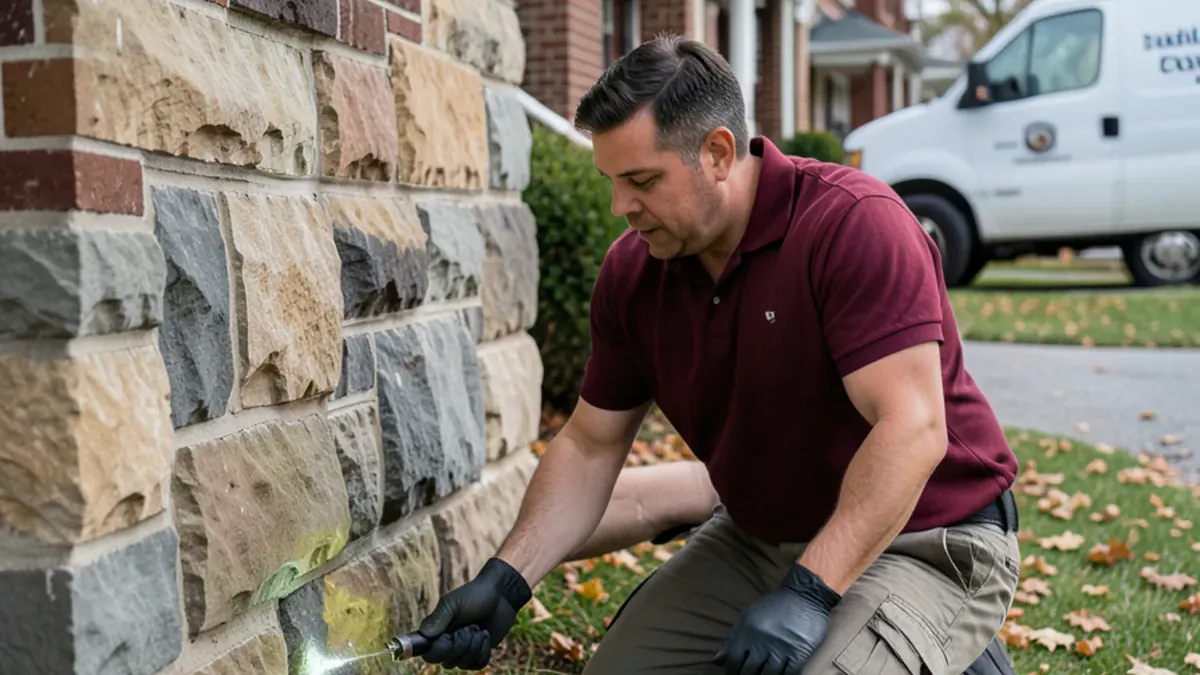
Rodent smell has two common sources: urine soaked into wood, insulation or subflooring, and a dead animal in a wall or ceiling. Air fresheners only mask it. Lasting odor removal means finding and removing the soiled material, then treating what remains with an enzyme cleaner that breaks down the urine.
A carcass inside a wall usually smells strongest for one to two weeks. Flies gathering at one spot on a wall or ceiling help narrow the location, and opening a small access point is sometimes the quickest fix; that is always discussed with you first.
What to Expect After the Cleanup
A cleaned attic or basement should have no visible droppings, no nesting and little to no odor once surfaces dry. Keep an eye out for fresh droppings over the next few weeks; any new ones mean a gap was missed and should be checked right away.
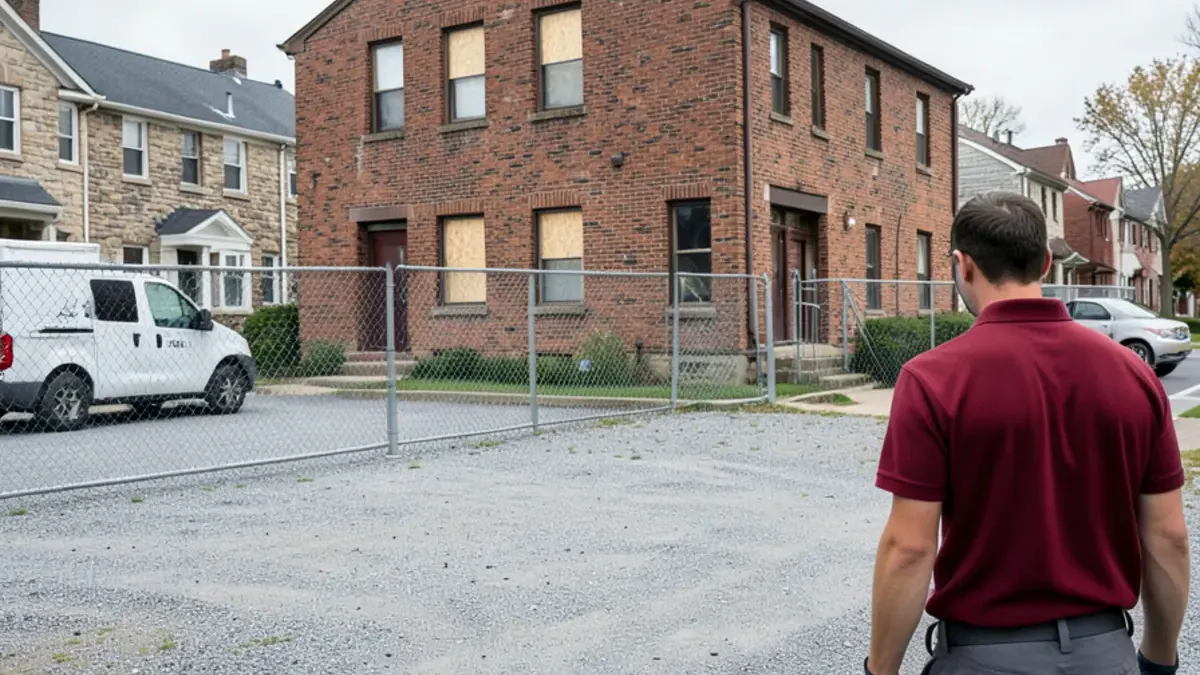
Attics often hold more than mice. If you heard heavier thumping or found larger nests in the insulation, squirrels may be involved; see squirrel and wildlife exclusion. For empty buildings slated to come down, our pre-demolition rodent baiting page explains the steps that usually come first. To keep the cleaned space from getting dirty again, review our rodent exclusion work.
What our rodent cleanup and sanitation includes
- Assessment of the soiled area after rodent activity has stopped
- Written scope separating what is cleaned, removed or referred out
- Wet removal of droppings and nesting following CDC guidance
- Disinfection of affected surfaces
- Removal of heavily soiled insulation where the job calls for it
- Odor source removal and enzyme treatment
- Final check of the cleaned area
Why call No Bugs Exterminator for rodent cleanup and sanitation
Cleanup tied to control
We confirm rodents are gone and entry points sealed before cleanup, so the space stays clean.
Clear scope up front
A free inspection and written quote spell out what will be cleaned and what may need another trade.
Local and family-run
Thom and his team are based in Media and open 7 days, 8 a.m. to 7 p.m., for homes and businesses.
Rated 4.8 on Google
Our rating comes from 21 Google reviews, and we explain each cleanup step before work begins.
Honest about other trades
If insulation replacement or asbestos testing belongs to another contractor, the written quote says so plainly.
Where we provide rodent cleanup and sanitation
Cleanup needs vary with the house. Mid-century homes in Marple Township often have attics where mice nested in insulation for years. In Ridley Township, many 1950s houses have crawlspaces and basements that hold droppings out of sight. Larger, older homes in Radnor Township can have big attic areas to assess, and Norwood, between Darby and Muckinipattis creeks, sees rats as well as mice.
- Radnor Township
Larger Main Line homes in Wayne, St. Davids and Rosemont often have big attics where years of mouse nesting soil the insulation out of sight.
- Villanova
Estate homes off Spring Mill Road come with large attics and outbuildings, so a cleanup scope here can cover several separate spaces.
- Newtown Township (Delaware County)
Homes near the Ellis Preserve border open land and woods, where deer mice nest in garages, sheds and attic storage.
- Broomall
Late-1950s houses around the West Chester Pike and Sproul Road crossing often have attic crawl spaces where mice nested for several winters.
- Middletown Township (Delaware County)
Wooded edges around Lima, Wawa and Glen Riddle bring deer mice into garages and sheds, where the CDC's wet cleanup method matters most.
- Village Green-Green Ridge
Ranch and split-level streets off Pennell Road, with a 1962 median build year, have low crawlspaces that hide droppings for years.
- Lima
With a 68% renter share near the Promenade at Granite Run, apartment storage rooms and shared utility spaces are frequent cleanup areas.
- Thornbury Township (Delaware County)
Large-lot homes and open fields around Glen Mills and Cheyney put field and deer mice close to outbuildings, garages and finished attics.
- Parkside
Early-1900s bungalows beside Brookhaven have small attics and knee-wall spaces where mouse-soiled insulation is hard to reach.
What customers say on Google
4.8 out of 5 from 21 reviews on Google. Quoted as written by customers.
Excellent service, very professional and friendly! Most importantly the results gave me peace of mind! Highly recommended!
Professional service with great results!
Thom is a top-notch pest control specialist! And is one of the most genuine guys in the industry. He came to inspect a situation I had going on at the house, took his time, offered detailed advice, and didn’t take a penny.
Rodent Cleanup and Sanitation: common questions
Is it safe to vacuum mouse droppings?
No, not with a regular household vacuum. Vacuuming or sweeping breaks dried droppings into fine dust that can carry viruses and bacteria into the air. The CDC advises airing the space out, wearing gloves, soaking droppings with disinfectant or diluted bleach for several minutes, then wiping them up with paper towels and sealing them in a bag.
Do you replace insulation after an infestation?
Heavily soiled attic insulation is usually removed rather than cleaned, since droppings and urine work deep into it. Whether we handle replacement ourselves or you need an insulation contractor for that part depends on the job. We will tell you which applies on the call and spell it out in the written quote.
How do you remove rodent smell?
By removing the source, not covering it. Urine-soaked nesting and insulation come out, stained wood or concrete gets an enzyme cleaner, and the area is aired out. If the smell comes from a dead rodent in a wall, the odor usually fades within a couple of weeks, or the carcass can be located and removed.
Should I clean up droppings myself?
A few droppings in a cabinet or on a basement shelf are fine to clean yourself using gloves and the wet method. Large accumulations in an attic, crawlspace or storage room, nesting packed into insulation, or any area tied to deer mice on a wooded lot are better handled as a planned job with protective gear.
Does cleanup happen before or after rodent removal?
After. Cleaning while mice or rats are still active only gives them a fresh space to soil again. The usual order is trapping, sealing entry points, confirming no new droppings for a week or two, and then cleanup. That sequence also makes it easy to spot any new activity afterward.
Related services
Helpful guides from our blog
Ready to get rid of the problem?
Thom and his team serve Media, Delaware County and southeastern Pennsylvania, open 7 days, 8 a.m. to 7 p.m..
- ★ 4.8 from 21 Google reviews
- Open 7 days, 8 a.m. to 7 p.m.
- Free inspection before treatment
- Family-run, based in Media, PA
Open 7 days, 8 a.m. to 7 p.m.