
This option depends on the property. Call (209) 563-1650 and we'll confirm whether it's the right fit before anything is scheduled.
What Is Pre-Demolition Rodent Baiting?
When a building comes down, any rats living in its basement, walls and sewer connections lose their shelter overnight and move to the closest food and cover, which is usually the neighbors. Baiting the property for a period before demolition reduces that population first.
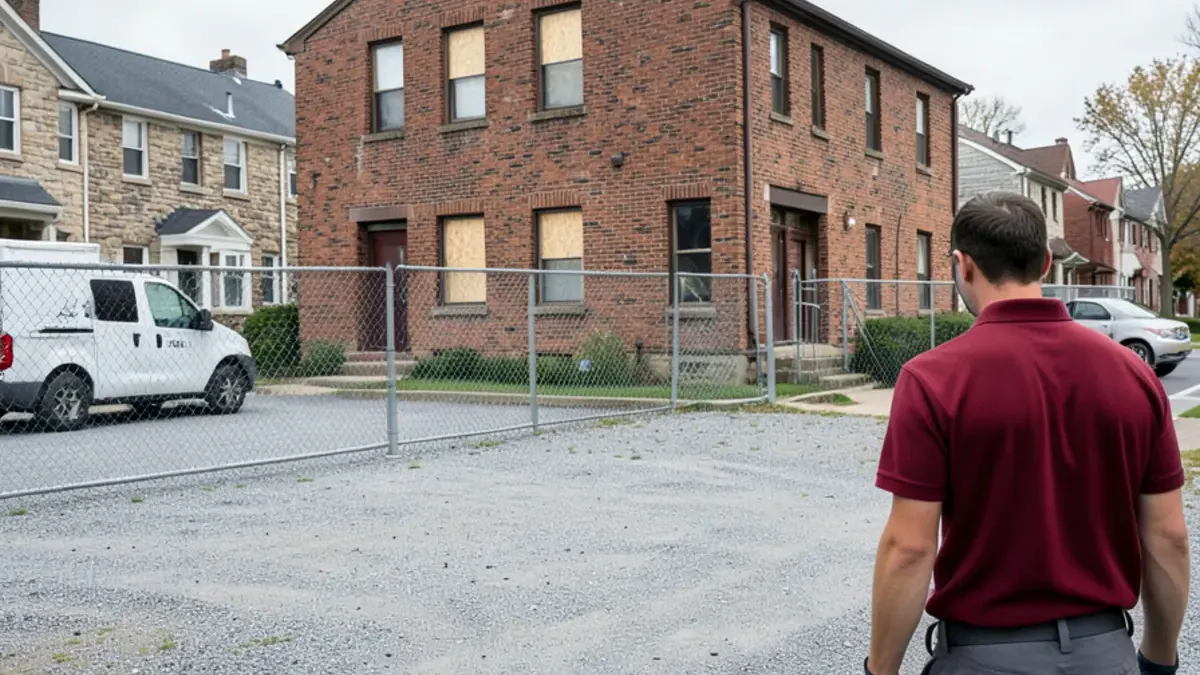
It applies to full teardowns, and it is worth considering for major interior gut renovations of vacant buildings too. Vacant rowhomes, older commercial buildings and properties with trash or debris left inside tend to hold the largest rodent populations, because nothing has disturbed them for months.
Signs a Vacant Building Is Holding Rodents
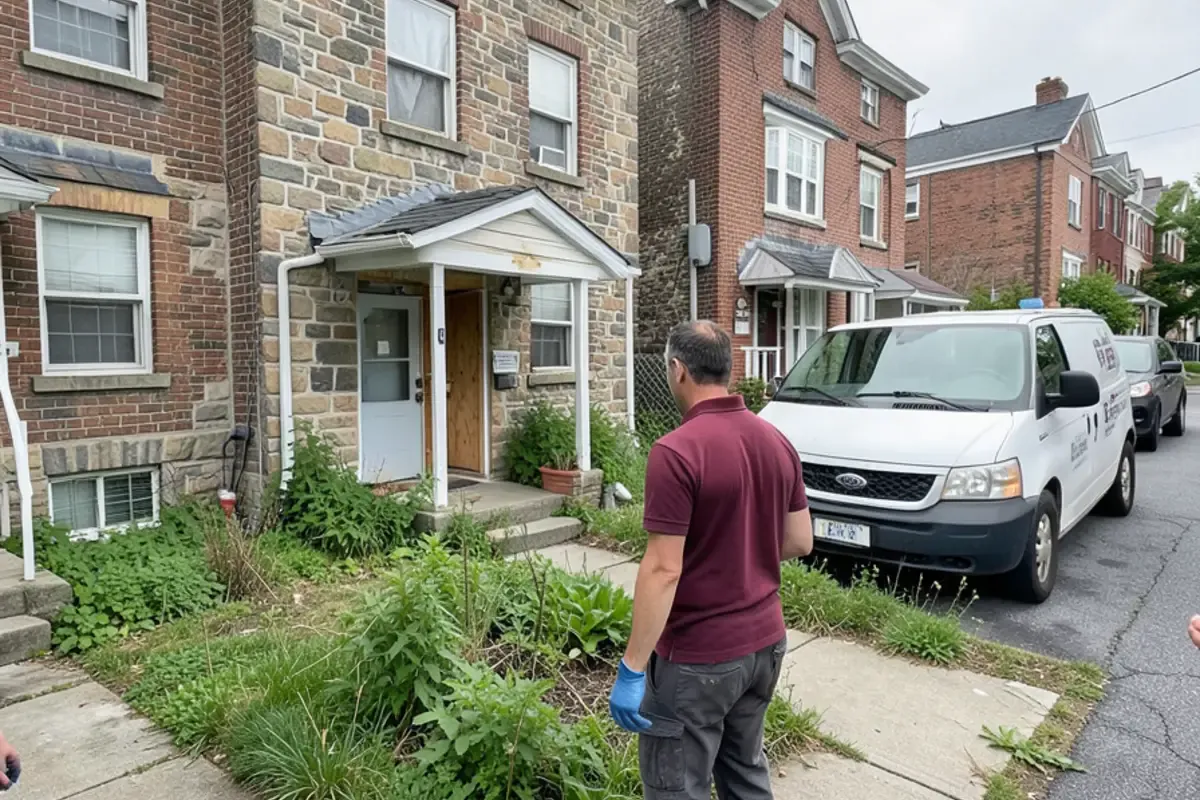
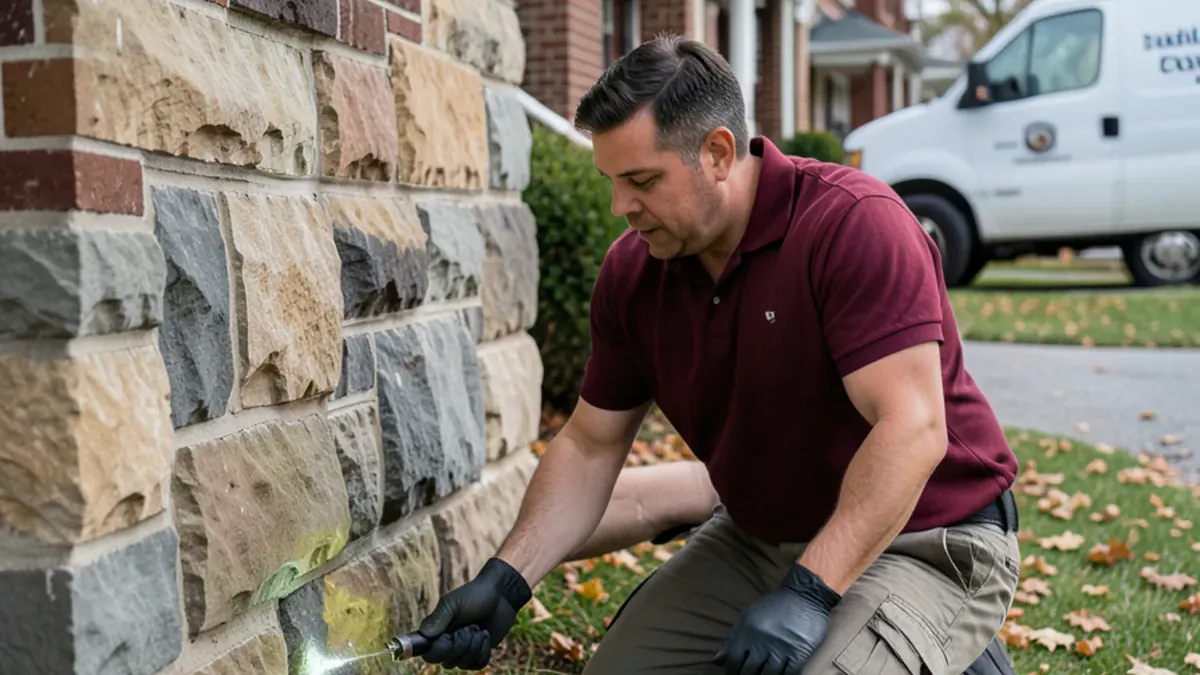
Buildings that have sat empty for a season or more nearly always have some activity, but a few signs point to a population large enough to scatter. Outside, look for burrow openings along the foundation and under slabs or porches, worn runways through overgrown grass, and gnawed corners on doors and basement windows. Inside, piles of droppings, shredded nesting in closets and a strong ammonia smell in the basement mean the animals have been breeding undisturbed.
Local building stock raises the stakes. In eastern Delaware County, Census (ACS) estimates put median build years in the 1940s for places such as Upper Darby, Chester and Lansdowne, and pre-war basements often tie into old clay sewer laterals that rats travel freely. A vacant rowhome or corner store on a block like that shares walls with occupied houses, so whatever lives in its basement will not stay put once demolition starts.
Which Permit Offices Require Proof of Rodent Baiting?
Some municipalities require proof that a building was baited or exterminated for rodents before they will issue a demolition permit. Philadelphia is one well-known example, and other cities and townships set their own rules, which can change over time.
Who places the bait matters as well. Rodenticide applied for hire in Pennsylvania falls under the Pesticide Control Act of 1973, administered by the Pennsylvania Department of Agriculture (PDA), which licenses pest control businesses; 7 Pa. Code § 128.31 puts that license number on the company's service vehicles.
Requirements differ on how long baiting must run, what documentation is accepted and who may provide it. Before scheduling anything, check with the building or permit office in the municipality where the property sits and ask exactly what they need. This is general information, not legal advice.
Baiting Methods for Vacant Buildings
A vacant building calls for a slightly different approach than an occupied home. There are no residents to report activity, so the setup has to be self-monitoring and secure.
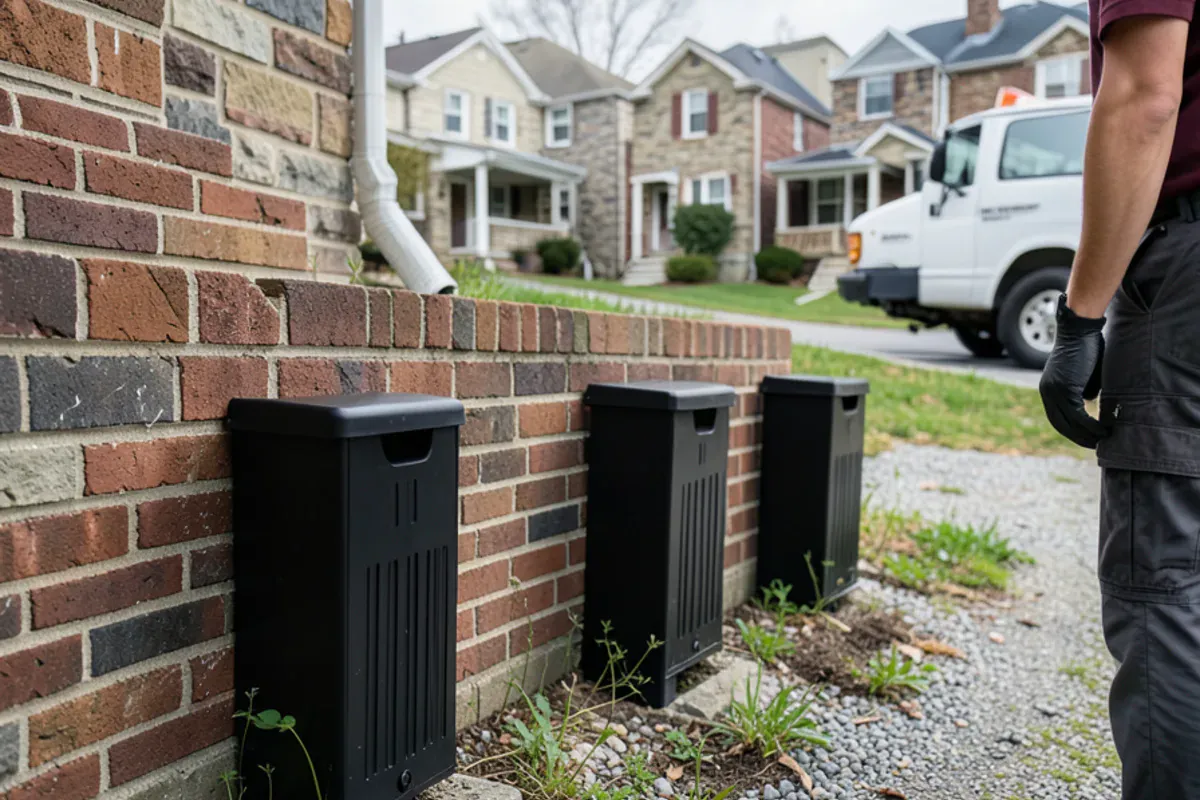
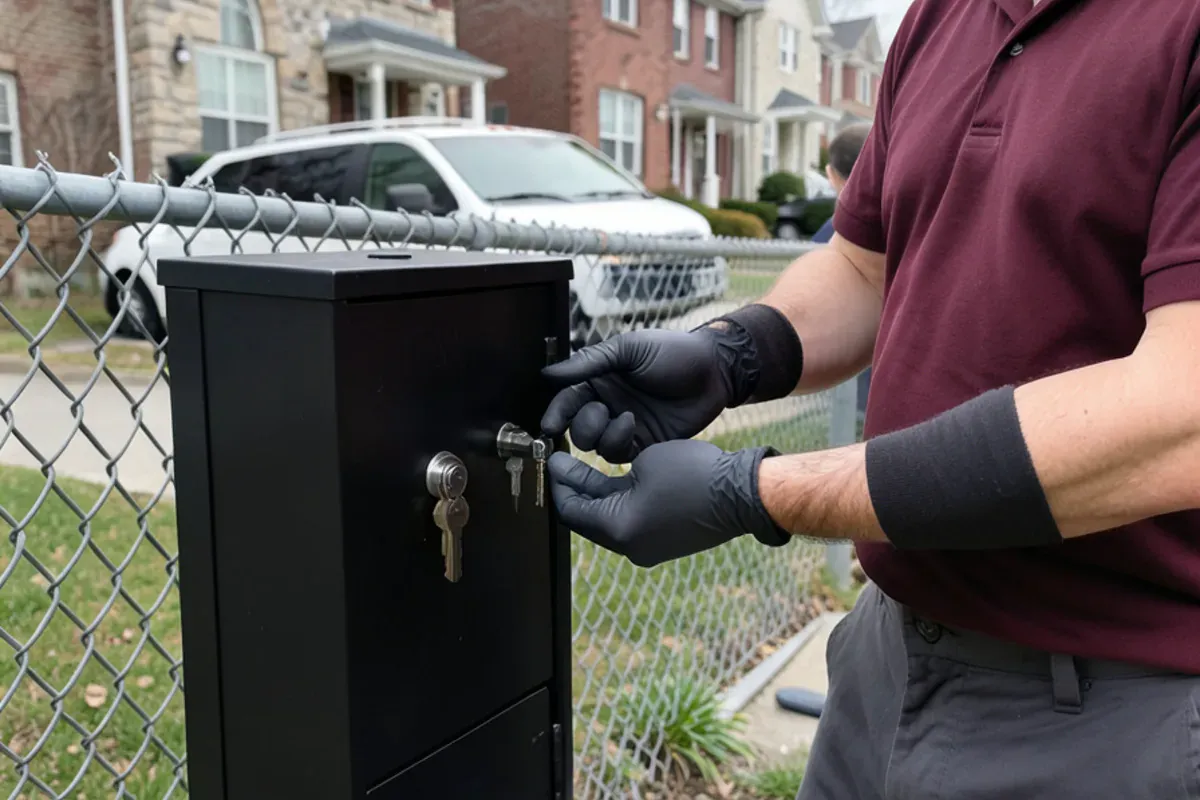
- Exterior bait stations — locked, tamper-resistant stations anchored along the foundation and property line, placed by label directions; they keep bait away from children, pets and wildlife.
- Interior stations or traps — in basements and ground floors where rodents nest, when the building can be safely entered.
- Burrow monitoring — burrows around the lot are plugged and checked so active ones can be found.
- Debris and food removal — owners clearing trash and food waste before baiting makes the bait far more attractive to rodents.
- Sewer and drain notes — open drains and abandoned sewer lines are flagged, since capping them is often part of the demolition process.
Talk to us about pre-demolition rodent baiting
Call and speak with Thom or his team. The inspection is free, and you get a written quote before any treatment.
- ★ 4.8 from 21 Google reviews
- Open 7 days, 8 a.m. to 7 p.m.
- Free inspection before treatment
- Family-run, based in Media, PA
Open 7 days, 8 a.m. to 7 p.m.
Rodent Baiting Before Demolition: The Timeline
Check your municipality's rules
Confirm with the permit office how long baiting must run and what paperwork it accepts.
Site inspection
The building and lot are walked for burrows, droppings, access points and safety hazards.
Written quote
You get the scope, number of stations, visit schedule and target start date in writing.
Station placement
Locked stations go in along the perimeter and, where safe, inside.
Service visits
Stations are checked and refilled, and bait consumption is recorded to show how activity changes.
Wrap-up before teardown
Activity is reviewed with you near the demolition date, and you receive whatever records were agreed in the quote.
What Paperwork Comes With a Demolition Permit Extermination Letter?
Permit offices that require baiting usually want a written record from the pest control provider. That typically includes the property address, the dates of service, the method used and a statement that baiting was carried out before demolition.
Because each municipality sets its own format, we will confirm on the call what documentation we can provide for your permit office, and the written quote will spell it out. Bring the permit office's exact requirements to that conversation so nothing is missed.
Cost Factors for Pre-Demolition Baiting
Two things set most of the scope: how long your permit office wants baiting to run and how many stations the lot needs. A single vacant twin in Drexel Hill with a small yard is a lighter job than a former commercial building on a large lot along Route 13 or Chester Pike, where the perimeter is long and trash has piled up.
Site conditions add to it. Debris that has to be cleared before bait will work, unsafe floors that keep stations outside, and a demolition date that slips and stretches the service period all change the quote. The visit schedule and documentation are put in writing so the number is easy to plan around.
- Size of the building and lot.
- Number of stations needed along the perimeter and inside.
- Length of the baiting period your municipality requires.
- Number of service visits during that period.
- Access and safety conditions inside a vacant structure.
- Amount of trash or debris still on site.
- Documentation the permit office asks for.
How Can You Protect Neighbors During Demolition?
Even with baiting, a few rodents may leave the site when machines arrive. A courtesy note to neighbors before demolition gives them time to check door sweeps, store food and watch for droppings. In attached rowhomes, the neighbors sharing a party wall face the most risk.
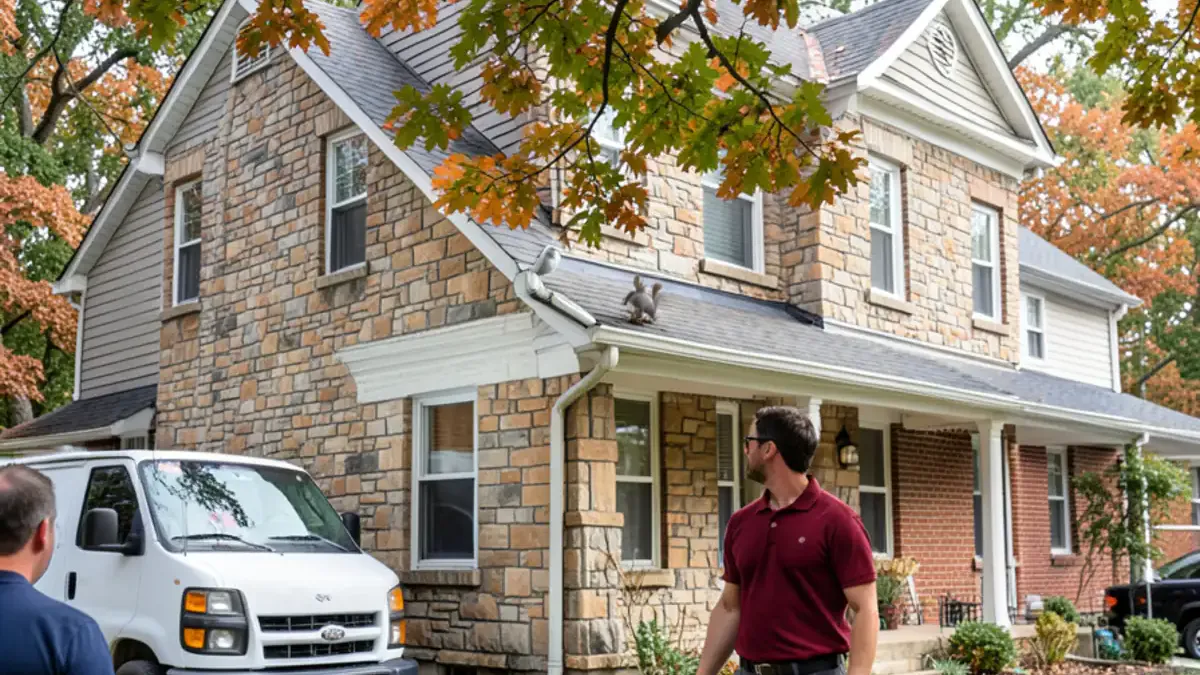
Homeowners next to a demolition site can get ahead of trouble with mouse control and sealing of their own foundations. Old vacant buildings also attract squirrels, raccoons and birds in the roof; animals other than rats and mice are covered on our squirrel and wildlife exclusion page. Landlords and managers with multiple properties can also read about property management pest control.
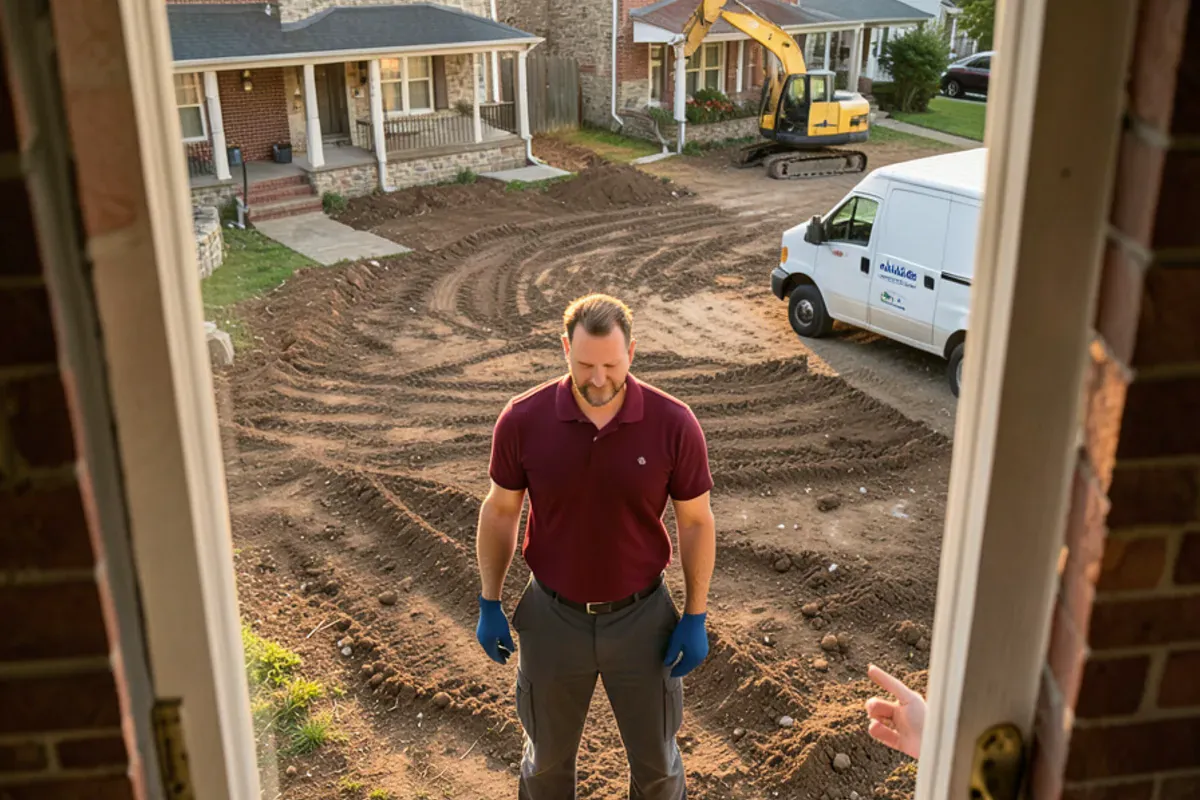
What our pre-demolition rodent baiting includes
- Site inspection of the building and lot for burrows and activity
- Written quote with station count, visit schedule and start date
- Anchored, locked perimeter stations that follow rodenticide label rules
- Interior stations or traps where the building can be safely entered
- Scheduled service visits with bait consumption recorded
- Notes on open drains and debris that affect results
- Documentation for your permit office, as confirmed on the call
Why call No Bugs Exterminator for pre-demolition rodent baiting
Planned around your permit
We build the schedule around your demolition date and the permit office's requirements you bring to the call.
Commercial and residential
Thom and his team work with homes and businesses, including contractors and property owners.
Written scope first
We look over the site at no charge and send a written quote before any station is set.
Open 7 days, 8 to 7
Contractors can reach us every day from 8 a.m. to 7 p.m. to line up station placement ahead of a permit deadline.
Family-run, based in Media
We are a small Delaware County business, so a site walk in Chester, Upper Darby or Darby is a short drive from our base.
Where we provide pre-demolition rodent baiting
Teardowns cluster in our older, denser communities. Census (ACS) estimates put the median home in Chester at 1949, on a Delaware riverfront lined with rowhomes. Upper Darby and Darby share that late-1940s row and twin stock, where one demolished house leaves neighbors on both sides exposed. Across the city line, Philadelphia is the most familiar local example of a municipality that asks for rodent baiting before it issues a demolition permit.
- Chester
Old riverfront rowhomes, a 1949 median build year and a 60% renter share mean a vacant unit usually shares walls with occupied neighbors.
- Chester Township
Toby Farms and the Chester Creek edge put older lots near the creek, where a teardown can push rats into nearby yards.
- Lower Chichester Township
Late-1940s housing beside Route 13 and the Marcus Hook refinery complex means old basements and commercial lots that hold rodents before demolition.
- Linwood
Older homes near Route 13, with a 1947 median build year, have old basements and clay sewer connections that let rats outlast a teardown.
- Trainer
In this riverfront borough beside the Monroe Energy refinery, clearing an old building near the Delaware can send rats toward nearby streets.
- Millbourne
A tiny borough at the Market-Frankford Line's Millbourne station on the city line, where rodents move freely between Philadelphia and Delaware County blocks.
- Tinicum Township
Essington's riverfront and the land around Philadelphia International Airport include commercial sites where baiting before demolition keeps rats from spreading.
- Folcroft
Bordering the John Heinz refuge and its Darby Creek wetlands, lots near the marsh give displaced rats cover close to homes.
- Darby Township
Two separate sections, including Briarcliffe near the Darby Creek tidal marsh, where rodents pushed out by demolition find wet ground and cover quickly.
What customers say on Google
4.8 out of 5 from 21 reviews on Google. Quoted as written by customers.
Excellent service, very professional and friendly! Most importantly the results gave me peace of mind! Highly recommended!
Professional service with great results!
Thom is a top-notch pest control specialist! And is one of the most genuine guys in the industry. He came to inspect a situation I had going on at the house, took his time, offered detailed advice, and didn’t take a penny.
Pre-Demolition Rodent Baiting: common questions
Who requires proof of rodent baiting before demolition?
Some municipalities do, as a condition of the demolition permit, and Philadelphia is a well-known example. Rules vary between cities, boroughs and townships and can change, so the permit office for the property's municipality is the only reliable source. Ask them what they require, how long baiting must run and what documentation they accept.
How long before demolition should baiting start?
Start early enough to meet your municipality's required baiting period, plus a cushion in case the demolition date slips. Permit offices often expect baiting to run for a set number of weeks, and the exact window comes from them. Calling during the planning stage, before the contractor's start date is fixed, avoids holding up the permit.
What paperwork do you provide for a permit?
We will confirm on the call what documentation we can provide for your permit office. Typically such a record shows the address, service dates and baiting method. Because requirements differ by municipality, bring the exact wording from your permit office, and the written quote will list what you will receive.
Does an interior gut renovation need baiting too?
It may not be required, but it is often wise. Gutting a vacant building's walls, floors and basement disturbs rodents in much the same way as a teardown. If the building has been empty for a while or shows droppings and burrows, baiting before work starts protects both the crew and the neighbors.
What happens to rats when a building comes down?
Any that survive move to the nearest shelter and food: neighboring basements, garages, sheds and trash areas. In rowhome blocks, the homes sharing walls with the demolished building feel it first. Baiting beforehand reduces how many are left to scatter, and neighbors who seal their own foundations ahead of time see far fewer strays.
Related services
Helpful guides from our blog
Ready to get rid of the problem?
Thom and his team serve Media, Delaware County and southeastern Pennsylvania, open 7 days, 8 a.m. to 7 p.m..
- ★ 4.8 from 21 Google reviews
- Open 7 days, 8 a.m. to 7 p.m.
- Free inspection before treatment
- Family-run, based in Media, PA
Open 7 days, 8 a.m. to 7 p.m.