
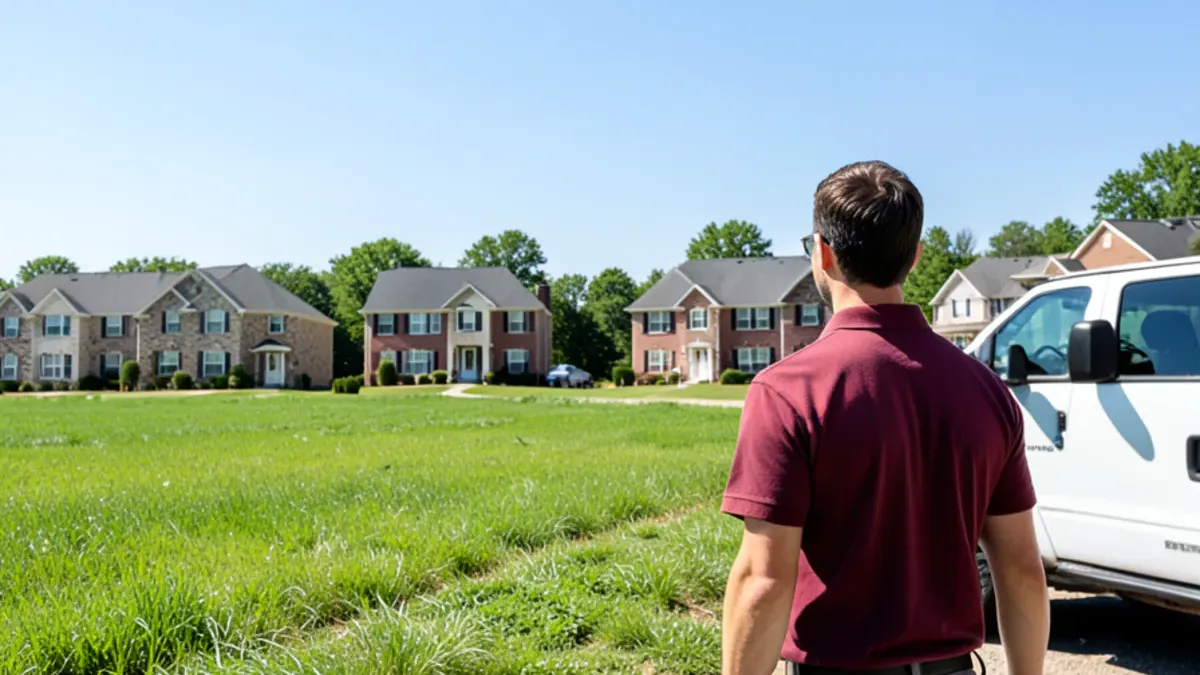
This option depends on the property. Call (209) 563-1650 and we'll confirm whether it's the right fit before anything is scheduled.
What a builder termite treatment is, and who needs one
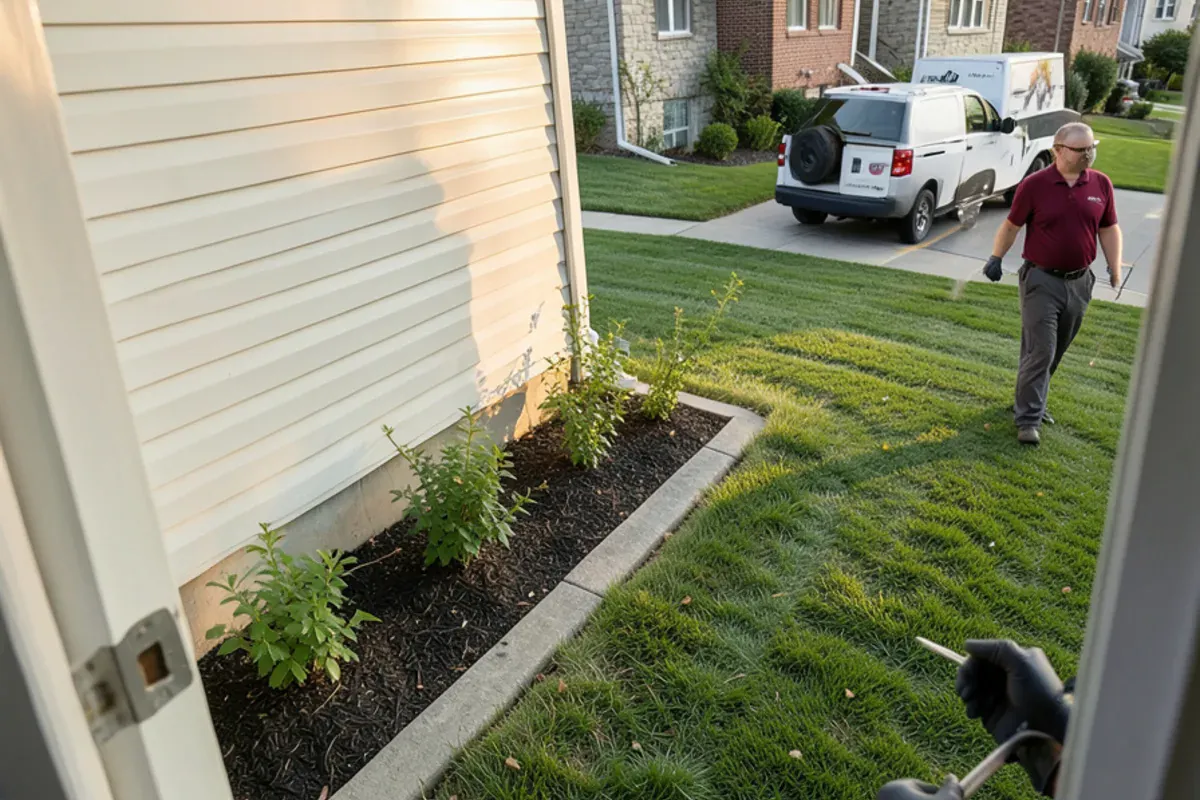
A pre-treat applies a liquid termiticide to the prepared soil under a slab or basement floor, and later along the outside of the foundation after backfill. Together they form a treated zone that subterranean termites must cross to reach the framing.
Builders of new subdivisions, custom-home owners, and homeowners putting on an addition, sunroom or garage all run into the question. Your municipality's code office can tell you what termite protection it expects; the International Residential Code lists accepted approaches such as soil termiticide, baiting systems, and pressure-treated or naturally resistant wood.
The lot itself can raise the stakes. Land cleared from woods leaves buried stumps and roots that feed termite colonies, former farmland may hold old fence posts and outbuilding footings, and a nearby creek or high water table keeps the soil damp, all common conditions where new homes go up in the western and southern parts of Delaware County.
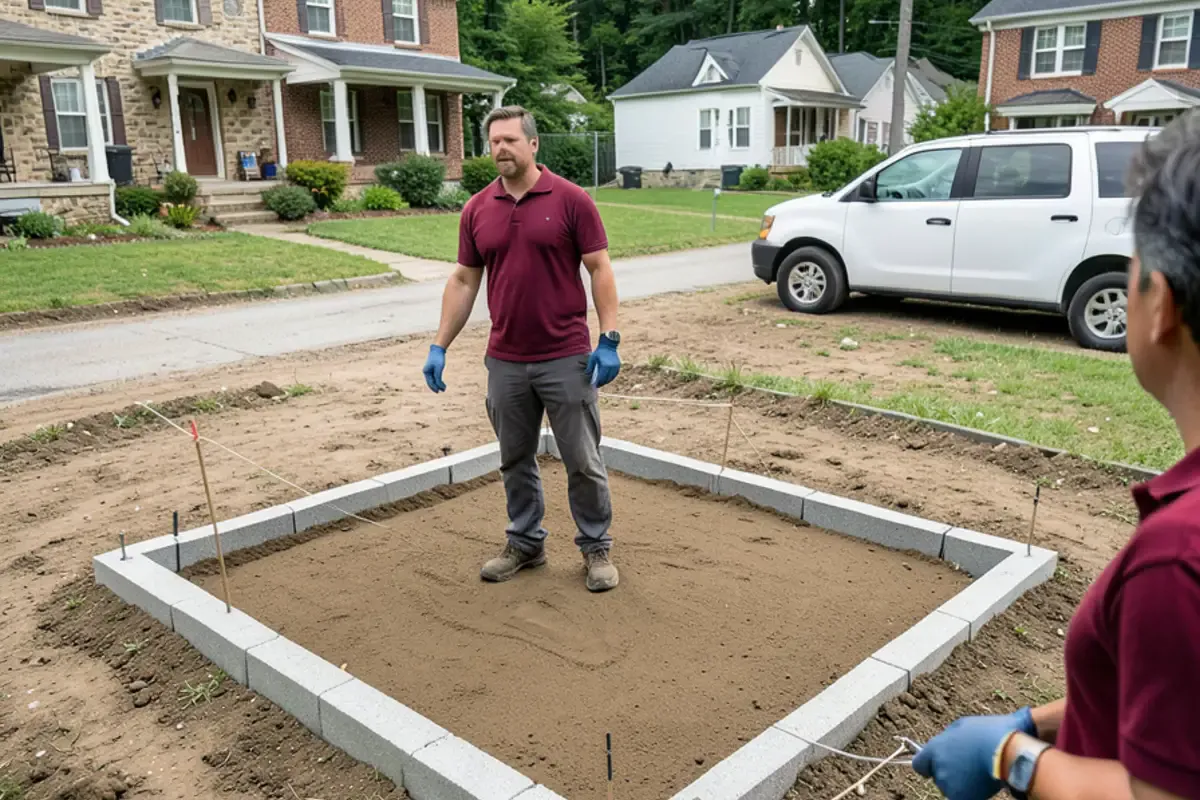
When should soil be treated on a new build?
Timing is everything. The horizontal treatment goes on after the soil under the slab is graded and compacted and the plumbing is roughed in, but before the vapor barrier and gravel go down and the concrete is poured. Treat too early and later grading moves the treated soil; treat too late and the slab is already in the way.
The vertical treatment along the outside of the foundation waits until backfill and final grade are done. Soil should be workable, not saturated: after a heavy southeastern PA downpour, the pre-treat may need to wait a day so it soaks in instead of running off.
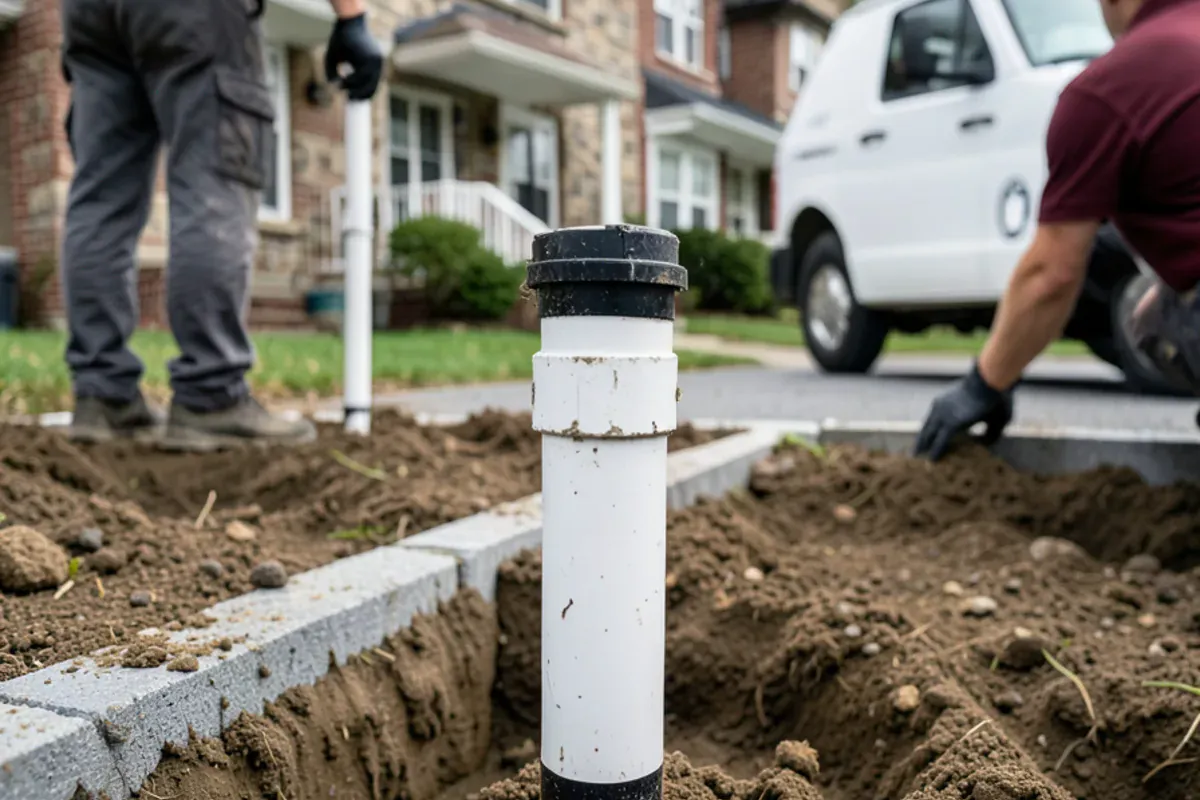
Treatment options for new construction
Soil termiticide remains the common choice under slabs because it reaches soil that will never be accessible again. Bait systems suit sites near wells or streams, and they can be combined with a soil pre-treat. Not every option is offered for every project: call (209) 563-1650 to confirm what's available for your build before you lock in the pour date.
- Horizontal soil treatment under slabs, basement floors, porches and garage pads
- Vertical soil treatment along the inside and outside of foundation walls and around piers
- Extra attention at plumbing, conduit and utility penetrations through the slab
- Treatment of hollow block foundation voids before they're capped
- In-ground bait stations installed after landscaping as an alternative or addition
- Pressure-treated sill plates and termite-resistant framing chosen by the builder
Building codes, permits and Pennsylvania pesticide law on a new build
Two sets of rules meet on a construction site. The building side is local: Pennsylvania's Uniform Construction Code is enforced by your township or borough, or the third-party agency it uses, and that code office decides what termite protection it wants to see, often by pointing to the International Residential Code's accepted methods. Ask early whether the inspector wants a treatment record before signing off on the foundation.
The pesticide side is set by the state. The Pennsylvania Department of Agriculture (PDA) enforces the Pesticide Control Act of 1973, licensing pest control businesses and certifying the applicators who treat soil, and 7 Pa. Code § 128.31 requires the business license number on service vehicles. The label then sets the rate, the timing before the vapor barrier and the setbacks from wells and streams.
Talk to us about pre-construction termite treatment
Call and speak with Thom or his team. The inspection is free, and you get a written quote before any treatment.
- ★ 4.8 from 21 Google reviews
- Open 7 days, 8 a.m. to 7 p.m.
- Free inspection before treatment
- Family-run, based in Media, PA
Open 7 days, 8 a.m. to 7 p.m.
The pre-treat sequence on a slab or basement pour
Site visit
Thom or one of his team reviews the plans, slab layout, porches and garage, plus any nearby well or stream.
Written quote
The quote lists the areas to be treated at each stage of construction.
Scheduling with the builder
Treatment is timed for after grading and rough plumbing and before the vapor barrier, usually within a day or two of the pour.
Horizontal treatment
Prepared soil under the slab is treated at the label rate, with extra attention around penetrations and along footings.
Vertical treatment
After backfill and final grading, soil along the outside of the foundation is treated.
Treatment record
A record of the date, areas and product used is provided for the builder's or owner's files.
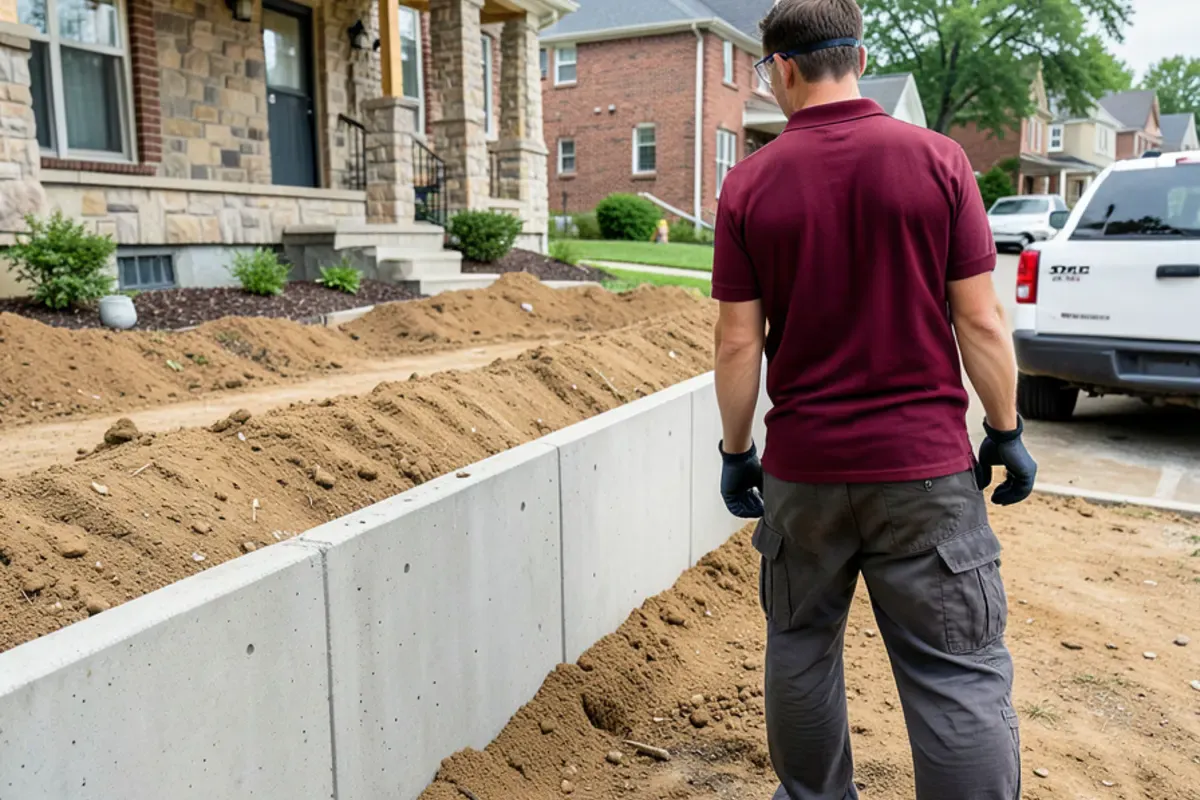
Do additions, sunrooms and porches need a pre-treat?
Usually, yes. An addition creates a new joint with the existing house, and that seam is a natural path for termites. If the original house was treated years ago, the addition's soil is untreated ground sitting against it. Treating the soil under the new slab and along the new footings ties the addition into protection on the rest of the house.
Older Delaware County homes getting a family-room addition or a rebuilt porch are a common case. If the existing house hasn't been checked in a while, the visit for the addition is a good time to look at its sills too.
What affects the cost of a new construction termite treatment?
The construction schedule is the biggest variable. A single basement pour with backfill a week later means two visits, while a Thornbury or Edgmont custom home with a basement, an attached garage pad, a covered porch and a later sunroom may need four or five separate trips timed to the builder's calendar.
Site conditions add to it. Lots near a stream or wetland, or on a private well, may need setbacks, a different technique near the water, or bait stations later, and a rainy spell that delays the pour can push treatment into a return visit. The written quote is laid out by construction stage, so the builder and owner see every trip and area before the first one is booked.
- Square footage of slab, basement floor, garage and porch pads
- Linear feet of foundation for the vertical treatment
- Number of separate trips the construction schedule requires
- Hollow block voids or complex footings
- Wells, streams or wetlands that limit soil treatment
- Whether bait stations are added after landscaping
After the pour: keeping the protection intact
Landscapers and later projects can undo a pre-treat. Keep mulch beds thin and away from the siding, don't let grade rise above the treated zone, and avoid stacking leftover lumber against the new foundation. Foam insulation that runs below grade deserves a yearly look because termites can tunnel inside it unseen.
Termites aren't the only wood pests on a building site. Framing left wet during a long build invites carpenter ant control calls later, and hardwood flooring that wasn't properly dried can bring in beetles that need powderpost beetle treatment. Where the soil wasn't treated before the pour, a liquid termite treatment can still be done afterward, with drilling.
What our pre-construction termite treatment includes
- Plan review and site visit before the pour
- Written quote by construction stage
- Horizontal soil treatment under slabs, porches and garage pads
- Extra treatment around plumbing and utility penetrations
- Vertical treatment along the foundation after final grade
- Treatment record for the builder or owner
- Guidance on landscaping that keeps the treated zone intact
Why call No Bugs Exterminator for pre-construction termite treatment
Flexible for job-site timing
We're open 7 days, 8 a.m. to 7 p.m., which helps when a pour date moves on short notice.
Close to Delaware County builds
We're based in Media, a short drive from the new construction in Concord, Bethel and Chester Heights.
Quote before the crew arrives
The site visit and written quote come before treatment, so builders know the stages and areas in advance.
Thom and his team on site
A small, family-run business from Media handles the site visit, the written quote and each treatment stage.
Help when the pour date moves
Same-day visits are often possible when the schedule allows — call early in the day.
Where we provide pre-construction termite treatment
Most new construction we're asked about sits west and south of Media. In Concord Township and Bethel Township, 1990s and newer subdivisions on former farmland still see infill homes and additions. Chester Heights has newer townhome communities off Route 452, and in Kennett Township custom homes and additions go up on larger rural lots.
- Edgmont Township
Subdivisions with a 1991 median build year still see new homes and additions near Ridley Creek State Park, on wooded ground termites already occupy.
- Thornbury Township (Delaware County)
Large-lot Glen Mills and Cheyney homes built around 1997 may add garages, porches and sunrooms that each need their own soil treatment.
- Chadds Ford Township
Custom homes along the Route 1 corridor near the Brandywine sit close to streams and wells, which shape where soil can be treated.
- Middletown Township (Delaware County)
Infill building and additions around Lima, Wawa and Glen Riddle tie new slabs to houses from the 1970s that may never have been treated.
- Newtown Township (Delaware County)
Newtown Square development around Routes 3 and 252 and the Ellis Preserve puts new foundations on land beside woods and open fields.
- Springfield Township (Delaware County)
Post-war Cape Cods often gain rear additions and enclosed porches, and the joint between old and new slab is a classic termite path.
- Marple Township
Homes from the early 1960s around Lawrence Park and Broomall that gain a family-room addition need the new slab treated before it is poured.
- Charlestown Township
New estate homes on former Great Valley farmland by Charlestown Park, with a 2000 median build year, can sit on ground where hedgerows left buried wood.
- Upper Chichester Township
1970s houses in Boothwyn and Twin Oaks getting garages or sunrooms need the new soil treated so it matches protection on the original house.
What customers say on Google
4.8 out of 5 from 21 reviews on Google. Quoted as written by customers.
Very professional and knowledgable service providers. They mainly solved our problems in one visit!
Easiest experience, very professional, well done 👍
Thom is a top-notch pest control specialist! And is one of the most genuine guys in the industry. He came to inspect a situation I had going on at the house, took his time, offered detailed advice, and didn’t take a penny.
Pre-Construction Termite Treatment: common questions
When should soil be treated on a new build?
After the soil under the slab is graded, compacted and the rough plumbing is in, but before the vapor barrier, gravel and concrete go down. The outside foundation is treated later, after backfill and final grading. In practice that means coordinating with the builder so the pre-treat happens within a day or two of the pour, on soil that isn't waterlogged.
Do additions need a pre-treat?
In most cases, yes. The joint between the addition and the existing house is a weak point, and the new slab sits on untreated soil. Treating under the new slab and along the new footings connects the addition to protection on the rest of the house. It's also a good moment to check the older home's sills.
What paperwork do builders receive?
A treatment record showing the date, the areas treated and the product used is standard for the builder's or owner's files. Lenders on some new-construction loans, including FHA and VA, may ask for a specific soil-treatment form, so ask your lender which one they need before the pour and tell us when you call.
Can a house be treated after it's built if we missed the pre-treat?
Yes, but it's more work. Soil under the slab can only be reached by drilling through the concrete, and the exterior soil must be trenched. A post-construction liquid treatment or bait stations can protect the house; it just costs more effort than treating open soil during construction.
Is pressure-treated lumber enough by itself?
It helps but doesn't stop termites from traveling. Treated sill plates resist feeding, yet termites can still build tubes over them to reach untreated studs, subfloor and trim. That's why builders often combine treated lumber with a soil pre-treat or bait system instead of relying on one measure.
Related services
Helpful guides from our blog
Ready to get rid of the problem?
Thom and his team serve Media, Delaware County and southeastern Pennsylvania, open 7 days, 8 a.m. to 7 p.m..
- ★ 4.8 from 21 Google reviews
- Open 7 days, 8 a.m. to 7 p.m.
- Free inspection before treatment
- Family-run, based in Media, PA
Open 7 days, 8 a.m. to 7 p.m.