
This option depends on the property. Call (209) 563-1650 and we'll confirm whether it's the right fit before anything is scheduled.
What is liquid termite treatment, and when does it fit?
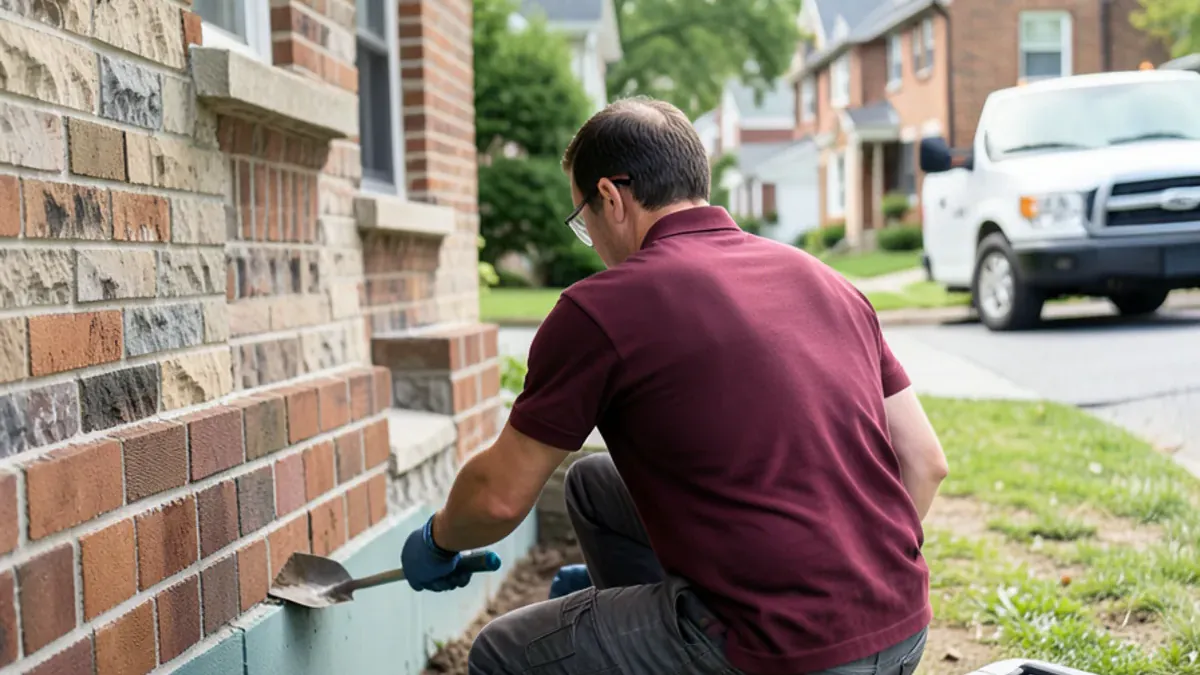
The goal is a continuous treated zone in the soil along every foundation wall, plus spots where termites slip past the foundation: porch slabs, garage joints, plumbing penetrations and cracks. Termites traveling between the colony and the house pass through that zone and pick up the termiticide.
It tends to fit when a termite inspection confirms termites are already active, when the foundation is fieldstone or hollow block with many hidden gaps, and when the owner wants protection that starts working on treatment day. It's a harder fit near a private well or cistern, beside a creek, or where most of the perimeter is covered by patios that would need heavy drilling. In those cases termite bait stations are often discussed instead.
The signs that usually push a house toward soil treatment are mud tubes on more than one foundation wall, a spring swarm from a basement corner, or damage where a soil-filled porch meets the framing, since each points to termites already moving through the soil beside the house.
Non-repellent vs. repellent termiticide barriers
Older soil treatments were repellent: termites sensed them and turned away, which only worked if the barrier had no gaps. Most soil treatments today use a non-repellent liquid termiticide. Termites can't detect it, so they tunnel through treated soil, pick up the active ingredient and carry it back to nestmates by contact and grooming.
That transfer effect is why a non-repellent termiticide barrier is forgiving of small gaps in stone or block foundations. It still depends on the right volume reaching the soil at the right depth, which is where trenching, rodding and drilling come in.
Trenching, rodding and drilling by foundation type
Termite trenching means digging a narrow trench against the outside foundation, treating the soil as it goes back in, and rodding deeper toward the footing. How much more is needed depends on the house:
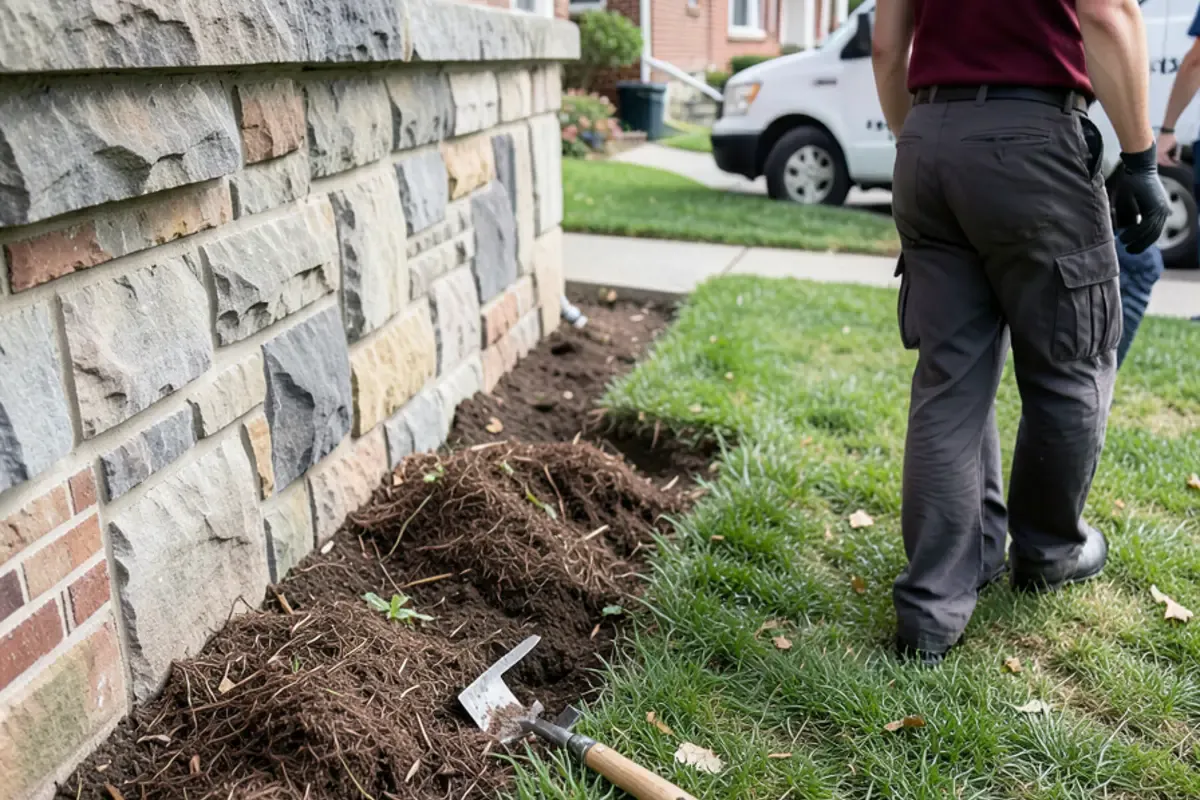
- Fieldstone foundations on pre-war twins: soil along both the outside and, where there's a dirt-floor area or crawl space, the inside of the wall, plus the soil-filled front porch
- Hollow concrete block: treatment of the soil plus the voids inside the block, which termites use as hidden highways
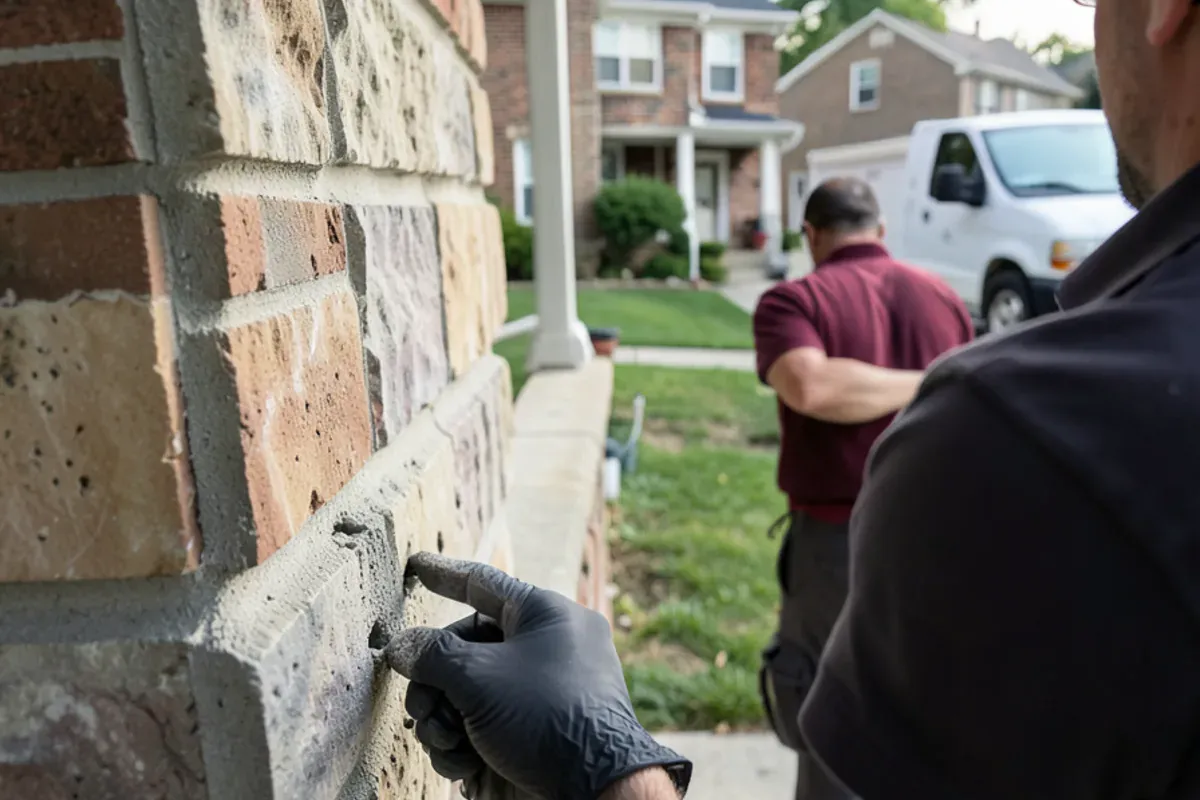
- Basement slabs: small holes along cracks, expansion joints and the wall-floor joint so termiticide reaches the soil below
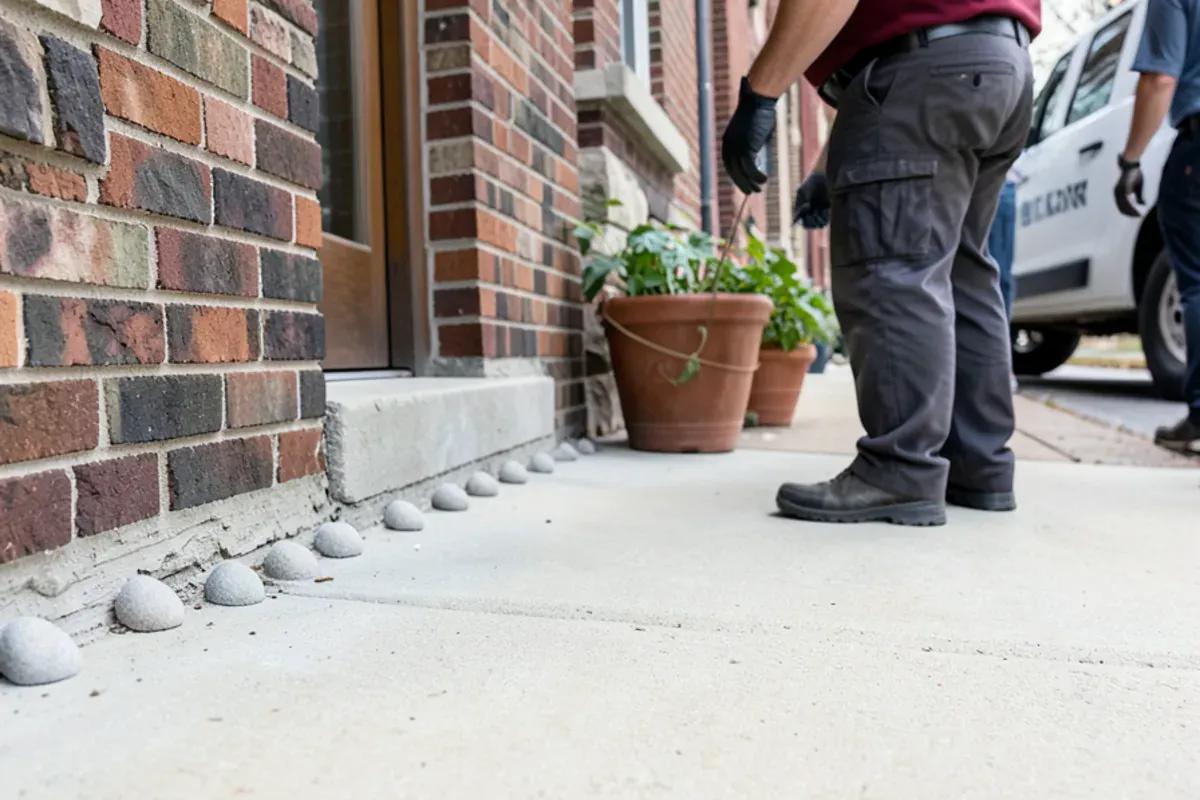
- Slab garages and patios on 1990s homes: drilling along the joint with the house and around plumbing or utility penetrations
- Concrete stoops and porches: drilling through the top or side to reach the fill soil trapped inside
How a liquid termite treatment is carried out
Free inspection
Thom or one of his team maps activity, foundation type, porches, wells and drainage so the plan fits the house.
Written quote and availability
You get a written quote. Call (209) 563-1650 to confirm a liquid soil treatment is available for your property before scheduling.
Prep
Basement items are pulled back from the walls, plants are moved off the foundation line, and well and utility locations are marked.
Exterior soil treatment
Soil is trenched and rodded along the foundation and treated at the volume and depth the product label requires.
Drilling where needed
Slabs, stoops, porches and block walls are drilled and treated, then the holes are patched.
Cleanup and notes
Soil is replaced, surfaces are cleaned, and you're told what to watch for and when re-inspection makes sense.
Talk to us about liquid termite treatment
Call and speak with Thom or his team. The inspection is free, and you get a written quote before any treatment.
- ★ 4.8 from 21 Google reviews
- Open 7 days, 8 a.m. to 7 p.m.
- Free inspection before treatment
- Family-run, based in Media, PA
Open 7 days, 8 a.m. to 7 p.m.
Precautions near wells, gardens, creeks and pets
Product labels set strict rules near wells, cisterns and water, and they're the law of the job. A house on well water may need a different technique close to the well, a larger setback, or a switch to bait in that area. Tell us where your well is, along with any buried oil tank or drainage pipe.
Vegetable gardens and herbs shouldn't sit in the treated band along the foundation, so plan to move those plantings. Kids and pets should stay off treated soil until it has dried and been covered. Homes that back onto Crum, Ridley or Darby creek may have drainage or slope issues that also shape the plan.
Pennsylvania law and the termiticide label
A liquid termiticide may only go down the way its EPA-registered label allows: the dilution, the volume per foot of foundation, the depth, and the setbacks from wells, cisterns and surface water. In Pennsylvania, applying it for hire is governed by the Pesticide Control Act of 1973 and overseen by the Pennsylvania Department of Agriculture (PDA), which licenses pest control businesses and certifies the applicators who do structural work.
Two easy checks before trenching starts: ask for the company's PDA business license number, which 7 Pa. Code § 128.31 requires on its service vehicles, and ask for the generic name of the active ingredient going into your soil so you can read its label yourself.
What affects the price of a termiticide barrier?
Foundation age is the biggest local swing. A 1940s stone twin in East Lansdowne or Collingdale with a soil-filled porch usually needs more drilling and more termiticide than a poured-wall 1970s split-level, where trenching does most of the work.
Hardscape adds labor. Every patio, stoop and garage slab along the treated line means drilling and patching, and a finished basement can push some of that work outside. Wells, and yards that slope down to Crum or Darby creek, may call for setbacks or a switch to bait in part of the perimeter, and the written quote shows that area by area.
- Total linear feet of foundation to be trenched and rodded
- Square footage of slab, patio, garage or stoop that must be drilled
- Foundation type, especially hollow block that needs void treatment
- Soil-filled porches, which add drilling and volume
- Wells, cisterns or creeks that require special setbacks or methods
- Finished basements where drilling must be done carefully or from outside
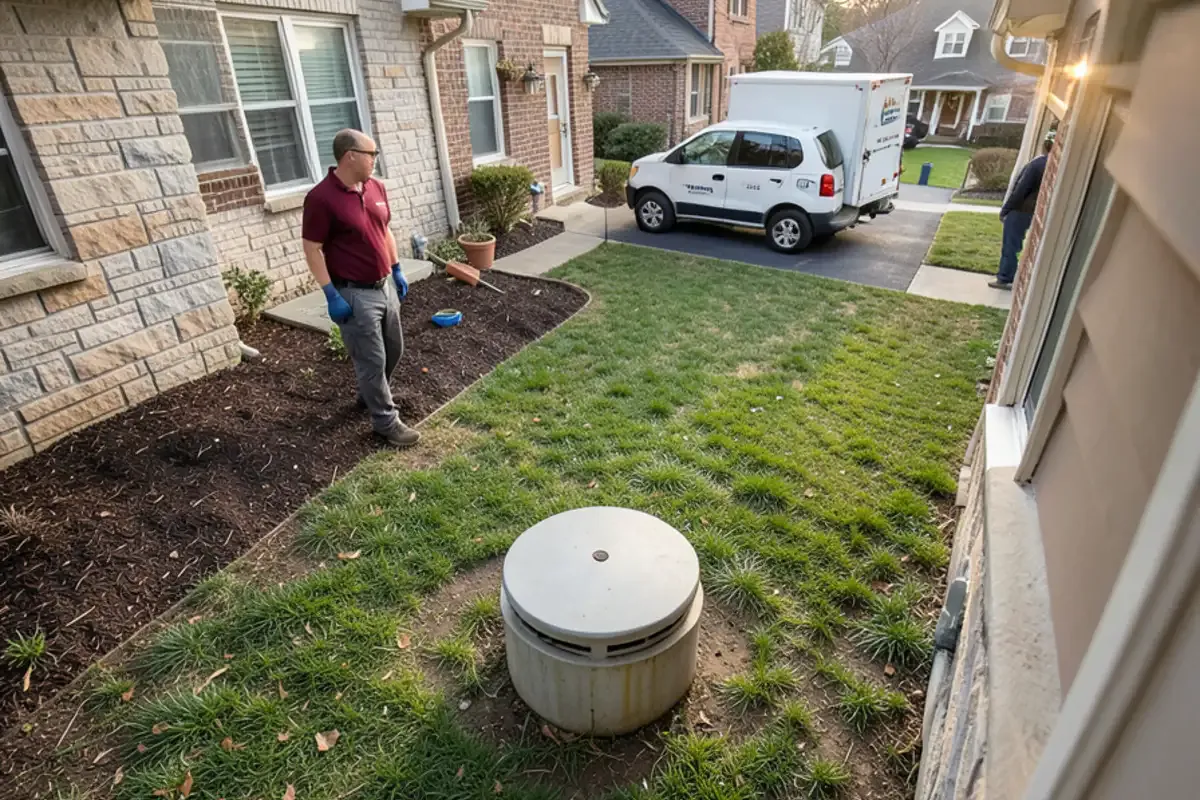
After treatment: what to expect and how to protect the barrier
You may notice a few termites or even a swarm in the weeks after treatment as the colony declines; that alone isn't a failure. Patched holes in garage or porch slabs will be visible but neat, and the soil along the foundation settles within a few rains.
Treated soil only protects while it stays in place. If you later dig for a patio, a new walkway, an addition or a drainage project, call before you dig, because that work can break the treated zone. Building onto the house? That's where pre-construction termite treatment comes in.
What our liquid termite treatment includes
- Free inspection to map activity, foundation type and water sources
- Written quote naming every area to be treated
- Soil trenching and rodding along the full foundation, as the label directs
- Drilling and treatment of slabs, stoops and porches where needed
- Void treatment for hollow block walls where present
- Patching of drilled holes and cleanup of soil
- Guidance on protecting the treated zone during future projects
Why call No Bugs Exterminator for liquid termite treatment
Plan before any digging
A free inspection and written quote come before any trenching or drilling, so you know which slabs and porches would be involved.
Local foundations, local base
We're a family-run business in Media and work around the stone, block and slab foundations common in Delaware County.
Reachable seven days
Questions after treatment? We answer the phone every day from 8 a.m. to 7 p.m.
Thom and his team
The owner and his small team handle the inspection, the written quote and your questions about the foundation afterward.
Same-day inspections when possible
Same-day visits are often possible when the schedule allows — call early in the day.
Where we provide liquid termite treatment
Soil treatment plans change with the foundation. In Yeadon and Clifton Heights, stone and brick twins with soil-filled porches need careful drilling and treatment along shared walls. In Glenolden, post-war homes sit near Muckinipattis Creek, where drainage matters. In Nether Providence Township, homes along Crum Creek and mature landscaping call for attention to slope and planted beds.
- East Lansdowne
Pre-war twins with a 1938 median build year often sit on stone foundations with soil-filled front porches that need drilling to reach.
- Collingdale
Twin and row streets along the Route 102 trolley, built around 1951, put shared foundation lines and porches in the treatment plan.
- Sharon Hill
Homes near Chester Pike with a 1954 median build year include block and stone foundations and concrete stoops that need void and slab treatment.
- Prospect Park
A rail borough of 1940s homes on the Darby Creek side, where older foundations and damp soil favor a continuous treated zone.
- Norwood
Bounded by Darby and Muckinipattis creeks, Norwood yards can slope toward water, so trenching depth and setbacks need care.
- Upland
A Chester Creek mill town with a 1946 median build year, where old stone foundations have many mortar gaps for termites to use.
- Eddystone
River-town homes near the Crum Creek mouth, built around 1948, sit on low, damp ground where soil treatment protects older sills.
- Drexel Hill
Brick twins from around 1949 often have soil-filled porches and garage slabs that a liquid barrier must reach by drilling.
- Morton
Homes in this small rail borough, built around 1964, are often on hollow-block foundations whose cores need treating along with the soil.
What customers say on Google
4.8 out of 5 from 21 reviews on Google. Quoted as written by customers.
Very professional and knowledgable service providers. They mainly solved our problems in one visit!
Easiest experience, very professional, well done 👍
Thom is a top-notch pest control specialist! And is one of the most genuine guys in the industry. He came to inspect a situation I had going on at the house, took his time, offered detailed advice, and didn’t take a penny.
Liquid Termite Treatment: common questions
How does a liquid termite barrier work?
The termiticide is applied to the soil along and under the foundation so termites pass through it while foraging. With a non-repellent product, termites can't sense it, so they pick it up and spread it to other termites by contact. On a stone twin, that treated zone has to include the fill soil inside the front porch, a frequent entry point.
Is drilling needed in a basement or slab?
Often, yes. Wherever concrete covers the soil next to the foundation, such as a basement floor, garage slab, patio or stoop, small holes are drilled so termiticide reaches the soil underneath. The holes are patched afterward. Finished basements are planned carefully; sometimes more of the work can be done from outside to avoid disturbing flooring.
Is the treatment safe for wells and gardens?
Product labels set specific precautions for wells, cisterns and nearby water, and those rules must be followed. Near a well, the plan may use a wider setback, a different technique, or bait stations instead of soil treatment. Food plants should be moved out of the treated strip. Tell us about wells and gardens during the free inspection so they shape the plan.
Can a liquid treatment be combined with bait stations?
Yes. Some properties use soil treatment on most of the foundation and stations in places where soil work is restricted, such as beside a well or a creek bank. Others add monitoring stations after a soil treatment as an early warning. The written quote will show which areas get which method.
Will I still see termites after treatment?
Possibly, for a short time. A colony doesn't collapse overnight, and swarmers or a few workers can appear in the weeks after treatment. Activity that continues past that window, or new mud tubes in a treated area, should be checked. Keep notes and photos of anything you see so we can compare it with the original inspection.
Related services
Helpful guides from our blog
Ready to get rid of the problem?
Thom and his team serve Media, Delaware County and southeastern Pennsylvania, open 7 days, 8 a.m. to 7 p.m..
- ★ 4.8 from 21 Google reviews
- Open 7 days, 8 a.m. to 7 p.m.
- Free inspection before treatment
- Family-run, based in Media, PA
Open 7 days, 8 a.m. to 7 p.m.