
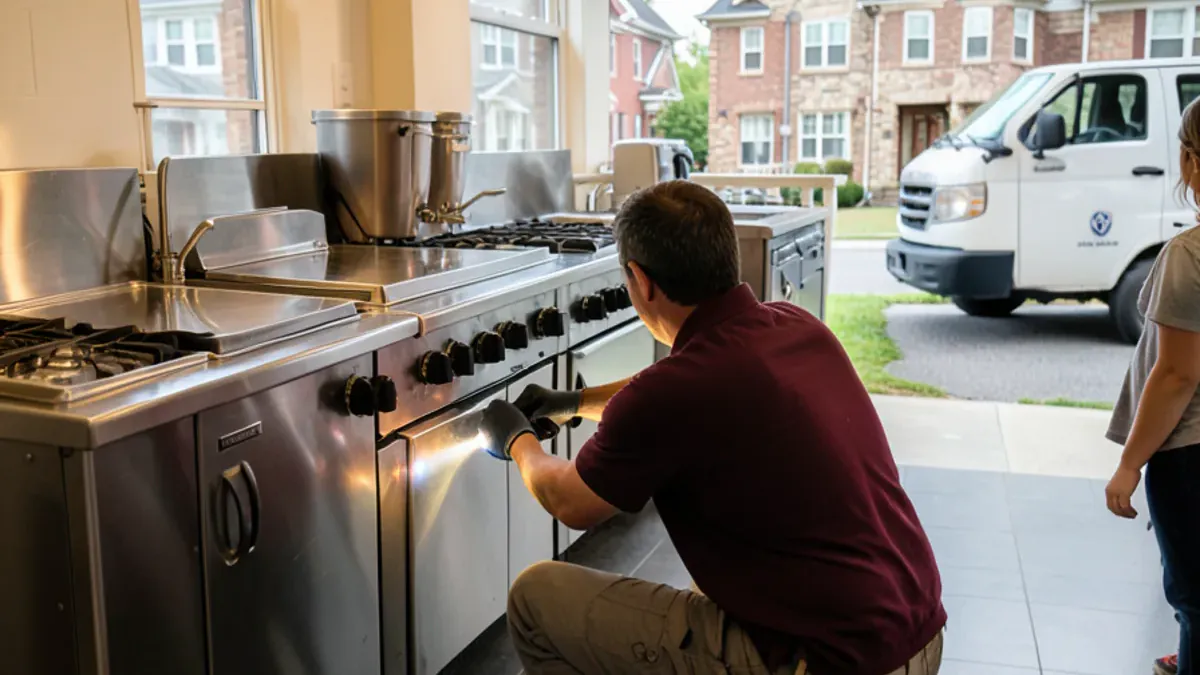
Which pests put a restaurant at risk?
German cockroaches cause most kitchen calls. They live in the warm gaps around dish machines, fryers, ice makers and refrigerator motor housings, and each egg capsule holds roughly 30 to 40 young, so a few roaches in a box of produce can become an infestation within weeks. Our cockroach control approach relies on gel baits and growth regulators placed in those harborages rather than sprays on open surfaces.
Fruit flies and drain flies come next, breeding in the film inside floor drains, bar sinks and mop buckets. House mice settle into dry storage and wall voids once the weather turns cold, and Norway rats work the dumpster pads behind strip centers along Baltimore Pike. Our fly control page covers drain cleaning and exclusion in more depth.
A health inspector who finds droppings or live insects can write you up, and a diner who sees a roach tells everyone.
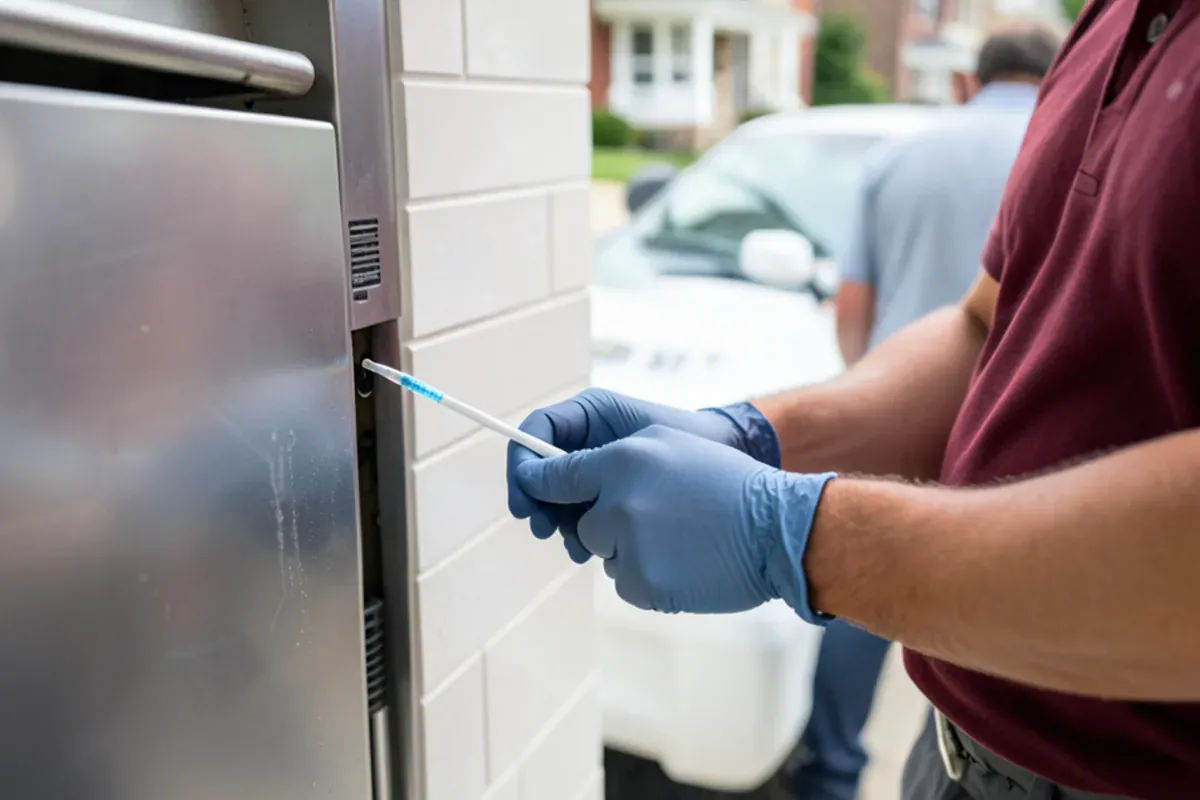
Early warning signs in a commercial kitchen
Most restaurant infestations announce themselves weeks before a customer notices, if the closing crew knows what to look for. German cockroach droppings look like ground pepper along hinge lines and inside drawer runners, and their shed skins and egg capsules collect in the warm corners behind a reach-in cooler. Mice leave dark, rice-sized droppings on dry storage shelves and chew small notches in flour and rice bags.
Other clues are easy to dismiss: a musty smell in a basement stockroom, greasy rub marks where rodents run along a wall, or a cloud of small flies over the mop sink at close. Local building stock adds causes of its own. Kitchens under apartments on State Street or in shared-basement storefronts in Upper Darby inherit whatever lives next door, and pad sites on Baltimore Pike tend to draw rats from the dumpster corral before anything shows up inside.
Preparing for a health inspection
Inspectors look for the same evidence we do: droppings in dry storage, live or dead insects under equipment, flies at the drains, gaps around pipes and doors, and whether you can show records of pest control service. We leave a written service log at every visit, noting what we checked, what we found, what we applied and where, and what the kitchen should fix.
Keep that log in one binder or folder the manager on duty can find. If you expect an inspection soon, ask for a visit a few days ahead so open items on the log get closed first.
Pennsylvania food code and pesticide rules for kitchens
Pennsylvania's food code, 7 Pa. Code Chapter 46, follows the FDA Food Code model and expects food facility premises to be kept free of insects and rodents. Inspections are carried out by the Pennsylvania Department of Agriculture or by the county or municipal health department that licenses the restaurant, depending on where it operates.
Pest control in a kitchen is regulated separately under the Pesticide Control Act of 1973: PDA licenses pest control businesses and certifies applicators, and 7 Pa. Code § 128.31 puts the license number on service vehicles. Product labels also draw a line between food-handling and non-food areas, which is why baits go into cracks away from prep surfaces rather than across counters. This is general information, not legal advice.
What our kitchen pest control covers
Kitchens rarely sit alone. If you rent space under apartments, roaches move between floors, so it helps to line up with the landlord's property management pest control plan. In a strip center, the shops next door matter too, which is where office and retail pest control comes in.
Food service pest control has to reach every place food, water or grease collects, not just the spots customers can see. A standard restaurant visit includes:
- Cook line, under fryers and ranges, and the gaps behind equipment
- Dish area, floor drains, hand sinks and mop sink
- Bar wells, speed rails, beer coolers and bar drains
- Dry storage shelving, walk-in coolers and receiving door
- Dining room perimeter, host stand and booth seating
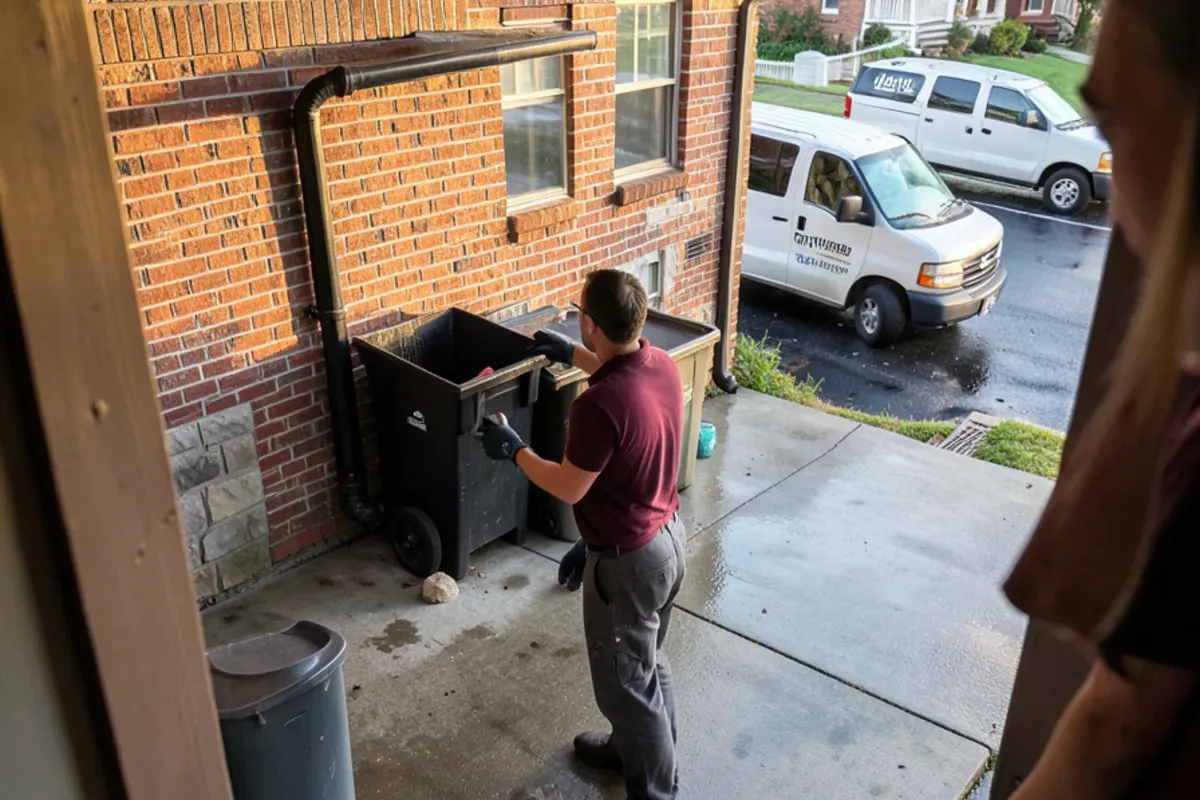
- Dumpster pad, grease bin area and exterior foundation
Talk to us about restaurant pest control
Call and speak with Thom or his team. The inspection is free, and you get a written quote before any treatment.
- ★ 4.8 from 21 Google reviews
- Open 7 days, 8 a.m. to 7 p.m.
- Free inspection before treatment
- Family-run, based in Media, PA
Open 7 days, 8 a.m. to 7 p.m.
Bar pest control and fruit flies
Bars have their own pattern. Sticky residue in speed rails, fruit garnish trays and slow floor drains feed fruit flies all year, and the dark, warm space under beer coolers suits cockroaches. Bar pest control here is mostly about drains and sanitation, with traps to measure progress and baits only where roaches hide. A ten-minute nightly drain and rail cleanup often does more than any product.
When can a restaurant be treated?
We schedule around service. Our hours run 8 a.m. to 7 p.m. every day of the week, so most restaurant visits happen before prep starts, in the lull after lunch, or on the day of the week you are closed. Gel baits and monitors can go in while staff work nearby, which keeps most visits short.
When a treatment needs an empty kitchen or must happen after closing, ask when you book and we will tell you what the schedule can do. A roach sighting in the dining room is urgent: call (209) 563-1650 early in the day, since same-day visits are often possible when the schedule allows.
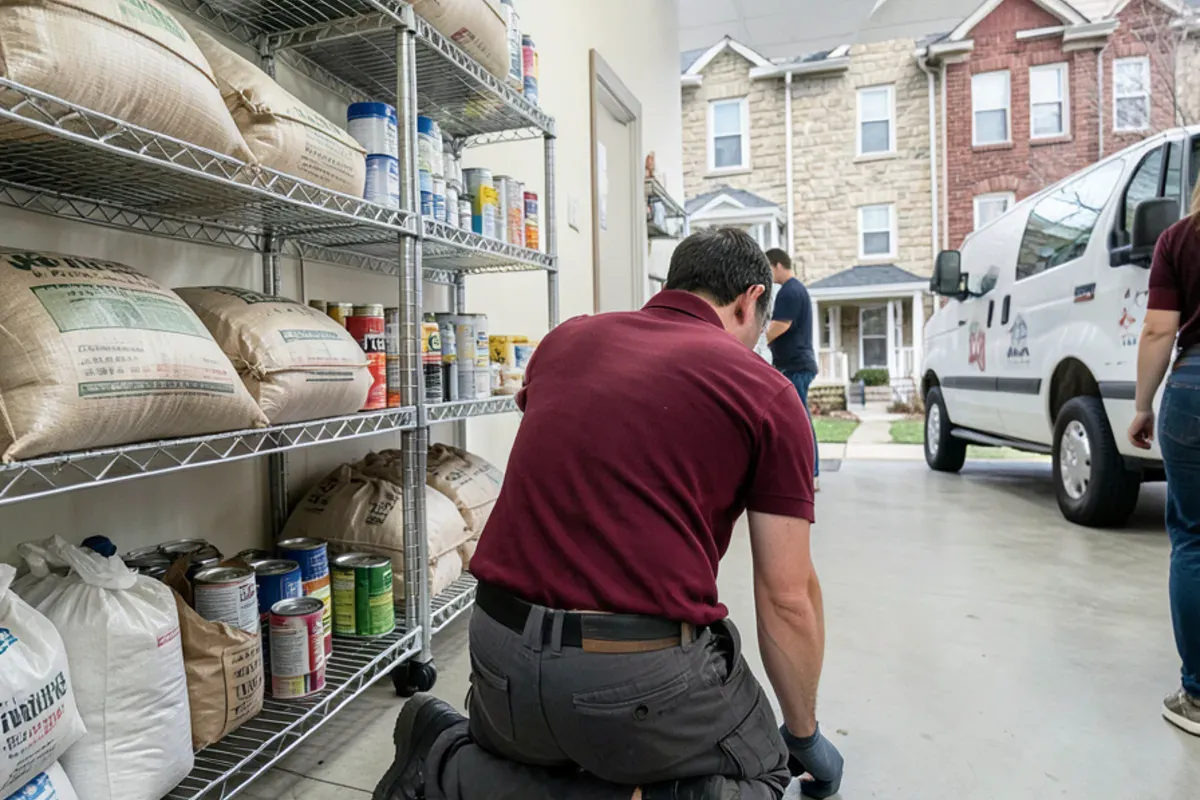
A restaurant service visit, step by step
Talk to the kitchen manager
Five minutes on what the line cooks and dishwashers have seen saves time in the walk-through.
Read the monitors
Glue monitors under the dish machine, bar and dry storage show whether roach or fly numbers are rising or falling.
Inspect harborage
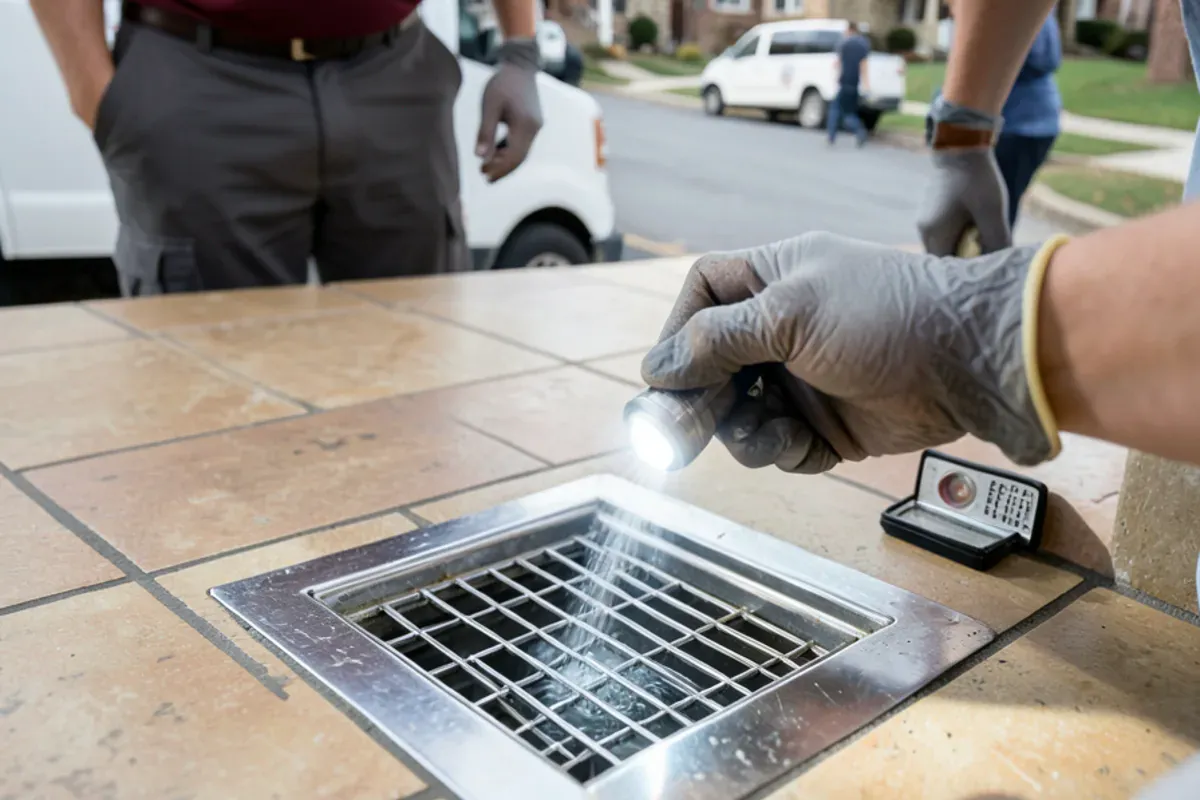
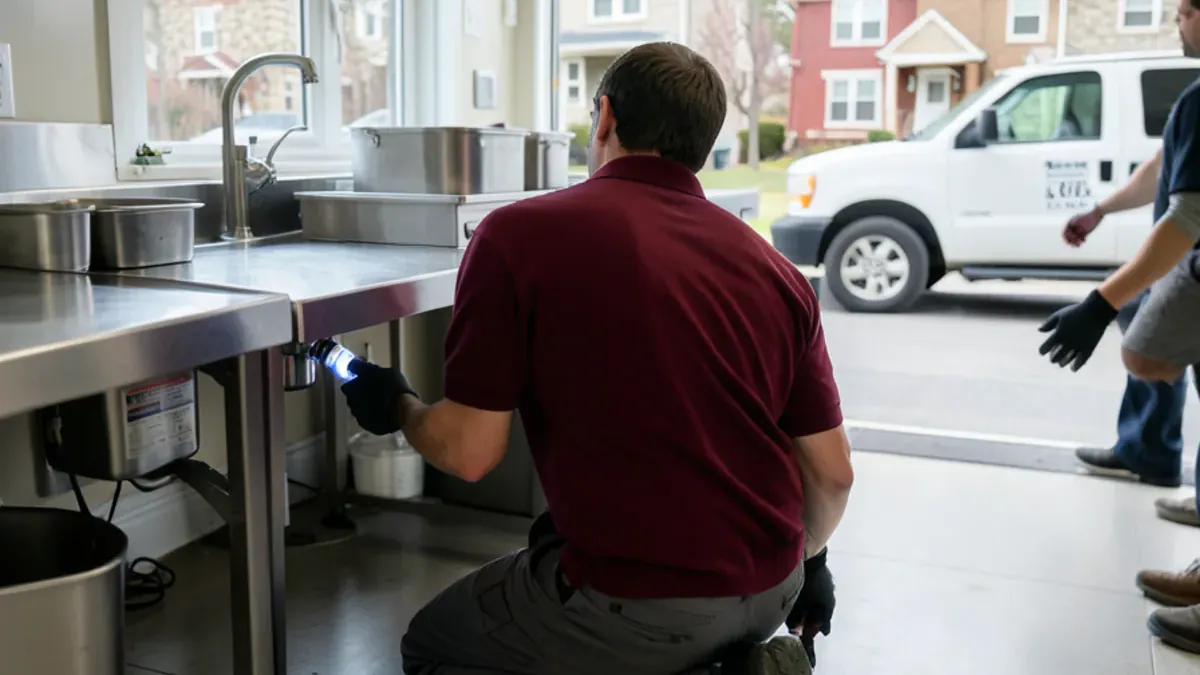
We check motor housings, door gaskets, wall gaps and drains with a flashlight.
Bait and treat
Gel baits and growth regulators go into cracks, away from food contact surfaces; rodent devices get checked and reset.
Flag sanitation and repairs
Grease buildup, broken door sweeps or a leaking line go into the notes with a clear fix.
Leave the service log
You get the written record for your inspection binder before we leave.
What affects the cost of restaurant service?
Your quote comes after a free inspection, in writing. These factors shape it:
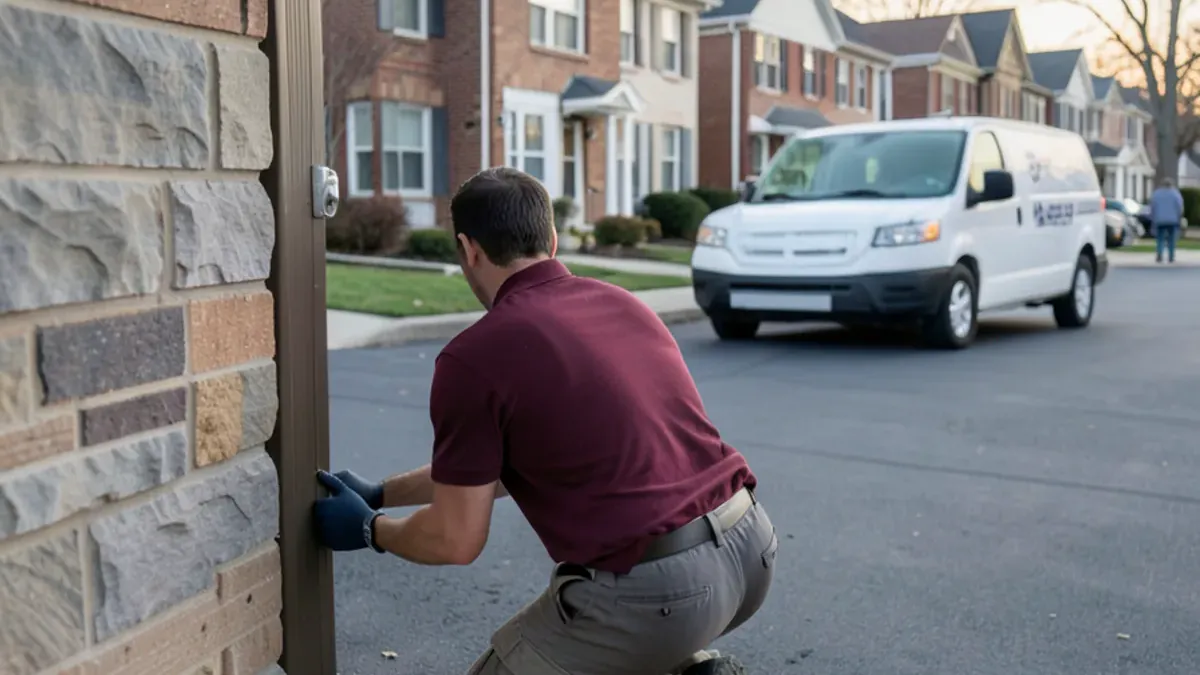
Where the kitchen sits in the building changes the scope. A café in a borough storefront with apartments above and a shared basement needs monitors on both levels and some coordination with the landlord, while a free-standing pad site turns mostly on its dumpster area and receiving door. Kitchens that start service with an established German cockroach population usually need closer follow-up visits in the first month or two, and the written quote spells that out before the program settles into a monthly rhythm.
- Kitchen size and number of prep or storage rooms
- Whether a cockroach population is already established
- Visit frequency, usually monthly for active kitchens
- Bar areas, basement storage or a second floor
- Number of exterior rodent stations
- Scheduling before opening or on your closed day
- Repairs such as door sweeps or sealing pipe gaps
What our restaurant pest control includes
- Free kitchen and exterior inspection with a written quote
- Cockroach monitoring and gel bait placement in harborage
- Drain fly and fruit fly breeding-site checks
- Interior and exterior rodent devices, checked every visit
- Pre-inspection visit on request
- Written service log for your inspection binder
- Sanitation and repair notes for the manager
Why call No Bugs Exterminator for restaurant pest control
Close to Media's restaurant blocks
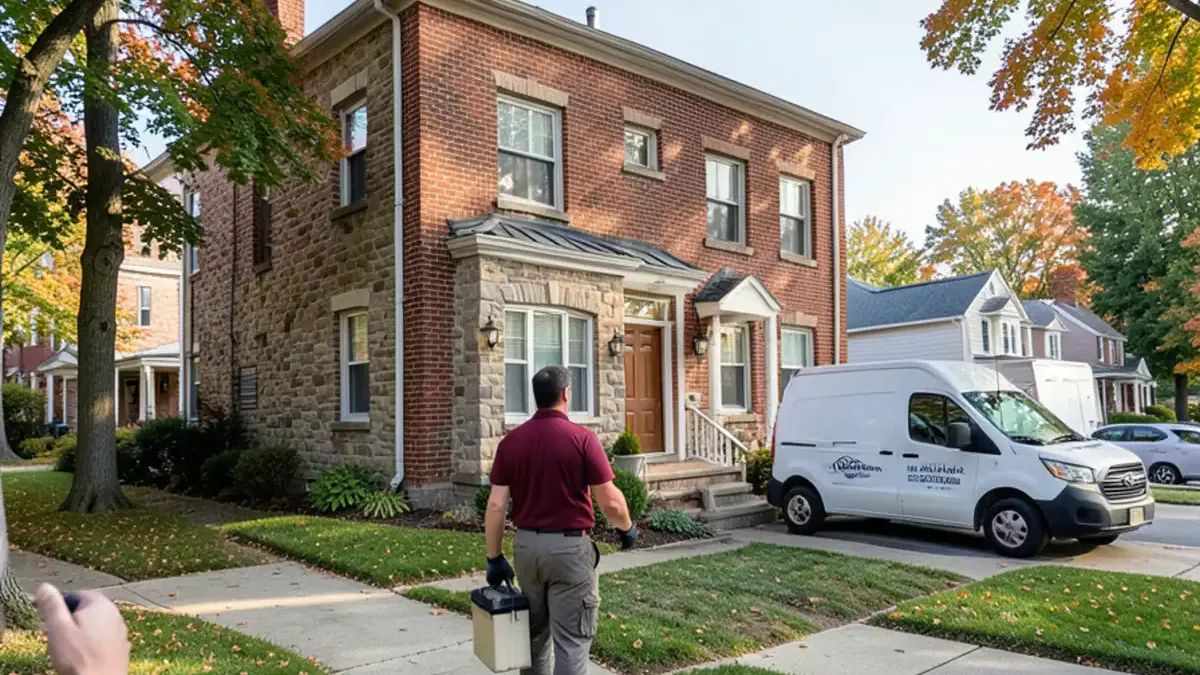
We are based in Media, so kitchens on State Street and along Baltimore Pike are a short drive for Thom and his team.
Seven-day schedule
Being open 7 days, 8 a.m. to 7 p.m., lets us book your closed day or the hour before prep, Sundays included.
Roaches and rodents are our daily work
We specialize in all insects and rodents, the two groups that close kitchens most often.
Free inspection before any contract
You get a written quote first, so there is no commitment before you see the findings.
Records you can hand over
Every visit ends with a written service log your manager can show an inspector.
Where we provide restaurant pest control
Restaurant work keeps us busy in Media, where cafés and taverns line State Street on the trolley line, and in Upper Darby, whose older rowhome-era storefronts share walls and basements. We also cover the kitchens along West Chester Pike in Broomall and the Baltimore Pike corridor through Clifton Heights, where older mill-era buildings give mice plenty of entry points.
- Media
State Street cafés and taverns sit under walk-up apartments in the county seat, so roaches and mice can travel between kitchens and the floors above.
- Wayne
Downtown Wayne’s Lancaster Avenue restaurants work out of older buildings in a Victorian rail suburb, where shared walls and basements carry mice between neighbors.
- Lansdowne
Restaurants near the historic Lansdowne Theater occupy buildings in a borough with a 1943 median build year, where old foundations let mice reach kitchens.
- Ardmore
Suburban Square and the Lancaster Avenue dining strip put many kitchens close together, so dumpster areas and shared walls move pests between businesses.
- Exton
Exton Square and Main Street at Exton draw a dense cluster of restaurants, where busy dumpster corrals and nightly deliveries call for steady rodent monitoring.
- Glenolden
Kitchens along MacDade Boulevard sit close to Muckinipattis Creek, and Norway rats that burrow along creek banks go looking for grease bins and dumpster pads.
- Narberth
This half-square-mile Main Line borough packs restaurants into pre-war buildings, median built 1938, where kitchens share walls and old basements.
- Phoenixville
Bridge Street dining near the Colonial Theatre fills a former iron-works town, and older commercial buildings there give mice and roaches room to travel.
What customers say on Google
4.8 out of 5 from 21 reviews on Google. Quoted as written by customers.
We use them for a year now very happy with the service for both of my businesses
Thom is a top-notch pest control specialist! And is one of the most genuine guys in the industry. He came to inspect a situation I had going on at the house, took his time, offered detailed advice, and didn’t take a penny.
Thom + his team were amazing. Very professional + provided me with a quote that made the most sense for my situation. Clearly I was not being gouged. Thom put the client first.
Restaurant Pest Control: common questions
How often should a restaurant be serviced?
Monthly service suits most restaurants, and kitchens with an active cockroach problem need closer follow-ups until monitor counts drop. We set the frequency after the free inspection, based on how much food you prepare, whether you have a bar or basement storage, and what the monitors under your dish machine are telling us.
Will you help us prepare for a health inspection?
Yes. Book a visit a few days before your expected inspection window and we will check the spots inspectors look at, such as dry storage, drains and the gaps behind equipment. We note anything that still needs fixing and leave an updated service log for your binder.
Can treatment happen after closing?
Sometimes. Our hours are 8 a.m. to 7 p.m., seven days a week, so many restaurants book before prep starts or on the day they are closed, which avoids night work entirely. Most baits can be placed with staff nearby. If a job truly needs an empty building after you close, tell us when you call and we will say plainly whether the schedule allows it.
Are the products you use safe around food?
We keep treatment away from food and food-contact surfaces. In kitchens we rely mostly on gel baits, growth regulators, traps and monitors placed in cracks and voids, and every product goes on according to its label. Before a visit, cover or put away open food and utensils near the areas we will treat, and the service log will list what was applied and where.
What should we do if a customer sees a roach?
Remove what you can, clean the area, and write down the exact spot and time, because a roach in the dining room usually traces back to a booth, a server station or a nearby wall void. Then call us early in the day so we can try to fit you in, and we will start the inspection where the sighting happened.
Related services
Helpful guides from our blog
Ready to get rid of the problem?
Thom and his team serve Media, Delaware County and southeastern Pennsylvania, open 7 days, 8 a.m. to 7 p.m..
- ★ 4.8 from 21 Google reviews
- Open 7 days, 8 a.m. to 7 p.m.
- Free inspection before treatment
- Family-run, based in Media, PA
Open 7 days, 8 a.m. to 7 p.m.