
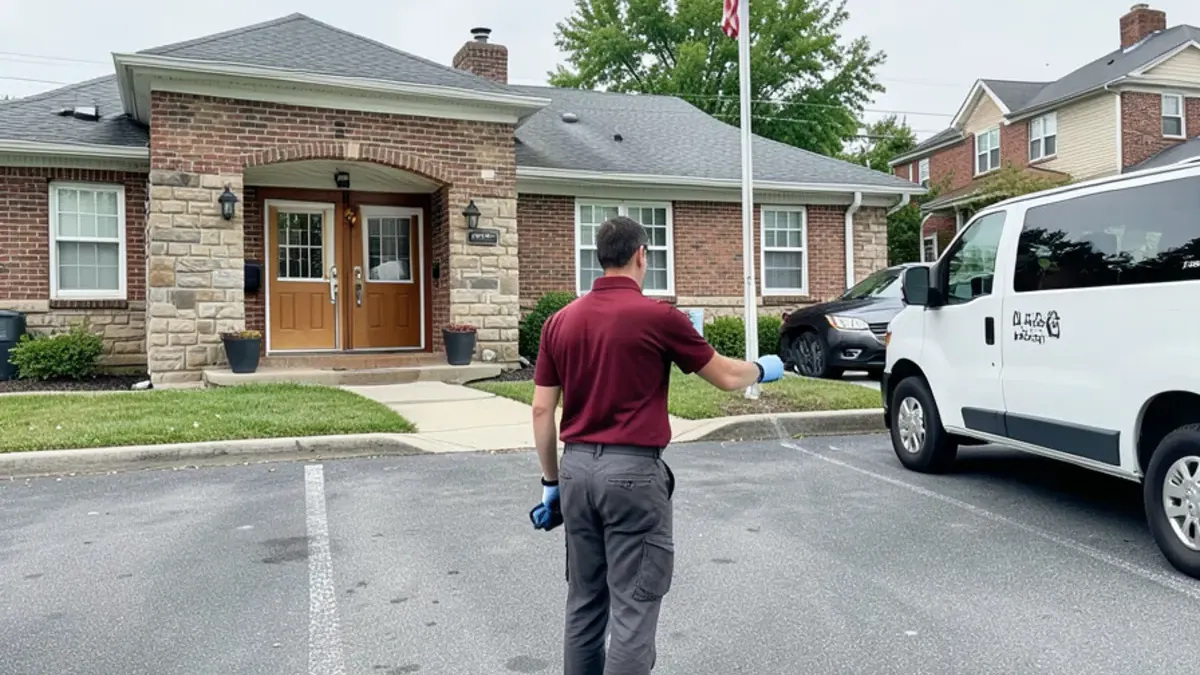
Does Pennsylvania law require integrated pest management in schools?
Yes, for public schools. Act 35 of 2002 requires each public school to adopt an IPM plan and to notify parents and staff about pesticide applications. The school's own plan names who coordinates pest management and how notices go out, so we work inside that plan rather than around it.
Private schools, preschools and child care centers are not covered by Act 35 in the same way, and they should check the rules that apply to their own licensing. Most of them choose the same IPM approach anyway, because it keeps pesticide use low where children spend the day. This is general information, not legal advice.
School integrated pest management in practice
School integrated pest management in PA buildings means inspection and prevention first. We monitor with traps and glue boards, point out sanitation and repair problems, seal entry points, and use baits in cracks and voids before considering any broader application. Treatments, when needed, happen while students are out of the building.
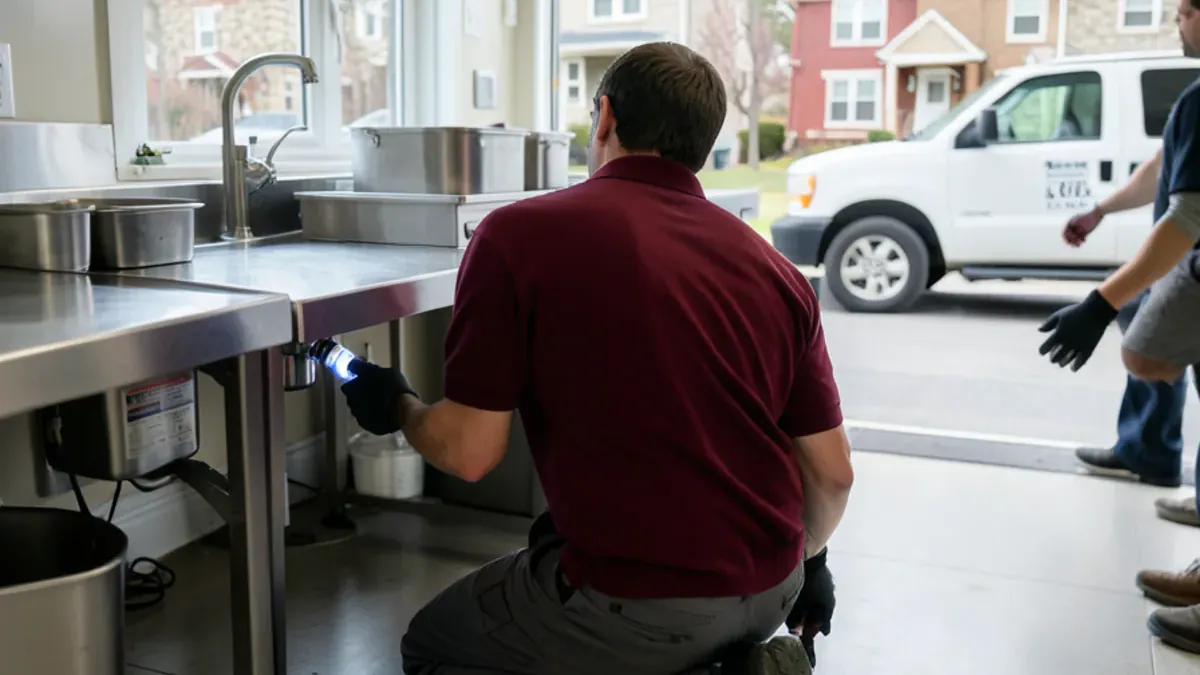
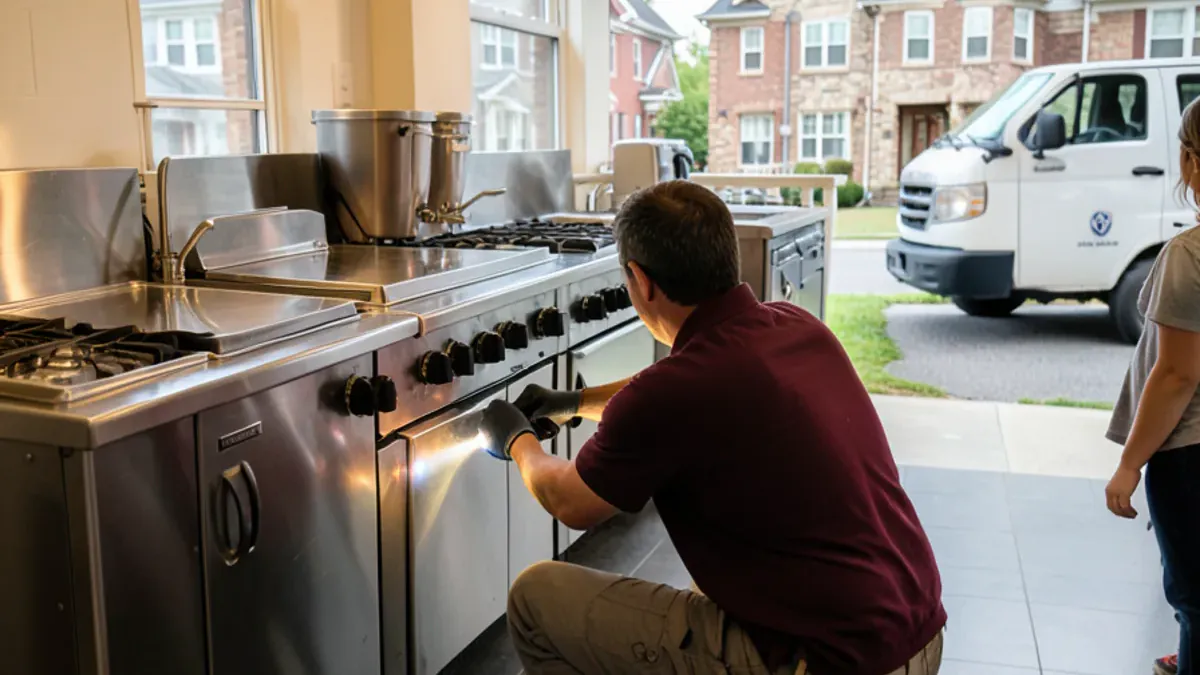
Cafeterias face the same cockroach, fly and mouse pressure as any commercial kitchen, which is why we treat them much like the kitchens on our restaurant pest control page. District warehouses and central kitchens that store bulk food follow the device-mapping routine described under warehouse and food facility pest control.
- Cafeteria kitchens, serving lines and dish rooms
- Classrooms with snack storage, sinks or class pets
- Locker rooms, gyms and athletic storage
- Custodial closets, boiler rooms and supply storage
- Playgrounds, athletic fields and dumpster areas
- Exterior doors, windows and utility gaps
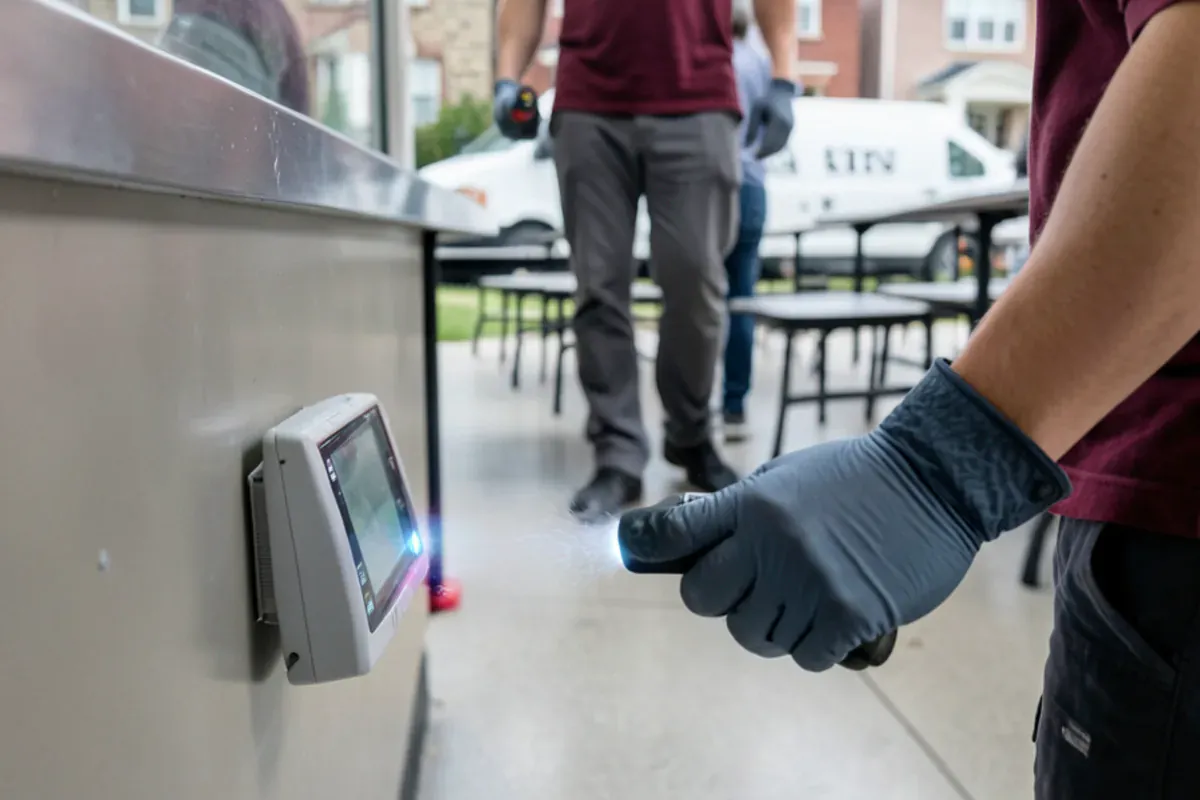
Signs of pests in classrooms, cafeterias and dorms
Teachers and custodians usually see the first evidence, often in places nobody checks daily. Mouse droppings collect at the back of snack cabinets and under classroom sinks, chewed construction paper turns up in art storage, and German cockroaches appear near the dish room or behind vending machines after hours. An ant trail on a windowsill usually leads to a juice box or fruit cup left in a desk.
Local campuses add their own causes. Older school buildings, common in a county where the median home dates to 1957, often have crawl spaces, pipe tunnels and utility gaps that mice use once fall arrives. Wooded edges and athletic fields bring yellow jackets to bleachers and trash cans in September, and residence hall move-in weeks bring bed bugs in luggage and secondhand furniture. In daycares, cubbies and nap-mat storage are where the first droppings usually turn up, because crumbs collect there out of sight.
How are parents and staff notified about treatment?
Under Act 35, the notice itself comes from the school, following its IPM plan. Our job is to give the school's IPM coordinator what they need ahead of time: the target pest, the product we propose to use, where it will go and the planned date. After the visit, the service log records what was actually applied and where, so the school's records match what happened.
Daycares are not bound by the same law, but we recommend telling families anyway. A short note home explaining what is being treated, and that it happened after hours, answers most questions before they are asked.
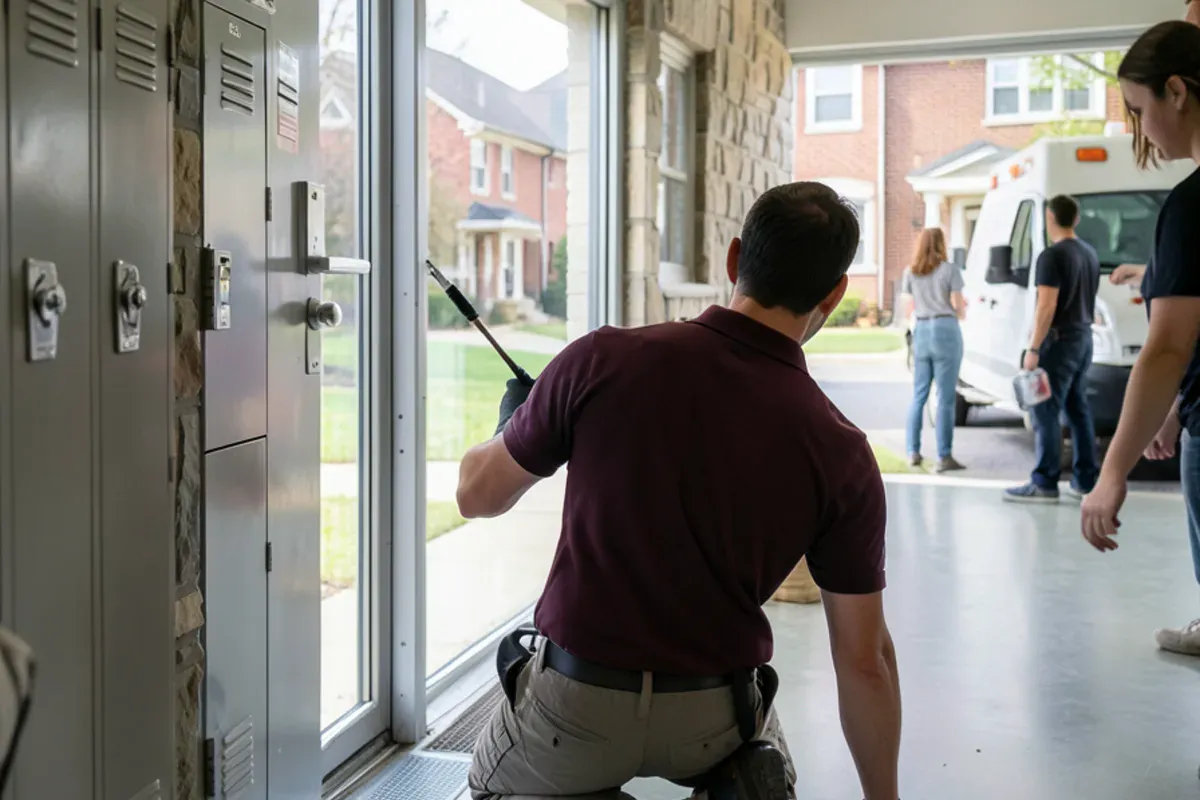
Talk to us about school and daycare pest control
Call and speak with Thom or his team. The inspection is free, and you get a written quote before any treatment.
- ★ 4.8 from 21 Google reviews
- Open 7 days, 8 a.m. to 7 p.m.
- Free inspection before treatment
- Family-run, based in Media, PA
Open 7 days, 8 a.m. to 7 p.m.
Daycares and college residence halls
Daycare pest control is about small spaces with a lot of food: snack rooms, cubbies, nap mats and diaper stations. Ants and mice are the usual calls, and late-summer yellow jackets around playground equipment and trash cans call for prompt stinging insect control before a child gets stung.
College dorms bring a different problem. Move-in and move-out weeks at Villanova, Swarthmore, Widener and Neumann move a steady stream of luggage, backpacks and secondhand couches through residence halls, which is how bed bugs spread from room to room. Our bed bug treatment specialty fits here, along with mouse work in older halls.
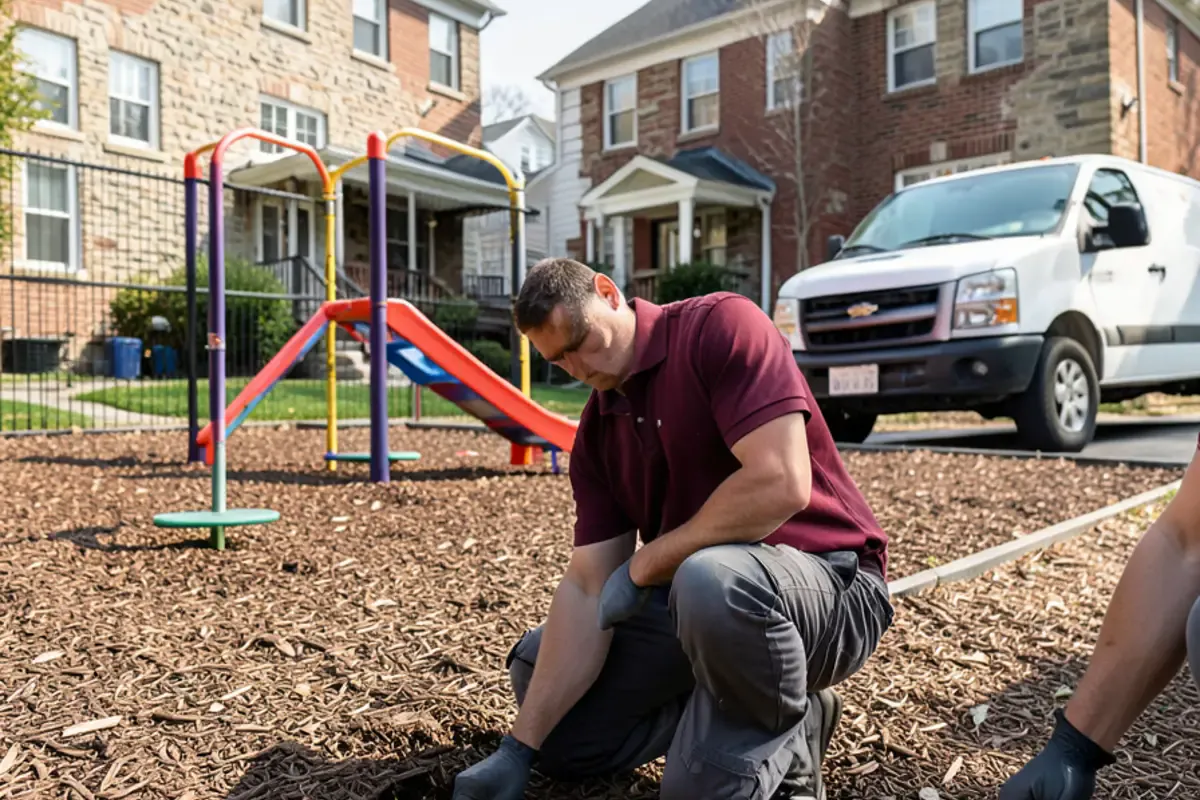
Scheduling around the school calendar
We plan school visits for after dismissal, weekends, and the long breaks. With service running 8 a.m. to 7 p.m. on weekends as well as weekdays, a Saturday morning visit to an empty building is easy to arrange. Summer and winter breaks are the right time for sealing gaps, replacing door sweeps and deeper cafeteria work.
For residence halls, the windows between semesters let us inspect and treat empty rooms before the next group of students arrives.
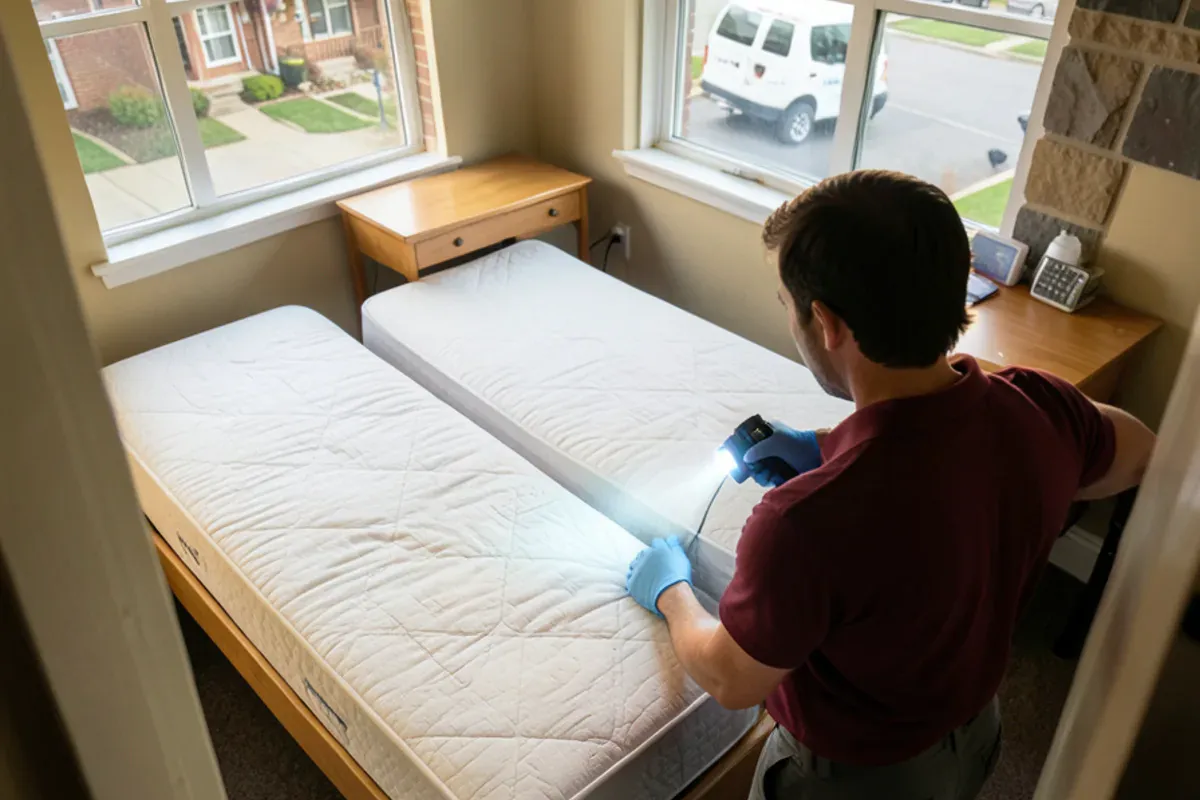
A school service visit, step by step
Check in with the IPM coordinator
We review the sightings log kept by custodians, teachers and kitchen staff.
Read monitors
Traps in the cafeteria, kitchen, custodial areas and classrooms are checked and replaced.
Inspect problem areas
Rooms with reports get a close look, including sinks, cabinets and wall gaps.
Fix before treating
We note sanitation, clutter and repair items, and seal what we can on the spot.
Treat only if needed
Any application follows the school's IPM plan and takes place with students out of the area.
Record it
The service log lists products, locations and recommendations for the school's files.
What affects the cost of school and daycare service?
We provide a written quote after a free inspection. These points shape it:
Campus layout moves the number more than enrollment does. A single-building elementary school with one cafeteria is a short, predictable visit, while a high school with a field house, stadium concessions and a separate bus garage needs more monitors and more ground covered. Daycares in converted houses or church basements often need extra sealing work for mice, and residence halls are usually quoted per building, with bed bug rooms priced as they come up. Preparing the product details your IPM coordinator needs for Act 35 notices is part of the scope as well.
- Building size and number of classrooms
- Cafeteria and kitchen size
- Number of buildings on a campus
- Visit frequency during the school year
- Weekend or break-week scheduling
- Exclusion work such as door sweeps and sealing
- Separate bed bug work in residence halls
What our school and daycare pest control includes
- Free inspection and written quote
- Monitoring in cafeterias, kitchens and custodial areas
- Product, location and date details for the school's notices
- Service log for the IPM coordinator's records
- Weekend, after-dismissal and school-break scheduling
- Stinging insect checks at playgrounds and fields
- Bed bug inspections for residence halls
Why call No Bugs Exterminator for school and daycare pest control
Close to Delaware County campuses
From our Media base, Swarthmore, Aston and Chester are a short drive, and Villanova is about 25 minutes.
Saturday and Sunday options
Open 7 days, 8 a.m. to 7 p.m., so buildings can be serviced while empty.
Bed bug specialists
Bed bugs are our specialty, which matters in dorms where they spread at move-in.
Quote first
A free inspection and a written price come before any school or daycare agreement.
Details for your Act 35 notice
Before any planned application, we send the target pest, product and location details your IPM coordinator needs to notify families and staff.
Where we provide school and daycare pest control
Campus work takes us to Swarthmore, where the college borders the Crum Woods, and to Aston Township, home of Neumann University in the Chester Creek valley. We also serve schools near Villanova in Radnor Township and near Delaware County Community College in Marple Township, where wooded edges and athletic fields bring yellow jackets and mice close to buildings.
- Folsom
Ridley High School and the neighborhoods around Morton Avenue put athletic fields, cafeterias and post-war housing side by side, a steady source of mice and yellow jackets.
- Villanova
Villanova University dorms see heavy move-in and move-out traffic each semester, which is how bed bugs travel from room to room in residence halls.
- West Chester
West Chester University sits in a brick downtown where Census (ACS) estimates put renter-occupied homes at 65%, so student housing and campus buildings share pest pressure.
- Westtown Township
The Westtown School campus and the Route 926 neighborhoods around it combine wooded grounds, dining halls and dorms that need year-round monitoring.
- Haverford Township
Haverford College and the township’s school buildings sit along Darby Creek’s wooded banks, where mice and stinging insects move toward buildings each fall.
- Chester
Widener University’s campus sits among riverfront rowhomes from around 1949, so older attached housing nearby keeps mice and roaches pressing on residence halls.
- Concord Township
Garnet Valley school subdivisions with a 1997 median build year surround newer school buildings whose fields and wooded edges draw yellow jackets by late summer.
- Thornbury Township (Delaware County)
Cheyney addresses and large-lot Glen Mills homes sit among open fields, where mice move into school and campus buildings as the weather cools.
What customers say on Google
4.8 out of 5 from 21 reviews on Google. Quoted as written by customers.
We use them for a year now very happy with the service for both of my businesses
Thom is a top-notch pest control specialist! And is one of the most genuine guys in the industry. He came to inspect a situation I had going on at the house, took his time, offered detailed advice, and didn’t take a penny.
Thom + his team were amazing. Very professional + provided me with a quote that made the most sense for my situation. Clearly I was not being gouged. Thom put the client first.
School and Daycare Pest Control: common questions
Does Pennsylvania require integrated pest management in schools?
It does for public schools. Pennsylvania Act 35 of 2002 requires them to adopt integrated pest management plans and to notify parents and staff about pesticide applications. Each school's plan sets the details, including who coordinates it. We follow the plan the district already has and supply the information its coordinator needs for notices. This is general information, not legal advice.
How are parents notified before treatment?
The school sends the notice, following the process in its IPM plan. Before a planned application we give the coordinator the target pest, the product, where it will be applied and the date, so the notice is accurate. Afterward our service log confirms what was actually used. Many daycares send a similar note home by choice.
Can treatment be scheduled around the school calendar?
Yes, and it should be. Routine visits happen after dismissal or on weekends, and we save sealing, door sweeps and deeper cafeteria work for winter and summer breaks. Residence halls are easiest between semesters, when rooms are empty. Because we are open seven days, a Saturday visit to an empty building rarely causes a scheduling problem.
Do daycares have to follow Act 35?
Act 35 is written for public schools, so a private child care center is not covered by it in the same way. Your own licensing rules may still say something about pest control and pesticide use, so check those. Either way, an IPM approach with after-hours treatment and a note to families is a sensible standard. This is general information, not legal advice.
What should we do about wasps near a playground?
Keep children away from the area and call us early in the day; same-day visits are often possible when the schedule allows. In late summer, yellow jackets nest in the ground near play equipment and gather at trash cans with sweet drinks. We locate the nest, treat it when children are not present, and suggest tighter lids for outdoor bins.
Related services
Helpful guides from our blog
Ready to get rid of the problem?
Thom and his team serve Media, Delaware County and southeastern Pennsylvania, open 7 days, 8 a.m. to 7 p.m..
- ★ 4.8 from 21 Google reviews
- Open 7 days, 8 a.m. to 7 p.m.
- Free inspection before treatment
- Family-run, based in Media, PA
Open 7 days, 8 a.m. to 7 p.m.