Pest risks in warehouses and food facilities
Freight is the main way pests get in. Sites near Philadelphia International Airport, along I-95 and on the Delaware River in Eddystone and Chester receive loads that may carry German cockroaches in cartons, mice in pallets, and stored-product insects such as Indian meal moths, warehouse beetles and sawtoothed grain beetles in bagged goods. Our pantry pest control page covers how those insects breed in dry food.
Outside, Norway rats follow rail lines, riverbanks and the tidal marsh near the Heinz refuge, and house mice move in from surrounding fields as soon as nights turn cold. For a food facility, the stakes go beyond damage: buyers and auditors expect a documented pest program, and contaminated product can be rejected or pulled.
Why do pests keep turning up at the dock doors?
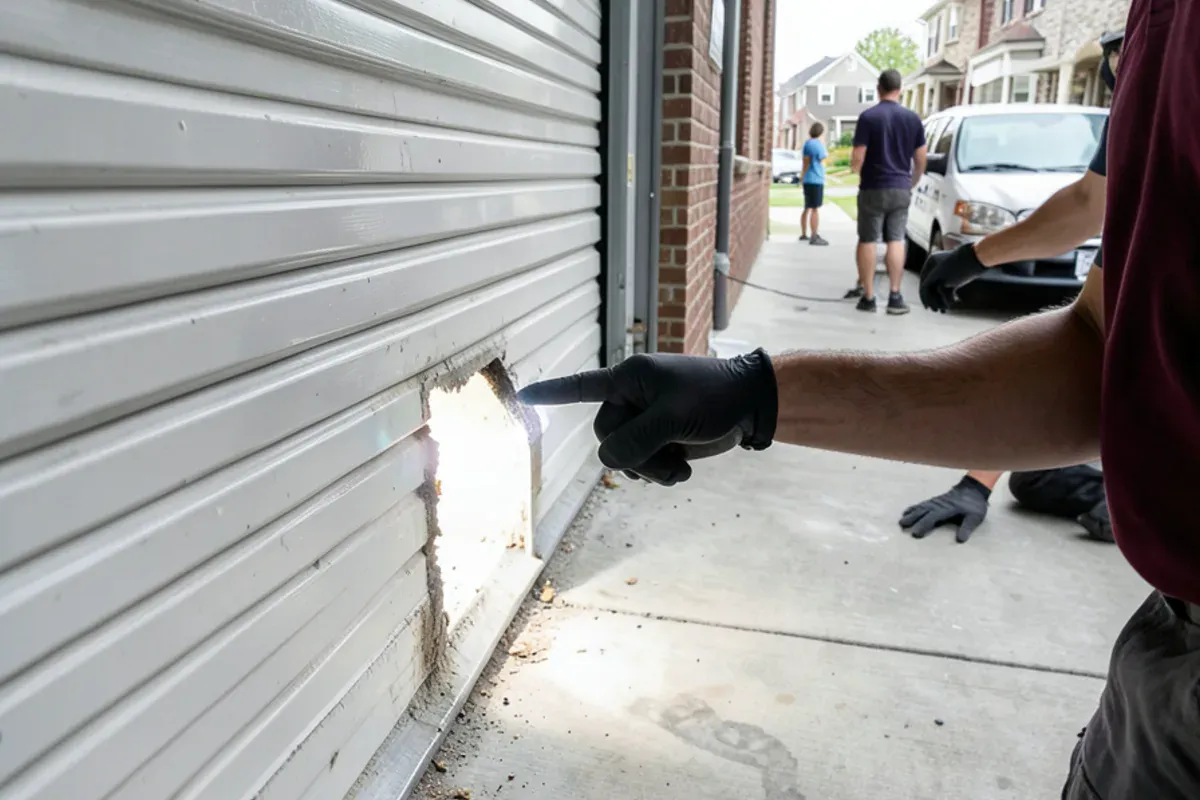
Because the dock is where the outside meets the inside, dozens of times a day. Doors left up during loading, worn levelers and brush seals with daylight showing let mice walk straight in, and a gap of about a quarter inch is enough. Pallets that sat in the yard overnight bring crickets, spiders and the odd mouse nest, while returned goods often arrive with torn packaging that stored-product insects move into.
The early clues are small: gnawed corners on bags and cartons, fine dust or webbing on bagged grain, rice or pet food, little moths circling racking lights at dusk, greasy rub marks along wall bases and droppings behind stretch-wrapped pallets. Along the Delaware River and around the airport, rats from riverbanks and rail beds add burrows at fence lines and under the edges of slabs, especially after a cold snap or a high tide.
How do we monitor rodents in a warehouse?
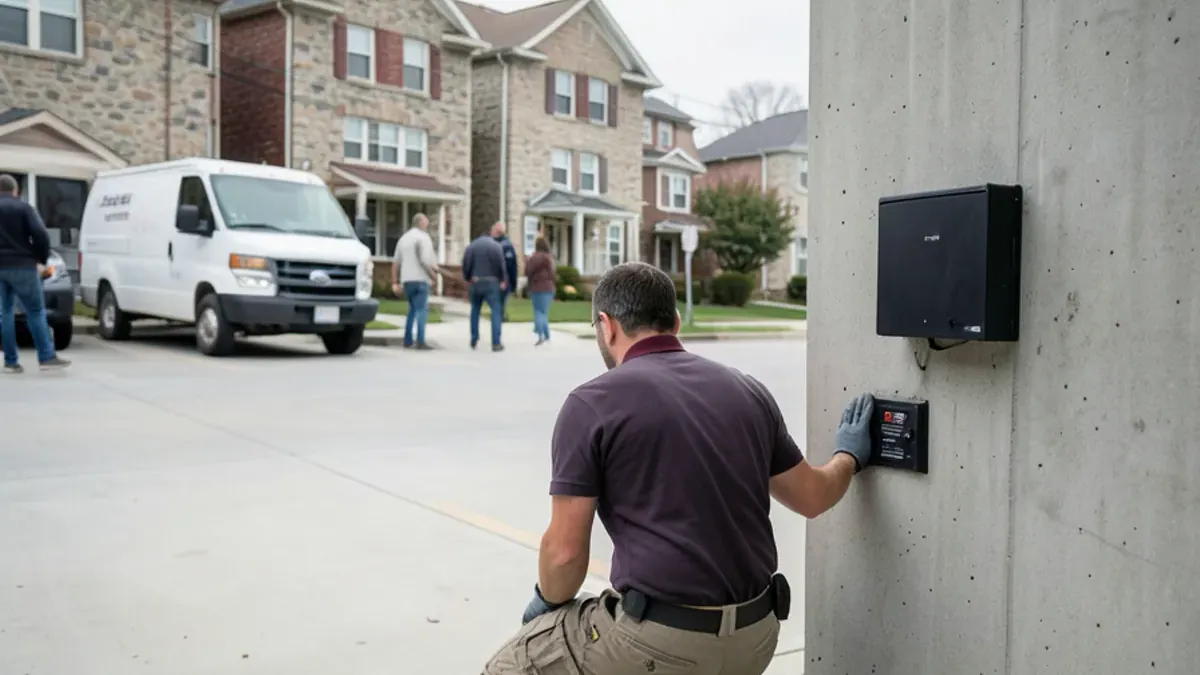
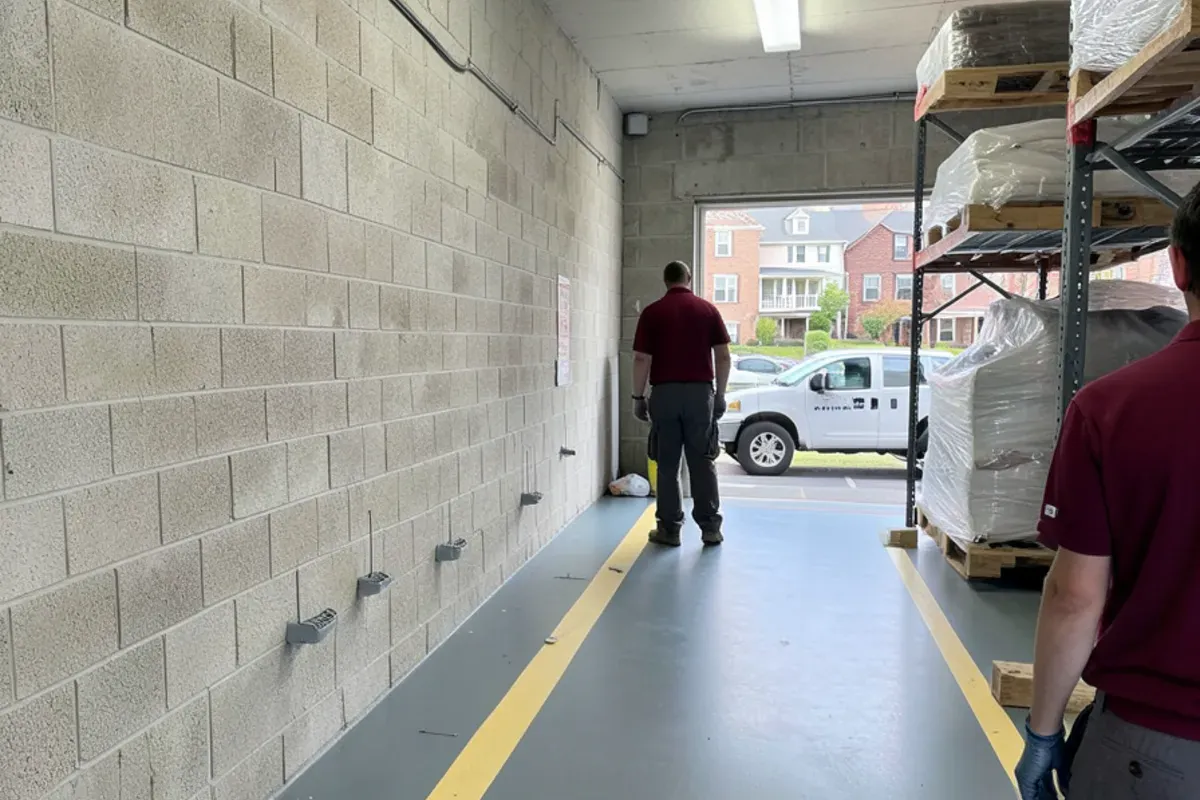
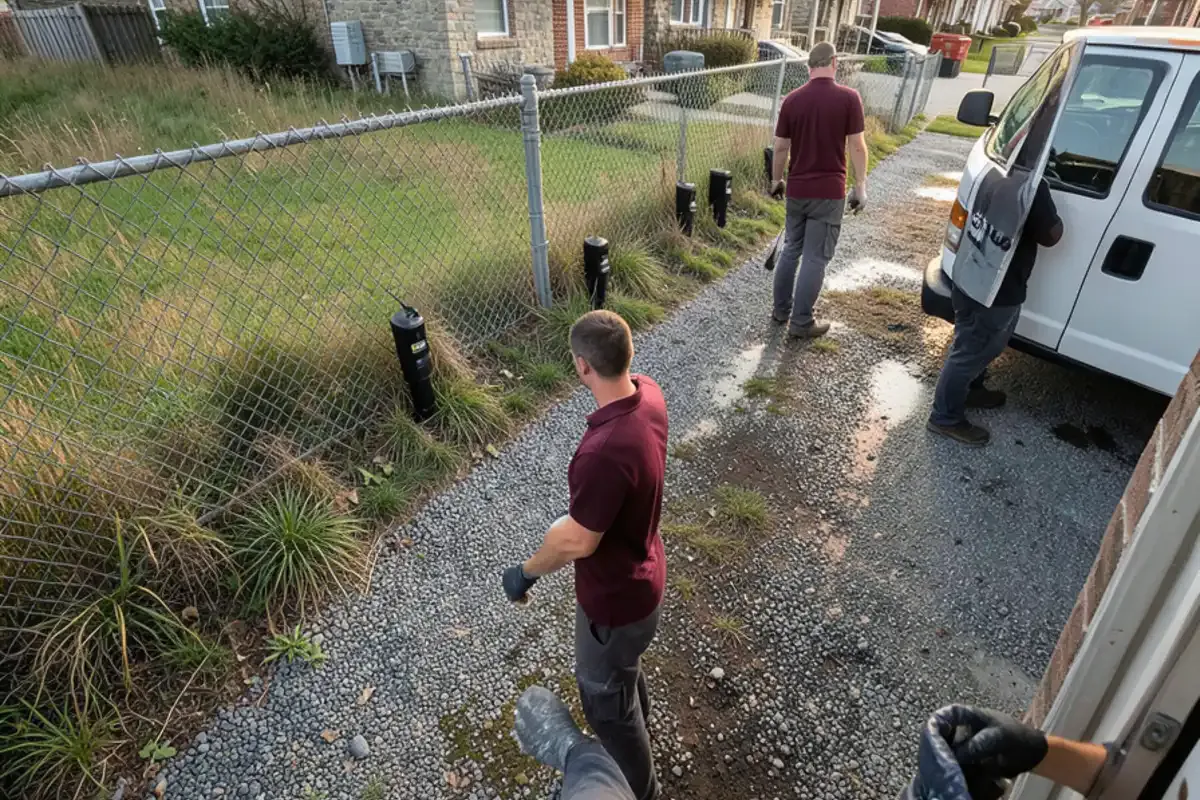
We build rodent control in layers. Tamper-resistant bait stations sit along the exterior walls and fence line to intercept rats and mice before they reach the building. Inside, traps line the walls at dock doors, personnel doors and set intervals along the perimeter, with no rodenticide placed where it could reach product.
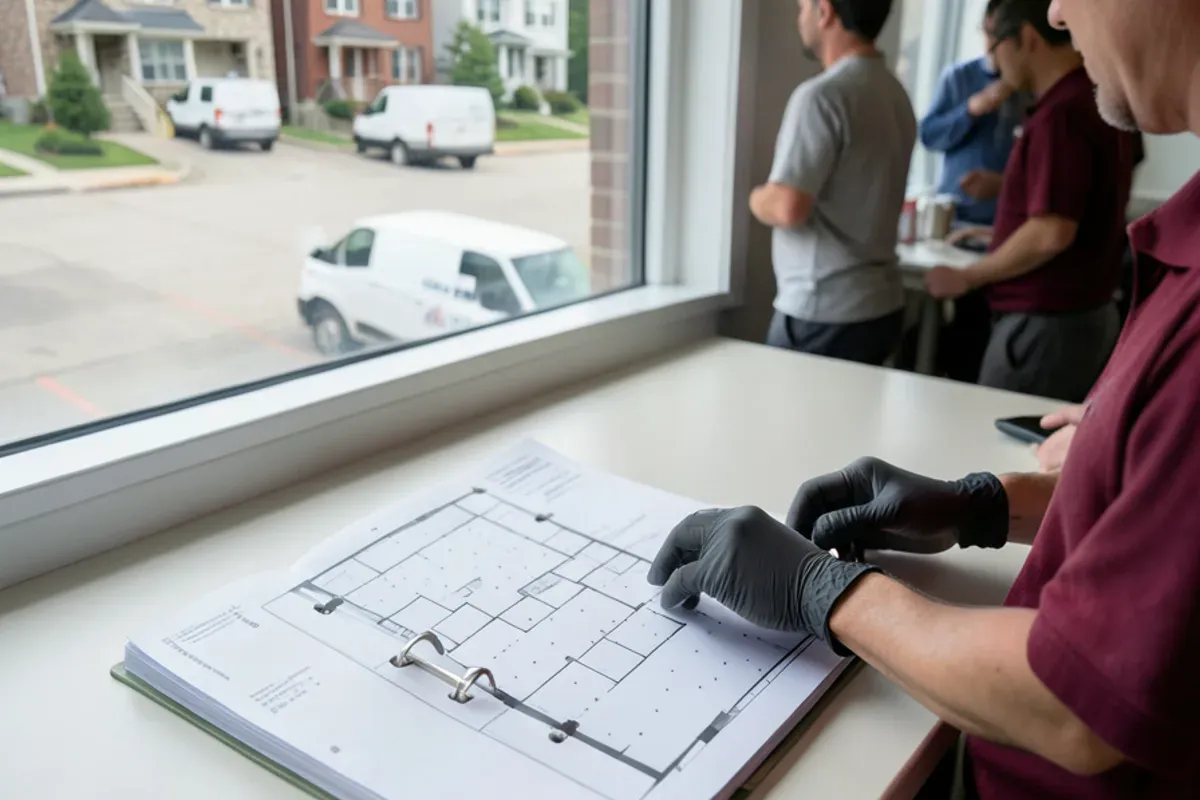
Every device gets a number and a spot on a site map, so a capture can be traced to a specific door or wall section. Keeping a clear strip along interior walls makes inspection faster, and sealing gaps around dock levelers, door seals and pipe penetrations, since a mouse needs only about a quarter inch, is covered on our rodent exclusion page.
Trend reports and service records
On recurring accounts, we record activity at each numbered device every visit and summarize those counts over time by zone, so you can see whether a dock, a wall or a storage room is getting better or worse. A rise at one door usually means a seal has failed or product is sitting too long in receiving.
Each service log also lists what we inspected, what we applied and where, and any corrective action we recommended, along with whether earlier recommendations were completed. Those notes give your quality or operations lead a clear paper trail.
Supporting a third-party food safety audit
Third-party food safety audits commonly ask to see a pest program's paperwork. We can supply the device map, service logs, trend summaries, a list of products used with labels and safety data sheets on request, and corrective action notes. The audit standard and the auditor decide what passes; our part is keeping the pest records complete and current.
Send us your auditor's pest control checklist before the program starts, and we will tell you plainly which items we can provide.
Talk to us about warehouse and food facility pest control
Call and speak with Thom or his team. The inspection is free, and you get a written quote before any treatment.
- ★ 4.8 from 21 Google reviews
- Open 7 days, 8 a.m. to 7 p.m.
- Free inspection before treatment
- Family-run, based in Media, PA
Open 7 days, 8 a.m. to 7 p.m.
FDA and Pennsylvania rules for food warehouse pest control
Food facilities registered with the FDA fall under its current good manufacturing practice rules at 21 CFR Part 117, which state that pests must not be allowed in any area of a food plant and that pesticides must be used in a way that protects food. In Pennsylvania, PDA's food safety staff inspect food processors and food warehouses, and pest evidence is a routine finding they look for.
The service side is regulated under the Pesticide Control Act of 1973: PDA licenses pest control businesses and certifies applicators, and 7 Pa. Code § 128.31 requires the license number on service vehicles. Rodenticide labels add their own limits, including tamper-resistant stations outdoors and no bait where it could reach product. This is general information, not legal advice.
What a warehouse program covers
Coverage depends on the site, but most programs include the areas below. Food commissaries with full prep kitchens also borrow from our restaurant pest control routine, and flex buildings that share walls with apartments run more smoothly when the owner's property management pest control plan lines up with ours.
- Exterior perimeter, fence line and dumpster or compactor area
- Dock doors, levelers, seals and receiving staging
- Racking, bulk storage and returned-goods areas
- Production or packing rooms in food and manufacturing sites
- Break rooms, locker rooms and restrooms
- Roof drains, utility penetrations and wall gaps
A warehouse service visit, step by step
We work around shifts and receiving schedules, and since we are open every day from 8 a.m. to 7 p.m., visits can land on a weekend or a slow morning when the docks are quiet.
Meet the site contact
We check in with quality, operations or maintenance and review any sightings since the last visit.
Walk the exterior line
Bait stations along walls and fence are opened, checked, recorded and refreshed.
Check interior devices
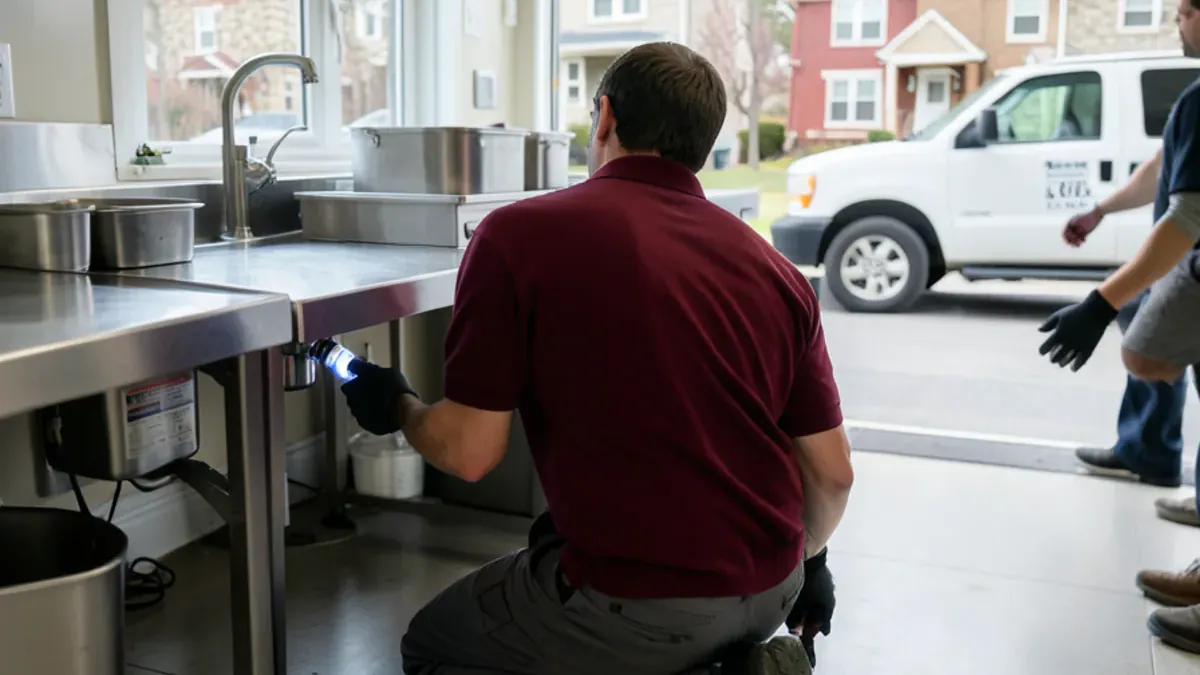
Each numbered trap is inspected and captures are logged against the site map.
Inspect product and receiving
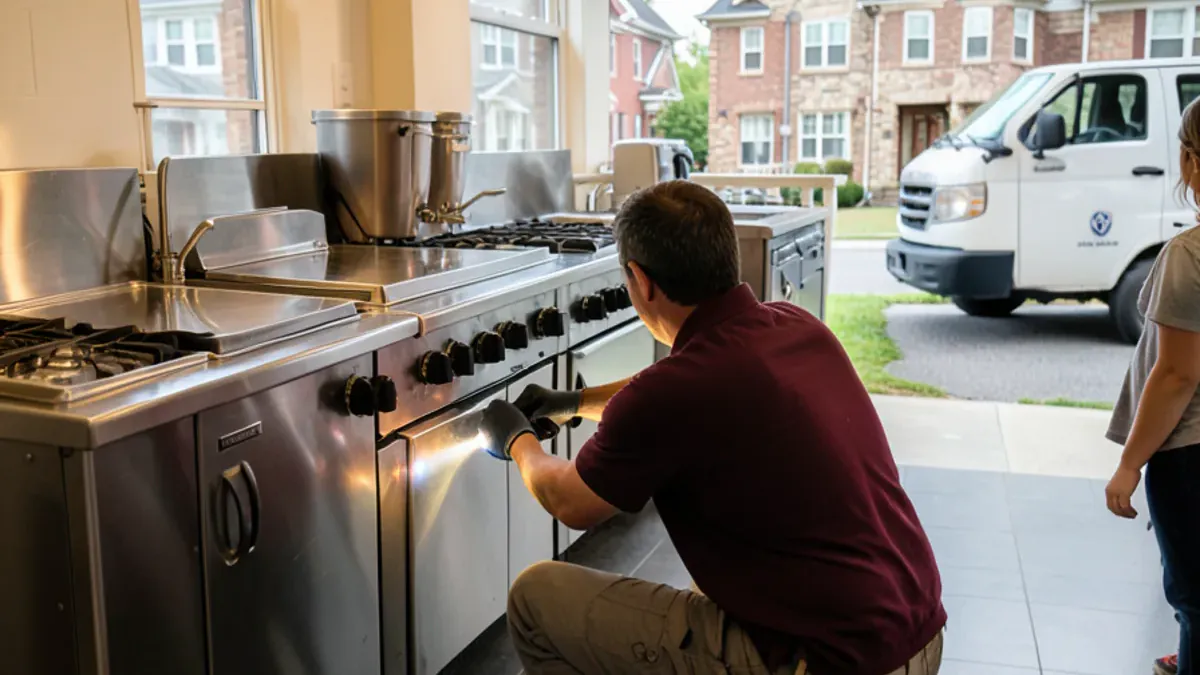
We look at staging areas, racking and returned goods for insects and rodent signs.
Note corrective actions
Damaged seals, spillage or product left too long go on the list with a recommended fix.
Update the records
The service log and device counts are updated and left with your contact.
What drives the cost of a warehouse program?
Each site gets a written quote after a free inspection. The main factors:
Layout and product type set the scope. A dry-goods distribution building with long blank walls and a handful of doors needs fewer devices than a food plant of the same size with production rooms, wash areas and a rail siding. Many food customers and audit schemes set their own expectations for device spacing and visit frequency, and those go into the quote. Older riverfront buildings in Eddystone or Marcus Hook may also need a first round of sealing at the docks and utility penetrations before routine service settles in.
- Building square footage and length of perimeter walls
- Number of dock doors and personnel doors
- How many exterior and interior devices the map needs
- Whether food or ingredients are stored or processed
- Visit frequency set by your customers or auditor
- Trend reporting and audit paperwork needs
- Sealing work around docks and utility penetrations
What our warehouse and food facility pest control includes
- Free site inspection and written quote
- Numbered exterior bait stations and interior traps
- Site map showing every device
- Stored-product insect inspection of racking and receiving
- Service log with corrective action notes
- Device activity trend summaries on recurring accounts
- Labels and safety data sheets on request
Why call No Bugs Exterminator for warehouse and food facility pest control
Rodents are core work
We specialize in controlling all insects and rodents, the two groups a warehouse program has to manage.
Weekend service days
Being open 7 days lets us schedule around receiving peaks and shift changes.
Same people each visit
Thom and his team know your device map, so trends get noticed rather than lost between technicians.
No surprises on price
A free inspection and written quote come first, so the program cost is clear before it starts.
A paper trail from day one
From the first visit every device is numbered and mapped, and each log entry ties findings to a specific door or wall section.
Where we provide warehouse and food facility pest control
Freight and storage work takes us to Tinicum Township, around Philadelphia International Airport and the Heinz refuge marsh, and to riverfront Eddystone, on the former Baldwin Locomotive site at the mouth of Crum Creek. We also cover industrial pockets in Ridley Township and the Delaware River waterfront in Chester, where rail lines, riverbanks and older buildings keep rats active year-round.
- Trainer
This riverfront borough beside the Monroe Energy refinery mixes industrial sites with homes from around 1957, and rats travel the riverbank and rail corridors between them.
- Marcus Hook
A Delaware River port town wrapped around the Marcus Hook Industrial Complex, where older waterfront buildings and freight traffic give rodents easy routes indoors.
- Lower Chichester Township
Linwood and the Route 13 corridor sit next to Marcus Hook’s refinery complex, so warehouses and shops there share rat pressure from the industrial waterfront.
- Upper Chichester Township
Commercial and light-industrial sites along the Route 322 corridor receive steady truck freight, which brings mice and stored-product insects in with pallets.
- Kennett Square
The self-described mushroom capital is ringed by growing houses and packing operations, where food handling and nearby fields keep rodent monitoring essential.
- Falls Township
The Keystone Trade Center on the former U.S. Steel site holds large industrial and logistics buildings whose dock doors and perimeters need numbered device lines.
- Darby Township
Sections near the Darby Creek tidal marsh border commercial properties close to the airport freight corridor, where Norway rats burrow along wet ground.
- Folcroft
Folcroft borders the John Heinz refuge’s tidal wetlands, so loading areas and dumpster pads nearby face steady pressure from marsh-edge rats.
What customers say on Google
4.8 out of 5 from 21 reviews on Google. Quoted as written by customers.
We use them for a year now very happy with the service for both of my businesses
Thom is a top-notch pest control specialist! And is one of the most genuine guys in the industry. He came to inspect a situation I had going on at the house, took his time, offered detailed advice, and didn’t take a penny.
Thom + his team were amazing. Very professional + provided me with a quote that made the most sense for my situation. Clearly I was not being gouged. Thom put the client first.
Warehouse and Food Facility Pest Control: common questions
Can you support a third-party food safety audit?
Yes, on the records side. We provide the device map, service logs, trend summaries, corrective action notes, and labels and safety data sheets for products used. Your auditor and the audit standard decide whether the program meets requirements, so share the pest control checklist with us early and we will tell you exactly which items we can supply before the audit date.
How do you monitor rodents in a warehouse?
With layers of numbered devices on a site map. Bait stations along the exterior walls and fence intercept rodents outside, and traps along interior walls, dock doors and personnel doors catch anything that gets in, without placing bait near product. Each visit we record activity device by device, so a problem traces back to a specific door or wall.
What trend reports do you supply?
On recurring accounts we summarize device activity over time, grouped by zone such as exterior, docks, storage and production. The summary shows whether captures are rising or falling at each area, which points to failing door seals, spillage or slow-moving stock. Alongside it, the service log lists corrective actions and whether earlier ones were completed.
How often should a warehouse be serviced?
Monthly service is common for food storage and distribution, and some customers or auditors ask for more frequent checks. A dry-goods warehouse with no food may do well on a longer interval. We recommend a frequency after the free inspection, based on what you store, how many dock doors you run and what the first round of monitoring shows.
What should receiving staff look for?
Check incoming loads for torn bags, droppings on pallets, gnawed corners, webbing in bagged goods and live insects in the trailer. Hold anything suspicious in a separate area and let us know, since one infested pallet can spread through racking. A quick look at the trailer floor before unloading catches problems while they are still on the truck.
Related services
Helpful guides from our blog
Ready to get rid of the problem?
Thom and his team serve Media, Delaware County and southeastern Pennsylvania, open 7 days, 8 a.m. to 7 p.m..
- ★ 4.8 from 21 Google reviews
- Open 7 days, 8 a.m. to 7 p.m.
- Free inspection before treatment
- Family-run, based in Media, PA
Open 7 days, 8 a.m. to 7 p.m.