
Common Spiders in Pennsylvania Homes
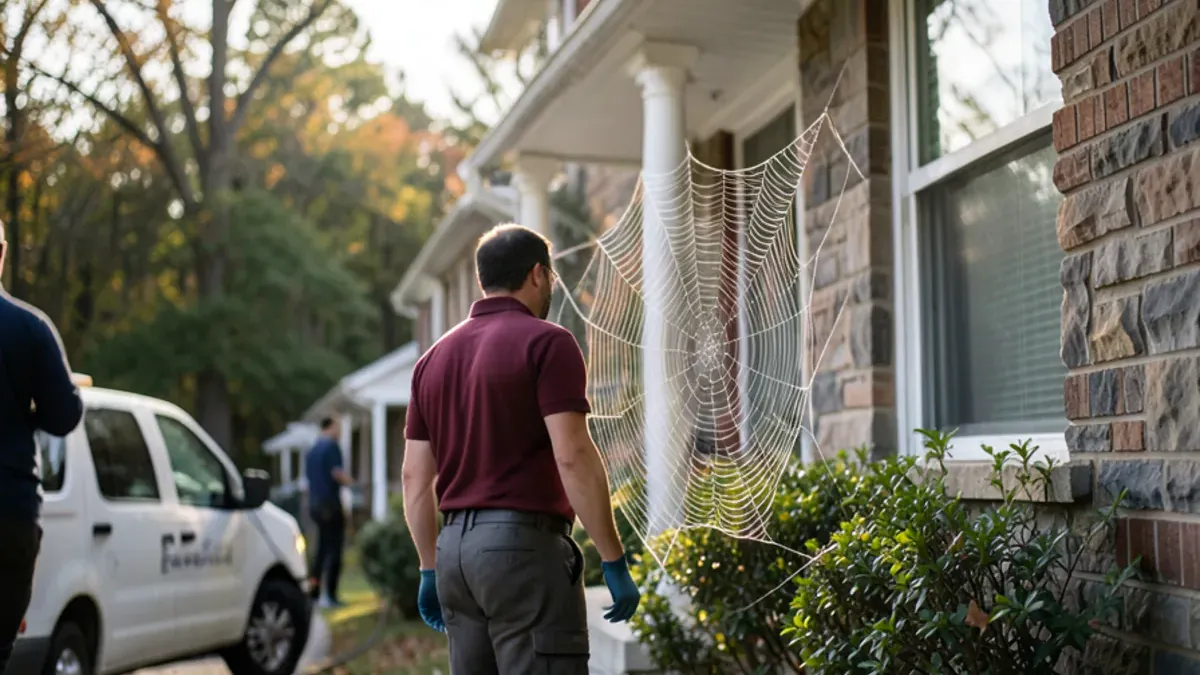
Getting the species right matters, because most spider worry comes from mistaken identity. Brown recluses are rarely found in southeastern Pennsylvania, and most spiders reported as recluses turn out to be wolf spiders or other brown hunters. Houses near creeks also get dark fishing spiders, big enough to span a palm, which look alarming but are harmless to people, and from August on orb weavers hang wheel-shaped webs across porches and shrubs.
Most spiders in Delaware County houses are harmless to people and actually eat other pests. Five turn up on our inspections far more than any others:
| Spider | How to recognize it | Where it turns up | Concern |
|---|---|---|---|
| Common house spider | Small, brownish gray, builds tangled cobwebs | Ceiling corners, behind furniture, window frames | Nuisance webs and egg sacs |
| Cellar spider | Tiny body on very long, thin legs | Basements, crawlspaces, garages | Nuisance; vibrates in its web when disturbed |
| Wolf spider | Large, hairy, brown with stripes; hunts on the floor without a web | Basement floors, garages, window wells | Startling size; bites are rare |
| Black widow | Glossy black with a red hourglass under the abdomen | Woodpiles, sheds, stone walls, meter boxes | Venomous; do not handle |
| Yellow sac spider | Pale yellow-green, roams at night | Ceiling corners, behind pictures, folded fabric | May bite if trapped against skin |
What Draws Spiders Into Basements, Garages and Window Wells?
Spiders go where the food is. Damp basement corners attract silverfish, centipedes, crickets and gnats, and spiders follow them in. Window wells collect leaves and moisture and act as a funnel into the house, while garages left open in the evening let in moths drawn to the light.
Location adds pressure. Homes in Upper Providence, Edgmont and Rose Valley back onto the woods around Ridley Creek State Park, and Haverford houses line the wooded banks of Darby Creek. Leaf litter, stone walls and woodpiles in those yards hold large outdoor spider populations that wander toward warm foundations as the nights cool.
Signs Spiders Have Settled In, and When They Peak Here
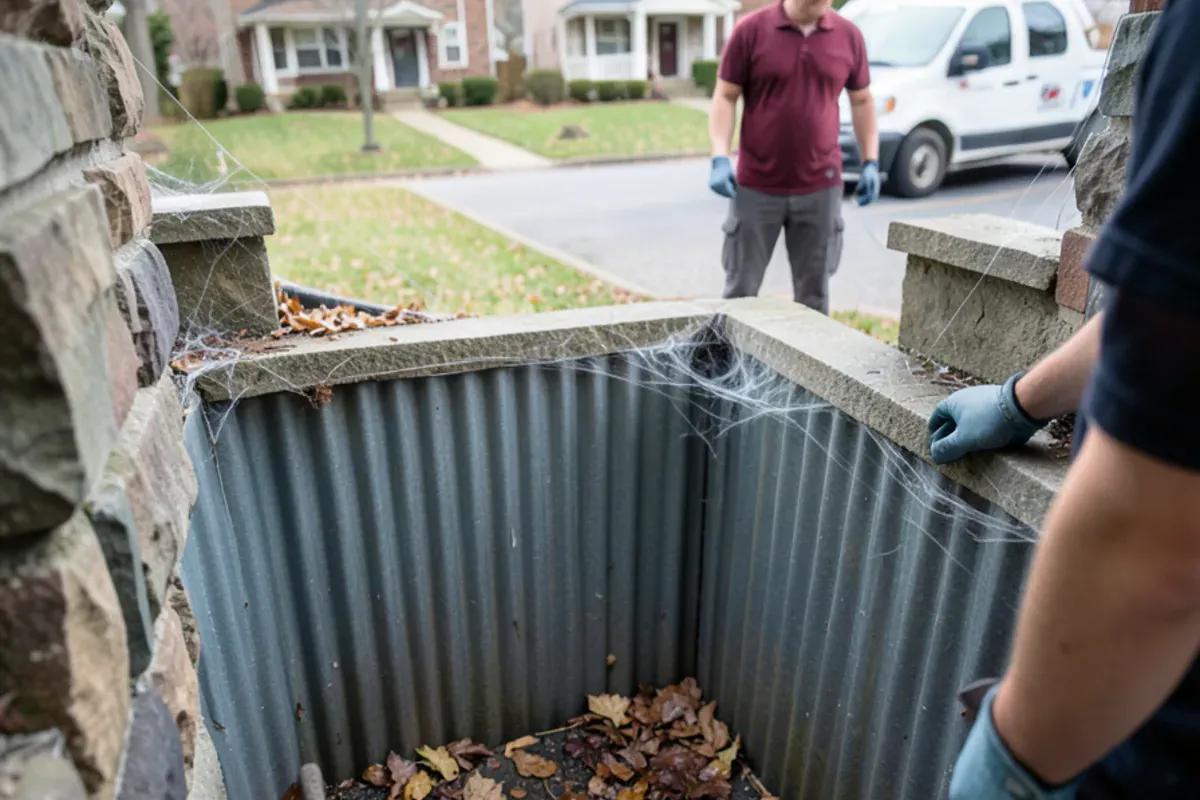
Around Delaware County, indoor spider sightings climb from late August through October, as males wander in search of mates and cooling nights push hunters toward the foundation, then ease off in winter. Homes near Crum, Ridley and Darby creeks see them earlier and longer, because the damp ground there breeds the midges, crickets and moths that spiders hunt.
A few spiders in early fall are normal for any house near trees. These signs say a population has moved in for good:
- Cobwebs that return to the same basement corners within a week of vacuuming
- Round, papery egg sacs tucked into floor joists, window frames or the back of storage shelves
- Wolf spiders in the tub or sink most mornings, which means they are hunting basement floors overnight
- Webs packed with dead moths and gnats around porch lights and garage doors
- Coarse, messy webs low in a woodpile, shed corner or meter box, typical of black widows
Are the Spiders the Problem, or the Insects They Eat?
Often it is the insects. A basement draped in cobwebs usually means a steady supply of prey: silverfish in cardboard boxes, centipedes along the slab, flies near a sump pit. Treating spiders alone buys a few clean weeks, while treating the prey and the moisture behind it keeps the webs from coming back.
We look at the whole picture on the inspection. Spiders crowd the same window frames and soffits where stink bugs push in each fall, so sealing those gaps helps with both. Wolf spiders and fleas both favor shady, overgrown yard edges, and if your pets are scratching too, ask about flea control during the same visit.
Spider Exterminator Options, From Web Removal to Sealing
A spider exterminator has several tools, and each solves a different part of the problem:
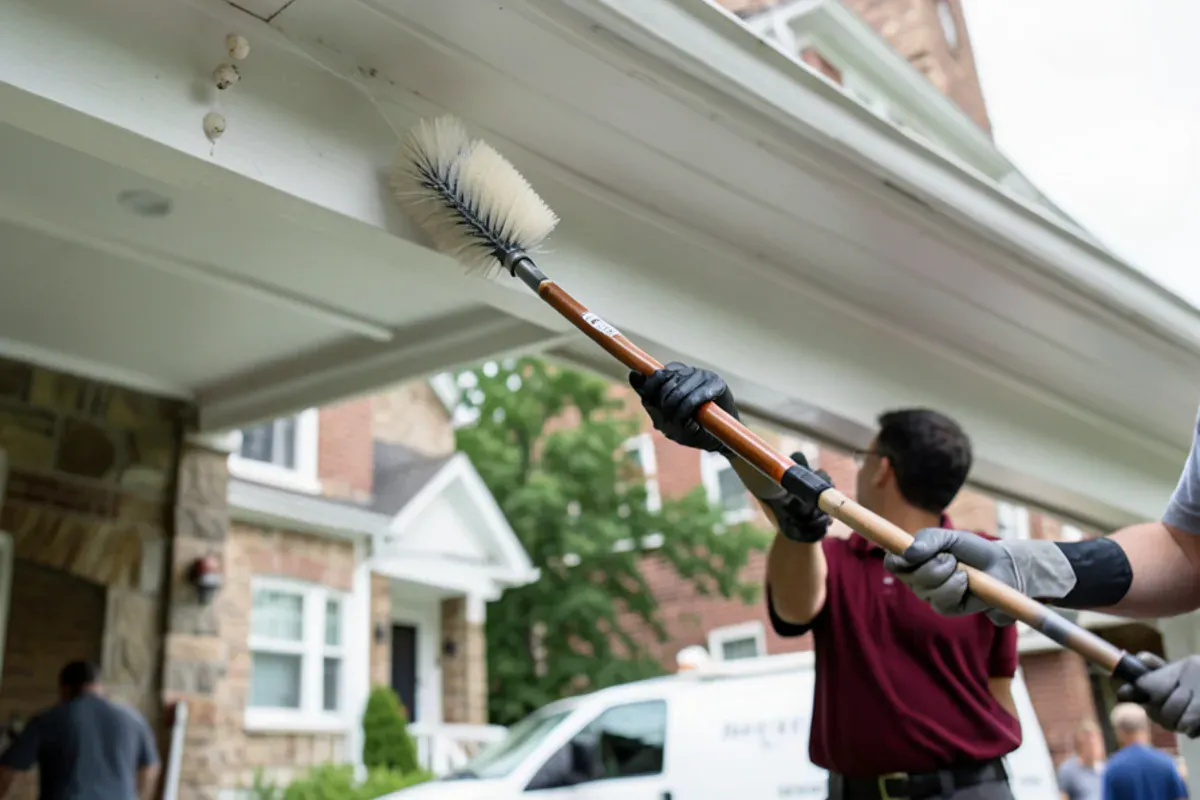
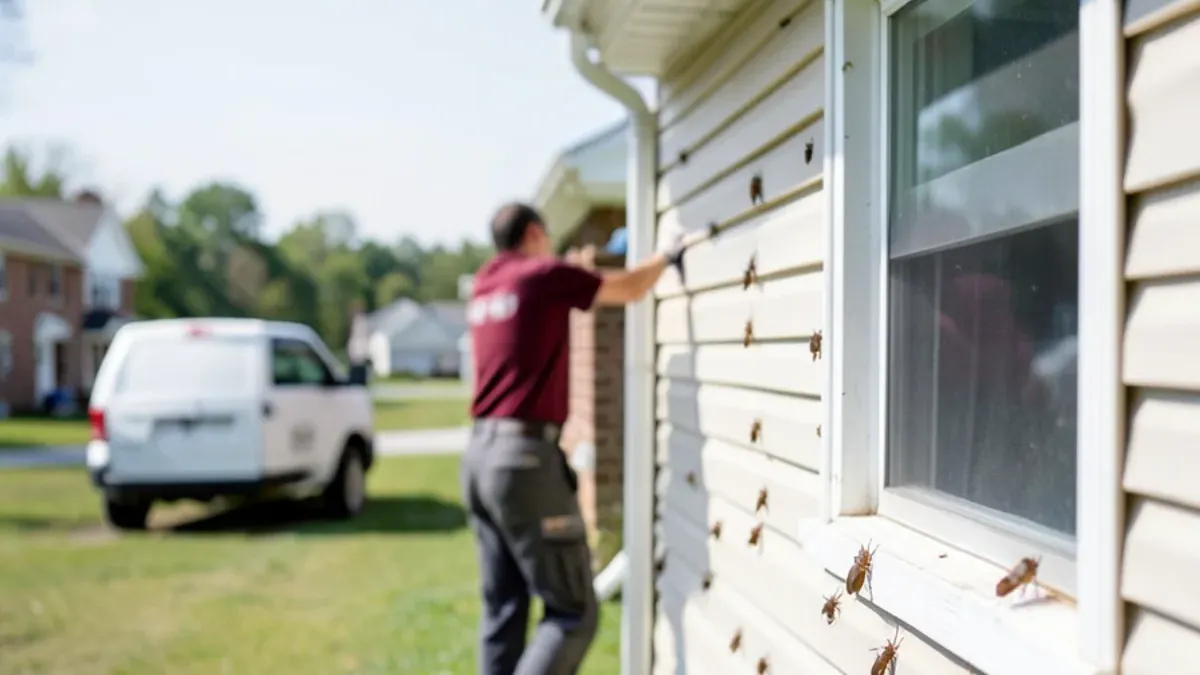
- Web and egg sac removal: we sweep webs and sacs from eaves, porch ceilings, basement joists and window frames. You see the result right away, but it does nothing about spiders that hunt without webs.
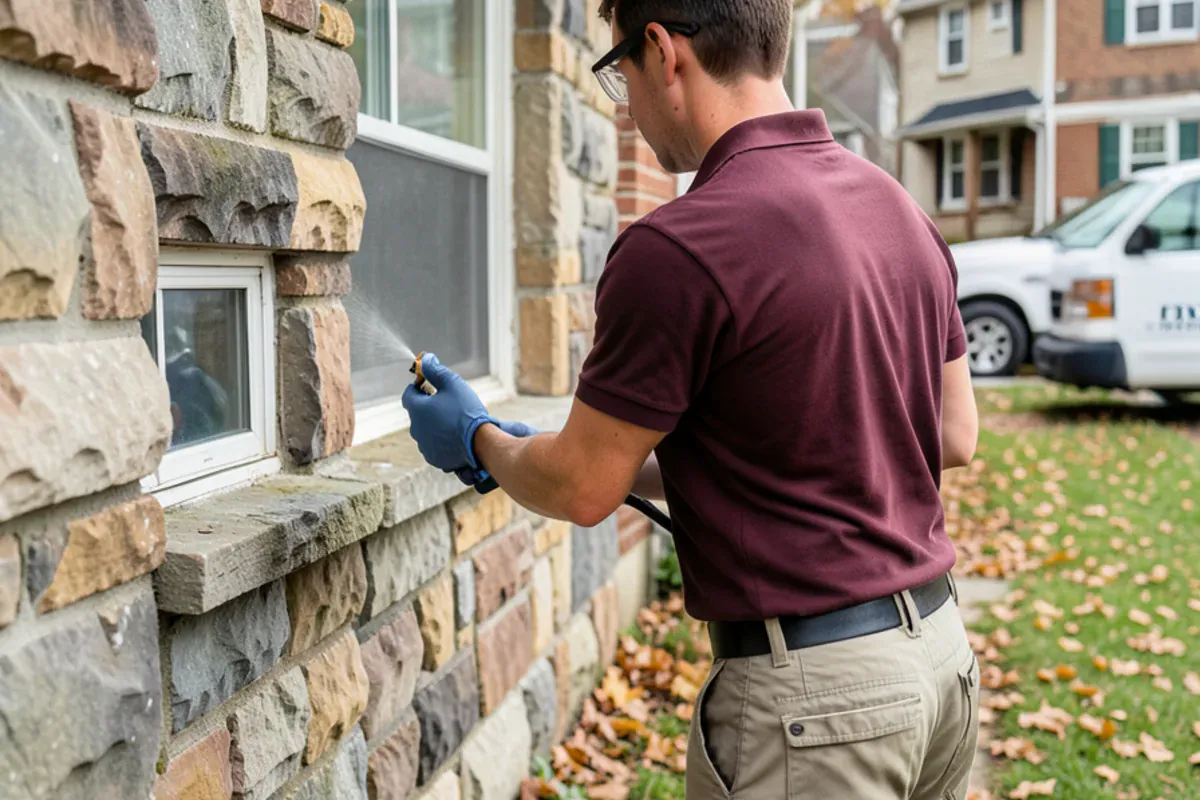
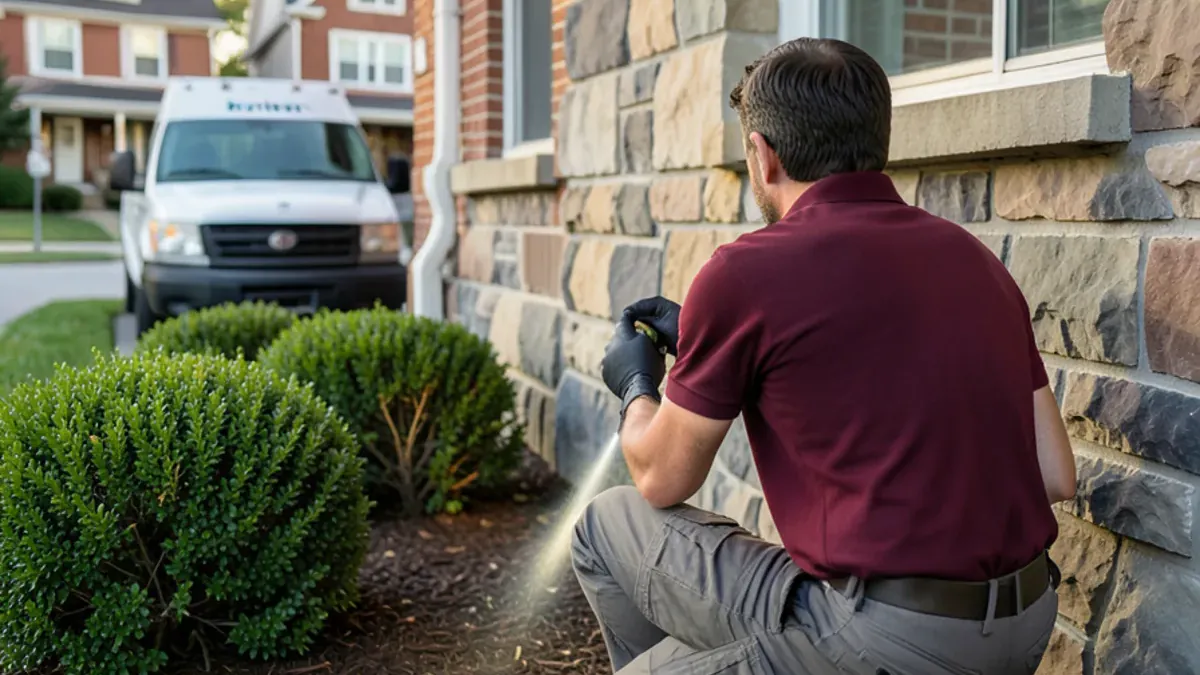
- Exterior perimeter treatment: a band along the foundation and around windows, doors, soffits and vents. It catches wandering spiders and the insects they eat; weather wears it down over a season.
- Interior crack-and-crevice treatment: aimed at basement edges, sill plates and utility penetrations. It reaches hunters like wolf spiders, and we keep it off open living-area surfaces.
- Sticky monitors: low-profile traps along basement walls show which spiders and insects are active. They catch some but do not control a population on their own.
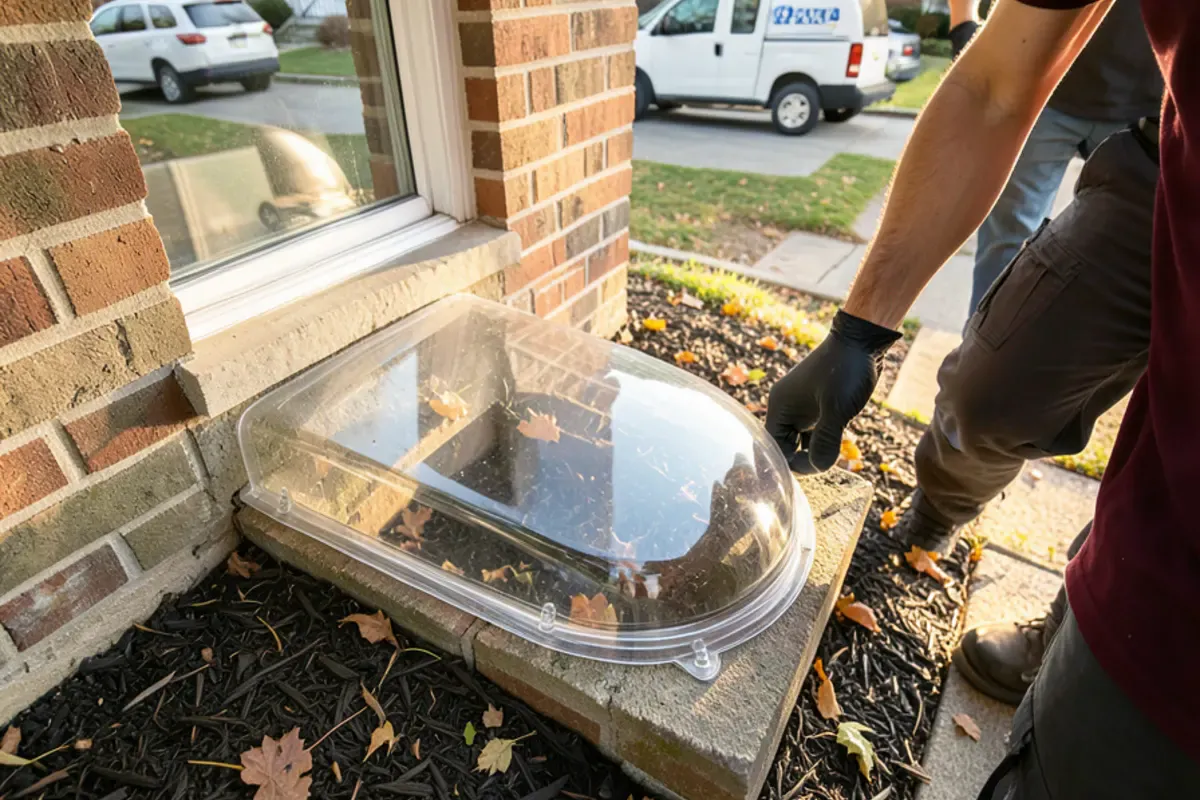
- Sealing and moisture fixes: door sweeps, window well covers, caulk at sill plates and a dehumidifier. Slower to put in place, but the longest-lasting fix of the five.
Talk to us about spider control
Call and speak with Thom or his team. The inspection is free, and you get a written quote before any treatment.
- ★ 4.8 from 21 Google reviews
- Open 7 days, 8 a.m. to 7 p.m.
- Free inspection before treatment
- Family-run, based in Media, PA
Open 7 days, 8 a.m. to 7 p.m.
How a Spider Control Visit Runs
A first visit takes in the outside of the house as well as the rooms where you see spiders.
Walk-through
We start where you see webs or spiders, then check the basement, garage, window wells and exterior walls.
Name the spiders and their prey
We identify the species and the insects feeding them, and check woodpiles, sheds and meter boxes for black widows.
Written quote
You receive the scope and price in writing before any treatment.
Web sweep
Webs and egg sacs come down from eaves, porch ceilings and interior corners within safe reach.
Treatment
An exterior perimeter band plus targeted interior work at entry points and basement edges.
Sealing advice
We point out the gaps, window wells and lighting changes that will cut down on returning spiders.
Spider Control Cost: What Moves the Number
Around Media, the setting changes the scope more than the spider does. A house that backs onto the Ridley Creek State Park tree line or the Crum Woods has a long exterior edge facing the habitat, so the perimeter band runs wider and often needs renewing each season. A rowhome in eastern Delaware County usually means a short front and back wall plus one basement, which keeps the job compact.
Two details add time on any property. Black widows in a stone retaining wall, shed or meter box call for a careful search of each spot before treatment, and three-story Victorians with high porch ceilings take longer to clear of webs and egg sacs.
We give you the figure in writing after walking the property. It depends on:
- Home size and the length of foundation to treat
- Height of the eaves, porches and soffits that need web removal
- Finished or unfinished basement, garage and crawlspace areas
- Whether black widows or a heavy population are present
- Wooded or creekside lots that need wider exterior coverage
- A one-time cleanup versus seasonal visits
Spider Treatments Under Pennsylvania's Pesticide Control Act
Spider products applied around a house for pay are regulated by the Pennsylvania Department of Agriculture (PDA) under the Pesticide Control Act of 1973. The agency licenses each pest control business, certifies the applicators responsible for treatments and, through 7 Pa. Code § 128.31, has businesses display their license number on the vehicles they use. Ask for that number before anyone starts on your foundation.
The product label is the other rulebook. Outdoor spider products carry label limits on spraying hard surfaces that drain to storm sewers and on use near water, which matters for homes beside Crum or Ridley Creek. Indoors, labels restrict where products can go in rooms that people and pets use, which is why our interior work stays in cracks and voids.
How to Keep Spiders From Coming Back
Treatment knocks the population down within days, and the exterior band keeps working for weeks after. Whether spiders return depends on what changes around the house. Homes on wooded lots often do better on a quarterly pest control plan that renews the exterior band each season.
- Swap white porch and garage bulbs for yellow or warm-toned LEDs that attract fewer night insects
- Cover window wells and clear leaves out of them every fall
- Stack firewood away from the house and off the ground, and wear gloves when moving it
- Run a dehumidifier to starve the basement of silverfish and centipedes
- Vacuum webs and egg sacs regularly rather than crushing them
- Fit door sweeps on garage and basement doors
What our spider control includes
- Free inspection of basement, garage, window wells and exterior
- Identification of spider species and the insects feeding them
- Black widow check at woodpiles, sheds and meter boxes
- Web and egg sac removal within safe reach
- Exterior perimeter treatment around the foundation and openings
- Targeted interior treatment at basement edges and entry points
- Written list of sealing and lighting changes
Why call No Bugs Exterminator for spider control
Close to the woods
Our Media base is close to the wooded creek valleys where homes see the heaviest spider pressure.
Free look first
We identify the spiders and their prey at no charge, then put the quote in writing.
Seven-day scheduling
Spider season peaks in fall, and we book visits from 8 a.m. to 7 p.m. every day of the week.
Houses and storefronts
We clear webs and treat spiders on homes as well as offices, shops and other commercial buildings.
Quick help for a black widow
Same-day visits are often possible when the schedule allows — call early in the day if a black widow has turned up near a door, sandbox or play area.
Where we provide spider control
Spider calls cluster where houses meet the woods. In Upper Providence and Edgmont, backyards run straight into the Ridley Creek State Park tree line. Rose Valley homes sit in deep woods full of stone walls and leaf litter, and Haverford Township houses along Darby Creek, many built around 1950, have damp basements that keep spiders well fed.
- Swarthmore
The Crum Woods wrap this borough of large pre-war homes, so orb weavers on porches and wolf spiders in old stone basements are routine calls.
- Thornbury Township (Delaware County)
Large-lot Glen Mills and Cheyney homes beside open fields get grass spiders and wolf spiders hunting their way toward garages each fall.
- Chadds Ford Township
Homes along the Brandywine and the Route 1 corridor sit among stone walls and outbuildings where black widows and cellar spiders settle.
- Middletown Township (Delaware County)
Wooded lots around Glen Riddle, Lima and Wawa, with a 1977 median build year, put leaf litter and woodpiles close to basement window wells.
- Villanova
Large estate homes off Spring Mill Road have tall eaves, porches and outbuildings that collect webs and egg sacs out of a homeowner's reach.
- Bethel Township
1990s subdivisions on former farmland near Booths Corner border hedgerows and fields that send spiders and their insect prey toward new foundations.
- Tinicum Township
The Heinz refuge marsh breeds midges and bright airport-area lighting draws moths, so spiders string heavy webs on Essington homes to catch both.
- Ridley Park
Victorian houses around Ridley Park Lake have deep porches and damp basements near the water, prime ground for fishing spiders and cellar spiders.
- Nether Providence Township
Wallingford and Garden City homes beside Smedley Park and Crum Creek see a long fall spider season fed by the creek's insects.
What customers say on Google
4.8 out of 5 from 21 reviews on Google. Quoted as written by customers.
No Bugs Exterminator is the best I have seen. The owner is the nicest person in the world, he doesn’t rush anything, and is very thorough in job.
Very happy with the service, they helped me quickly to control the problem.
Thom is a top-notch pest control specialist! And is one of the most genuine guys in the industry. He came to inspect a situation I had going on at the house, took his time, offered detailed advice, and didn’t take a penny.
Spider Control: common questions
Are any spiders in Pennsylvania dangerous?
Only one is a real concern: the northern black widow, which hides in woodpiles, sheds and stone walls. Its bite is venomous, and anyone who has a severe reaction should seek medical care. Brown recluses are rarely found here. Wolf spiders and yellow sac spiders can bite if trapped against skin but are not considered dangerous. We check for black widows on every exterior inspection.
Why do I see more spiders in basements in fall?
Mostly because males are out looking for mates. Many house spiders and wolf spiders mature in late summer, and the males roam floors and walls searching for females, which is why they end up in tubs, sinks and basement floors. Cooling nights also push outdoor spiders toward the warmth of the foundation. Around Delaware County this peak usually runs from September into October.
Does spraying stop spiders for good?
No single spray does. A perimeter treatment cuts spider numbers for weeks to a season, but new spiders arrive from the yard and woods as long as there are insects to eat and gaps to slip through. Lasting control comes from pairing treatment with web removal, sealing and moisture control. Homes next to wooded creek lots usually need the exterior renewed each season.
Will you remove webs from high eaves and porches?
Yes, within safe reach. During the visit we sweep webs and egg sacs from eaves, porch ceilings, soffits, basement joists and window frames, then treat those spots so new webs go up more slowly. Some very high gables on tall homes may be beyond what we can reach safely, and we will tell you that during the inspection rather than on the day of service.
How do you handle spider treatment around kids and pets?
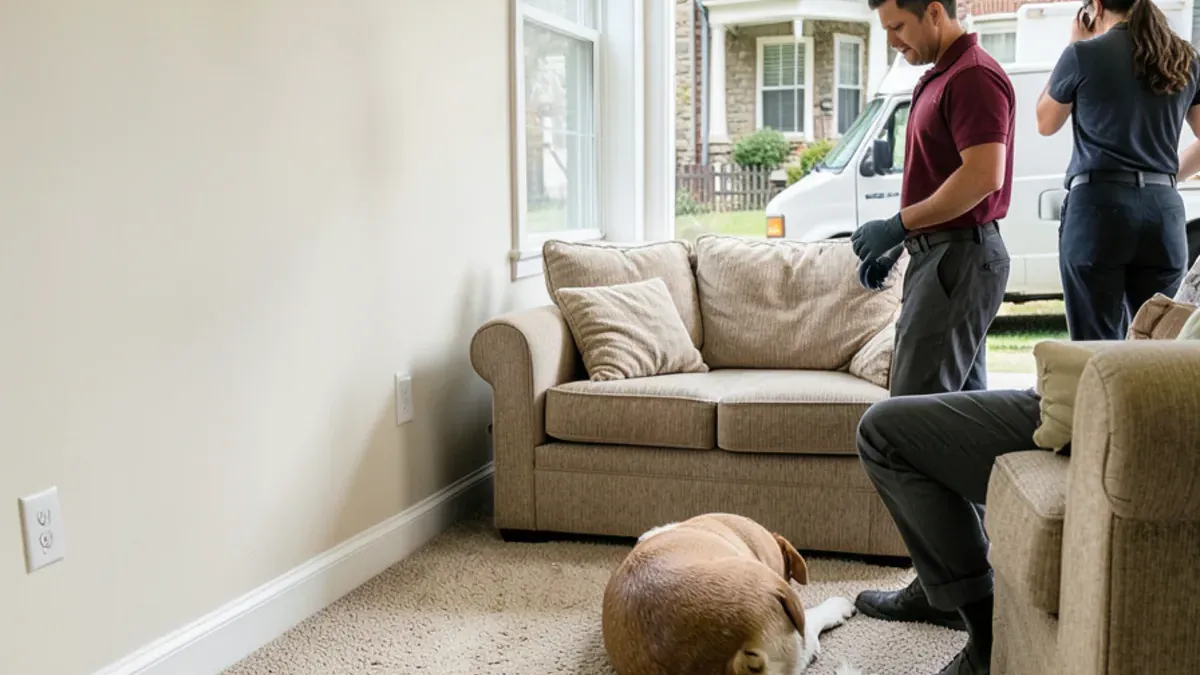
We keep it targeted. Interior applications go into cracks, sill plates and basement edges rather than open floors, and exterior work stays on the foundation and around openings. We ask that children and pets stay off treated areas until they are dry, and before leaving we show you exactly where product was applied so there are no surprises.
Related services
Helpful guides from our blog
Ready to get rid of the problem?
Thom and his team serve Media, Delaware County and southeastern Pennsylvania, open 7 days, 8 a.m. to 7 p.m..
- ★ 4.8 from 21 Google reviews
- Open 7 days, 8 a.m. to 7 p.m.
- Free inspection before treatment
- Family-run, based in Media, PA
Open 7 days, 8 a.m. to 7 p.m.