
Signs of Fleas on Carpet, Furniture and Pets
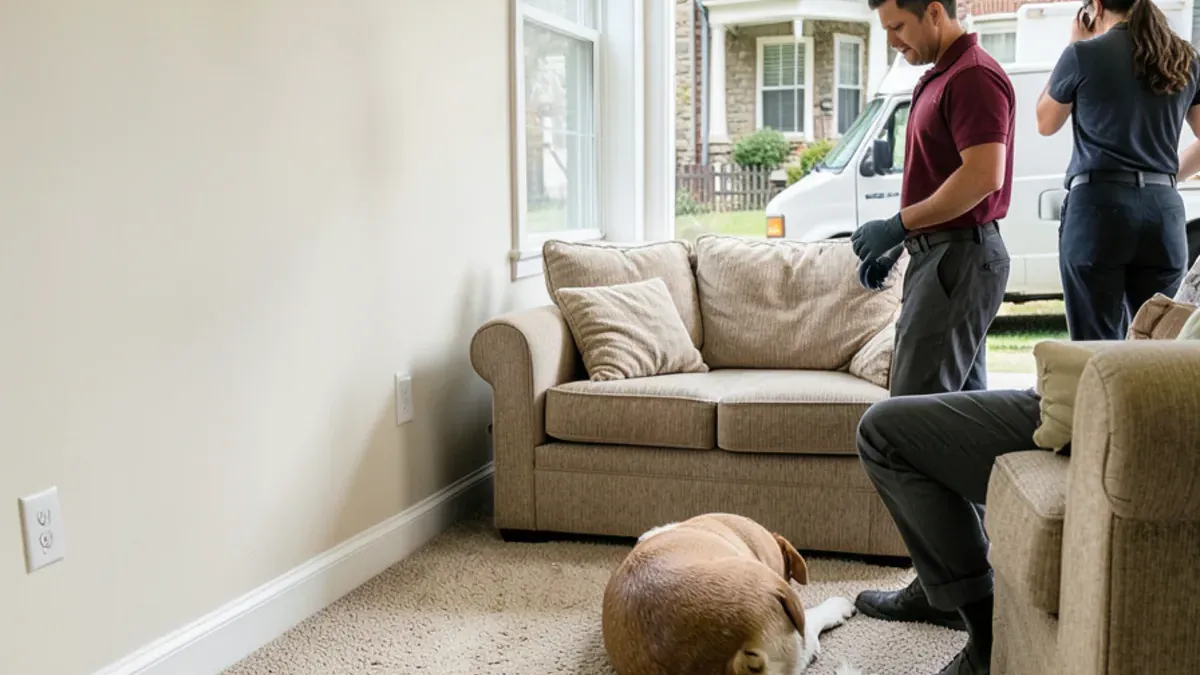
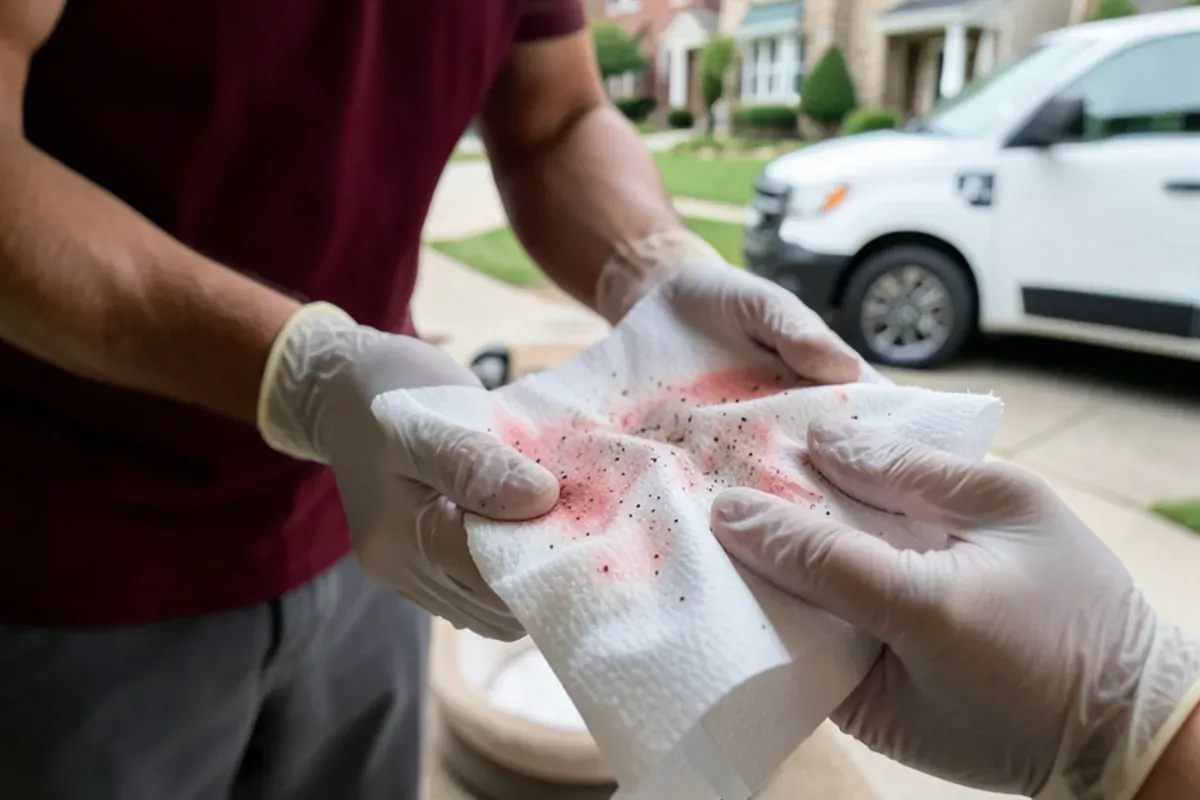
Bites usually come first: small, itchy red bumps on ankles and lower legs, often in clusters. Pets scratch, chew at the base of the tail or lose patches of fur. On carpets and pet bedding you may find tiny dark specks of flea dirt that turn reddish when dabbed onto a damp white paper towel.
For a quick test, walk slowly across the carpet in white socks pulled up to the knee. Fleas jump on and stand out against the white. Activity is usually heaviest where pets sleep, along sofa edges and in carpet near doorways.
Where and when you get bitten also helps separate fleas from other biters. Flea bites cluster below the knee and show up after time in a carpeted room or the yard, while bed bug bites tend to appear on arms, neck and shoulders after a night in bed. Around Delaware County, flea calls climb from July into September, when warm, humid weather speeds larval growth, though a heated house can keep a population going into winter.
How Do Fleas Get Into a House Without Pets?
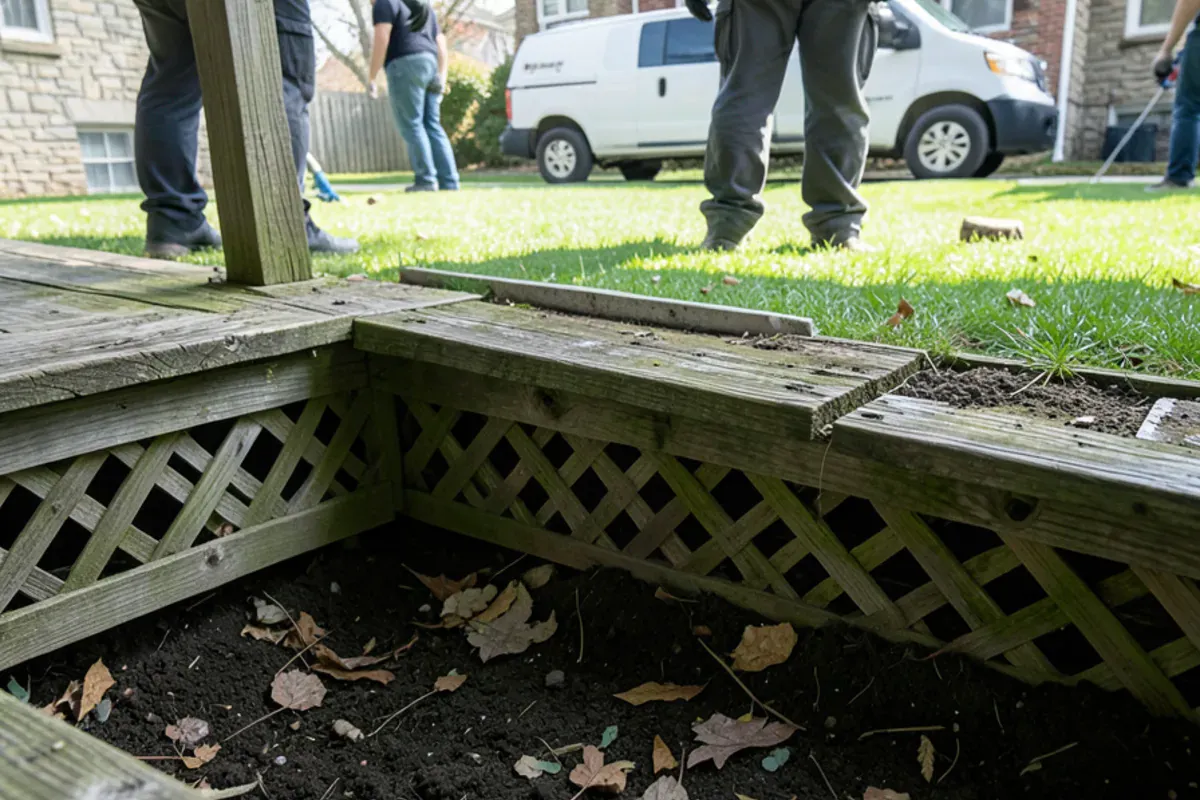
Fleas come from animals, just not always yours. Squirrels, raccoons, groundhogs, opossums and stray cats carry them into yards, under decks and porches, and into crawlspaces. Larvae develop where those animals rest, and the next warm stretch brings out hungry adults that jump onto whoever walks by.
Moving into a rental or a newly bought house is another common route. Pupae can sit dormant in carpet for weeks after a previous occupant's pet leaves, then hatch at once when footsteps and body heat signal that a host is back. With so many rentals across eastern Delaware County, we see this pattern after summer move-ins.
The Flea Life Cycle, and Why One Treatment Is Never Enough
Adult fleas on your pet are only a small slice of the population. The rest, as eggs, larvae and pupae, live in carpets, upholstery, pet beds and shaded yard soil. Eggs fall off the animal and hatch within days, larvae burrow deep into carpet fibers, and pupae spin a sticky cocoon that resists most insecticides.
So we pair an adult-killing treatment with an insect growth regulator that stops eggs and larvae from developing. The cocoon stage is the gap: pupae keep hatching for roughly two weeks and die once they touch treated surfaces, which is why your vacuuming matters so much.
Getting Your Home Ready for Flea Treatment
Good prep lets the treatment reach the carpet base, where larvae live. Before we arrive:
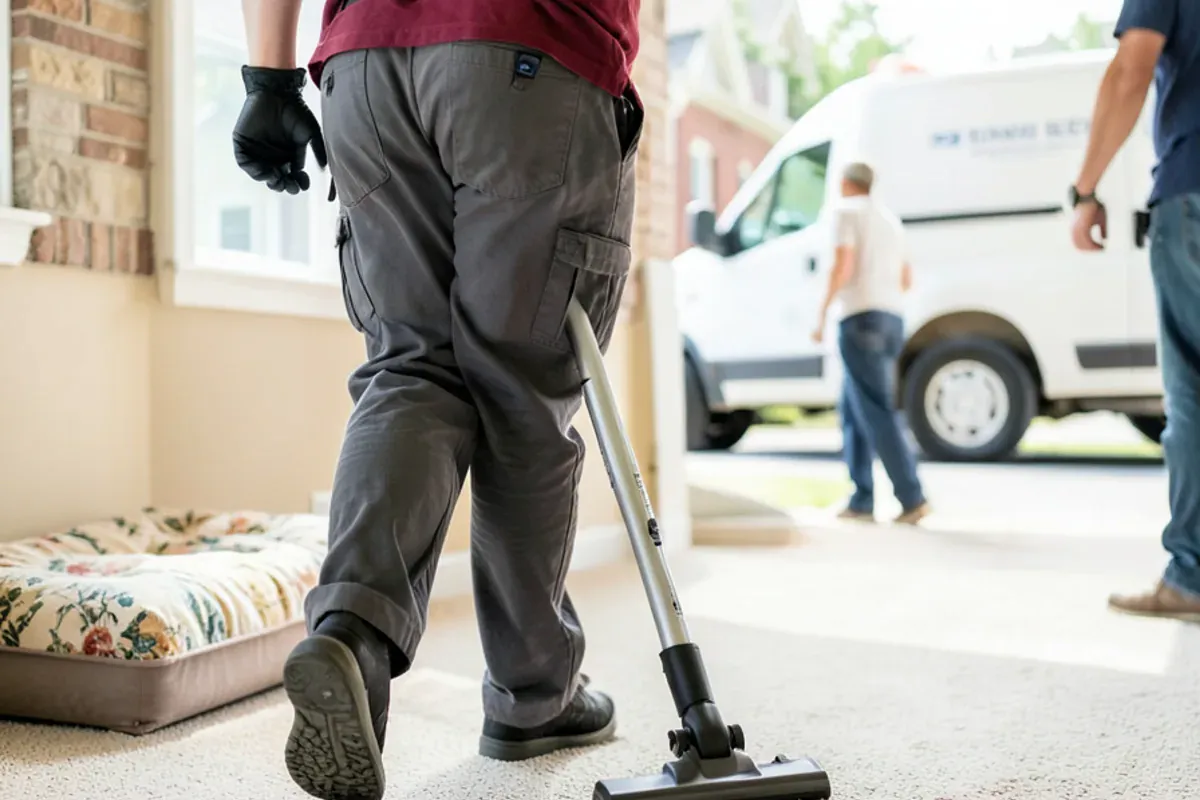
- Vacuum every carpet, rug, upholstered chair and sofa, including under cushions and along baseboards, then empty the canister or toss the bag outside
- Wash pet bedding, throw blankets and washable rugs in hot water and dry them on high heat
- Pick up toys, shoes and clothing so every floor surface can be treated
- Arrange your pet's flea treatment through your veterinarian for the same week
- Plan for people and pets to stay out of treated rooms until surfaces dry
Flea Products, Pet Labels and Pennsylvania Pesticide Rules
Two sets of rules meet on a flea job. The products applied to carpets, furniture and yards are pesticides used for hire, which Pennsylvania regulates through the Pesticide Control Act of 1973. The Department of Agriculture (PDA) licenses the business and certifies the applicator, so before treatment you can ask for the company's PDA license number and the name of the person applying.
What goes on your dog or cat is a separate matter for your veterinarian. Spot-ons, collars and oral flea medicines are labeled for the animal, indoor flea sprays are labeled for surfaces, and one is never a stand-in for the other. Surface product labels also set how long people and pets stay off treated carpet, which is where the dry time we give you comes from.
Talk to us about flea control
Call and speak with Thom or his team. The inspection is free, and you get a written quote before any treatment.
- ★ 4.8 from 21 Google reviews
- Open 7 days, 8 a.m. to 7 p.m.
- Free inspection before treatment
- Family-run, based in Media, PA
Open 7 days, 8 a.m. to 7 p.m.
Flea Control in Delaware County Homes, Visit by Visit
Every flea job follows the same pattern, whether the source was your pet or a former tenant's.
Inspection
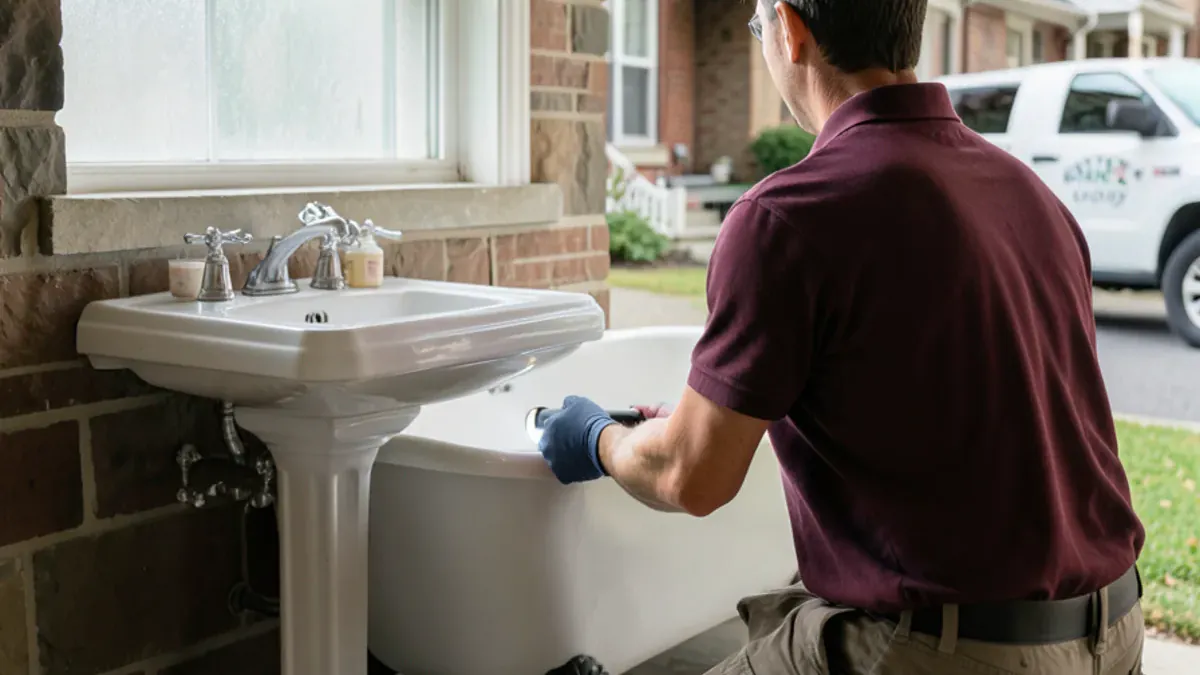
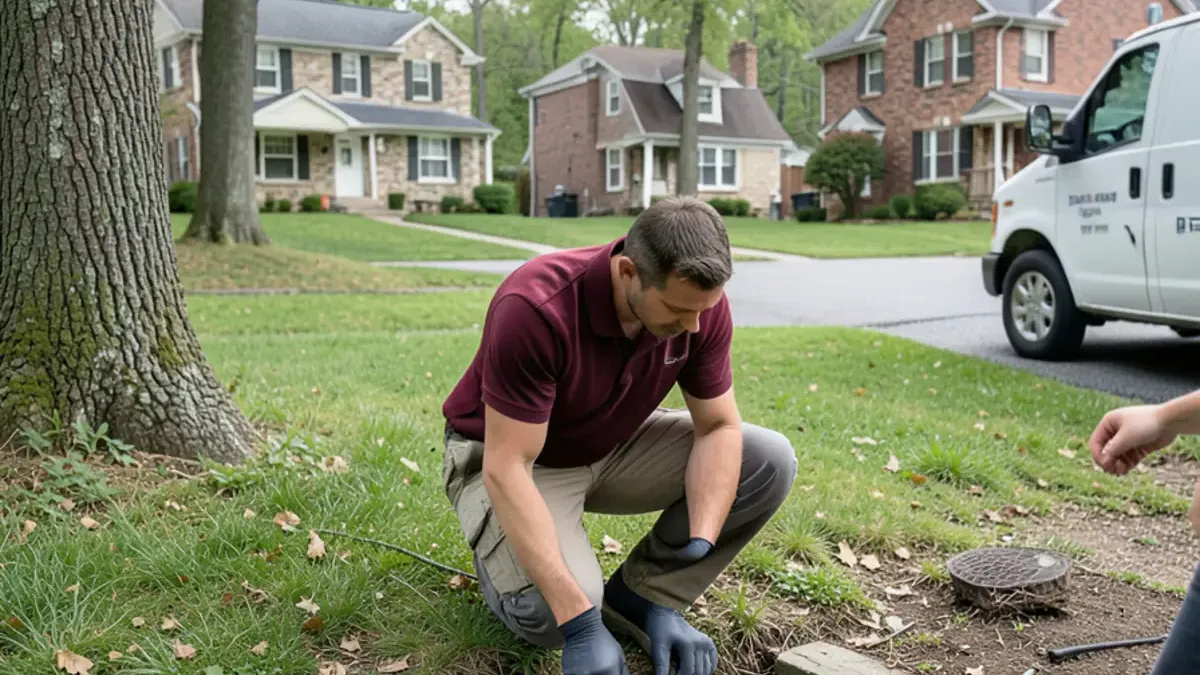
We check pet resting spots, carpets, furniture, the basement and crawlspace, then look outside for shaded places where pets or wildlife lie down.
Written quote
You see which rooms, furniture and yard areas we plan to treat, in writing, before we start.
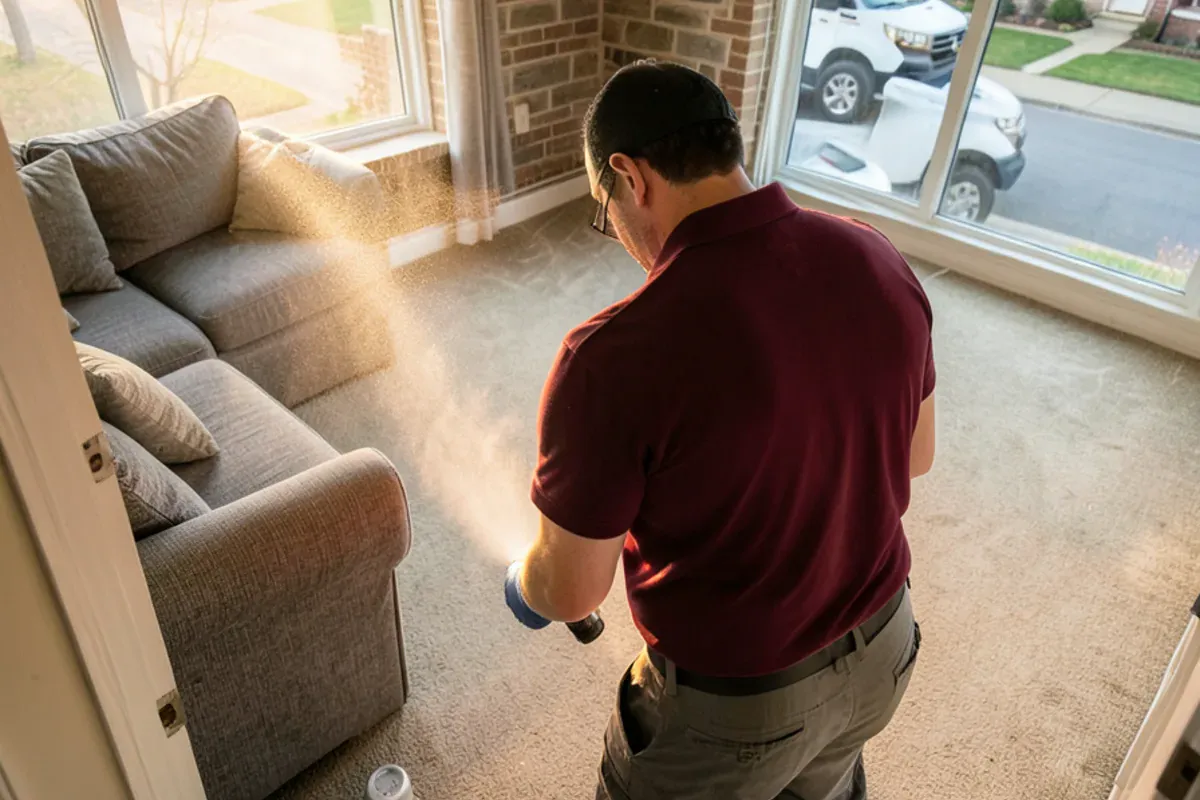
Interior treatment
Carpets, rugs, under furniture and along baseboards receive an adult-killing product plus an insect growth regulator.
Yard treatment where needed
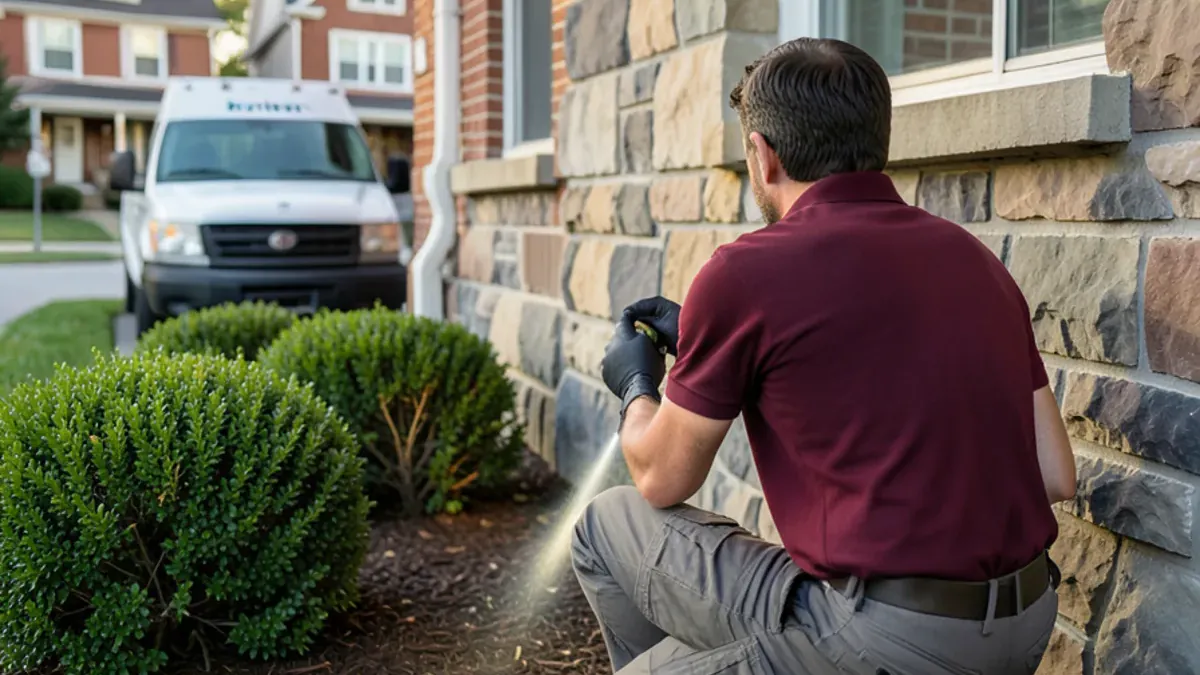
Shaded areas, the ground under decks and porches, dog runs and fence lines get a targeted outdoor application.
Dry time
People and pets stay out until treated surfaces are dry, and we tell you how long that should take in your home.
Follow-up
About two weeks later, once the last pupae have hatched, we check back and retreat if activity continues.
When Does a Flea Yard Treatment Make Sense?
Not every flea job needs the yard. If your pet stays indoors, or the problem traces back to a former tenant's pet, interior work alone may be enough. The outdoors matters when pets spend time in the yard, when wildlife lives under a deck or shed, or when fleas return after an indoor-only treatment.
Outdoor fleas need shade, moisture and an animal host, and they do not last long in full sun on short grass. We treat where they actually live, under decks and porches, along shaded fence lines, in dog runs and beneath shrubs, rather than spraying the whole lawn.
Damp crawlspaces that hold flea larvae often hold centipedes and millipedes as well, and humid basement storage rooms can harbor silverfish. We point out both if we see them.
What Sets Flea Exterminator Cost?
Around Delaware County, the flooring and the source shape a flea quote. A garden apartment with wall-to-wall carpet is mostly interior work, while a Lansdowne twin with a porch, a shady side yard and a groundhog under the deck needs outdoor treatment too, plus a conversation about keeping that animal out. Hardwood floors with a few area rugs take less product than fully carpeted rooms, but the gaps between old floorboards can hold larvae and need attention.
How long the fleas have been breeding matters as well. A problem caught the week after move-in is usually smaller than one that has run for a month through two or three pets, which more often needs the full follow-up visit rather than a quick check.
Pricing follows the free inspection as a written quote. The main factors:
- Number of rooms and floors with carpet or upholstered furniture
- Whether the yard, deck or crawlspace needs treatment too
- How long fleas have been established and how many pets live in the home
- Whether wildlife under a porch or deck is feeding the problem
- Number of follow-up visits
The Two Weeks After Flea Treatment
Expect to see some fleas for 10 to 14 days. They are new adults emerging from cocoons that were protected during treatment, and they die after contacting treated surfaces. Vacuum daily during this stretch, because vibration coaxes pupae to hatch sooner and the vacuum pulls up eggs and larvae.
Hold off on shampooing carpets for at least two weeks, keep your pet on the flea product your veterinarian recommends, and wash pet bedding weekly. Fleas still active after the follow-up usually point to an untreated pet, wildlife outside or a missed room.
What our flea control includes
- Free inspection of pet areas, carpets, furniture, basement and yard
- Written quote listing every room and outdoor area to be treated
- Adult flea treatment for carpets, rugs and under furniture
- Insect growth regulator to stop eggs and larvae from developing
- Targeted yard treatment under decks, porches and shaded areas when needed
- Prep checklist and aftercare timeline
- Follow-up check after the pupae have hatched
Why call No Bugs Exterminator for flea control
Free inspection before anything
We confirm it is fleas, not another biting pest, and put the plan and price in writing.
Open every day
Flea bites often get noticed on weekends, and we take calls from 8 a.m. to 7 p.m., seven days a week.
Family-run in Media
Thom and his team serve Delaware County first, along with Chester, Montgomery and Bucks counties and Philadelphia.
All insects, one call
We specialize in controlling insects and rodents, so if the inspection turns up something besides fleas, we can address that too.
Before the move-in
Same-day visits are often possible when the schedule allows — call early in the day. Treating an empty rental before furniture arrives makes the carpet work far easier.
Where we provide flea control
Fleas turn up all over Delaware County, but two situations repeat. In Drexel Hill, including the large Drexelbrook apartment community, and in Woodlyn, rentals turn over often and dormant pupae greet new tenants. In Lansdowne and Ridley Township, older homes with porches, decks and creekside yards give squirrels and other wildlife sheltered spots to drop flea eggs.
- Darby Township
Briarcliffe, one of the township's two separate sections, sits near the Darby Creek tidal marsh, where raccoons, groundhogs and stray cats bring fleas into yards.
- Folcroft
Homes bordering the John Heinz refuge share their fence lines with wildlife, so fleas often arrive under decks and sheds before pets bring them inside.
- Norwood
Yards bounded by Darby and Muckinipattis creeks give groundhogs and opossums shaded cover under porches, a common start for household flea problems.
- Prospect Park
With 42% of homes rented in this rail borough, dormant flea pupae left by a previous tenant's pet are a frequent move-in surprise.
- Lima
Apartments make up most of the housing near Granite Run, and carpeted units that turn over often can hold fleas from the last occupant's pet.
- Rosemont
Apartment buildings off Lancaster Avenue near Rosemont College, about half the housing, see flea calls after summer lease changes.
- Aldan
Pre-war homes by the Clifton-Aldan rail stop have deep front porches and crawlspaces where stray cats and squirrels rest and drop flea eggs.
- Eddystone
Older houses near the Crum Creek mouth on the Delaware River sit beside wooded banks that hold wildlife, and fleas follow those animals indoors.
- Parkside
Early-1900s bungalows with raised porches and low crawlspaces give wildlife shaded spots where flea larvae develop right beside the front door.
What customers say on Google
4.8 out of 5 from 21 reviews on Google. Quoted as written by customers.
No Bugs Exterminator is the best I have seen. The owner is the nicest person in the world, he doesn’t rush anything, and is very thorough in job.
Excellent service, very professional and friendly! Most importantly the results gave me peace of mind! Highly recommended!
Very happy with the service, they helped me quickly to control the problem.
Flea Control: common questions
Do I need to treat my pet and my home at the same time?
Yes. An untreated pet keeps carrying new fleas into a freshly treated house, and an untreated house lets eggs and pupae in the carpet reinfest a treated pet within days. Book your pet's flea product through your veterinarian for the same week as our visit. We handle the home and yard; your vet handles the animal.
How long do fleas survive after treatment?
Adults that hop onto treated carpet or furniture usually die within hours, but you can keep seeing fleas for about two weeks. Pupae inside their cocoons are shielded from treatment and hatch on their own schedule, and daily vacuuming speeds that along. If steady activity continues past our follow-up check, something is still feeding the problem, often an untreated pet or wildlife under a porch.
Do I have to vacuum before a flea treatment?
Yes, and thoroughly. Vacuuming lifts carpet fibers so the treatment reaches larvae at the base, removes eggs and flea dirt, and stirs pupae into hatching. Cover every carpet, rug and upholstered piece, plus under furniture and along baseboards, then empty the vacuum outdoors. Keep vacuuming daily for two weeks afterward, but wait on any steam cleaning or shampooing.
Can fleas live in a house with no pets?
For a while, yes. Pupae can wait weeks in carpet for a host, and adults will bite people when no animal is around. In a pet-free home the source is usually a previous occupant's pet or wildlife living under a deck, porch or crawlspace. We look for both during the inspection, since treating the house without dealing with the source invites a repeat.
How soon can my pet go back into treated rooms?
Once treated surfaces are completely dry, which usually takes a few hours depending on ventilation, humidity and carpet thickness. Before we leave, we tell you the specific wait for the products used in your home. Mention birds, reptiles or fish tanks when you book, since they need extra precautions during treatment.
Related services
Helpful guides from our blog
Ready to get rid of the problem?
Thom and his team serve Media, Delaware County and southeastern Pennsylvania, open 7 days, 8 a.m. to 7 p.m..
- ★ 4.8 from 21 Google reviews
- Open 7 days, 8 a.m. to 7 p.m.
- Free inspection before treatment
- Family-run, based in Media, PA
Open 7 days, 8 a.m. to 7 p.m.